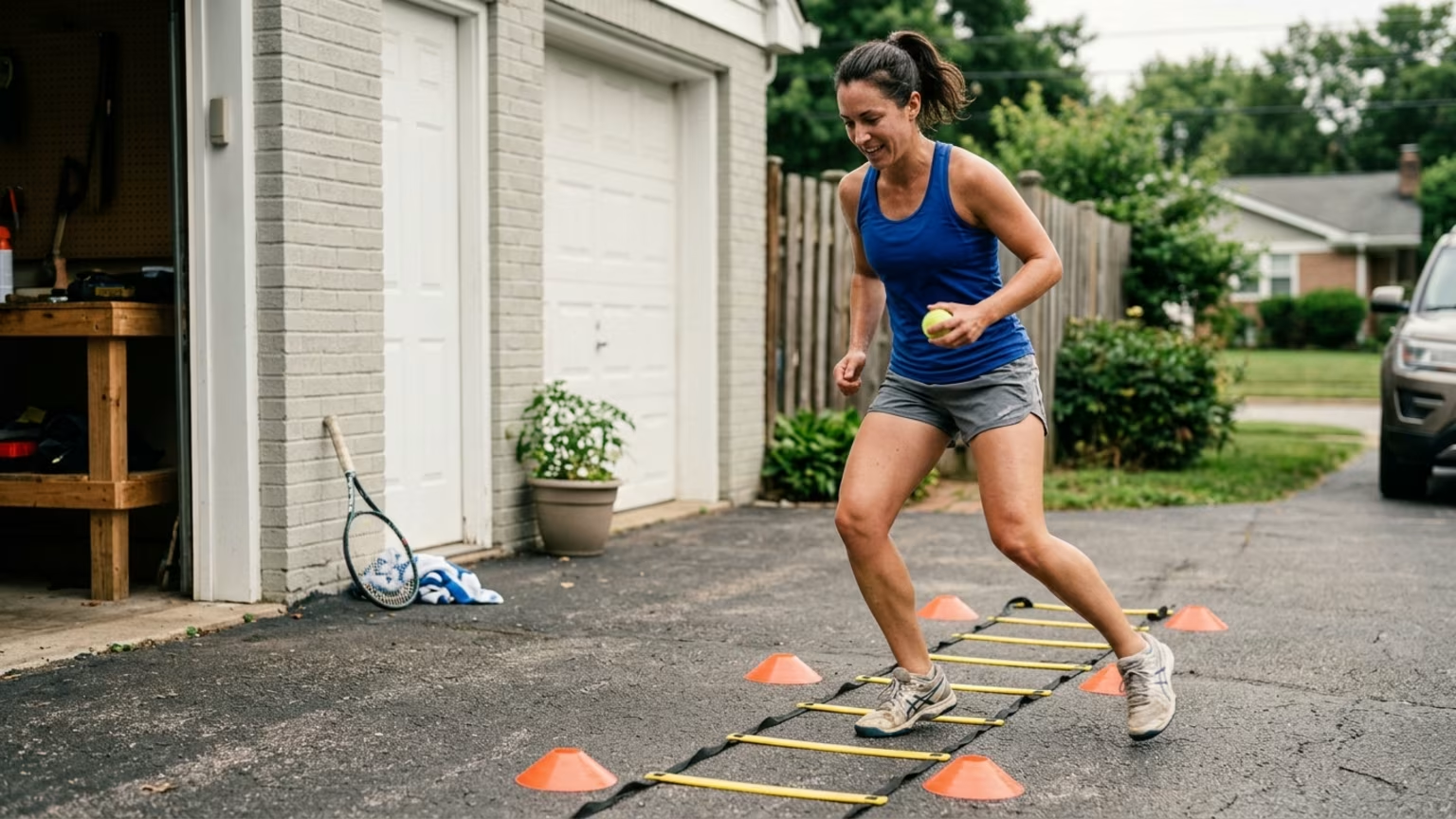

A structured four week home footwork program for tennis players. Learn how controlled agility drills and dynamic preparation support athletic longevity.




On September 14, 2026, Crunch Time Coaching updated its practical guidance on tennis footwork. The platform outlined a structured program of seven home based drills for adult players. This updated framework prescribes short agility sessions lasting 15 to 20 minutes. Players are advised to perform these focused routines three to four times per week.
The coaching resource details a strict four week progression for these home drills. Week one introduces lateral shuffles performed for three sets of 20 seconds. Players are instructed to rest for exactly 30 seconds between these lateral sets. Week two adds forward and backward short steps to build linear control.
The lateral shuffle prescription demands strict work intervals. Players execute these side movements to build foundational strength in the frontal plane. The short rest periods intentionally challenge muscular endurance without causing complete fatigue. This carefully managed work ratio ensures that form remains pristine throughout the session.
When forward and backward short steps are introduced, the focus shifts to linear deceleration. Tennis and pickleball repeatedly force players to sprint toward the net and recover backward. Practicing this specific directional change at home prepares the lower body for sudden match stops. The guidance suggests maintaining a low athletic stance during these linear transitions.
During week three, the program introduces a figure eight pattern. This drill requires players to maneuver around two markers placed approximately 2 meters apart. The figure eight drill is prescribed for three sets of 30 seconds. Finally, week four incorporates crossover steps programmed at three sets of 15 seconds per side.
Beyond directional agility, the routine heavily emphasizes foundational split steps. Split step practice involves three sets of 10 repetitions. Players take 30 seconds of rest between these specific sets. The guide describes the split step as a critical way to prepare the legs.
This deliberate preparation allows athletes to push off efficiently in multiple directions. Shadow groundstrokes serve as the final core component of the program. These are prescribed as three sets of 10 repetitions per session. The shadow swings combine movement to the ball, planting the feet and recovering.
Before starting any agility work, players must complete a five minute dynamic warm up. This brief preparation sequence includes leg swings, walking lunges and ankle circles. Single leg balance work is also recommended in every session to build baseline control. Hip and calf strengthening exercises are suggested twice per week.
The article advises players to wear shoes with proper lateral support. Practicing fast lateral movement on slippery flooring should be avoided entirely. The guidance also recommends taking a full rest day between hard sessions. When advancing the routine, players should add only one set per week.
Elite racquet athletes integrate heavy strength cycles into their daily jobs. For the adult recreational player, mimicking a professional workload often leads to joint pain. A 2026 narrative review notes that tennis demands frequent accelerations, decelerations and multidirectional changes of direction. To handle these demands safely, amateur players should prioritize movement quality over maximum speed.
In our experience at Evercourts, skipping basic court preparation carries immediate risks. We consistently notice how rapidly poor preparation affects on court performance. "When I first started playing pickleball, I noticed how many people skipped warming up entirely. They would jump straight out of their cars and right up to the kitchen line."
That observation mirrored a personal error in workload management. "I tried doing that and immediately pulled a calf muscle. Pickleball requires just as much explosive lateral movement as tennis, just in a tighter space. Since then, I always spend five minutes doing dynamic lunges and ankle rolls."
Committing to those small habits completely transformed my baseline mobility. "It changes everything about how confident I feel pushing off the baseline." For this article, the core lesson is that consistent daily rehearsals build athletic longevity. Rushing into fast directional changes without proper joint preparation causes unnecessary setbacks.
The coaching article reinforces this measured approach by prioritizing a quiet split step landing. The primary goal is not maximum vertical height or pure explosiveness. A proper split step keeps the knees softly bent and the hips low. Contact is made through the balls of the feet with weight distributed evenly.
Players are encouraged to film their split step from the side. Listening for a quiet foot contact is an excellent technical cue for absorbing force. For older players returning to the sport, managing total workload is critical. The published advice suggests starting with half the volume they think they can handle.
This compact template helps recreational players build court endurance over time. It allows athletes who train the movements behind better tennis, pickleball and padel footwork to maintain consistency. Treating these short sessions as skill practice limits unnecessary physical stress. It provides a safe environment to rehearse critical movement patterns away from match pressure.
Many adult players assume that getting faster requires grueling sprints on a hard court. However, heavy repetitive sprinting often exacerbates existing joint wear and tear. Focusing on technique during home agility sessions provides a much safer alternative. By mastering the coordination of the split step, players naturally improve their reaction times.
Properly integrating these home drills changes how the body handles match day stress. Athletes who refine their footwork mechanics waste far less energy during baseline rallies. They learn to position themselves optimally instead of scrambling at the last second. This improved efficiency directly translates to better stamina in the final sets of a match.
The current tennis conditioning literature supports a year round approach to physical robustness. The 2026 narrative review in the Strength and Conditioning Journal focuses on lower limb and trunk power. This specific training dose should be adjusted based on tournament density and athlete history. While the coaching article offers a structured template, the available sources do not provide a quantified injury reduction percentage.
The review characterizes tennis as an intermittent and high intensity sport. To meet the physical demands of the game, stretch shortening cycle function is a crucial quality. Trunk control is also listed as a key physical trait relevant to tennis robustness. Players looking for comprehensive routines can review safer court footwork: a complete injury prevention field manual.
While the narrative review provides a strong scientific foundation, it is a broad synthesis. It applies from academy settings to professional environments without offering age stratified recommendations for recreational adults. The available tennis specific review discusses movement demands extensively but lacks a footwork specific intervention study. Therefore, the home footwork program is presented as practical guidance rather than proven clinical prevention.
The exact weekly prescriptions across the coaching page suggest some flexibility for adult athletes. A broader suggestion in the text recommends three sets of 30 to 45 seconds per drill. While the program outlines distinct intervals, players must remember that drills complement general robustness training. Single leg balance work helps develop ankle stability for athletes returning to play.
Adult racquet sports players must manage their weekly training volume carefully. The recommendation to train three to four times weekly may work for healthy individuals. However, it should not be treated as universally appropriate for those with existing joint disease. Players whose match schedule is already dense should reduce their home agility volume.
The narrative review emphasizes that conditioning should not exist in a vacuum. Treating agility practice as separate from court movement limits its effectiveness. Rehearsing the exact movement demands of racquet sports yields better physical adaptations. This specific approach ensures that every home session directly benefits match performance.
The conditioning landscape is moving toward an integrated model of performance management. This modern approach blends on court movement practice with low burden readiness monitoring. Over the next season, we expect coaching platforms to align home routines closer to exact rally structures. Treating conditioning as an inseparable part of court movement will become the standard for adult players.
Guiding physical preparation by actual movement demands ensures a higher return on training time. Integrating a compact performance battery will help athletes monitor their availability. Players interested in court level execution should explore court-based conditioning drills for tennis, pickleball and padel. Ultimately, these targeted strategies will keep more athletes on the court for years to come.
Follow Evercourts for practical insights on tennis, pickleball and padel performance, movement, recovery and healthy ageing. Stay connected for new articles, research-led guidance and ideas to help you play well and keep playing for years.


A recent live-play test of a silent pickleball highlights its value for practice, but standard balls still perform better for match play and power control.

An evidence check on sports supplements like tart cherry juice. Learn why racquet sports players should prioritize core nutrition over functional foods.
In late 2026, Oura analyzed wearable data to see how recreational tennis impacts heart health and recovery. Learn what this means for your athletic longevity.
Read practical guidance for better movement, smarter preparation and a game that keeps working for you.
explore the Blog
