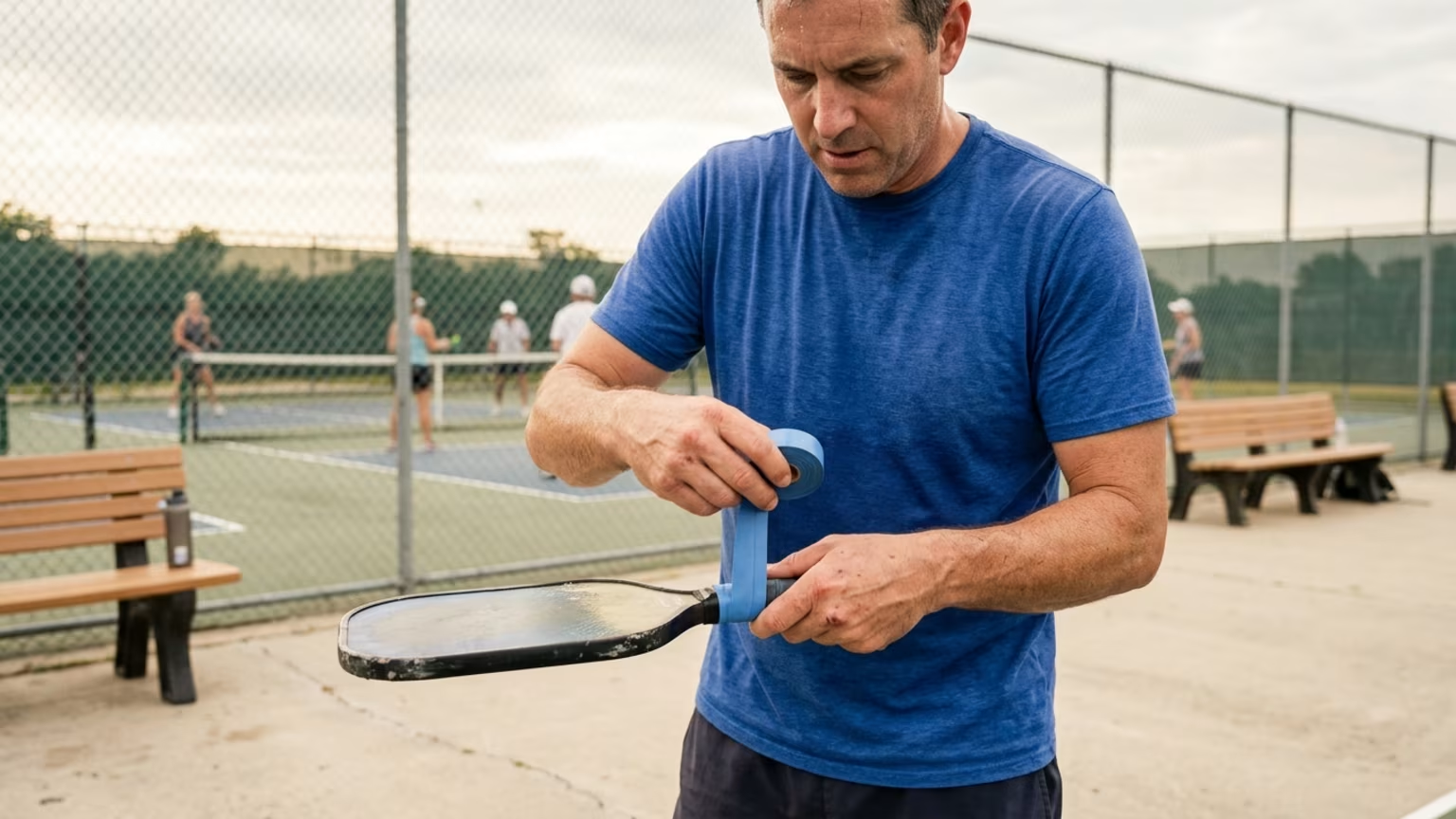

The Dink recently released a guide on applying a pickleball overgrip. Learn how a proper paddle setup impacts handle comfort and supports athletic longevity.




On September 23, 2026, The Dink published "How to Overgrip Your Pickleball Paddle Perfectly Every Time" by Digital Content Manager Alex E. Weaver. The article gives adult pickleball players a visually focused tutorial on applying an overgrip to adjust their handle. It highlights pickleball commentator and PicklePod co-host Nico the Lefty as the central example of a clean application. The publication also directs readers to a practical wrapping tutorial from Louis of Pickleball Pursuit.
The Dink recently expanded on this topic through its broader paddle setup coverage. This related guidance treats grip changes as part of a wider customization process alongside weight, balance, and lead tape adjustments. The setup article advises players to remove the stock grip to create a consistent baseline when building a custom handle. Doing so ensures that any added layers sit evenly against the core material of the paddle.
For players seeking a specific feel, the publication describes a practical two-layer approach to wrapping the handle. The first overgrip is applied tightly to establish a firm and stable foundation. A second layer is then applied somewhat more loosely over the first to add cushioning and a softer feel. Because these layers change the overall mass of the equipment, The Dink recommends weighing the paddle before and after any modifications.
A separate pickleball equipment guide provides additional mechanical steps for a secure wrap. This guide recommends beginning the application at the butt cap and maintaining firm tension throughout the process. Players should overlap the grip tape consistently to avoid creating ridges before finishing with the supplied adhesive tape. The guide also advises replacing a moisture-wicking overgrip regularly to maintain security during sweaty matches.
For adult recreational players, this guidance offers a low-cost way to experiment with handle comfort and sweat management. Professional players often customize their equipment meticulously to hit exact performance specifications. Weekend players should view an overgrip simply as a practical tool to improve grip security during long matches. Adding thickness can make a handle feel much more comfortable for one player while making it feel entirely too bulky for another.
We always encourage players to prioritize their physical preparation before obsessing over minor equipment modifications. As one of our team members recently shared, "I remember finishing a tough two hour padel match on a cold Tuesday night and waking up the next morning feeling like my lower back was locked in concrete. For a long time, I just accepted this as the price of playing hard in my forties. But once I started spending just ten minutes on targeted hip mobility before heading to the club, the stiffness almost completely vanished. It taught me that we do not have to accept pain as a default state of aging."
A fresh overgrip will not fix poor court movement or an inadequate pre-match routine. When you test a new grip configuration, you should monitor how your hand and forearm respond during practice. You should play a few casual points to ensure the paddle remains secure in your hand before using it competitively. Any changes to your personal equipment configuration should complement a sensible workload and a proper physical warm-up.
Our team has seen many players rush to modify their gear without addressing their underlying physical foundation. As another Evercourts editor noted, "I used to think a tough conditioning block was the only way to improve my court endurance. Then I started tracking my sleep. I noticed that on days I slept less than six hours, my reaction time at the net was noticeably sluggish, and I felt gassed by the second set. Prioritizing consistent rest did more for my late match stamina than any extra sprints ever did. Recovery is the true foundation of performance."
If you decide to modify your paddle handle, taking a methodical approach will yield the best results for your court performance. The recommendation to remove the stock grip provides a flat and predictable surface for your new materials. This step prevents the underlying factory grip from bunching up and creating uncomfortable high spots under your hands. You can then apply a single replacement grip or test the two-layer method depending on your personal comfort preferences.
Applying the first layer tightly is crucial because it anchors the entire grip to the solid core of the handle. A loose base layer will shift during aggressive baseline drives, which can completely compromise your shot control. When adding a second layer for cushioning, maintain a consistent overlap angle from the butt cap to the top collar. A uniform wrap ensures that your fingers rest naturally without pressing into awkward ridges or gaps.
Finally, players should always measure how much mass they are adding to their equipment. The Dink’s setup guidance advises weighing the paddle both before and after applying your new grip layers. Because standard overgrips and adhesive tapes add a few extra grams to the bottom of the handle, the overall balance of the paddle can change slightly. By documenting these exact measurements, you can perfectly replicate your preferred configuration on a backup paddle for tournament play.
The demographic realities of pickleball make sensible equipment choices and physical preparation incredibly important for adult players. A recent injury overview in California Broker Magazine highlights the specific vulnerabilities of older adult competitors. The publication reports that adults aged 60 to 69 were the highest-risk age group in its cited data. Furthermore, approximately 90 percent of emergency-department visits for pickleball injuries involved players aged 50 or older.
These figures clearly illustrate why older players must approach their time on the court with intention and care. Taking the time to properly size your grip can help you avoid squeezing the paddle too tightly during intense rallies. This is why selecting appropriate court gear is a critical step in supporting athletic longevity. Players returning from an injury should prioritize a secure and comfortable hold over simply copying a professional player's exact setup.
Your equipment should work with your body to reduce unnecessary strain during repetitive swinging motions. A well-wrapped handle helps manage sweat and prevents the paddle from twisting in your hand during off-center hits. However, it is vital to remember that a comfortable grip is just one component of a broader longevity strategy. A smart equipment choice is only effective when paired with managing your recovery demands properly throughout the week.
Over the next season, expect racquet sports media to publish increasingly detailed content regarding granular paddle customization. Tutorials on weight distribution, lead tape placement, and specialized grip textures will likely become common resources for adult players. However, the most successful recreational competitors will filter this advice strictly through the lens of their own physical comfort. The conversation will slowly shift from achieving a visually perfect wrap to building highly individualized setups that support healthy aging on the court.
Follow Evercourts for practical insights on tennis, pickleball and padel performance, movement, recovery and healthy ageing. Stay connected for new articles, research-led guidance and ideas to help you play well and keep playing for years.


An evidence check on sports supplements like tart cherry juice. Learn why racquet sports players should prioritize core nutrition over functional foods.
In late 2026, Oura analyzed wearable data to see how recreational tennis impacts heart health and recovery. Learn what this means for your athletic longevity.
Recent guidelines emphasize gradual progression, dynamic warm-ups, and scheduled recovery to help adult racquet sports players maintain athletic longevity.
Read practical guidance for better movement, smarter preparation and a game that keeps working for you.
explore the Blog
