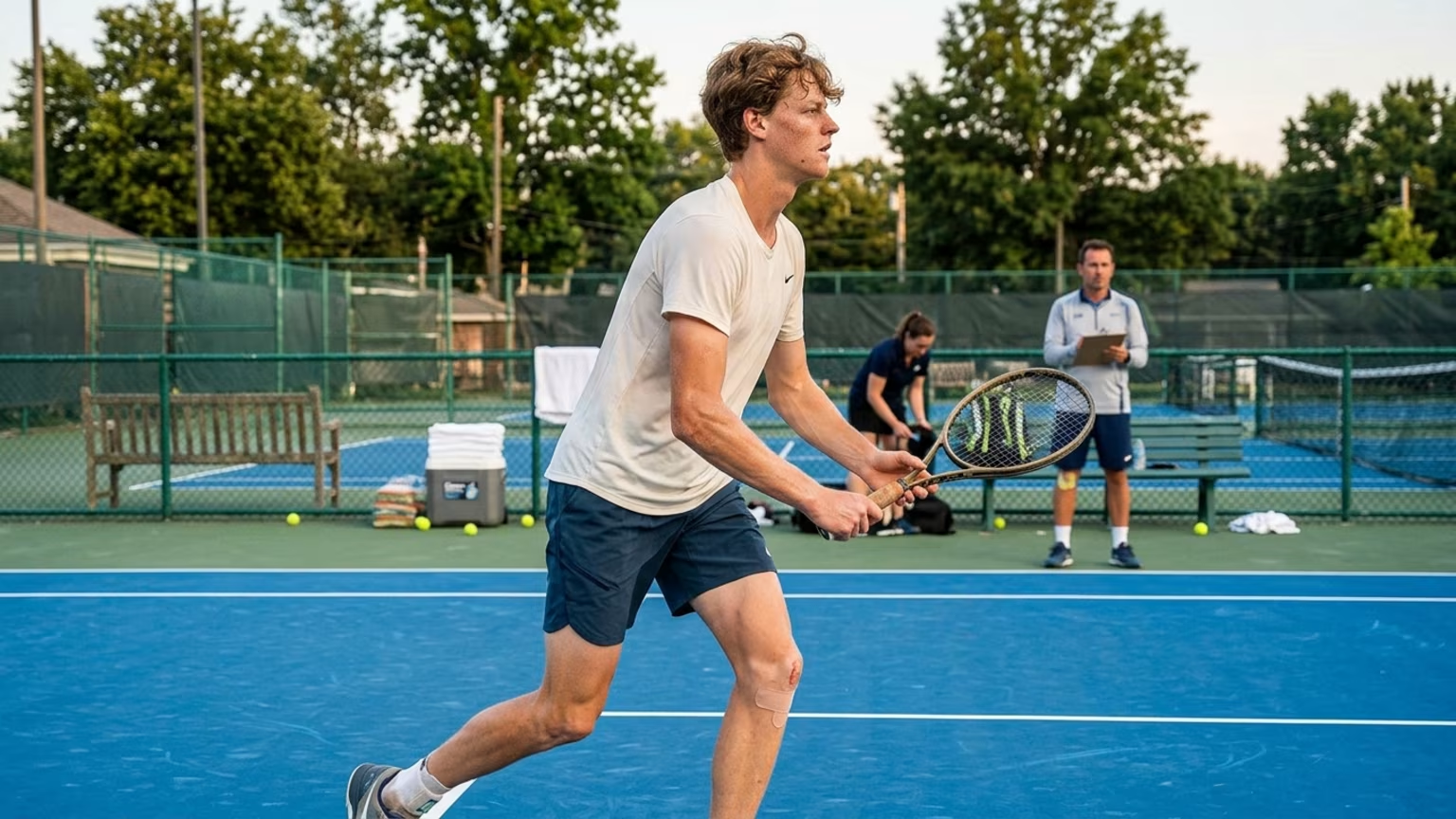

A September 2026 report details Jannik Sinner's phased return from a right knee injury. Learn how his structured rehabilitation provides a practical blueprint.




On September 9, 2026, Quotidiano Sportivo reported that Jannik Sinner is undertaking a staged medical and training progression for a right knee injury. Sinner is currently following a highly structured recovery plan in Turin to determine his physical readiness for competitive play. The report outlines a careful sequence of medical testing, targeted therapy, and limited racket work. The immediate priority is evaluating how his knee responds to these crucial early sessions. This phased approach will dictate whether the current ATP ranking leader can return to regular training before the upcoming Asian swing.
Sinner has been absent from the competitive tour since July 12. His last appearance was a victory over Alexander Zverev in the Wimbledon final. Rather than rushing back to the court, his support staff has implemented a strict rehabilitation schedule. The report indicates that the first phase of this comeback is taking place at J Medical in Turin. This controlled environment allows his physical response to dictate the calendar.
The recovery process involves close coordination among several specialized professionals. Trainer Umberto Ferrara, physiotherapist Alejandro Resnicoff, and team doctor Luca Semperboni are all actively managing his rehabilitation. Their collective focus is on objective medical evaluations rather than simply guessing his readiness. The report characterizes his team as optimistic about his progress so far. However, they are treating early positive indications as steps in a process rather than a final clearance to compete.
Following the initial off court therapy, Sinner has progressed to the next stage of his recovery. He has resumed limited racket sessions at Circolo della Stampa Sporting in Turin. This indicates that his knee has healed enough to handle basic court movements and the physical stress of hitting. These sessions are being used as practical tests to measure his joint stability and pain levels. Resuming racket work is an important milestone, but it does not guarantee immediate tournament readiness.
If Sinner successfully passes these early physical tests, the plan shifts to a new location. He is expected to travel to Monte Carlo to resume regular, higher intensity training. Coach Simone Vagnozzi would oversee this phase of the comeback. This move remains completely conditional on medical feedback and his daily physical response. Sinner has targeted the ATP 500 tournament in Beijing for his official return, which is scheduled to begin on September 30.
Professional tennis players have access to elite medical facilities, but their disciplined return strategies offer clear lessons for adult recreational players. When amateur players experience a knee injury, they frequently make the mistake of returning to full match play too quickly. A common error is assuming that a lack of pain during daily walking means the joint is ready for sprinting and sliding. The Sinner report demonstrates a much more logical and cautious progression. His timeline separates basic functional recovery from the specific demands of high level tennis.
The most practical takeaway for the weekend athlete is the concept of strict sequencing. Sinner began with clinical therapy before testing his body with light racket work. Only after analyzing his physical response will his team clear him for regular tennis practice. Adult players should adopt this exact mindset to support their own athletic longevity. A successful return requires breaking your recovery into distinct, manageable phases. Watching how Sinner’s knee recovery prioritizes gradual loading proves that patience is a significant competitive advantage.
You do not need a professional medical team to implement a smart comeback plan. A practical strategy should be developed with a qualified physical therapist to guide your specific progression. This protocol must establish clear rules for how to proceed if pain, swelling, or stiffness returns. Players who want to stay on the court for years must view match readiness as a final destination, not a starting point. Implementing a defined return to play framework ensures that you test your body safely before playing a full match.
During any phased return to racquet sports, players must learn to separate normal muscular fatigue from joint pain. Hitting on the court for the first time in weeks will naturally cause some muscle soreness. However, sharp pain or visible swelling in the knee joint indicates that the physical load was too high. Sinner’s team is using his Turin racket sessions to carefully monitor these specific variables. Adult players must be equally disciplined, stepping back from the court if next day symptoms suggest they have pushed beyond their physical limits.
The Quotidiano Sportivo report highlights the crucial link between medical therapy and on court coaching. Sinner’s physical therapy in Turin is directly connected to the tennis practice he hopes to resume in Monte Carlo. For amateur players, this level of coordination is often missing. Your local tennis professional needs to understand the exact physical limitations set by your doctor or physical therapist. Bridging the gap between rehabilitation exercises and actual tennis practice helps you build a sustainable longevity game plan for the future.
Adult recreational players often struggle with the patience required for a phased return. It is tempting to jump straight into a weekend league match the moment your knee feels normal. However, sudden spikes in physical activity are a primary cause of reinjury in racquet sports. Gradually increasing the duration and intensity of your practice sessions allows your joints and tendons to adapt safely. By treating your return as a slow progression, you protect your physical capabilities and ensure you can continue enjoying the sport.
The September 30 start date for the Beijing ATP 500 leaves a very narrow window for Sinner to build match fitness. If he receives full medical clearance, his first tournament back will be physically demanding. The projected entry list features opponents like Zverev, Félix Auger-Aliassime, and Novak Djokovic. Flavio Cobolli, Alex de Minaur, and Daniil Medvedev are also expected to compete.
Facing players of this caliber requires explosive movement and sustained endurance right from the opening round. His physical conditioning staff will have to balance the need for intense practice with joint safety. They must avoid overloading his knee before the actual competition begins. A rapid return against top tier competition is the ultimate physical test of a rehabilitation program.
Beyond the initial return in Beijing, the tennis calendar offers very few opportunities for rest. The report notes that Sinner and Carlos Alcaraz could potentially meet at the Shanghai Masters 1000. That prestigious tournament is scheduled to run from October 7 through October 18. Following the Asian swing, Sinner is also expected to compete in the Six Kings Grand Slam exhibition in Riyadh. Managing this dense sequence of events will require constant evaluation from his medical team.
A planned tournament schedule is simply a blueprint, not a binding contract. Over the coming weeks, the tennis world will see exactly how Sinner’s knee responds to cumulative stress. His team will likely remain highly conservative, prioritizing his long term physical health over any single event. If testing or training loads do not support safe competition, expect his team to delay his return and adjust the calendar accordingly. This careful approach to injury management will shape how professional players and coaches handle workload progressions throughout the rest of the season.
Follow Evercourts for practical insights on tennis, pickleball and padel performance, movement, recovery and healthy ageing. Stay connected for new articles, research-led guidance and ideas to help you play well and keep playing for years.


Track soreness, fatigue and movement between racquet-sport matches, with practical guidance on reviewing plans and seeking qualified advice.

A research-led look at tennis training load, with a simple log for court time, effort and symptoms to support a considered return after a break.

Compare racquet, paddle and court-shoe upgrades by fit, feel, surface and budget, with practical demo checks and a clear buying priority.
Read practical guidance for better movement, smarter preparation and a game that keeps working for you.
explore the Blog
