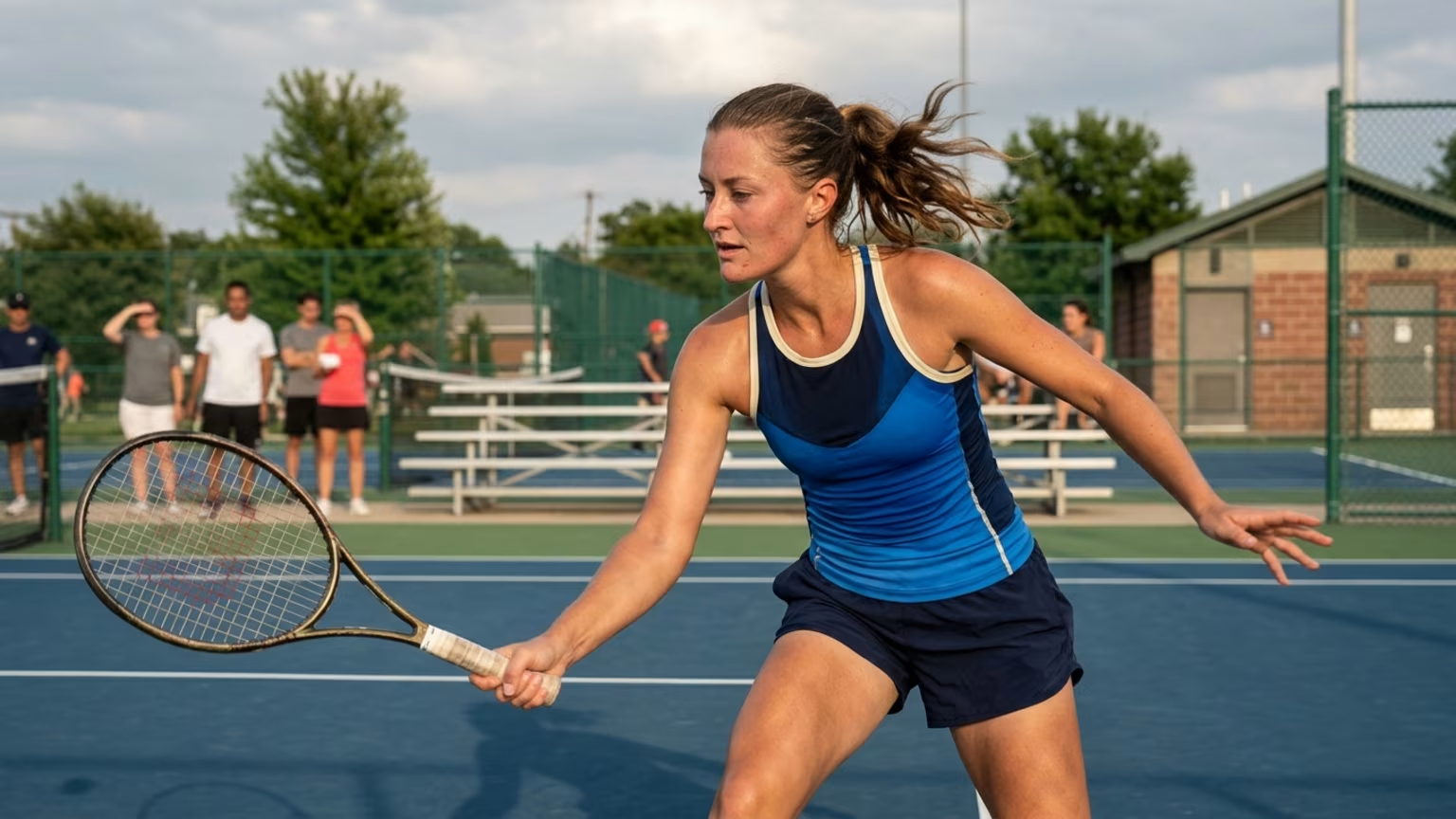

Kristina Mladenovic's 140-minute singles return at the Singapore Open offers a practical case study in managing court load and modifying competitive formats.




On September 21, 2026, Kristina Mladenovic completed a 140-minute women's singles match at the Singapore Tennis Open. The French player faced Japan's Nao Hibino in the round of 32. Mladenovic lost the contest in three sets with scores of 7-5, 3-6, and 6-4. Despite the defeat, Mladenovic reported that she experienced no pain anywhere during the match.
According to The Straits Times, Mladenovic also stated she felt physically well and was moving efficiently throughout the contest. This physical feedback was a major milestone for the 33-year-old athlete. She is currently returning from a chronic foot problem that had left her relying on crutches in 2025. The severity of the injury had previously raised doubts about her ability to return to competitive tennis.
While her return to singles play marks a positive step forward, her competitive emphasis has shifted toward doubles. Mladenovic described singles play as physically demanding and tricky to navigate. Returning to singles requires substantially more fitness and match exposure than competing in a doubles format. By managing her physical load carefully, she hopes to avoid risking further injury to her foot.
Her strategy of prioritizing doubles has yielded significant success during her comeback. In July 2026, she won the Wimbledon women's doubles title alongside Guo Hanyu. According to The Straits Times, that victory marked her seventh women's doubles Grand Slam championship. She also holds three mixed-doubles Grand Slam titles.
At the Singapore event, Mladenovic entered the doubles draw with Alexandra Panova. Her regular partner was unavailable due to representing China at the Billie Jean King Cup. Mladenovic and Panova competed as the fourth-seeded team against Ingrid Neel and Giuliana Olmos. According to BBC Sport, Mladenovic and Panova defeated their opponents 6-4, 4-6, and 10-8 in the round of 16.
Mladenovic's current strategy serves as an excellent case study in adapting competitive goals. By limiting her exposure to the grueling baseline exchanges typical of modern singles, she manages the acute stress on her lower body. Doubles relies more heavily on explosive lateral steps, sharp net reactions, and strategic court positioning. These distinct demands allow her to compete fiercely while minimizing the sustained cardiovascular fatigue that singles mandates.
The Singapore Tennis Open carried a reported US$1.2 million prize purse, equivalent to approximately S$1.5 million. Competing for these financial stakes requires immense physical preparation and flawless tactical execution. Mladenovic acknowledged that building chemistry with a new doubles partner is inherently difficult. This suggests that adaptation involves interpersonal and tactical demands as well as managing a physical workload.
By managing her match schedule, Mladenovic can protect her physical health while continuing to compete at a championship level. Returning from a severe chronic issue often requires athletes to dial back their exposure to high-stress scenarios. Singles matches force players to cover more ground, absorb more impact, and sustain higher cardiovascular outputs. Prioritizing doubles serves as a practical bridge for reintegration into tournament play.
For a player returning from a severe injury, the leap from practice sessions to full tournament play is steep. Mladenovic specifically noted that she lacked singles matches after returning from her severe foot issue. This highlights the crucial difference between being able to practice and being prepared for repeated competitive demands. Practicing allows a player to control the environment and stop immediately if symptoms flare up.
In contrast, competitive matches introduce unpredictable movements, sudden changes in direction, and prolonged physical stress. This underscores how adapting your tactical movement for singles and doubles involves mental and physical adjustments. Every athlete must eventually confront the physical ceiling of their chosen discipline during a comeback. When players lack recent match exposure, their bodies are simply not conditioned to absorb the compound fatigue of a long tournament week.
At the professional level, adjusting competitive roles is a calculated decision designed to extend a career. Elite players benefit from specialized coaching, medical teams, and carefully planned schedules. Mladenovic's choice to lean on her doubles expertise provides a template for managing physical limitations. However, adult recreational players must view this strategy through a slightly different lens.
Weekend league players often lack the comprehensive support networks that professionals rely on. A temporary reduction in pain does not necessarily mean a chronic issue is fully resolved. Amateur players should avoid treating a single pain-free outing as permanent medical clearance for unrestricted play. Modifying the competitive format is an excellent way to maintain athletic longevity, but it must be paired with realistic expectations.
Our team at Evercourts frequently sees adult players pushing through discomfort simply out of habit. I remember finishing a tough two hour padel match on a cold Tuesday night and waking up the next morning feeling like my lower back was locked in concrete. For a long time, I just accepted this as the price of playing hard in my forties. But once I started spending just ten minutes on targeted hip mobility before heading to the club, the stiffness almost completely vanished. It taught me that we do not have to accept pain as a default state of aging.
Mladenovic's outlook after her singles loss provides a valuable lesson in defining competitive success. Instead of focusing solely on the final score, she emphasized her ability to fight through the match and move effectively. Enjoying the process of returning to singles points was a clear priority for her in Singapore. This mindset shift is essential when structuring specialized off-court routines and evaluating on-court progress.
A successful return to the court is rarely a straight line of uninterrupted progress. Amateur players frequently judge their recovery solely by whether they win their local league matches. This binary thinking often leads to pushing through dangerous fatigue and ignoring early warning signs of physical regression. Learning to value movement quality and symptom reduction over scoreboard results is a critical skill for any player focused on athletic longevity.
Recreational players dealing with stiffness or recovering from minor injuries should adopt similar success metrics. Completing a set with fluid movement and waking up the next day without excessive soreness is a major victory. Defining success strictly by match wins can encourage players to push past their physical limits prematurely. Taking a patient approach ensures that court time remains sustainable over the long term.
The stark contrast in Mladenovic's rankings perfectly illustrates the physical realities of different tennis disciplines. Before the Singapore tournament, she had climbed to No. 11 in the women's doubles rankings. In contrast, her singles ranking had fallen to No. 822. She had previously achieved a career-high singles ranking of No. 10 back in 2017.
These numbers highlight how an athlete can possess elite tactical skills while still rebuilding the physical endurance required for singles. Mladenovic's 140-minute singles match against Hibino represents a massive physical investment. Enduring over two hours of continuous court coverage tests a recovering athlete's structural resilience. Her rankings gap reflects a logical and phased approach to returning to full competitive capacity.
The rigorous physical reality of a 140-minute professional tennis match cannot be overstated. Over the course of three demanding sets, players execute hundreds of violent decelerations and explosive directional changes. For someone with a history of chronic foot issues, simply surviving that volume of movement is a monumental achievement. The rankings disparity between Mladenovic's singles and doubles careers is the direct statistical result of these differing movement profiles.
Looking forward, we anticipate that more players will adopt load management strategies to extend their time on the court. Athletes returning from chronic physical setbacks will likely continue treating workload as a flexible variable rather than a strict mandate. Specialized formats like doubles offer a sustainable pathway to compete while gradually rebuilding fitness. Mladenovic's phased approach demonstrates that adapting your competitive focus is a sign of strategic maturity.
As the calendar turns, players at every level should monitor their symptom response and adjust their court time accordingly. Recreational competitors can benefit immensely from modifying match lengths or temporarily switching formats to protect their health. Embracing these adjustments will help players maintain their physical capabilities and enjoy the sport for years to come. Building foundational footwork skills is just one piece of the athletic longevity puzzle.
The ultimate goal is always to keep playing well without compromising the future. We expect professional tours to see more athletes prioritizing specific formats over punishing dual-discipline schedules. Weekend competitors should follow suit by treating their physical capacity with the same strategic respect. Longevity on the court is ultimately determined by the intelligent management of the work we put into it.
Follow Evercourts for practical insights on tennis, pickleball and padel performance, movement, recovery and healthy ageing. Stay connected for new articles, research-led guidance and ideas to help you play well and keep playing for years.


An evidence check on sports supplements like tart cherry juice. Learn why racquet sports players should prioritize core nutrition over functional foods.
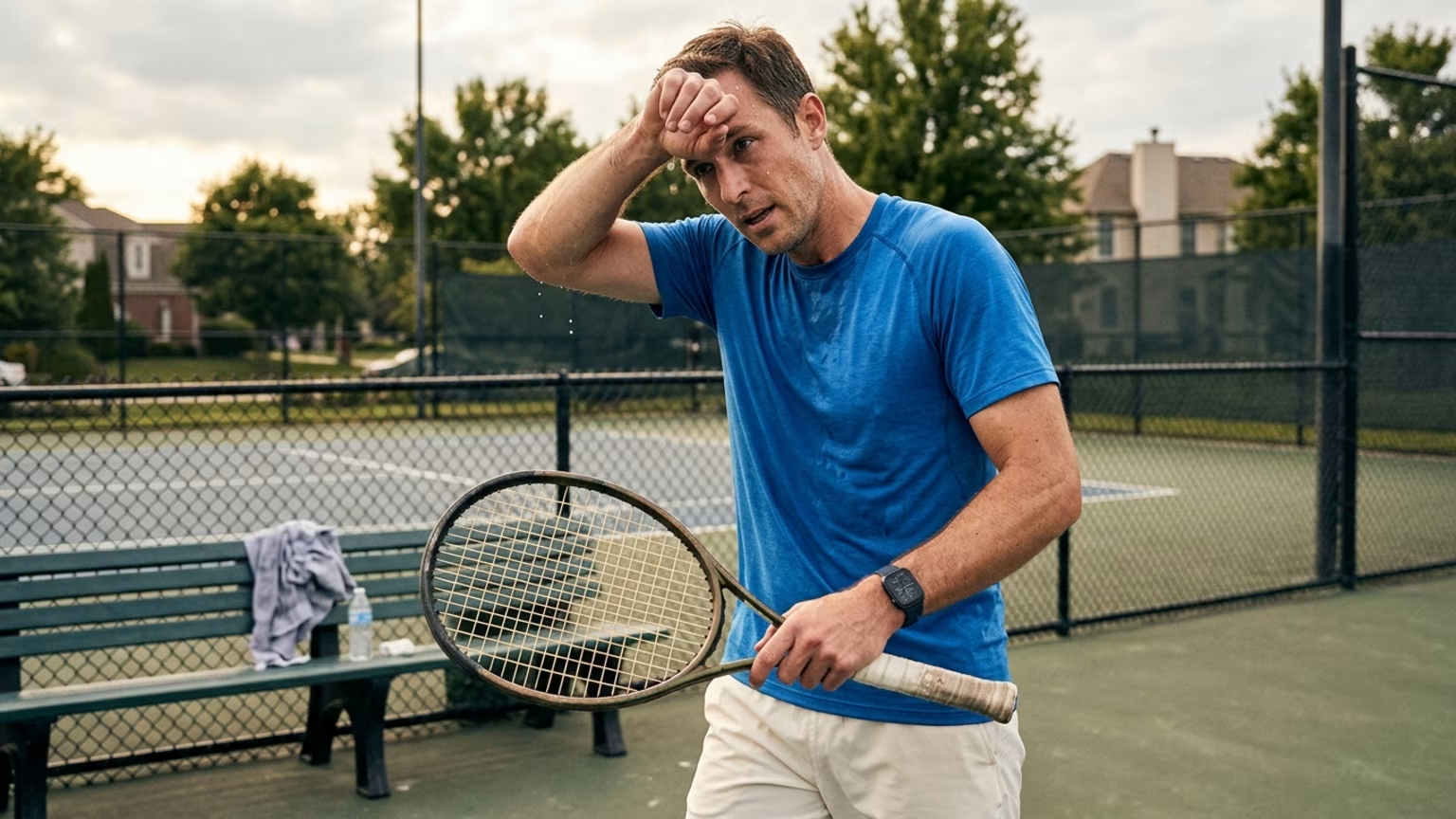
In late 2026, Oura analyzed wearable data to see how recreational tennis impacts heart health and recovery. Learn what this means for your athletic longevity.
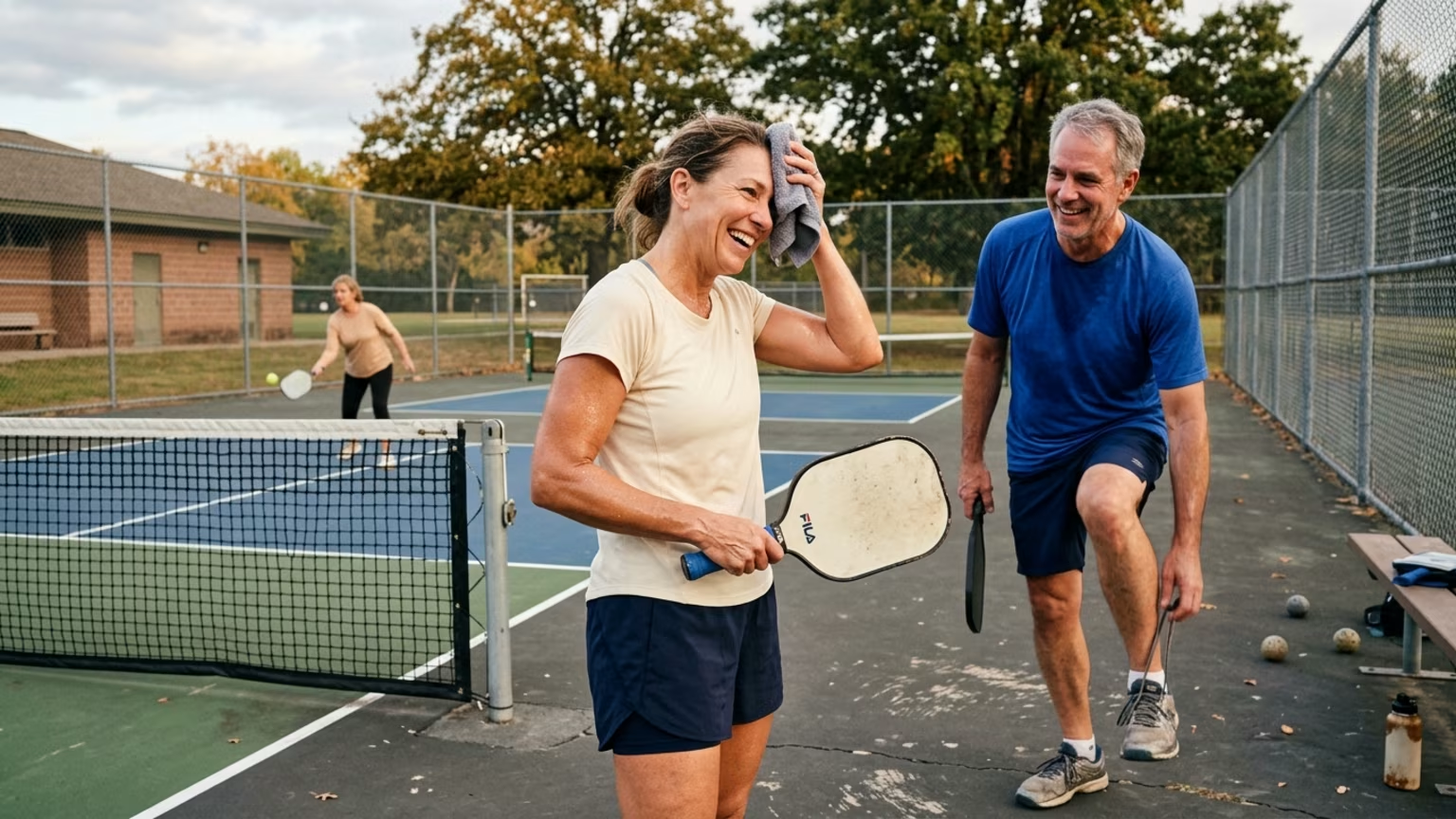
Recent guidelines emphasize gradual progression, dynamic warm-ups, and scheduled recovery to help adult racquet sports players maintain athletic longevity.
Read practical guidance for better movement, smarter preparation and a game that keeps working for you.
explore the Blog
