

Limber Health recently highlighted the PEACE & LOVE protocol for acute sports injuries. Learn how racquet players can safely reintroduce movement.




Total rest is often the worst possible response to a minor court injury. You have just finished a brutal three-setter, and your knees are throbbing with every step. Your first instinct is to grab a bag of frozen peas and stay on the couch, but a recent explainer from Limber Health suggests that this automatic reaction might actually delay your safe return to the court.
Limber Health published an explainer on August 21, 2026, outlining a research-informed approach to acute soft-tissue injuries. The publication focuses on the PEACE & LOVE framework for managing muscle, tendon, and ligament issues. This framework attempts to cover both the acute phase and the later rehabilitation continuum. It replaces the outdated assumption that sports injuries require complete immobilization.
The protocol provides adult racquet athletes with a practical way to manage their physical health. It was proposed by Blaise Dubois and Jean-François Esculier in a 2020 British Journal of Sports Medicine article. Their framework emphasizes temporary protection followed by symptom-guided loading and exercise. The goal is to safely reintroduce movement and maintain cardiovascular fitness without aggravating the tissue.
A few years ago, I realized my tennis serve speed was dropping, and my shoulder was constantly throbbing after matches. Instead of pushing through the pain, I took a month to rebuild my mechanics and focus on rotator cuff endurance.
I stopped trying to hit flat aces and developed a much heavier kick serve. My win rate actually went up, and my shoulder stopped hurting. Sometimes longevity means outsmarting your own ego on the court.
The PEACE & LOVE publication is an editorial viewpoint that synthesizes existing evidence. It proposes a general management framework rather than publishing new participant-level outcomes or control groups. Medical summaries for ankle sprains also support this active approach. Clinical guidance emphasizes early active movement and supervised exercise while discouraging unnecessary prolonged rest. Understanding how amateur court players can distinguish normal recovery from real injuries is critical before starting any rehabilitation routine.
The first few days after an injury require careful management to prevent further damage. The PEACE acronym outlines the immediate steps to take following a sprain or muscle pull.
Limber Health advises players to avoid activities that cause pain immediately after an injury. You should reduce aggravating movement during this early period to protect the tissue. The original paper recommends restricting painful movement for approximately one to three days. However, the framework cautions that prolonged rest may actually compromise your overall tissue strength.
The second step involves lifting the injured limb above heart level to help manage swelling. Jean-François Esculier told the Daily Herald that there is limited evidence this improves healing. He noted that it remains a low-risk measure that is reasonable to use. The British Journal of Sports Medicine paper also acknowledges that the evidence for this step is weak.
Limber Health recommends avoiding routine anti-inflammatory use because inflammation contributes to tissue healing. The explainer argues that frequent use of non-steroidal anti-inflammatory drugs may interfere with repair. This recommendation is based on concerns that suppressing inflammation could negatively affect long-term healing. You should discuss symptom management and medication choices with a qualified medical professional.
The framework questions routine icing as a mandatory healing intervention for soft-tissue injuries. Ice can reduce pain through vasoconstriction, but it might limit the movement of inflammatory cells. The paper acknowledges that high-quality evidence for ice in soft-tissue injuries is simply lacking. A brief cold treatment can provide temporary comfort, but it is not automatically essential for healing.
Tape or elastic bandages may help control swelling and improve comfort during the early recovery period. The evidence for compression is conflicting, but it may reduce swelling after an ankle sprain. The explainer also encourages active participation and education in your rehabilitation. Players should maintain realistic expectations and avoid looking for overnight fixes.
Once the initial acute phase passes, players must shift their focus to active rehabilitation. The LOVE acronym guides this gradual return to physical activity.
Limber Health recommends reintroducing movement and mechanical stress as soon as your symptoms permit. You should begin with tolerable walking or low-resistance movements before progressing to heavier loads. The goal is to rebuild tissue capacity using weight-bearing and mobility work. This careful progression is vital for maintaining bone health and long-term training capability.
Physical recovery is closely linked to your psychological response and expectations. Esculier advised injured people to expect improvement rather than catastrophising their situation. The framework treats fear and depression as highly relevant factors in the rehabilitation process. A realistic mindset helps players avoid both unnecessary fear and premature overconfidence.
You can maintain general fitness by performing pain-free cardiovascular activity like stationary cycling. Esculier recommended using a stationary bike or swimming if walking is difficult. This supports healthy circulation without aggravating the injured area. Maintaining your conditioning helps you manage energy during long racquet sports matches once you fully recover.
Progressive exercise is presented as a way to restore strength, mobility, and proprioception. You should increase the intensity gradually according to your specific symptoms. This work helps restore the physical qualities needed for changing direction, lunging, and reaching. Consistent strength work builds a foundation for long-term athletic longevity on the court.
Pain alone should not determine whether you are ready for full-intensity match play. You must also consider your ability to perform sport-specific movements without compensation. Proper strength and conditioning for healthy aging requires understanding your specific sport. Each racquet sport places unique biomechanical demands on healing tissues.
Tennis players recovering from muscle pulls must carefully load their rotational pathways. The serve requires massive core engagement, and groundstrokes demand stable hips for power transfer. You should reintroduce easy hitting and controlled directional changes before attempting full-intensity points. Focus on restoring shoulder mobility and torso strength during the progressive exercise phase.
Pickleball matches force players to execute rapid stops, lateral shuffles, and sudden directional changes. If you are recovering from an ankle sprain, you must rebuild confidence in your deceleration mechanics. Begin with reduced court coverage and simple dinking drills. Slowly introduce lateral movement only when you can plant your foot without sharp pain.
Padel players face unique challenges from overhead smashes, low glass retrievals, and sudden sprints. Recovering players must focus heavily on restoring lower-body elasticity and knee stability. You should start by hitting simple volleys before progressing to deep lobs or aggressive overheads. Ensure your joints can handle deep flexion before you resume competitive tournament play.
Adult players can apply these research-backed principles to safely manage acute soft-tissue injuries. A sensible progression replaces complete rest with measured, symptom-guided activity.
Recovery is not about escaping the court forever, but about respecting the body enough to return only when it is truly ready.
Follow Evercourts for practical insights on tennis, pickleball and padel performance, movement, recovery and healthy ageing. Stay connected for new articles, research-led guidance and ideas to help you play well and keep playing for years.


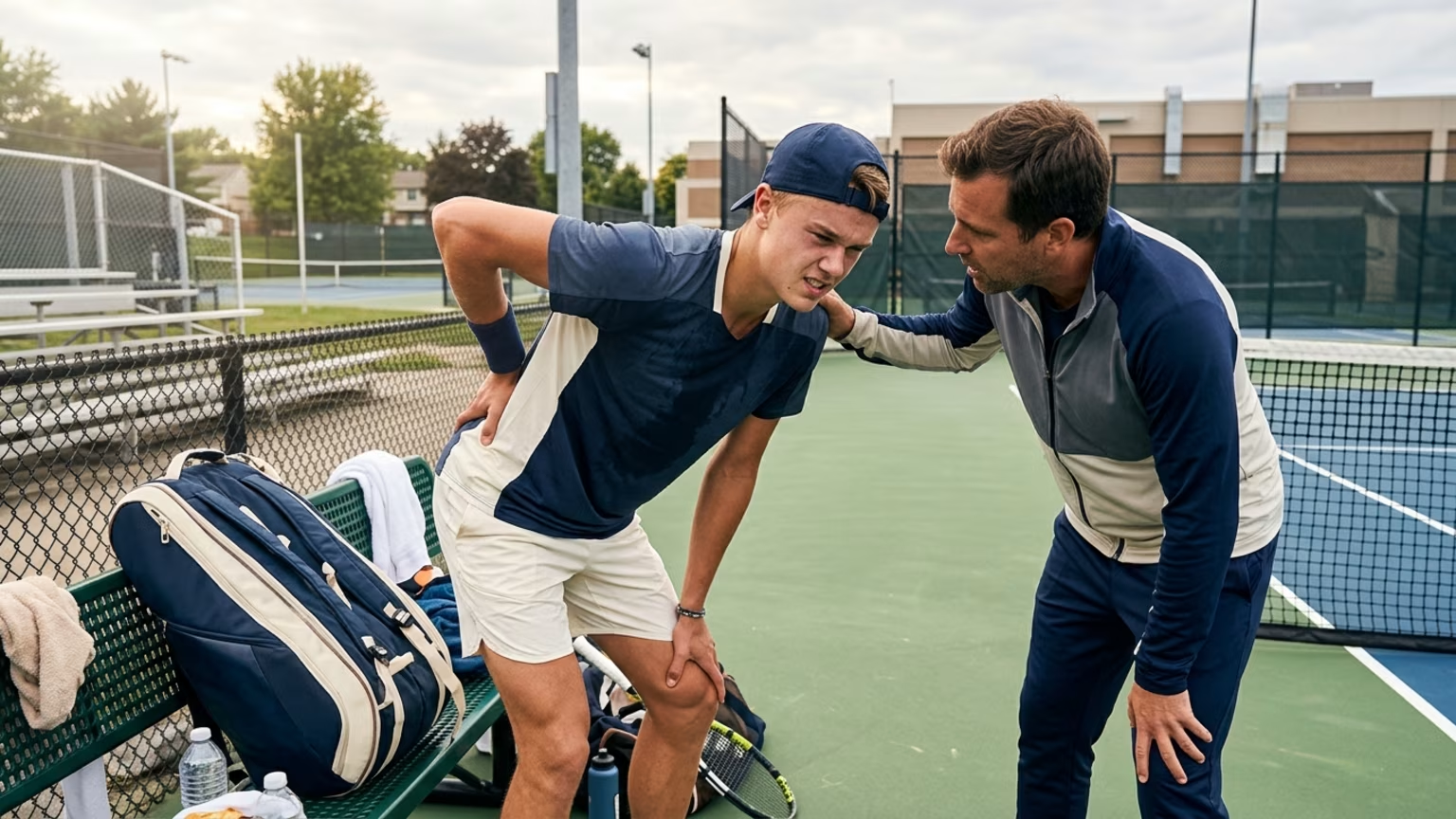
Holger Rune withdrew from the European Open with a back problem. The facts behind his decision and a grounded perspective for recreational players.

The Dink’s October 17 guide emphasizes deep returns, ball-height decisions and positioning against faster pickleball opponents.

A new report outlines padel and tennis gear trends. Learn how to assess adjustable rackets, sensor feedback and smart-court claims.
Read practical guidance for better movement, smarter preparation and a game that keeps working for you.
explore the Blog
