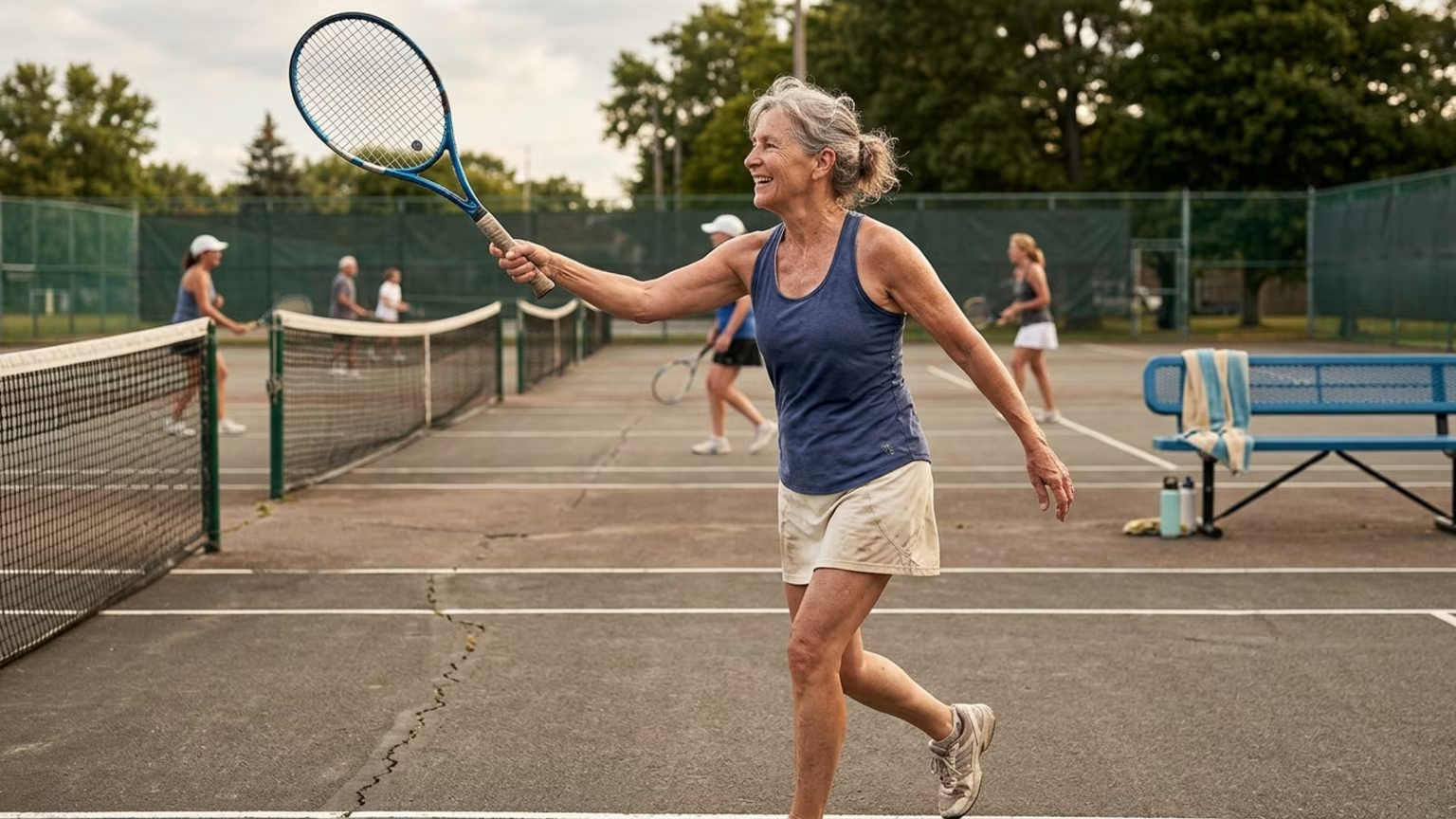

A practical guide to maintaining a lifelong racquet sports habit through format adaptability, proper load management, and reliable social infrastructure.




In 2025, the Sports and Fitness Industry Association estimated that 24.3 million Americans played pickleball. This represents a massive shift from the approximately 4.2 million players recorded in 2020. This migration reflects a fundamental change in adult recreation. Players are increasingly willing to alter court dimensions to keep racquet sports in their lives.
The recent explosion in racquet sports participation spans multiple playing formats. Tennis participation in the United States reached more than 27.3 million people in 2025. The United States Tennis Association reports that this participation figure is up 54 percent since 2019. Nearly 40 percent of those participants played in public parks.
Organized competition remains a substantial participation pathway for adults. The USTA says its League program serves more than 800,000 participants nationwide. Players can therefore remain competitive while changing the frequency or level at which they compete.
Pickleball has expanded even more rapidly across the country. The distinction between casual and frequent participation remains highly relevant for this group. One industry summary reports 16.8 million casual pickleball participants and 7.48 million core participants in 2025. This research defines a core participant as someone playing at least eight times annually.
Padel is also expanding internationally at a rapid pace. The available global figures are less consistent across different reporting sources. One 2025 World Padel Report estimate cited more than 35 million players worldwide. This same report highlighted 24,600 clubs and 77,300 courts around the globe.
Another industry estimate puts worldwide padel participation at 19.4 million players in 2026. This variance illustrates the difficulty of comparing estimates that use different definitions of a player. The collection methods also differ widely between organizations. Regardless of the exact total, adults clearly have more options than ever before.
Professional players optimize their bodies for a brief window of peak performance. Recreational adults face a completely different operational tension. The goal is not to peak for a single summer season. The objective is athletic longevity and staying capable for decades.
This requires a profound shift in how you view personal progress. As one of our team members recently shared, "A few years ago, I realized my tennis serve speed was dropping, and my shoulder was constantly throbbing after matches. Instead of pushing through the pain, I took a month to rebuild my mechanics and focus on rotator cuff endurance."
Adjusting tactics is a fundamental part of the long game. They continued, "I stopped trying to hit flat aces and developed a much heavier kick serve. My win rate actually went up, and my shoulder stopped hurting. Sometimes longevity means outsmarting your own ego on the court."
Elite circuits demand specialized balance training for racquet sports to handle extreme loads. Adult players simply need enough physical capacity to return to the court safely. Sustained adherence depends heavily on autonomous motivation, perceived competence, and enjoyment. A reliable long-term training plan helps adults handle repeated lunges safely.
Many players stubbornly hold onto their original competitive identity. A wiser approach involves adapting the format before abandoning the sport entirely. Transitioning from singles to doubles is a highly effective strategy for older adults. Switching from full court tennis to padel can also maintain tactical engagement without identical physical stress.
Creating a minimum viable week helps maintain continuity during busy periods. This might mean one short practice session paired with weekend mobility work. Keeping a backup plan prevents an all or nothing response when travel or injury interrupts normal play. Adjusting the routine is always better than stopping completely.
The health case for continuous play relies on combining aerobic effort with strength and coordination. A British Journal of Sports Medicine analysis examined more than 80,000 adults. This observational research reported that racquet sport participation was associated with a 47 percent lower risk of death from any cause. It also showed a 56 percent lower risk of cardiovascular death compared with inactivity.
Secondary reports on the Copenhagen City Heart Study provide another compelling data point. They describe an estimated 9.7 year difference in longevity between tennis players and sedentary participants. These are observational associations rather than guaranteed outcomes for every individual. They highlight the immense value of maintaining physical activity as we age.
However, simply playing more matches does not automatically equal better health. A South Korean study found that approximately two in five recreational pickleball players reported an injury over 12 months. These issues predominantly involved lower extremity and overuse injuries. The same study noted that greater weekly playing volume was independently associated with injury occurrence.
This data directly challenges the assumption that smaller courts prevent all physical injuries. Sudden increases in playing volume and inadequate lower body conditioning can easily undermine continuity. Players must actively manage these physical risks through proper load management. Smart match scheduling is critical for preventing predictable overuse issues.
Adding regular muscle strengthening activity helps players tolerate court deceleration forces. The World Health Organization guidelines emphasize that older adults should include functional balance work. Relying exclusively on court time may not maintain every capacity needed for consistent play. Building strength away from the court protects your time on it.
The trajectory of racquet sports over the next season will depend heavily on accessible community infrastructure. Millions of players have adopted new court formats over the last five years. The primary challenge now is maintaining those habits as court congestion increases in popular areas.
We expect to see a growing emphasis on public parks and localized group play. Finding a suitable club environment that offers flexible formats will also be essential. Reliable social support creates accountability and reduces the friction of returning after a break. Scheduled sessions and familiar partners make it much easier to stay active.
Players who adapt their routines will easily outlast those who refuse to compromise. Keeping a racquet sport in your life is not about forcing an outdated training schedule. It is about actively managing your physical constraints while finding new ways to compete. The 24.3 million Americans who played pickleball in 2025 prove that flexibility is the ultimate key to continuous play.
Follow Evercourts for practical insights on tennis, pickleball and padel performance, movement, recovery and healthy ageing. Stay connected for new articles, research-led guidance and ideas to help you play well and keep playing for years.


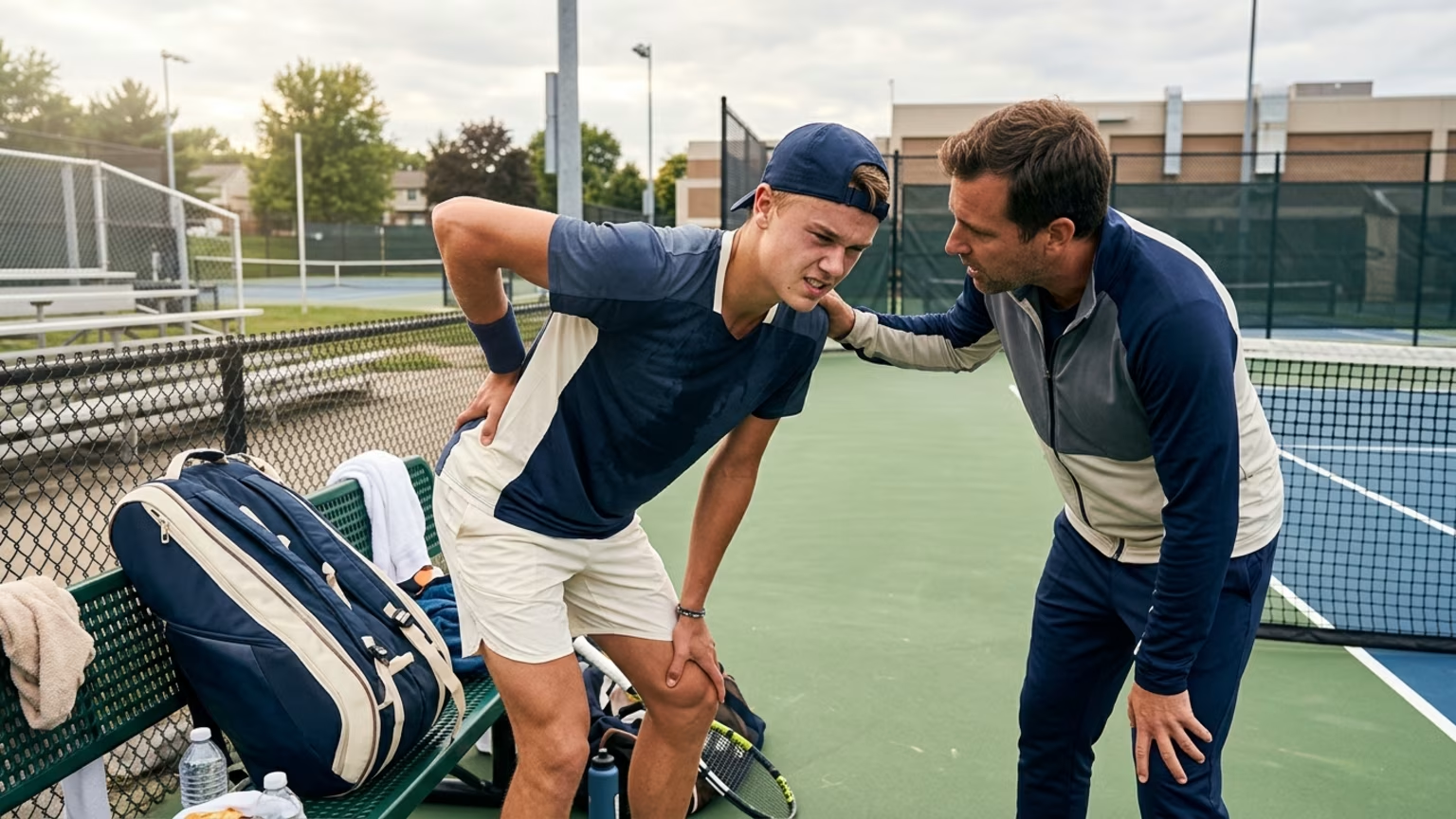
Holger Rune withdrew from the European Open with a back problem. The facts behind his decision and a grounded perspective for recreational players.

The Dink’s October 17 guide emphasizes deep returns, ball-height decisions and positioning against faster pickleball opponents.

A new report outlines padel and tennis gear trends. Learn how to assess adjustable rackets, sensor feedback and smart-court claims.
Read practical guidance for better movement, smarter preparation and a game that keeps working for you.
explore the Blog
