

Malaysia’s Christian Didier Chin and Aidan Khairuddin Yunus took Asian Games padel silver. Discover how their rapid cross-training success impacts rec players.




On October 3, Malaysia’s Christian Didier Chin and Aidan Khairuddin Yunus won silver in the men’s doubles padel event at the Aichi-Nagoya 2026 Asian Games. The pair lost the championship match to Qatar’s top-seeded brothers Mashari Naif and Rashed Naif. The final score concluded at 3 to 6 and 1 to 6. This tournament marked the official debut of padel at the Asian Games.
It was also the first appearance for Malaysia’s national padel squad on this major multi-sport stage. Returning from the event, the Malaysian pair immediately stated their next competitive objective. They are targeting gold at the upcoming 2027 SEA Games in Malaysia.
The path to the Asian Games final highlighted the varied athletic backgrounds currently feeding competitive padel. Chin entered the sport as a former tennis player. Yunus transitioned into padel from a squash background. According to the Malaysian Padel Association president, the two athletes had been playing together for only about three to four months before the tournament.
Despite this limited preparation time, they successfully navigated the draw to reach the championship match. They secured victories over Kazakhstan, the Philippines and Iran along the way. The International Padel Federation noted that the sport's inclusion at the Nagoya City Higashi Sports Center reflects a broader expansion across the region. As padel grows in Asia, international multi-sport events serve as critical testing grounds for newly formed national squads.
A silver medal on debut proves that regional programs are quickly assembling capable teams. It also indicates that players from established racquet sports can make an impact when guided by a national federation. However, the final match itself served as a sharp test of experience. The Qataris' composure and tactical execution proved decisive against the relatively new Malaysian partnership.
Yunus acknowledged that the pair needed more experience managing nerves on a major stage as the tournament stakes rose. Chin observed that their own eagerness to pull off an upset ultimately worked against them in the final match. The Malaysian Padel Association president maintained that the pair showed strong chemistry despite their short time together. The federation sees clear potential for them to progress in future regional competitions.
When professional athletes achieve rapid tournament success after changing sports, recreational players often draw incorrect conclusions. An Asian Games silver medal achieved after a short preparation window might seem to suggest an effortless transition. Adult players frequently assume that years of tennis or squash will automatically translate into immediate padel dominance. While prior racquet experience certainly provides a foundation, the reality for everyday players requires much more patience.
Elite competitors possess an athletic conditioning baseline that allows them to process new spatial demands quickly. For the recreational weekend player, attempting to skip the learning curve often results in frustration or physical strain. Transitioning between court sizes requires an intentional approach to managing physical workloads. Tennis players tend to use large swing mechanics that can lead to joint fatigue when applied to a heavier padel racket.
Squash players may understand playing off the back wall but frequently struggle with the slower pace and strategic lobbing required in padel. Players who want to maintain their athletic longevity must recognize that hitting the ball cleanly is only one part of the equation. The unique demands of the sport require dedicated practice and patience. Learning essential footwork skills is crucial before attempting aggressive competitive play.
Rather than relying solely on their individual swing mechanics, the Malaysian athletes pointed to softer skills as the driver of their tournament run. The primary report states that Chin and Yunus credited determination and team spirit. They also highlighted collaboration, communication and mutual support as key factors in their success. In the recreational context, these partnership dynamics are exactly what separate consistent club players from struggling beginners.
Adult players transitioning into the sport should prioritize adapting their movement to doubles and building tactical alignment with their partner. Many adults switching from singles tennis to doubles padel face a significant psychological adjustment. In singles sports, the athlete is entirely self-reliant and sets the tempo of the rally alone. Padel requires constant negotiation with a partner regarding court positioning, shot selection and emotional momentum.
Yunus noted that managing nerves on a major stage was a significant factor as the pressure increased. For the amateur player, managing frustration when a partner misses an easy overhead is a similarly critical skill. Building a cohesive team mindset takes time and deliberate practice during routine matches. Rushing into high-stakes club matches without developing this communication often leads to unforced errors and poor court positioning.
Recreational athletes should not use a professional team's accelerated three-month timeline as a personal benchmark. The focus should remain on steady and sustainable progression on the court. Whether you are coming from tennis or squash, cross-training across courts requires adequate rest and a focus on long-term performance. Building a resilient body capable of regular play will always outrank the pursuit of a quick trophy.
The results from the Aichi-Nagoya 2026 Asian Games provide clear metrics on the current state of regional competitive padel. The Malaysian team’s journey to the final was built on a remarkably short preparation window of three to four months. In elite racquet sports, this is a compressed timeline that underscores the rapid assembly of national teams in emerging markets. This brief window was sufficient to secure wins over three separate nations before reaching the championship round.
However, the final scoreline maps the clear advantage of established tournament experience. The Malaysian team fell to the top-seeded Qatari pair with a score of 3 to 6 and 1 to 6. This decisive straight-sets result illustrates the tactical gap that still exists between an experienced top seed and a newly formed challenger team. Earning a few games in a final is a respectable start for a new partnership.
The broader context of these numbers shows a sport in rapid transition. When a team with less than half a year of combined experience can reach a major final, the talent pool is still developing. As the sport matures over the next decade, the barrier to entry for international finals will rise significantly. Teams will eventually need years of specialized padel experience to advance past the early rounds of multi-sport events.
The focus now shifts toward institutional support and the long-term development of competitive athletes. Following the Asian Games result, Malaysia’s National Sports Council announced it will discuss what support emerging sports need to develop athletes and improve competitiveness. The recent silver medal finish serves as a tangible highlight to anchor these funding and infrastructure discussions. National federations are beginning to recognize that relying on athletes crossing over from other sports is only a temporary strategy.
As the 2027 SEA Games approach, expect to see sports councils implementing structured coaching frameworks designed specifically for padel. While the tennis-to-padel pathway has delivered an early medal, sustaining success at the international level requires dedicated youth programs. The next season will reveal which regional federations are prepared to invest the necessary resources into their athletic infrastructure. Padel is rapidly transitioning from a recreational novelty into a fully supported medal discipline across Asia.
Follow Evercourts for practical insights on tennis, pickleball and padel performance, movement, recovery and healthy ageing. Stay connected for new articles, research-led guidance and ideas to help you play well and keep playing for years.


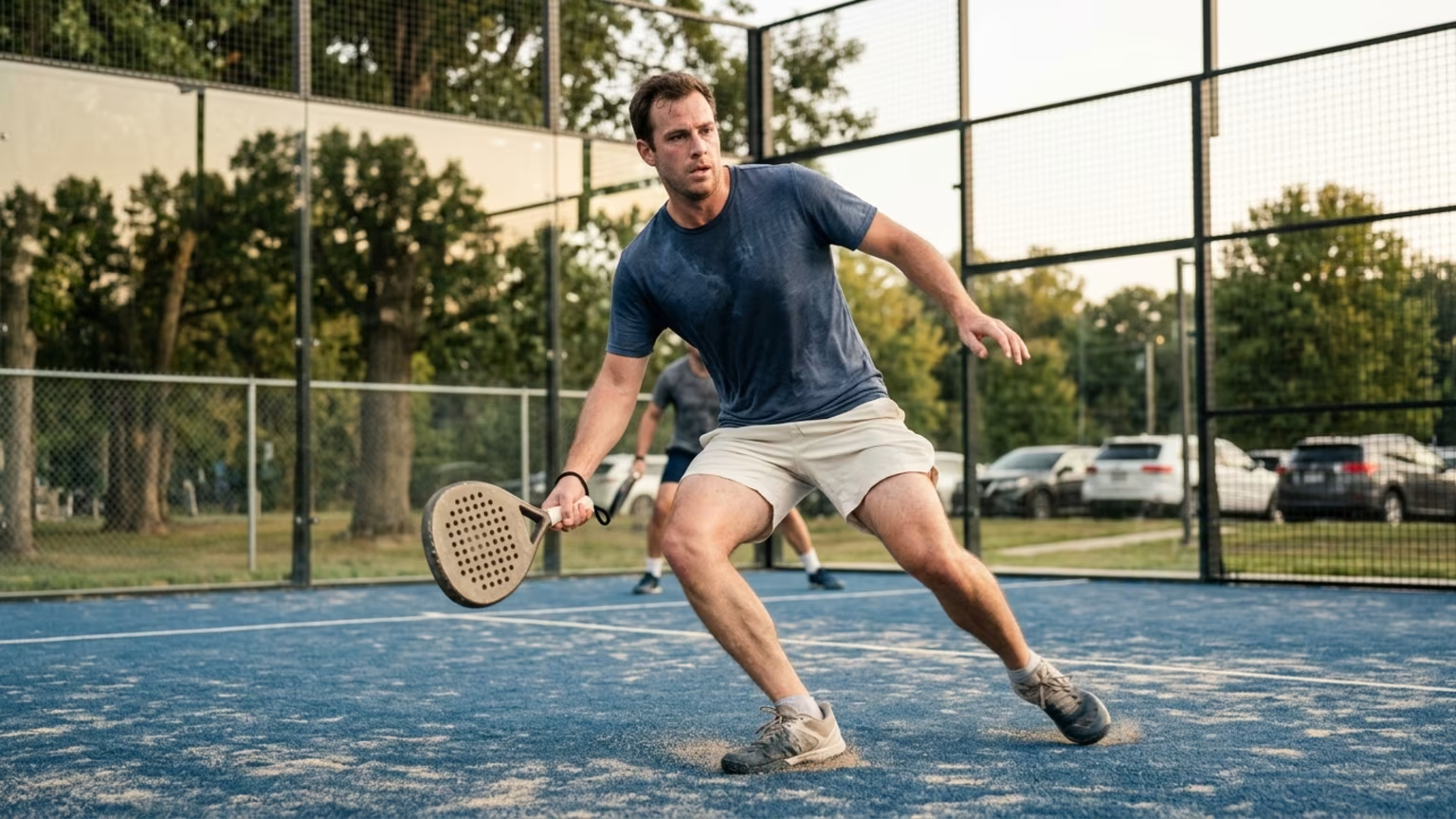
Learn why braking and changing direction are crucial padel skills. This article explains what current research says about court movement and athletic longevity.

Understand pickleball's stop-and-start movement demands to improve performance and athletic longevity. Learn how to condition safely and protect your joints.
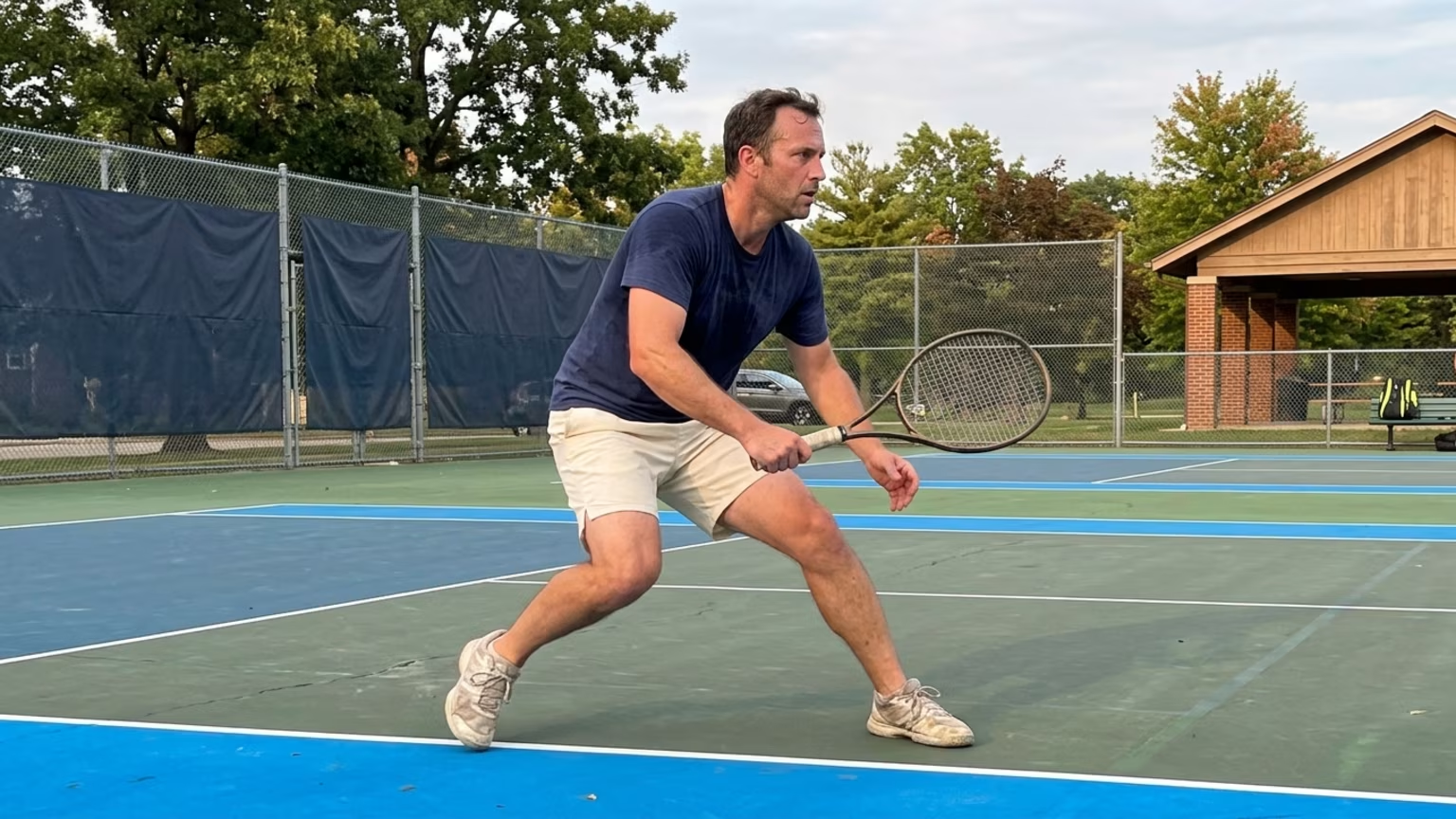
Court movement relies on multidirectional control rather than straight-line speed. Understand how deceleration training supports healthy aging on the court.
Read practical guidance for better movement, smarter preparation and a game that keeps working for you.
explore the Blog
