

Understand pickleball's stop-and-start movement demands to improve performance and athletic longevity. Learn how to condition safely and protect your joints.




Pickleball court movement is the continuous cycle of short accelerations, sudden stops, lateral lunges, and rapid changes of direction required to track and hit a plastic ball. It demands the ability to control your body weight while braking, reaching beyond your normal base of support, and quickly recovering for the next shot. Unlike steady exercises such as walking or jogging, the sport forces players to constantly manage starting and stopping forces. This stop-and-start nature defines the unique physical toll of the game.
Many adult players enter the sport expecting a light cardiovascular workout. They quickly find that the specific demands of the court require much more dynamic physical control. The true challenge is not just getting to the ball quickly during a fast rally. The challenge is decelerating safely once you arrive and maintaining your balance through the swing.
Assessing your foundation with a movement screen can help clarify your readiness for these demands. A player must be able to push off forcefully to reach a wide dink at the kitchen line. They must then immediately arrest that forward momentum to avoid stepping into the non-volley zone. This constant demand for sudden deceleration requires significant lower body strength and joint stability.
While walking moves you forward at a predictable pace, racquet sports require completely different movement mechanics. Tennis, pickleball, and padel challenge your leg strength and balance through repeated explosive efforts and changes of direction. According to Kriz Physical Therapy, pickleball commonly involves short accelerations and sudden stops. The sport also requires lateral movement, challenging lunges, and reaches beyond a player's base of support.
This repeated braking action places high demands on the lower body and joint structures. The smaller court dimensions in pickleball and padel often mean these start-and-stop cycles happen very frequently. A player is rarely moving in a straight line for more than a few steps before needing to plant a foot. You have to constantly switch directions to respond to your opponent during rapid exchanges.
Understanding how court geometry changes the physical toll on your body is crucial for adult recreational players. In tennis, you might have longer sprints to track down a groundstroke from the baseline. In pickleball, the action is compressed into tighter spaces with faster exchanges at the non-volley zone. This compression forces players into frequent lateral shifts and rapid weight transfers that heavily tax the hips and knees.
The format you choose also changes the specific physical requirements of the match. Adapting your movement for singles and doubles play means recognizing how court coverage responsibilities shift. Singles play generally requires more court coverage and higher cardiovascular output. Doubles play involves more localized, rapid lateral shifts while defending the net with a partner.
It is easy to find headlines suggesting that court sports are either a perfect fitness solution or a guaranteed path to injury. The actual data presents a more measured reality for players focused on performance. The physical demands of racquet sports differ significantly from steady aerobic exercise, but they do not require a tournament-level output every session. It is important to remember that recreational play does not always demand a maximal effort.
Players have the ability to control their pace and session length based on their current fitness level. Treating every weekend match like a high-stakes competition often leads to unnecessary physical strain. Lancaster Orthopedic Group advises players to build up gradually and increase frequency, duration, or intensity one at a time. This specific, single-variable approach helps players adapt to the sport's demands without overwhelming their tissues.
Relying on court play alone for fitness often leaves gaps in a player's physical preparation. The game provides valuable cardiovascular activity, but it does not supply every strength or balance stimulus a player needs. A well-rounded approach requires supplemental work to build the specific capacities needed for lateral agility. Conditioning outside of match play is the most reliable way to handle the intense, repetitive demands of the court.
Building a resilient body for racquet sports requires intentional preparation outside of standard match play. Athletic longevity depends on treating court sessions as a performance rather than your only form of exercise. Iowa Orthopaedics recommends warming up, allowing recovery between sessions, wearing shoes with good traction, and increasing play gradually. Players who condition for control are better equipped to handle the demands of lunging and recovering.
Proper footwear is a foundational element of safe court movement. Choosing the right shoes to support your movement helps provide the necessary traction for sudden stops and lateral cuts. Once you have the right gear, you must focus on how you manage your physical readiness over time. Simple movements like side steps, calf raises, and sit-to-stands can help prepare the body for intense lateral shifts.
This measured approach prevents the physical overload that often follows sudden spikes in playing time. When you prioritize recovery and strength, you protect your joints and extend your playing years. Taking time to focus on off-court conditioning ensures that you can handle the specific demands of the sport safely. It is much easier to maintain your court movement than to rebuild it after a forced break.
A structured approach to managing your recovery demands allows your tissues to adapt to the stress of play. The goal is to keep competing well into the future without being sidelined by preventable issues. Smart players recognize that rest days are just as important as time spent drilling on the court. Athletic longevity is a product of consistent and sensible physical management.
Even with careful preparation and gradual progression, players may still encounter physical challenges that require expert attention. General muscle soreness after a long weekend of matches is a normal part of athletic participation. However, persistent pain that alters your daily movement patterns is a clear signal to seek help. If you experience sharp joint pain, swelling, or discomfort that does not improve with rest, you should consult a qualified physical therapist.
Playing through structural pain often changes your court mechanics, which can lead to secondary issues over time. A professional can assess your specific movement patterns and help you address the root cause of the discomfort. They can provide targeted strategies to restore your mobility and safely return you to the court. Relying on generic internet advice for persistent pain is rarely an effective strategy for adult athletes.
Recognizing when to step off the court and get an expert opinion is a critical part of maintaining your long-term health. Smart players listen to their bodies and address minor issues before they become permanent barriers to play. Seeking timely professional guidance ensures that small setbacks do not turn into season-ending injuries. Evercourts remains committed to providing practical clarity so you can move well and keep enjoying the game for years to come.
Follow Evercourts for practical insights on tennis, pickleball and padel performance, movement, recovery and healthy ageing. Stay connected for new articles, research-led guidance and ideas to help you play well and keep playing for years.


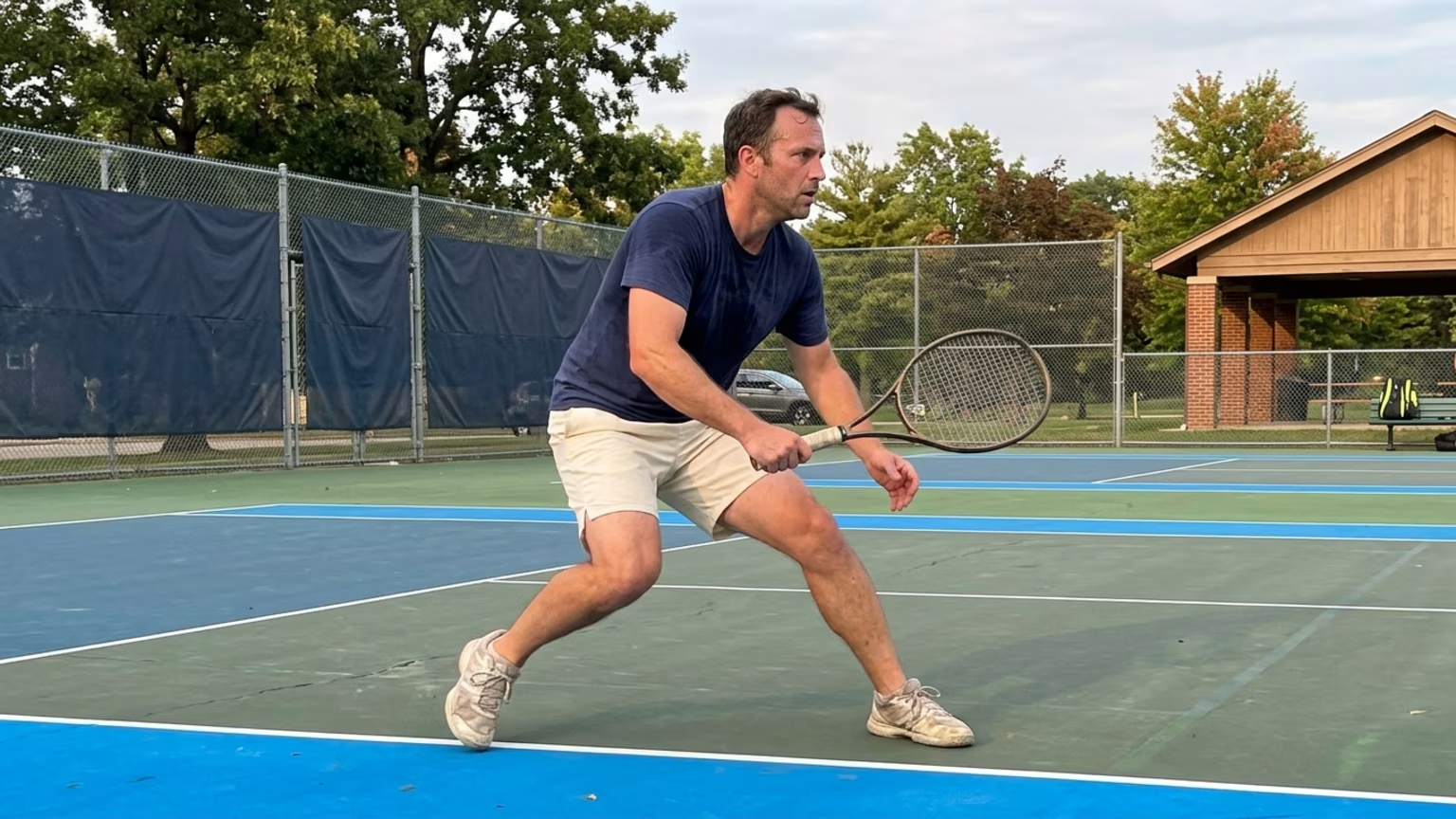
Court movement relies on multidirectional control rather than straight-line speed. Understand how deceleration training supports healthy aging on the court.

Rod Laver, Tim Henman, and Pat Rafter discussed timing and coaching at the 2026 Laver Cup. Learn how adult players can use these insights for healthy aging.
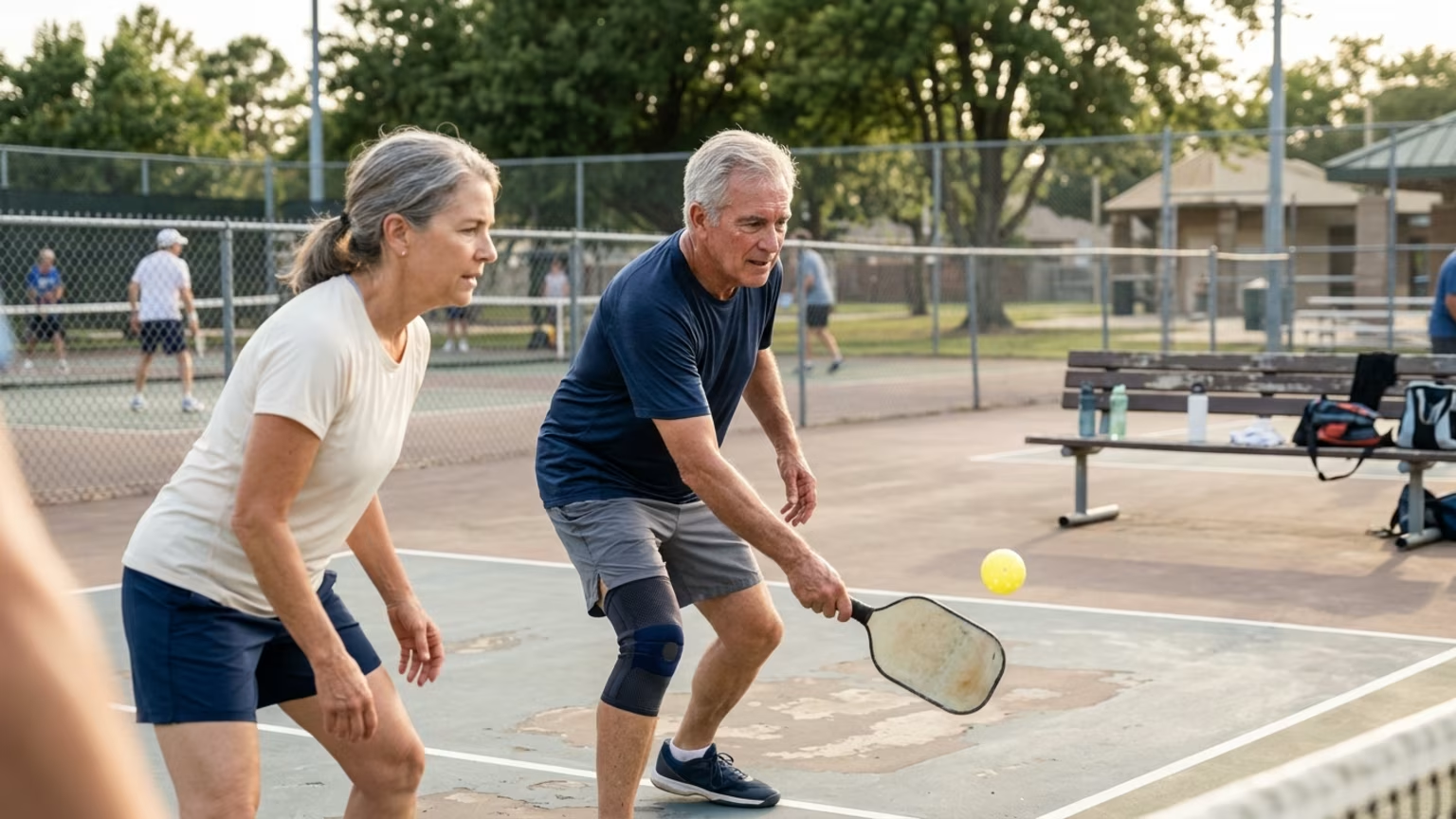
A new Nature Aging study reveals how exercise creates biological signals that protect joint health, offering practical insights for aging racquet sports players.
Read practical guidance for better movement, smarter preparation and a game that keeps working for you.
explore the Blog
