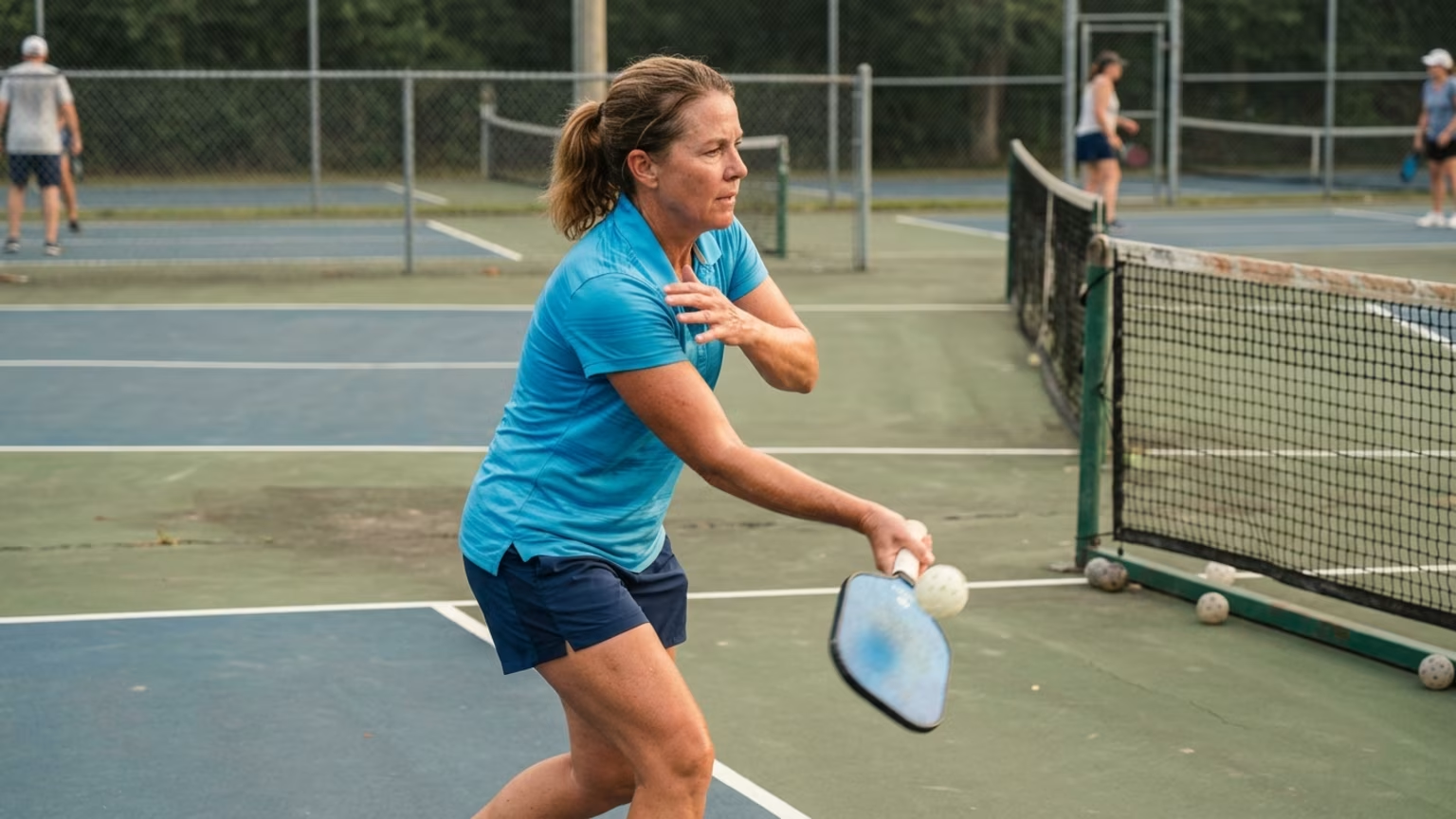

Learn why an effective pickleball serve requires more than raw arm power. See how a coordinated kinetic chain, depth and spin improve your game safely.




On September 22, 2026, Times Now published an updated analysis by Sudipta Biswas detailing the mechanics of an effective pickleball serve. The report shifts the focus away from raw arm speed and toward a coordinated kinetic chain. This technical breakdown explains why generating pace solely from the shoulder is less effective than using the entire body. The update highlights how top players combine multiple variables to pressure their opponents right from the baseline.
The updated article outlines how a high-quality serve depends on combining power with depth, spin, trajectory and strategic movement. Biswas explains that energy must begin in the legs and transfer through the body into the paddle. This kinetic chain replaces the common habit of hitting the ball with an isolated arm swing. The report covers two broad serve variations, which are the toss serve and the drop serve.
Both serving methods require upward and forward foot movement alongside a relaxed arm. The toss serve involves releasing the ball and striking it in the air, while the drop serve allows the ball to bounce first. The analysis emphasizes that a deep serve is highly valuable because it can force the receiver backward. Pushing the receiver deep reduces their available reaction time and makes it harder for them to move forward.
To achieve this depth consistently, the article identifies the back half of the service court as the ideal landing target. A serve that lands deep but lacks consistency or placement may still be attackable. The report also details how players can manipulate the ball after contact to increase difficulty. Topspin is created by brushing upward on the back of the ball with the paddle face.
This brushing motion adds an arcing trajectory that helps the ball dip and kick after the bounce. The article notes that changing body position, shot selection, spin and pace adds critical unpredictability. This variation prevents opponents from anticipating the serve too easily.
For professional players, building this serving sequence is a matter of optimizing points and maximizing pressure. As quoted by Times Now, Roscoe Bellamy stated that his mechanics, depth, spin and trajectory make the ball feel heavier. A heavy ball forces the receiver to absorb more energy, leading to weaker returns and better offensive opportunities for the server. He explicitly rejected the idea that simply swinging harder explains an effective serve.
Professional player and coach Jessica Improta adds to this perspective by describing an alignment concept using a visual tube. Improta suggests aligning the hip points along the intended swing path to allow freedom of movement and smooth forward weight transfer. Top players also regularly observe court conditions during warm-up and adjust their height, pace and targets. They make these tactical adjustments based on how court temperature and ball type affect the bounce.
At the elite level, these minute adjustments dictate who controls the point from the very first strike. Professional athletes understand that individual components are less important in isolation than the ability to combine them consistently.
For the adult recreational player, these professional insights translate directly into athletic longevity and better point construction. Hitting the ball as hard as possible with a stiff arm often leads to shoulder tension and highly inconsistent contact. We know how easily these bad habits form on the court. When I first started playing pickleball, I noticed how many people skipped warming up entirely.
They would jump straight out of their cars and right up to the kitchen line. I tried doing that and immediately pulled a calf muscle. Pickleball requires just as much explosive lateral movement as tennis, just in a tighter space. Since then, I always spend five minutes doing dynamic lunges and ankle rolls.
It changes everything about how confident I feel pushing off the baseline. Applying that same preparation to the serve means prioritizing a repeatable, whole-body motion over maximum effort. Recreational players can improve their essential footwork skills to ensure their legs are engaged during the serve. Instead of forcing pace, weekend players should focus on stable footwork and forward weight transfer.
Maintaining a relaxed arm allows the paddle to accelerate naturally as part of the whole-body movement. A Dink Pickleball article similarly describes the kinetic chain as a sequence in which the legs push, the hips rotate, the torso uncoils and the shoulder follows. Treating the shoulder as the final link helps adult players maintain a consistent serve without unnecessary joint strain. This approach is highly relevant for older players who want to preserve power and speed without risking injury.
The healthy aging takeaway is that efficient sequencing offers a way to seek effective ball performance safely. Power from the legs does not require players to jump or aggressively lunge through every serve.
A practical serving session for a weekend league player should focus on sequencing rather than raw power. Players can practice hitting several serves for depth, then several for spin and then several with controlled pace variation. They can train spin and trajectory separately before combining them with pace. Combining these elements naturally follows once the individual components feel comfortable and repeatable.
Players can use Improta’s alignment idea by checking whether their hips and intended swing path are coordinated. This simple check prevents players from becoming overly concerned about pointing their toes in one exact direction. Evaluating a serve should involve asking whether it is deep, difficult to read and repeatable. Hitting the back half of the court with enough height to clear the net consistently is more effective than a flat, fast serve that frequently misses.
Adjusting serve height based on the court day decision and weather conditions is a practical habit every player can adopt.
As pickleball instruction matures over the next season, expect to see a wider shift away from basic speed drills toward comprehensive kinetic chain training. Players will increasingly treat the serve as a tactical setup rather than a mere formality, making sequencing and trajectory standard practice in recreational clinics. This evolution will encourage players to train specific elements of the serve systematically before testing them in competitive matches. Ultimately, recognizing that serve effectiveness comes from coordinated movement will help players build more sustainable and competitive match habits.
Follow Evercourts for practical insights on tennis, pickleball and padel performance, movement, recovery and healthy ageing. Stay connected for new articles, research-led guidance and ideas to help you play well and keep playing for years.


An evidence check on sports supplements like tart cherry juice. Learn why racquet sports players should prioritize core nutrition over functional foods.
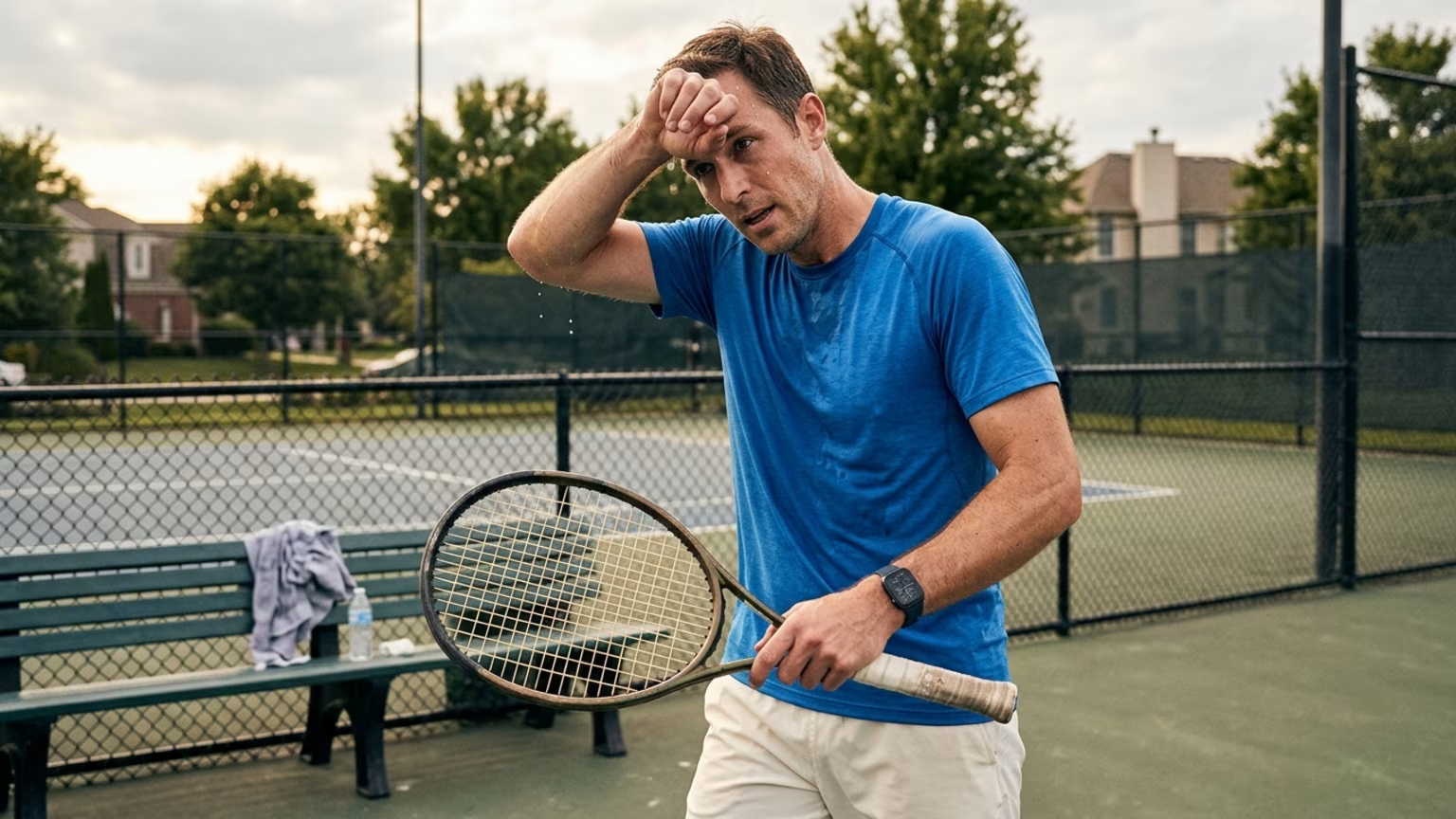
In late 2026, Oura analyzed wearable data to see how recreational tennis impacts heart health and recovery. Learn what this means for your athletic longevity.
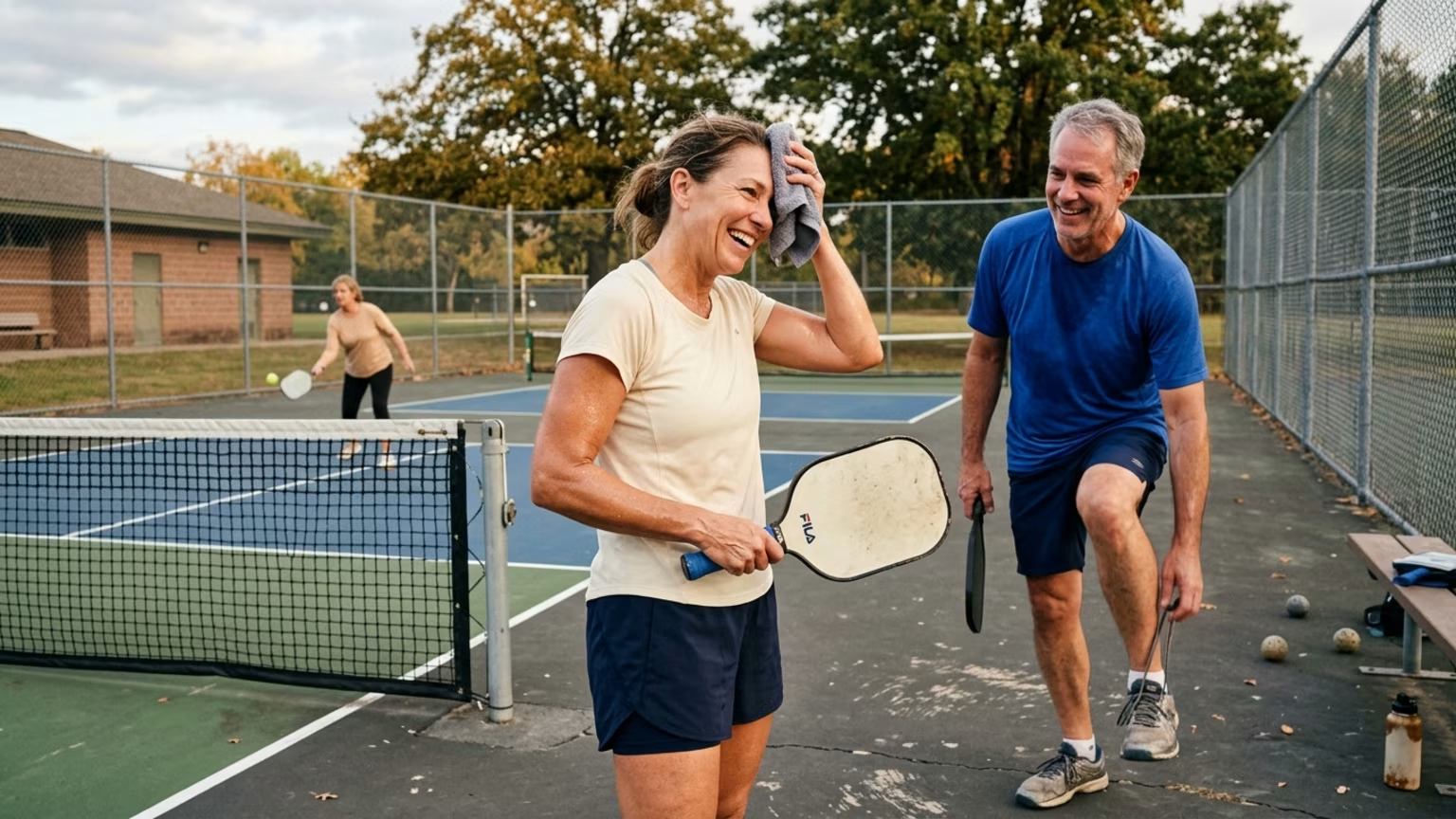
Recent guidelines emphasize gradual progression, dynamic warm-ups, and scheduled recovery to help adult racquet sports players maintain athletic longevity.
Read practical guidance for better movement, smarter preparation and a game that keeps working for you.
explore the Blog
