

The 2026 National Masters of Padel in Monterrey introduces structured veteran divisions, giving older players new pathways for competitive athletic longevity.




Rain tapped lightly against the clubhouse windows while a few players stretched tight hamstrings on the blue turf. We had just finished a heavy session of baseline drills. The conversation quickly turned to the struggle of entering open tournaments against much younger opponents.
How do adult players plan a competitive calendar when local open events demand too much physical recovery? The addition of structured veteran divisions at national tournaments provides a clear path to compete against peers of similar ages and physical capacities.
The Federación Mexicana de Pádel scheduled the 2026 National Masters of Padel for August 27 to 30, 2026. The event took place at Power Padel in Monterrey. The reported tournament structure spans youth, adult, and veteran divisions. This includes specific categories from 10 and under divisions up to players over 60 years old.
According to am.com.mx, qualification requires a consistent season on the local circuit. Guanajuato’s pairs earned their places after ranking among the national top 10 in their respective divisions. The report says that champions and runners up in each category receive direct Pan-American qualification. This structure provides a tangible reward for adults who manage their workload throughout the competitive year.
The Guanajuato contingent spans several adult divisions across the tournament. They have pairs competing in the highest level men’s category down to the fifth category for women. This broad structure gives recreational players multiple levels between beginner participation and the elite competitive tier. Grouping youth development alongside senior competition shows that the sport values participation at every stage of life.
Having a national top 10 ranking pathway means players can plan a truly structured season. They can build their schedule around specific qualifying events rather than playing random club matches. A clear calendar helps athletes peak for important weekends while scheduling adequate rest blocks. Planning a sustainable tournament calendar for racquet sports is much easier when the federation provides a predictable path.
Age specific categories respect the physical realities of older athletes. The Guanajuato delegation lists Alejandra Aguilar in the women’s 40 plus division. Porfirio Muñoz and Fernando Rubio are listed in the men’s 60 plus division. These divisions confirm that a player’s competitive career does not necessarily end when they leave open age competition.
I remember finishing a tough two hour padel match on a cold Tuesday night and waking up the next morning feeling like my lower back was locked in concrete. For a long time, I just accepted this as the price of playing hard in my forties. But once I started spending just ten minutes on targeted hip mobility before heading to the club, the stiffness almost completely vanished. It taught me that we do not have to accept pain as a default state of aging.
Veteran categories encourage a similar mindset of thoughtful preparation. A player can seek a competitive level that matches their current skill and physical experience. Returning players can rebuild match tolerance in an appropriate age group before targeting a high level national event. This gradual approach protects the body from sudden spikes in acute physical workload.
We constantly see players ignore minor aches until they become severe movement limitations. Taking a proactive approach to physical maintenance is the only way to sustain tournament volume. Routine mobility work is just as important as practicing your overhead smash. Treating your body with respect allows you to handle competitive stress with much greater ease.
Different racquet sports place different demands on aging joints. Padel requires frequent rotational movements and low defensive digging near the back glass. Pickleball demands short bursts of lateral quickness near the kitchen line. Tennis requires repetitive overhead serving and longer sprints across the baseline.
A 2026 scoping review summarized by Lifestyle Reviewer evaluated 14 studies involving 3,581 padel players. The review reported estimates of approximately three injuries per 1,000 playing hours and eight injuries per 1,000 matches. Elbow and shoulder issues are particularly prominent among regular players. These figures remind us that padel requires careful physical preparation and essential footwork skills.
Players moving between these sports must manage their load carefully. Proper conditioning for tennis might not fully prepare your shoulders for repetitive padel smashes. It is crucial to adapt your preparation for each specific sport. We recommend using a 12 minute court ready warm up before any intense match.
Despite the specific injury risks of improper training, the overall health benefits of racquet sports remain well documented. A Danish observational study published by Women's Health followed 8,577 adults and reported an association between tennis participation and longer estimated life expectancy. The key is staying healthy enough to keep playing consistently over the years. We want players to maintain their court time without relying on painkillers or excessive rest days.
Older players should monitor their perceived exertion alongside their match results. Tracking sleep quality and morning soreness provides vital clues about your recovery status. If stiffness worsens over a tournament weekend, you must adjust your training load immediately. Pushing through joint pain to earn ranking points usually leads to forced time away from the court.
Partnership dynamics also play a massive role in managing tournament fatigue. You should agree on travel expectations and recovery priorities before the season begins. A compatible partner who understands your physical limits is incredibly valuable. Strong communication allows teams to share the physical burden during long matches.
Managing volume requires a strict look at your weekly playing hours. Padel players often play several consecutive days without realizing the cumulative stress on their elbows. We advise keeping a simple log of your court time and recovery days. Taking two full rest days per week can drastically reduce your risk of overuse injuries.
Lifting weights is a strict requirement for senior racquet athletes. You must build muscle capacity in your lower body to handle aggressive court movements. Simple exercises like split squats prepare your knees for sudden changes of direction. This strength foundation helps you build a tournament calendar that protects your recovery and ensures you arrive feeling fresh.
Age specific national tournaments provide older athletes with a rewarding way to test their skills safely. Managing your match workload intelligently ensures you can chase titles without sacrificing your athletic longevity.
Follow Evercourts for practical insights on tennis, pickleball and padel performance, movement, recovery and healthy ageing. Stay connected for new articles, research-led guidance and ideas to help you play well and keep playing for years.


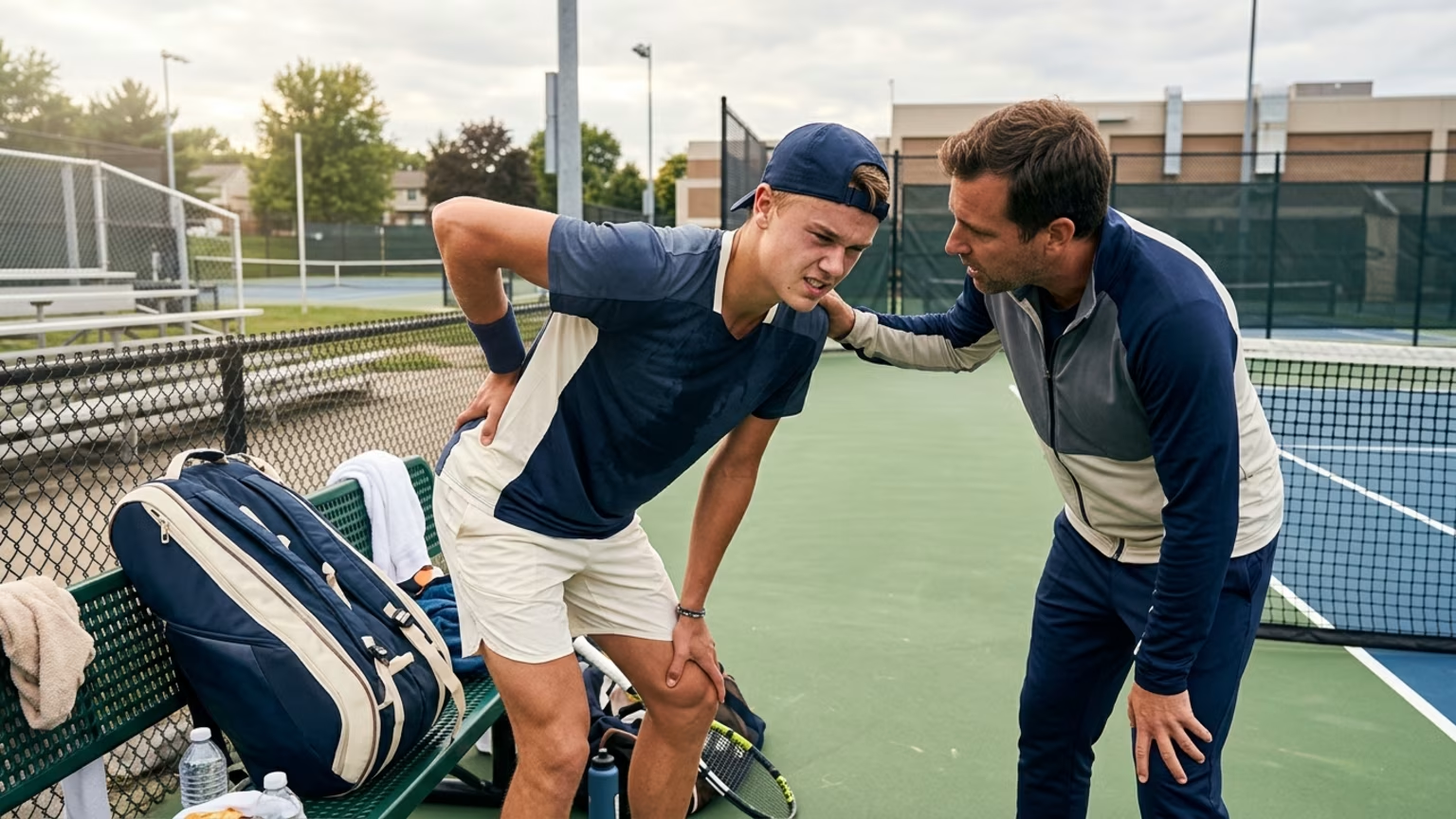
Holger Rune withdrew from the European Open with a back problem. The facts behind his decision and a grounded perspective for recreational players.

The Dink’s October 17 guide emphasizes deep returns, ball-height decisions and positioning against faster pickleball opponents.

A new report outlines padel and tennis gear trends. Learn how to assess adjustable rackets, sensor feedback and smart-court claims.
Read practical guidance for better movement, smarter preparation and a game that keeps working for you.
explore the Blog
