

Efficient court movement quality and positioning help adult players maintain athletic longevity and play safely across tennis, pickleball, and padel.




Movement quality in racquet sports is the ability to arrive at the ball in balance by using controlled preparation rather than relying on raw sprinting speed. Tennis, pickleball, and padel players often mistake good footwork for running as fast as possible toward the ball. True court coverage relies on efficient setup steps, timely split-steps, and deliberate deceleration mechanics. This approach helps players use less energy while reaching the correct hitting position consistently.
Mastering these movement fundamentals creates a reliable foundation that travels across different court sizes and varied playing surfaces. A player who prioritizes posture and precise timing over frantic scrambling will naturally find better, more stable hitting positions. Evercourts focuses on this exact distinction to help adult players perform well today and sustain their abilities over time. Efficient court movement is a highly learnable skill that completely changes how you experience competitive play.
Many recreational players spend hours perfecting their swing mechanics while entirely ignoring their lower body coordination. However, the best backhand in the world loses its effectiveness if you arrive late and off-balance. By focusing on controlled, deliberate steps, you build a versatile skill set that applies to any racquet sport. Good movement makes the game feel slower, giving you more time to execute your chosen strategy.
Racquet sports require repeated explosive efforts and constant changes of direction that challenge the lower body. Tennis, pickleball, and padel all force players to accelerate rapidly, brake suddenly, and pivot within tight spaces. These intermittent bursts of activity demand significant output from the neuromuscular system. Muscles and joints must absorb force during deceleration just as much as they generate power for sprints.
Each sport presents unique physical challenges that tax your energy systems differently. Tennis often requires longer lateral sprints across the baseline followed by heavy, sudden braking to recover. Pickleball features a smaller court, but the relentless small adjustments and rapid weight transfers place constant stress on the legs. Padel introduces complex rotational movements, backpedaling for lobs, and explosive jumps near the glass. Despite these variations, the core demand for balanced deceleration remains identical across all three courts.
Moving efficiently across any court means managing these repetitive physical loads point after point. When players rely entirely on speed to retrieve balls, they amplify the stress on their knees and ankles. The continuous cycle of jumping, lunging, and recovering can quickly lead to early fatigue if a player lacks structured habits. Developing better stopping skills helps reduce this physical toll while improving court positioning.
A solid foundation in essential footwork skills protects the body during sudden stops. Effective deceleration prevents the momentum of a fast sprint from overwhelming tired joints. Players must learn to balance intense physical demands with smart, economical movement strategies.
Sports science provides valuable insights into court coverage, but players must separate specific study contexts from universal rules. Research often examines isolated variables rather than the holistic, dynamic match environment. A practical example comes from an article by Dominating Tennis reporting on a 2022 hard-court study. This specific study looked at 12 male experts returning first serves to measure their split-step timing.
According to Dominating Tennis, these 12 expert players recorded mean times of 131 milliseconds for their first-foot landing after server contact. Their second-foot landing averaged 156 milliseconds after contact in this controlled environment. The players then initiated lateral movement at an average of 177 milliseconds following the serve. While these numbers illustrate incredible elite reaction speeds, they are not practical timing targets for recreational players.
A tennis-training page on the same site recommends starting the split-step just as an opponent prepares to hit. However, current evidence does not establish one perfect timing cue that works for every adult player across all racquet sports. The focus should remain on balanced preparation rather than trying to match elite millisecond benchmarks. Trying to force expert timing onto recreational play often leads to rushed movements and poor balance.
The scientific understanding of these fast-growing sports continues to expand, particularly regarding older participants. BusinessUpturn reports that a 2024 scoping review examined 27 distinct studies on adult pickleball participation. The review found potential health and fitness benefits, especially for older players looking to stay active. However, the publication also noted that the overall evidence base for pickleball remains in a developing stage.
This developing research landscape means players should focus on adaptable, pragmatic movement principles rather than rigid rules. A holistic approach prioritizes smooth transitions and controlled preparation over chasing unproven fitness trends. We know that maintaining good foundational mobility supports better joint health on the court. Structuring your pre-match routine to protect key joints is an excellent way to prepare for these dynamic sports.
Understanding how to move better directly supports a player's athletic longevity in racquet sports. When adults prioritize efficient court positioning, they reduce the unnecessary physical wear associated with frantic scrambling. This intentional shift from pure speed to calculated court coverage allows players to stay active for years. Good mechanics ensure that the body absorbs forces evenly during sudden direction changes and heavy landings.
Healthy aging on the court requires treating movement quality as a primary training goal rather than an afterthought. Players who refine their deceleration skills avoid the jarring impacts that often sideline enthusiastic adults. Incorporating structured movement routines helps maintain the physical capabilities needed for long matches and busy tournament weekends. It is much easier to sustain a sport when your body moves with economical precision.
Conserving energy through better footwork also pays immediate dividends during the late stages of a tough match. When you arrive at the ball in balance, you use less upper-body effort to control your shots. This efficiency delays the onset of fatigue and keeps your decision-making sharp when the score is close. Learning how to manage racquet sports workloads is crucial for maintaining this high level of execution.
Many players find that simply slowing down their practice sessions improves their overall movement awareness. Executing footwork patterns at half-speed helps you recognize where you might be losing your balance. This deliberate practice translates perfectly to the chaotic environment of a real match. Focusing on your stability before increasing your pace is a proven way to develop lasting athletic skills.
Building a sustainable athletic routine also involves knowing how daily activities affect your time on the court. Recognizing that everyday exercise habits play a significant role in your match preparation is a vital step. A calm, methodical approach to footwork practice translates into smoother, less taxing competitive matches. You can protect your long-term health while simultaneously becoming a more difficult opponent to beat.
Even with excellent movement habits, adult players must pay close attention to how their bodies respond to court time. Persistent stiffness or localized discomfort that lasts for several days after playing is a clear signal to seek help. If you experience sharp pain during sudden stops or changes of direction, you should consult a qualified physiotherapist. Attempting to play through acute discomfort often changes your natural movement mechanics and creates secondary joint problems.
Older players or individuals returning from a long break should consider consulting a healthcare provider before increasing match volume. Medical guidance is especially important for adults with a history of cardiovascular concerns or previous joint surgeries. A professional can help you develop a safe loading plan that respects your current physical capacity and fitness level. Prioritizing your health ensures you can keep enjoying tennis, pickleball, and padel safely for decades.
Players must remember that early intervention is the best strategy for managing common sports injuries. Ignoring warning signs usually leads to longer recovery periods and extended time away from the courts. A good physiotherapist will offer specific, evidence-based modifications to keep you active while you heal properly.
Evercourts provides this research-led context to help you make informed decisions about your racquet sports journey. Proper physical preparation, realistic movement expectations, and timely professional advice will keep you performing your best. Stay balanced, respect your body's limits, and keep enjoying the court.
Follow Evercourts for practical insights on tennis, pickleball and padel performance, movement, recovery and healthy ageing. Stay connected for new articles, research-led guidance and ideas to help you play well and keep playing for years.


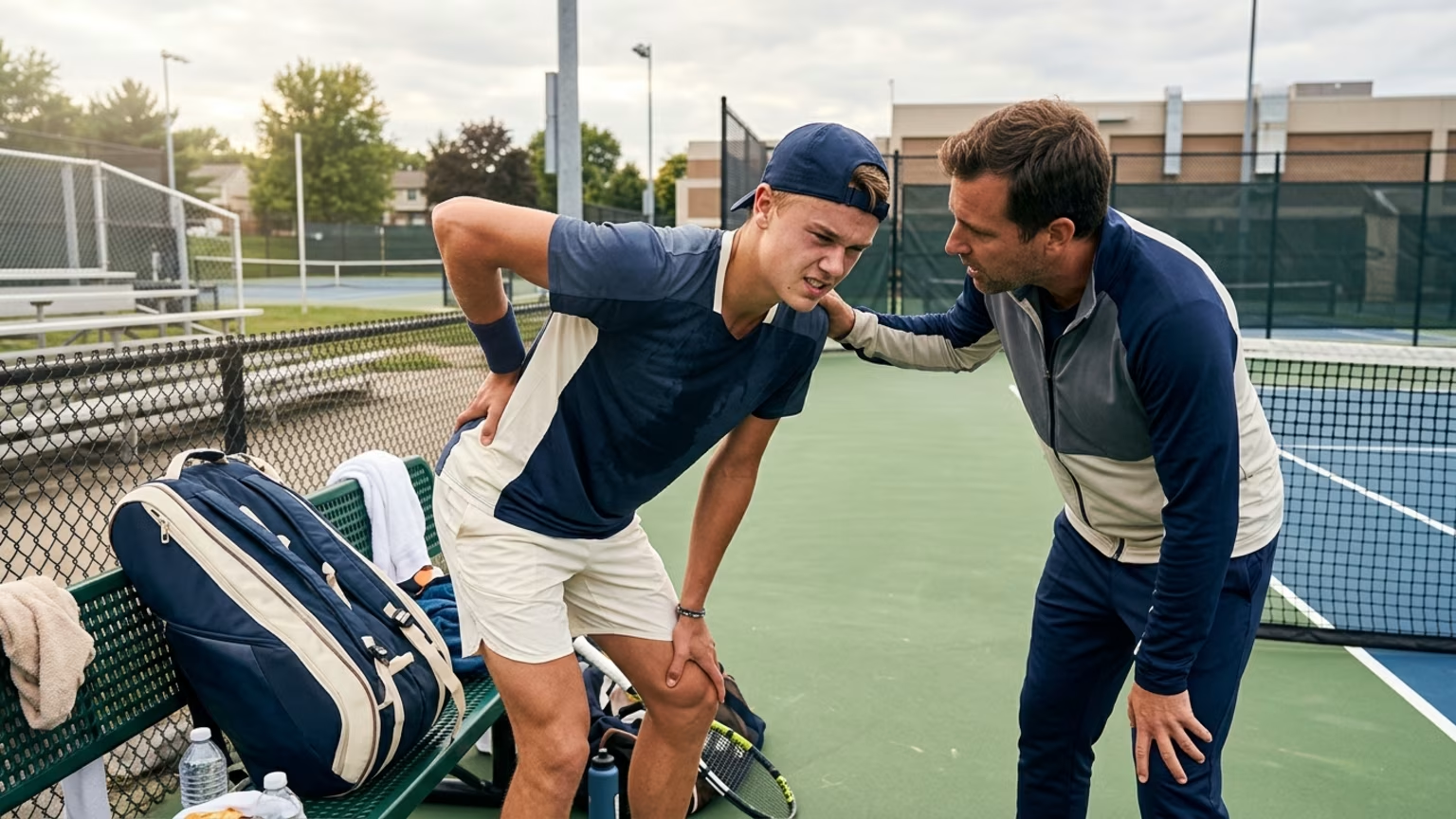
Holger Rune withdrew from the European Open with a back problem. The facts behind his decision and a grounded perspective for recreational players.

The Dink’s October 17 guide emphasizes deep returns, ball-height decisions and positioning against faster pickleball opponents.

A new report outlines padel and tennis gear trends. Learn how to assess adjustable rackets, sensor feedback and smart-court claims.
Read practical guidance for better movement, smarter preparation and a game that keeps working for you.
explore the Blog
