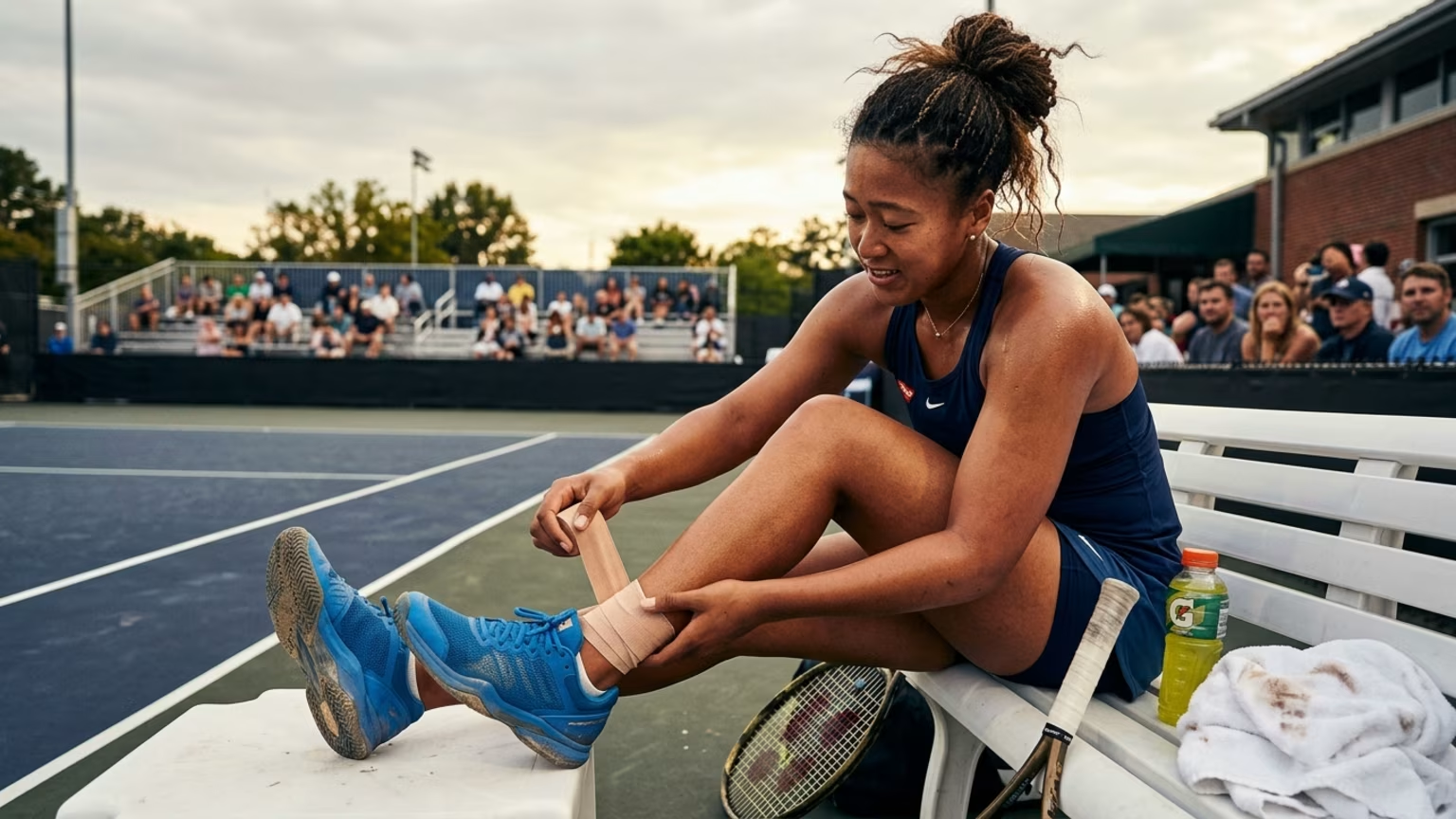

Naomi Osaka managed a persistent Achilles issue during the 2026 US Open. For recreational players, her medical timeout highlights the need for load management.




During the 2026 US Open, Naomi Osaka requested a medical timeout for a persistent Achilles problem during her third-round match against Elise Mertens. Osaka stated that she was managing a nagging issue that had not fully resolved since the grass-court season. The intervention occurred in the third set of a grueling competition. Osaka eventually secured the victory and advanced to the fourth round of the tournament.
The No. 13 seed faced a visible physical hurdle during the later stages of her third-round matchup. The US Open reported that the discomfort involved the left Achilles area of Osaka, contrasting with an earlier right-foot injury that forced her retirement at Bad Homburg. A physio arrived during the timeout to massage the affected area on the court. The medical professional then applied Tiger Balm to the region.
Osaka noted that these interventions appeared to provide some temporary relief during the match. However, she admitted to questioning whether her previous time away from competition was adequate to resolve the problem. She expressed reluctance about requesting medical assistance during active competition, worrying that it could signal vulnerability to her opponent. This situation created a psychological disadvantage that she had to overcome.
The episode highlights the complex dynamic between physical limitation and competitive confidence. The medical break happened after Osaka had fallen behind in the final set. Following the treatment, she shifted her mindset and began playing more aggressively. The US Open reported that she won three consecutive games right after the timeout before being scheduled to face reigning Australian Open champion Elena Rybakina in the fourth round.
Elite professionals have immediate access to medical staff during high-stakes tournaments. They make calculated decisions to survive a specific match using short-term comfort measures. Recreational players should not treat these strategies as long-term solutions for tendon health. The available event coverage does not include an independent physician assessment or a confirmed diagnosis of tendinopathy for Osaka, making her use of Tiger Balm a report of immediate subjective experience.
Rehabilitation guidance emphasizes that recovering from tendon issues is about restoring capacity. According to a reputable rehabilitation source, the goal is building tolerance for walking, exercise and sport. Simply resting until pain disappears is not an effective long-term strategy for court athletes. Finding a middle ground between excessive rest and excessive loading is critical for joint health, as symptoms may require temporary activity modification while a structured rehabilitation program rebuilds tendon tolerance.
Advancing load too quickly can actually increase soreness and delay overall progress. For adult players, the physical demands of racquet sports heavily complicate the recovery process. Tennis, pickleball and padel all require recurring push-offs, short sprints and hard braking. Players must also manage intense lateral movement and frequent direction changes.
A tendon that feels fine during ordinary walking may struggle under the stress of a competitive match. This reality aligns with the sport-specific progression outlined by rehabilitation experts. The recommended progression starts with supported or isometric heel-raise work before moving to more demanding calf strengthening. Players should then advance to hopping, change-of-direction drills, running progressions and sport-specific movement.
These later stages should only occur when symptoms and function permit. Assessing readiness requires looking beyond pain levels during a single short session. Calf strength, balance, movement control and confidence also matter immensely for return to play. Tolerance later that same day and the next morning provides crucial feedback for athletes.
As we evaluate how to build better routines, personal experience offers a stark lesson. When I first started playing pickleball, I noticed how many people skipped warming up entirely. They would jump straight out of their cars and right up to the kitchen line. I tried doing that and immediately pulled a calf muscle.
Pickleball requires just as much explosive lateral movement as tennis, just in a tighter space. Since then, I always spend five minutes doing dynamic lunges and ankle rolls. It changes everything about how confident I feel pushing off the baseline. Recreational players must view their routines through a similar lens of preparation and load management.
Taking a physical therapy-first approach helps players build actual resilience instead of masking symptoms with balms. Modifying match frequency and repeated tournament days can give tendons the necessary time to adapt. Players should preserve safe movement where possible rather than assuming that total inactivity is always the answer. Following a comprehensive guide to Achilles and calf preparation is far more effective than trying to play through pain.
The specific match statistics provide concrete context for the physical demands placed on players. Osaka entered the tournament as the No. 13 seed and faced immense pressure in the third round. Her match against Mertens required a full three sets to determine a winner, ending with a final score of 6-3, 3-6, 7-5 in favor of Osaka.
The momentum shift following her medical timeout was a highly visible turning point. After trailing in the third set, Osaka won three consecutive games to reclaim the lead. She finally closed out the demanding match on her fourth match point, securing the victory after playing through multiple crucial points.
The way top athletes navigate nagging physical issues will remain a central storyline this season. We expect to see more players carefully balancing tournament schedules against the need for tendon recovery. Understanding how to navigate workload management and injury recovery is becoming essential for longevity in racquet sports. A return to jumping or competitive sport should never rely solely on whether pain has temporarily disappeared.
Rehabilitation guidance identifies calf strength, balance, movement control and confidence as equally relevant considerations for readiness. If symptoms persist or worsen, players must seek professional assessment rather than increasing match volume. We anticipate that structured protocols and formal basics training for beginner injury prevention will become standard practice across all competitive levels. Managing load intelligently today ensures that players can continue enjoying the court for years to come.
Follow Evercourts for practical insights on tennis, pickleball and padel performance, movement, recovery and healthy ageing. Stay connected for new articles, research-led guidance and ideas to help you play well and keep playing for years.


Understand how coverage, playing format and wall rebounds shape tennis, pickleball and padel movement, with research context for long-term play.

Plan the move from league night to tournament weekend with practical answers on practice, recovery, travel, meals and match-day arrangements.

Put tennis point timings in context, track court and strength work, and compare your activity without borrowing workload targets from other sports.
Read practical guidance for better movement, smarter preparation and a game that keeps working for you.
explore the Blog
