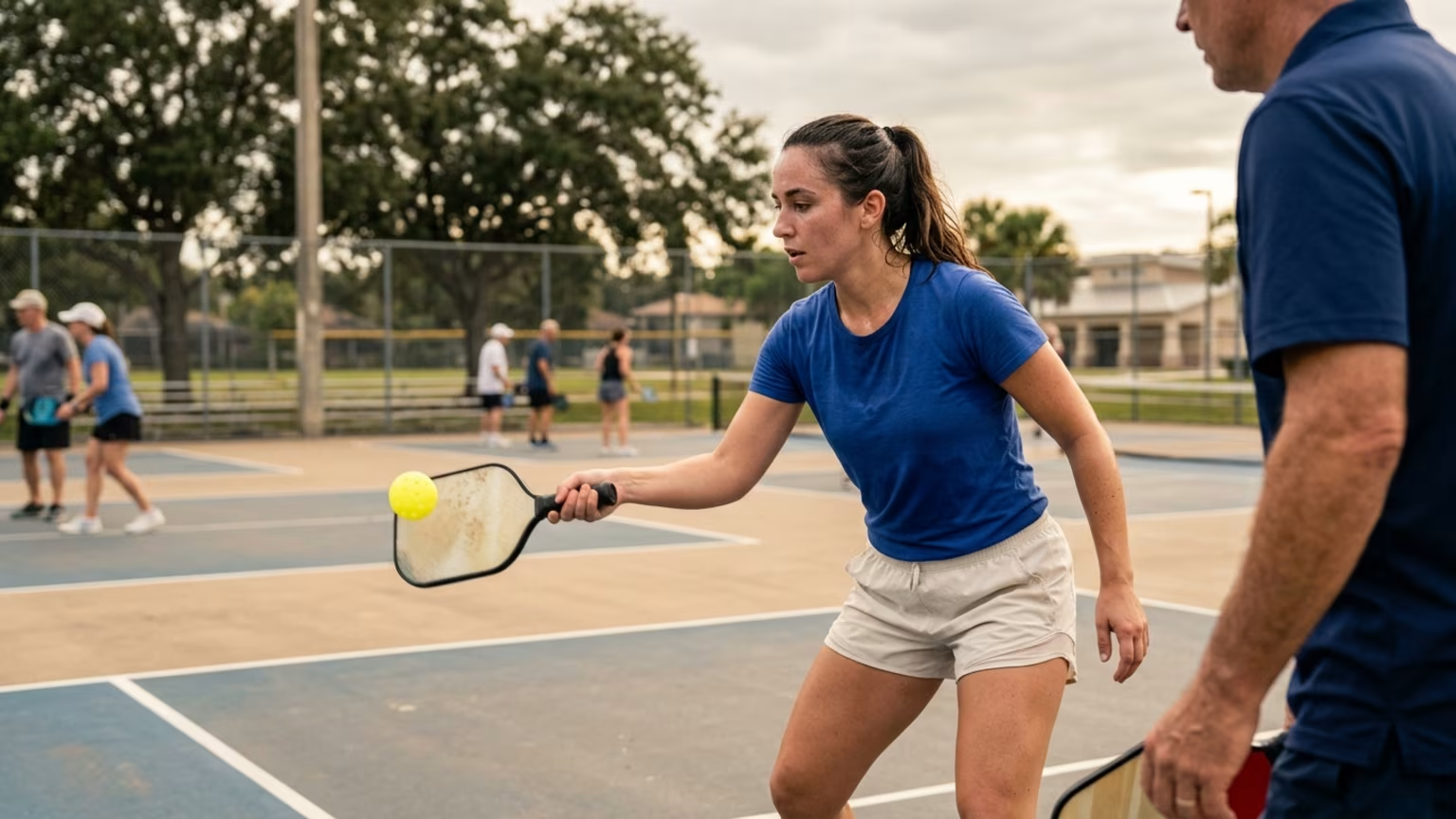

Pickleball coaches and clinicians urge recreational players to use formal basics training, proper footwear, and structured warm-ups to prevent joint injuries.




In a recent feature published by Vogue Philippines, pickleball coach Paolo Enriquez warned that poor technique among beginners is contributing to a wave of joint injuries. The coach urged new players to seek formal instruction on grip, movement patterns, and warm-up routines rather than relying on informal advice. This coaching push arrives as a ValuePenguin analysis of U.S. Consumer Product Safety Commission data estimated that emergency-room-treated pickleball injuries surged to more than 31,000 in 2025. That figure marks a steep climb from about 8,300 reported injuries in 2018.
The Vogue Philippines feature highlights a very common trap for eager new players. The sport is highly accessible, but improper play can contribute to shoulder bursitis, sprains, knee injuries, and pickleball elbow. Enriquez recommends that beginners take structured classes to learn the proper grip and swing mechanics early on. Formal coaching helps players avoid unnecessary wrist and elbow loading while coordinating their swing.
Beyond technique, the feature outlines highly practical equipment strategies for basic injury prevention. Enriquez advises beginners to borrow several paddles before making a purchase. Testing different weights, grip sizes, and balances during low-pressure play helps a new player find a controllable paddle. This step prevents players from simply buying the most expensive or powerful model before they understand their own mechanics.
When players borrow paddles, they can actively assess how different grip sizes impact their forearm tension. A grip that is too small requires excessive squeezing, which directly contributes to the onset of pickleball elbow. Conversely, testing heavier paddles during easy rallies helps a player decide if they have the shoulder strength to maneuver it safely. These small equipment choices make a massive difference in managing stress on the upper body over a long match.
Enriquez also identifies stable court footwear as an essential starting point for new players. Beginners do not necessarily need shoes marketed exclusively for pickleball. The coach notes that tennis, badminton, or basketball shoes can work well if they meet individual fit and lateral stability needs. Footwear must provide traction, but it cannot compensate for poor stopping mechanics or a lack of physical conditioning.
Medical professionals strongly echo this need for deliberate preparation. A sports-medicine physician quoted in regional health reporting advised players to warm up thoroughly and allow their bodies to adapt gradually. An orthopedic surgeon quoted by The Kansas City Star stated that stretching and dynamic movement before play are highly effective ways to reduce injury risks. Other orthopedic specialists recommended building core, hip, and shoulder strength to support proper posture.
For the adult recreational player, the low barrier to entry in pickleball often masks the physical demands of the game. Elite athletes treat court movement as a precise skill that requires a structured physical training plan. In contrast, many recreational beginners step out of their cars and immediately start a high-intensity open play session. This mismatch between expectation and physical preparation is exactly where the majority of injuries happen.
To protect their joints, beginners should treat their first few sessions as skill development rather than a fitness test. The Vogue Philippines article recommends starting with friends or players at a similar skill level. Players should take a few lessons and build basic competence before they ever enter open play. This approach helps players learn efficient movement patterns and basic positioning without the pressure of a fast-paced match.
A proper warm-up routine is just as important as learning the rules of the game. Clinicians recommend a short and progressive routine to prepare the body for competition. Players should begin with easy general movement before adding dynamic mobility for the shoulders, wrists, hips, knees, and ankles. Following this, they can rehearse specific actions like lateral stepping and controlled rallies.
A hospital health source specifically advised players not to get out of a car and immediately begin a full-speed match. The transition from a sedentary state to explosive court movement is a primary trigger for soft tissue injuries. Proper preparation ensures that the nervous system is ready to handle sudden changes in direction. This targeted preparation to protect joints is essential for anyone looking to maintain athletic longevity.
Sports-medicine experts suggest that static stretching is actually more appropriate for a cooldown than a pre-match routine. Players need to prime their muscles for quick reactions and sudden stops. This progressive approach is especially important for cross-training across varying court surfaces to ensure proper joint stability. Adult players who switch between sports must understand that each game places unique loads on the body.
A slow progression into match play helps players recognize the difference between normal muscle soreness and acute warning signs. Repeated elbow or wrist pain should always prompt a reduction in playing volume. Furthermore, lower-body pain after awkward stopping or reaching requires professional assessment rather than an attempt to push through it. Listening to the body is a critical part of managing overall court workload.
The sheer scale of recreational participation helps explain why injury prevention is gaining so much attention. Recent reporting by KBIA, citing Sports & Fitness Industry Association data, noted that approximately 24 million Americans played pickleball annually. While this massive player base highlights the sport's appeal, the rapid surge in casual participation brings a corresponding rise in clinical visits.
The estimated increase to more than 31,000 emergency-room-treated injuries in 2025 only captures a fraction of the issue. These U.S. injury figures exclude cases managed in primary care, sports-medicine clinics, urgent-care centers, or at home. A 2024 review published in the Journal of the American Academy of Orthopaedic Surgeons directly addressed this broader trend. The paper, titled "Pickleball: A Standard Review of Injury Prevalence and Prevention in a Rapidly Growing Sport," examined how the clinical community can best respond.
The rapid expansion of the sport is also highly visible in international markets. The Vogue Philippines feature stated that the Philippine Pickleball Federation counted more than 46,400 registered players, almost 500 affiliated clubs, and more than 420 playing venues. The same article noted a 1,213 percent increase in DUPR users in the Philippines, describing the country as the fastest-growing market globally. However, the article did not name a public source to support its claim of more than 50 million pickleball players worldwide.
This global growth has triggered a sharp rise in dedicated scientific interest. A bibliometric analysis published in the Journal of Human Sport and Exercise reported an exponential increase in pickleball research output after 2024. The analysis found that U.S.-based researchers alone accounted for 172 publications and 443 citations. Much of this academic work focuses squarely on injury risk and health promotion.
The bibliometric analysis identified two major research strands driving this new wave of publications. One strand heavily explores injury risk, documenting the common sprains and joint issues seen in clinics. The other strand focuses on health promotion, studying how regular play improves cardiovascular health and social well-being for aging adults. This dual focus highlights the balancing act required to keep players active while minimizing clinical risk.
These studies emphasize that pickleball is an excellent avenue for healthy aging when played responsibly. However, recreational accessibility should never be confused with automatic physical preparedness. Players must actively prepare their bodies for the unpredictable nature of racquet sports. This includes understanding the mechanics of the sport and scheduling court sessions to allow for adequate recovery.
As participation continues to scale, expect local clubs to formalize their introductory programs over the next season. The casual approach of learning through open play will likely be replaced by mandatory beginner clinics that focus heavily on technique, footwear, and warm-up routines. Facilities will start prioritizing proper onboarding to keep their courts full and their players healthy.
This shift will help integrate adult players more safely, aligning with broader goals of athletic longevity. By treating pickleball as a true sport that requires instruction and preparation, the recreational community can significantly reduce injury rates. Coaches and clinicians will continue to lead this transition, ensuring that players build the core, hip, and shoulder strength needed to stay on the court for years to come.
Follow Evercourts for practical insights on tennis, pickleball and padel performance, movement, recovery and healthy ageing. Stay connected for new articles, research-led guidance and ideas to help you play well and keep playing for years.


Practical answers on court shoe surfaces, fit, lateral support and wear for tennis, padel and pickleball, without injury-prevention promises.
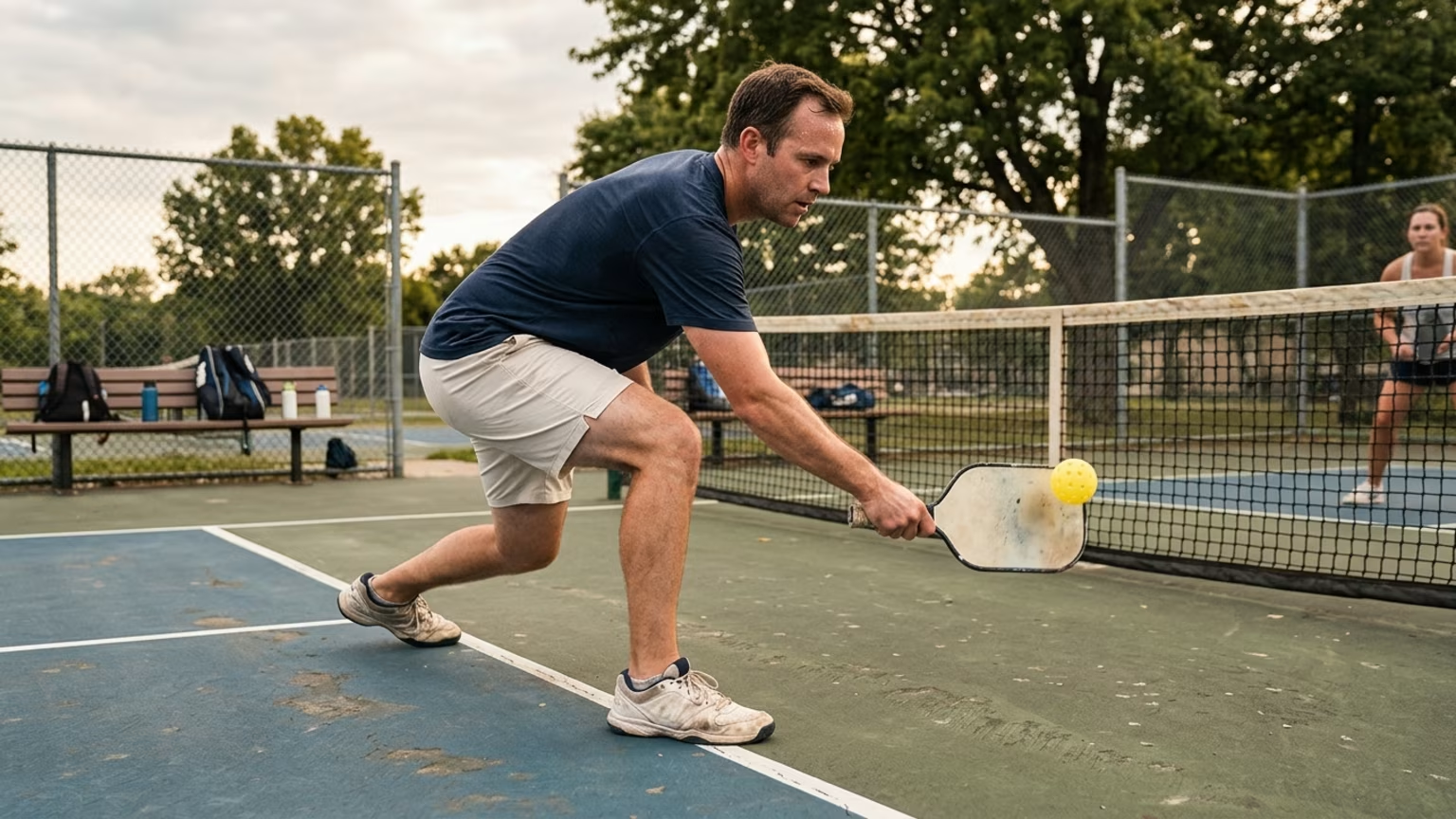
Understand kitchen-line mobility, use a modest comfort self-check, and consider simple movement options without treating flexibility as an injury forecast.

A practical guide to padel fatigue, flexible pacing, hydration considerations and symptoms that mean stopping play and seeking care.
Read practical guidance for better movement, smarter preparation and a game that keeps working for you.
explore the Blog
