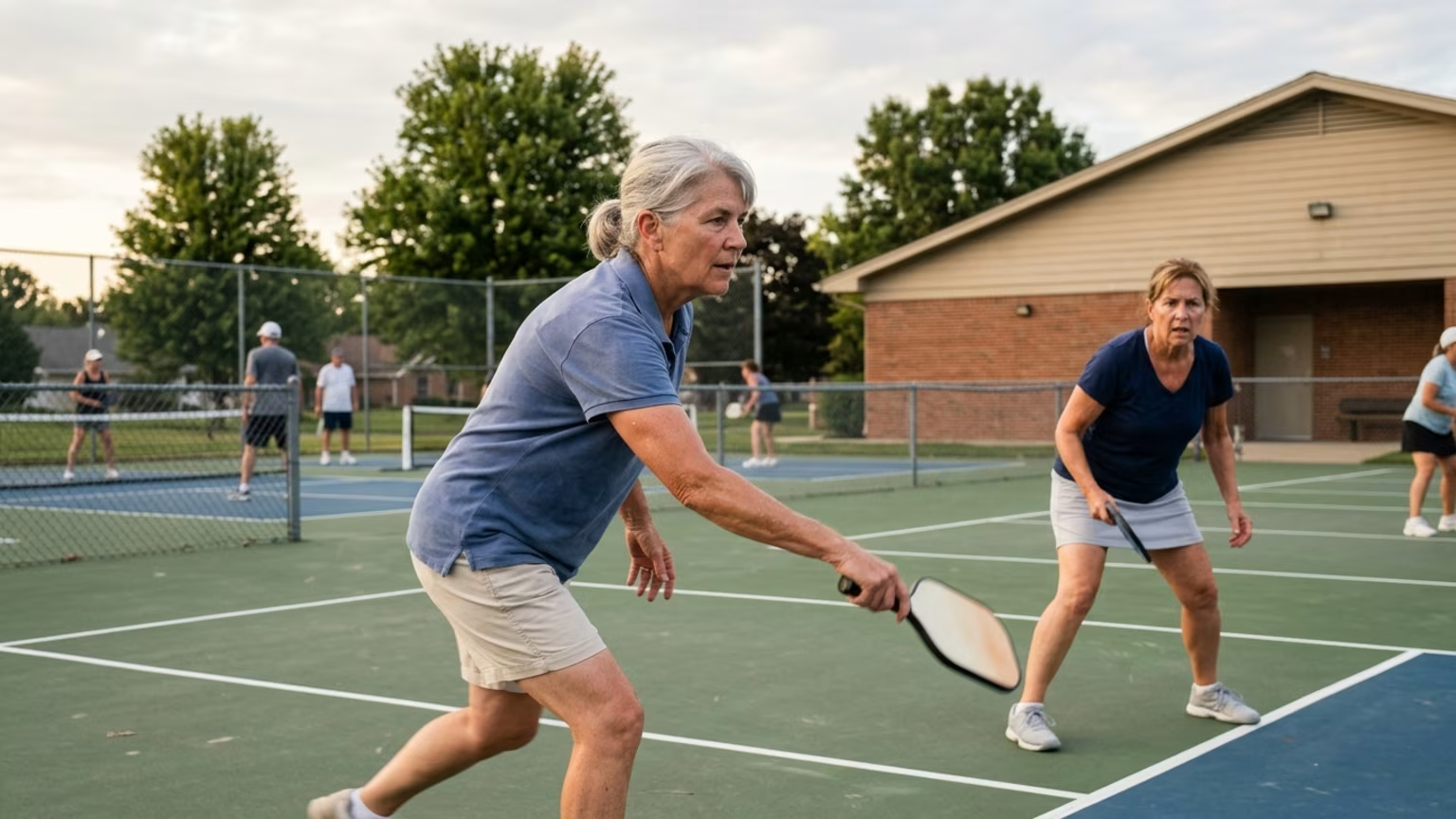

The National Senior Games Association argues that older racquet athletes need physical preparation, not avoidance, to reduce injury risks and build capacity.




On September 29, 2026, the National Senior Games Association published a new position piece titled "Why Standard Medicine Fails Senior Athletes: The Story Behind SAFE." Written by physical therapist Dr. Becca Jordre, the article details the creation of the Sustained Athlete Fitness Exam. This assessment is specifically intended for athletes age 50 and older. The core message focuses on preparing older players for competition rather than restricting their activity.
Jordre traces the origins of the Sustained Athlete Fitness Exam back to 2010. During the South Dakota Senior Games that year, athletes showed little interest in a proposed "Elderly Fitness Exam." The original naming and approach failed to resonate with older competitors who viewed themselves as capable athletes. Recognizing this disconnect, Jordre began years of targeted physical screening and data analysis to develop the current assessment framework known as SAFE.
The National Senior Games Association describes this exam as a specific way to measure athletic power, speed, dynamic balance and agility. To scale the program, the association says it has trained hundreds of physical therapy volunteers. These specialized volunteers conduct screenings across the country at various competitive events. Through these widespread efforts, the organization has engaged thousands of athletes using the SAFE framework.
While the recent article outlines the core fitness domains, it omits several specific structural details. The publication does not publish the assessment's individual tests or its proprietary scoring system. Furthermore, it does not provide the duration of the exam or a detailed clinical protocol. The primary goal is to evaluate athletes on capabilities relevant to their sports rather than providing a standalone testing manual.
Professional athletes receive medical care that focuses heavily on returning to competition safely. If a tour player gets hurt, their team immediately works on restoring power and agility. The medical staff builds a structured plan to prepare the athlete for specific match demands. For the adult recreational player, conventional medicine often takes a completely different approach.
Standard care frequently treats joint discomfort or muscle pain as an inevitable feature of age. Doctors might simply tell a weekend tennis or pickleball player to stop playing entirely. The new approach from the National Senior Games Association attempts to bridge this significant gap. Jordre argues that conventional care fails senior athletes by not addressing their specific athletic goals.
Age-related physical changes do make strength maintenance harder and recovery times noticeably longer. However, these natural changes mean adult players require more preparation rather than total withdrawal from sport. A player should not go straight from a period of inactivity to a heavy tournament schedule. Adult players must build their physical capacity before competition to keep enjoying racquet sports safely.
Different racquet sports place unique physical demands on the aging body during competition. Tennis requires significant baseline power and sustained speed to cover a larger court surface. Pickleball heavily tests dynamic balance due to the frequent forward transitions and rapid net exchanges. Meanwhile, padel demands exceptional agility to manage rebounds and continuous positional shifts.
A standardized assessment helps players identify which specific physical traits need more focus before returning to play. Dr. Jordre, who holds a PhD in her field, designed the assessment to address exactly these athletic requirements. The exam targets the critical movement patterns of court sports by evaluating power, speed, dynamic balance and agility. An older tennis or padel player cannot rely solely on cardiovascular endurance to prevent on-court injuries.
These athletes must actively maintain the explosive athletic traits that allow them to change directions safely during a rally. Instead of fearing injury, players can focus on structured and intentional physical preparation. Taking the time to prepare your body for the workload is far more effective than avoiding the game entirely. Athletes of all ages should train actively to meet the physical demands of their chosen sport.
The National Senior Games Association shared feedback from players who recently completed the Sustained Athlete Fitness Exam. The organization reports that 100 percent of participating senior athletes found the assessment valuable. Additionally, 95 percent of respondents said they learned something new about their physical capacity. These numbers highlight a strong positive reception among the targeted athletic demographic.
However, the published article does not supply respondent counts, survey dates or methodology details. It also lacks a clear response rate from the tested population. Therefore, these figures represent participant feedback reported by the association rather than independently established clinical results. They show high satisfaction but do not independently prove that the exam directly improves physical performance.
Broader injury data highlights the urgent need for targeted physical preparation in modern racquet sports. A September 2026 Racket Chronicle article analyzed U.S. emergency room visits for specific pickleball injuries. The data showed that adults 50 and older accounted for 83.4 percent of visits recorded between 2018 and 2025. This high percentage underscores why older athletes need proper conditioning before engaging in competitive play.
Within that specific 2018 to 2025 dataset, falls, slips or trips caused 43.1 percent of the recorded injuries. This context clearly shows why the Sustained Athlete Fitness Exam focuses heavily on dynamic balance and agility. When players lose their balance during rapid lateral movements, their risk of sustaining a serious injury increases. Improving agility and balance can help players maintain stability during fast-paced points on the court.
Physical training programs can help address these specific movement risks for older recreational players. The same Racket Chronicle piece describes a 10-week program combining strength, balance and change-of-direction training. The program improved change-of-direction speed and noticeably reduced the reported fear of falling among participants. Developing this physical confidence is a crucial part of maintaining athletic longevity in racquet sports.
The publication noted that the study was not randomized, and the fall difference at follow-up was not statistically significant. Still, the results support the idea that intentional training yields noticeable movement improvements over time. Adding simple resistance and mobility training remains a practical way to support healthy aging. Proper preparation builds the necessary physical foundation for years of continued recreational play.
The conversation around healthy aging in racquet sports is shifting rapidly toward performance-based metrics. Over the next season, expect more organizations to adopt specialized physical assessments like the Sustained Athlete Fitness Exam. Medical providers and coaches will likely move away from blanket rest recommendations for older players. Instead, they will focus on baseline testing for power, speed and balance before competition begins.
This transition means recreational players will need to prioritize off-court preparation more than ever before. The focus will be on building specific strength and conditioning habits rather than reacting to injuries after they happen. Building physical capacity through targeted training will become the standard approach for extending playing years. Smart, consistent preparation will replace fear as the primary tool for keeping older athletes active on the court.
Follow Evercourts for practical insights on tennis, pickleball and padel performance, movement, recovery and healthy ageing. Stay connected for new articles, research-led guidance and ideas to help you play well and keep playing for years.


An evidence check on sports supplements like tart cherry juice. Learn why racquet sports players should prioritize core nutrition over functional foods.
In late 2026, Oura analyzed wearable data to see how recreational tennis impacts heart health and recovery. Learn what this means for your athletic longevity.
Recent guidelines emphasize gradual progression, dynamic warm-ups, and scheduled recovery to help adult racquet sports players maintain athletic longevity.
Read practical guidance for better movement, smarter preparation and a game that keeps working for you.
explore the Blog
