

A 2026 Nationwide Compounding brief outlines customized topical and electrically assisted treatment options for tennis elbow and wrist tendinopathy.




In September 2026, Nationwide Compounding published a sports-medicine brief outlining customized topical and electrically assisted treatment options for elbow and wrist overuse injuries. The publication focuses on managing lateral epicondylitis and wrist-extensor tendinopathy across racquet sports. It establishes a practical framework for clinicians to match specific formulation vehicles to the exact phase of a tissue injury. This guidance helps physical therapists and compounding pharmacists coordinate better care for tennis and pickleball athletes.
The brief divides treatment into acute, subacute, and chronic phases. The acute phase covers the initial zero to 72 hours following a flare. The subacute phase lasts from 72 hours up to six weeks. The chronic phase describes symptoms persisting beyond six weeks.
During the acute phase, the article recommends using gel vehicles to deliver active ingredients. Nationwide Compounding cautions against applying heavy occlusive creams in the first 48 to 72 hours when swelling is present. A light gel is considered more practical during this early swollen window. For racquet-sport overuse injuries, the brief identifies a ketoprofen 15 percent gel as one specific option for acute flares.
The publication also discusses diclofenac paired with DMSO as another topical approach. For chronic presentations, it describes cream-based formulations and penetration enhancers as possible tools. The brief recommends regular clinical reassessment rather than indefinite renewal of any single formulation.
For refractory cases, the article highlights iontophoresis, which uses a low-level electrical current to move ionized drug molecules through the skin. The brief identifies dexamethasone sodium phosphate 0.4 percent aqueous as an example for this method. It notes that an iontophoresis formulation requires an aqueous base, the correct ionic form, an appropriate pH, and a therapeutic concentration. The article specifically states that commercial dexamethasone products may not meet those exact requirements.
Iontophoresis represents a significant step up from standard topical application. It requires specialized clinical equipment and a precise understanding of the specific drug compound. The formulation must be explicitly designed for electrical delivery. Using a standard commercial cream with an iontophoresis machine simply will not work.
Professional athletes typically have dedicated medical teams to manage injury protocols and regulatory compliance. The adult recreational player usually navigates tendon pain independently. This brief shows that treating elbow and wrist pain requires specific diagnosis rather than simply asking a doctor for a generic cream. A player must understand that the proposed concentration, vehicle, and application frequency are prescription-specific decisions.
When I first started playing pickleball, I noticed how many people skipped warming up entirely. They would jump straight out of their cars and right up to the kitchen line. I tried doing that and immediately pulled a calf muscle.
Pickleball requires just as much explosive lateral movement as tennis, just in a tighter space. Since then, I always spend five minutes doing dynamic lunges and ankle rolls. It changes everything about how confident I feel pushing off the baseline. That early mistake taught me the importance of respecting acute injury windows and physical demands.
Just like a pulled muscle, an inflamed tendon requires phase-appropriate care. Using a heavy cream on a fresh swollen wrist injury might trap heat or hinder absorption, which is why the brief favors gels initially. Recreational players should ask a clinician to identify the actual pain generator first, as tennis elbow and wrist pain are broad descriptions. Understanding the injury risks and prevention strategies compared between different racquet sports helps athletes identify these issues early.
The brief also emphasizes individualized assessment for special populations. Masters athletes, women, pregnant or breastfeeding athletes, and people taking anticoagulants require careful consideration. Age and polypharmacy can alter skin permeability and drug interactions. Players aged 40 or older should always disclose these factors before choosing a topical treatment.
Anti-doping compliance presents another major difference between everyday clinic visits and competitive reality. The article emphasizes that compounding pharmacy regulation and anti-doping regulation are separate systems. Compliance with FDA compounding requirements does not establish compliance with World Anti-Doping Agency rules. The 2026 WADA list states that topical NSAIDs are not prohibited, but corticosteroid status depends heavily on the route of administration.
Players competing in tested events must verify every active ingredient against current rules. The brief identifies DMSO as a special formulation nuance. While the article does not describe DMSO itself as prohibited, it cautions that its role as a penetration enhancer may affect the absorption of other ingredients. Athletes may need to secure a Therapeutic Use Exemption if a prohibited substance is medically necessary. Proper smart tournament planning to avoid racquet sports injuries involves understanding these recovery regulations completely.
The brief cites a Cochrane meta-analysis of 61 randomized controlled trials regarding acute musculoskeletal sports injuries. This analysis reports that topical NSAIDs provided greater than 50 percent pain reduction compared with a placebo. The specific NSAIDs mentioned include diclofenac, ibuprofen, ketoprofen, and piroxicam. This provides a baseline understanding of how these medications perform in general acute scenarios.
However, the article also acknowledges a 2026 systematic review that introduces important nuance. This review found that some topical NSAID formulations did not reach statistical significance in certain randomized-trial designs. Despite demonstrating a favorable safety profile, not every combination produces identical results.
The 2026 systematic review highlights why athletes cannot assume all topical products perform equally. Some formulations demonstrated safety but failed to show meaningful statistical differences compared to placebos. The effectiveness of a topical treatment relies heavily on the specific vehicle used to transport the active compound. A poorly designed cream might sit on the skin without ever reaching the inflamed tendon.
Topical performance depends heavily on the active ingredient, the concentration, and the application site. The vehicle and penetration enhancer also play a critical role in clinical outcomes. Compounding a product by changing a concentration or adding DMSO does not automatically guarantee better results than an approved commercial product.
The brief does mention a randomized trial involving a multi-ingredient topical combination. It does not supply enough detail on the study population or outcome size to support a market-wide conclusion. Efficacy claims must remain tied to specific conditions like acute flares rather than acting as a universal cure for chronic tendinopathy. Players should view these statistics as a reason to seek individualized medical care instead of self-prescribing.
We expect to see more adult players seeking localized drug delivery to avoid relying exclusively on oral medications. The appeal of customizable concentrations and ingredient combinations will likely grow across local tennis and padel clubs. Clinicians will increasingly focus on matching the exact delivery method to the specific tissue target. Players will need to treat these compounded formulations as serious medical interventions rather than casual recovery aids.
This shift means athletes must learn to use symptom relief as a supportive tool for active rehabilitation. Reducing elbow pain with a targeted gel should enable proper physical therapy rather than providing an excuse to play through mechanical failure. Consistent cross-training across courts and proper load management remain the true foundations of joint health. The focus moving forward will center on combining precise medical interventions with sustainable movement practices.
Follow Evercourts for practical insights on tennis, pickleball and padel performance, movement, recovery and healthy ageing. Stay connected for new articles, research-led guidance and ideas to help you play well and keep playing for years.


An evidence check on sports supplements like tart cherry juice. Learn why racquet sports players should prioritize core nutrition over functional foods.
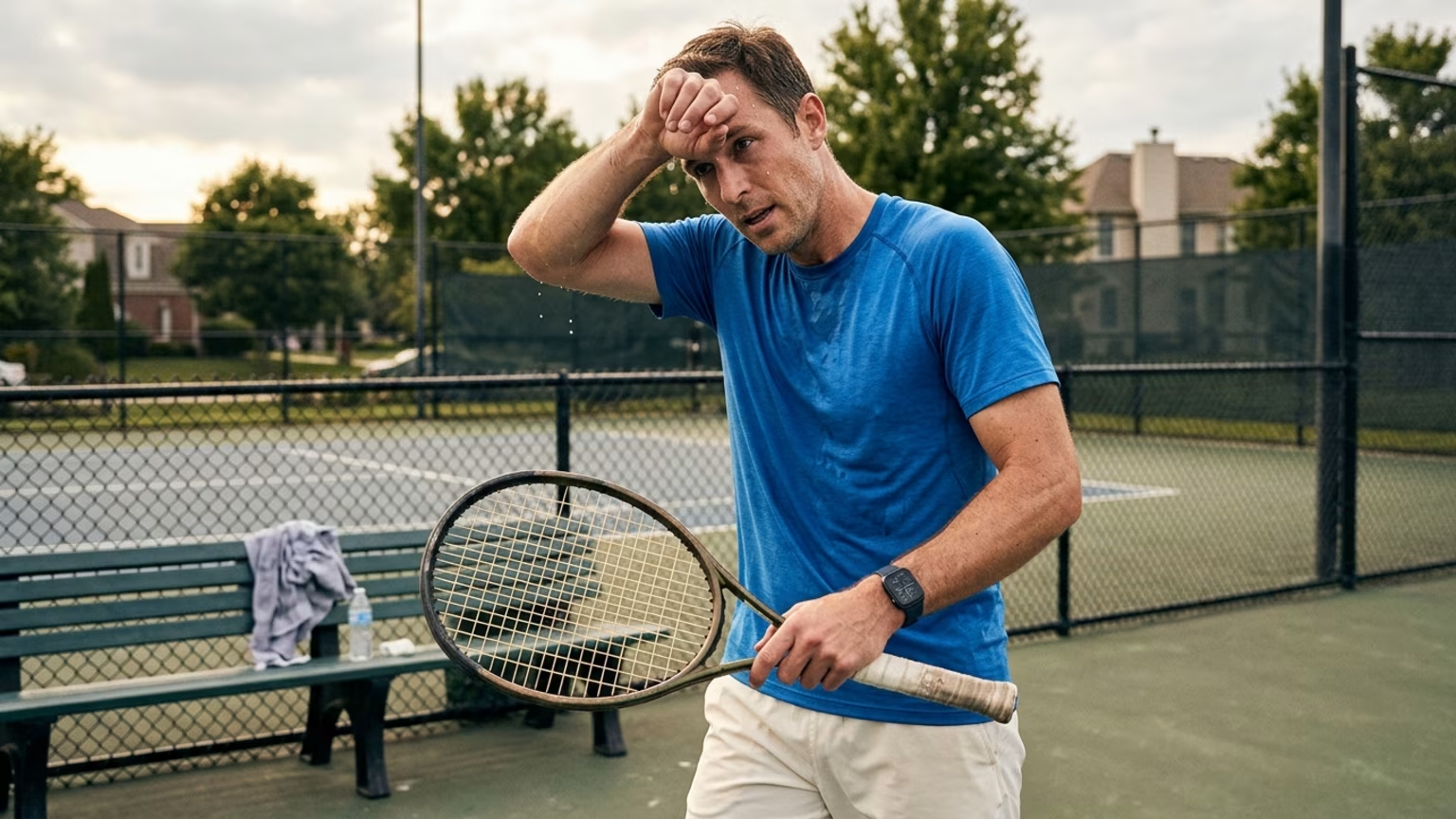
In late 2026, Oura analyzed wearable data to see how recreational tennis impacts heart health and recovery. Learn what this means for your athletic longevity.
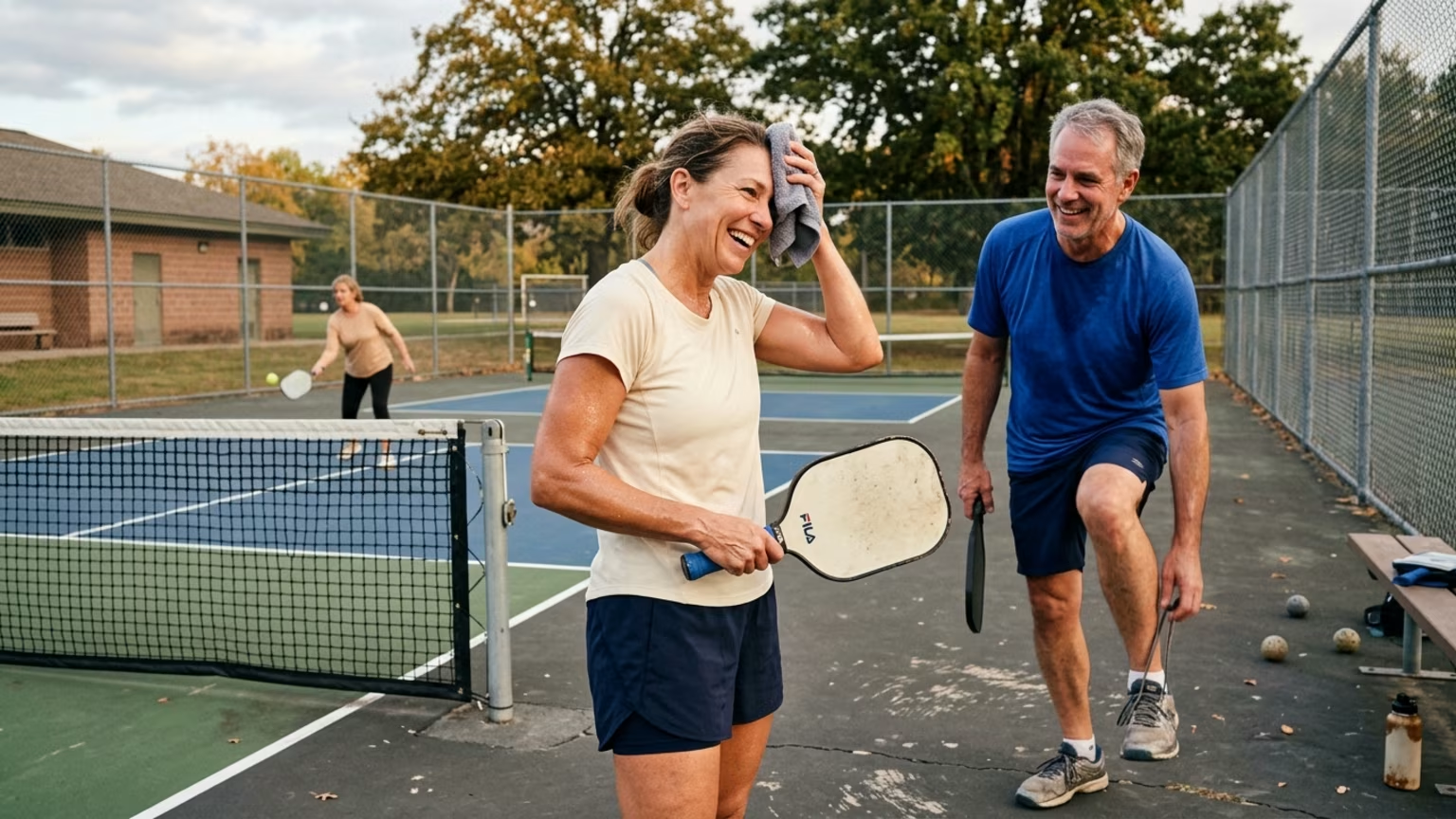
Recent guidelines emphasize gradual progression, dynamic warm-ups, and scheduled recovery to help adult racquet sports players maintain athletic longevity.
Read practical guidance for better movement, smarter preparation and a game that keeps working for you.
explore the Blog
