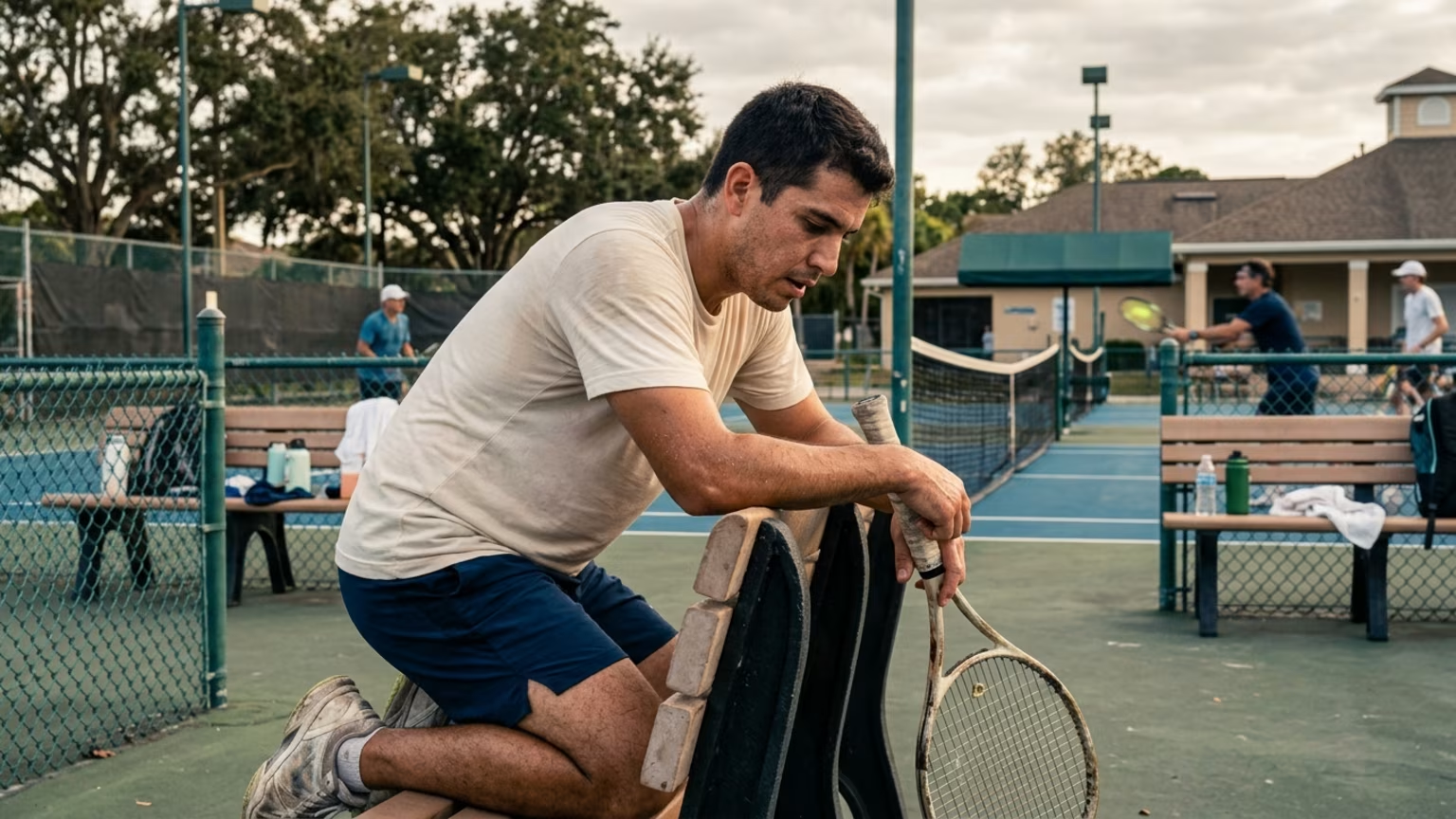

La Gazzetta dello Sport and PTPA data reveal a 25% rise in tennis injuries. Learn what pro workloads mean for amateur racquet sports and injury prevention.




In August 2026, La Gazzetta dello Sport published an investigative report showing that injuries and retirements in professional tennis have risen by roughly 25% over the past 20 years. The report detailed an especially sharp increase of more than 112% in injuries involving the upper limbs and shoulders. This data release arrives amid a crowded professional calendar that has drawn criticism from top players. The investigation highlights a growing physical burden from continuous international travel and heavier modern hitting.
The Gazzetta investigation used recent injury reporting to frame concerns around elite workload. The 2026 season brought prominent injury absences involving Carlos Alcaraz, Jannik Sinner, and Jack Draper. Sinner was sidelined by inflammation in his right knee. Alcaraz missed significant time with a right-wrist tendon injury before his return.
Alcaraz has publicly criticized the difficulty of the tennis schedule. He stated that failing to address the issue could lead to more injuries in the future. Ubitennis independently summarized the Gazzetta finding as a roughly 25% increase in injuries over two decades. A separate report in Health Newspapers attributed further data to the Professional Tennis Players Association.
The PTPA says its analysis covered more than 30,000 professional matches across eight years. According to that PTPA analysis, upper-body injuries increased 42% in the first quarter of 2026 compared with the corresponding historical comparison period. Furthermore, arm injuries increased 112% against the cited 2025 baseline. The same reporting said that match-ending injuries increased 53% and re-injuries increased 55% in the PTPA analysis.
However, these statistics come with important caveats for objective readers. The underlying dataset and a peer-reviewed methodology for the 42% and 112% figures had not been publicly released at the time of the report. Comparisons across 20 years are also vulnerable to changes in injury definitions and tournament structures. A crowded schedule is a plausible contributor, but the available sources do not prove that calendar density alone caused the increase.
The professional calendar provides a useful warning for recreational players. Amateurs generally face different match durations, travel demands, and medical support systems. Yet the core principles of workload management apply directly to weekend leagues and local tournaments. Amateurs who stack several demanding sessions without allowing a genuine low-load day risk similar overuse issues.
Our team at Evercourts emphasizes tracking all court time together as a unified training load. Players should monitor matches, drilling, serving sessions, and strength work collectively. Recognizing early symptoms is crucial to stopping the frustrating pattern of recurring joint pain. Give shoulder care a regular place in training to mitigate these mechanical demands.
A sensible program can include pain-free rotator-cuff and scapular-strength work. Incorporating thoracic mobility and gradual serving progressions with a qualified coach provides significant protection. Building back into serving and overheads progressively after a layoff is absolutely critical. Adult players should avoid returning immediately to full match intensity without adequate preparation.
We know firsthand that lower-speed games still demand proper physical preparation. "When I first started playing pickleball, I noticed how many people skipped warming up entirely," recalls a member of our team. "They would jump straight out of their cars and right up to the kitchen line. I tried doing that and immediately pulled a calf muscle."
"Pickleball requires just as much explosive lateral movement as tennis, just in a tighter space," they noted. "Since then, I always spend five minutes doing dynamic lunges and ankle rolls. It changes everything about how confident I feel pushing off the baseline." Pickleball and padel players should never assume that a lower average ball speed eliminates physical risk.
Repeated serves, overheads, and quick reaction shots can still create substantial shoulder and elbow loading. Recreational competitors must prioritize sustainable routines over short-term volume spikes. Scheduling true off-court recovery is vital, rather than treating desk work or light hitting as complete rest. Elite schedules are not a blueprint for amateur success, and structuring your match schedule for optimal rest requires an honest assessment of your capacity.
Additional data points provide further context around match volume and injury occurrence. Lottomatica reports that the PTPA found injured players had averaged 461 minutes of tennis in the preceding month. This compared with 343 minutes for players without an injury. The resulting 34% difference supports a cautious association between recent match volume and physical problems.
This specific comparison may also reflect reverse causality. Healthier players might accumulate more match time for reasons completely unrelated to workload. Meanwhile, players already developing symptoms may have proactively reduced their tournament participation. Still, the numbers confirm that recent findings from the players' association regarding arm health remain a central industry topic.
Broader tournament figures reflect similar strains across the professional sport. Tennis Head reported 33 Grand Slam men’s singles withdrawals in 2026 at that point in the season. This compares with 25 withdrawals in 2016 and 30 in 2025. While withdrawal figures do not automatically prove every injury trend is worsening, they add weight to the workload debate.
Lottomatica also reports that late-starting Grand Slam matches became notably more common in recent seasons. Matches beginning after 7 p.m. at Grand Slam tournaments rose from 6.6% in 2018 to 19.8% in 2024. The same report said that night matches were associated with an injury rate of 5.2%. This compared with a 4.6% rate for daytime matches.
Separately, a large retrospective study summarized by Health Newspapers examined decades of historical match data. The study analyzed 167,211 ATP matches from 1973 through 2019 and 46,268 WTA matches from 1975 through 2019. That study found an overall retirement incidence of 0.87 per 1,000 games on the ATP Tour and 0.81 per 1,000 games on the WTA Tour. The research also highlighted reported evidence of increasing retirement incidence over time, especially in more recent years.
The conversation around tennis workloads will likely intensify during the upcoming off-season. Tour officials face growing pressure to address calendar density and continuous travel requirements. Players are becoming more vocal about the cumulative physical burden of the modern schedule. We expect medical staffs to advocate for longer recovery windows between mandatory events next year.
Future injury reports may prompt structural changes to tournament obligations across the professional circuit. More transparent data sharing from player associations would help clarify the exact causes of upper-limb issues. Until then, players at all levels must take personal responsibility for their own physical pacing. Thoughtful load management remains the most effective tool for supporting long-term court performance and healthy aging.
Follow Evercourts for practical insights on tennis, pickleball and padel performance, movement, recovery and healthy ageing. Stay connected for new articles, research-led guidance and ideas to help you play well and keep playing for years.


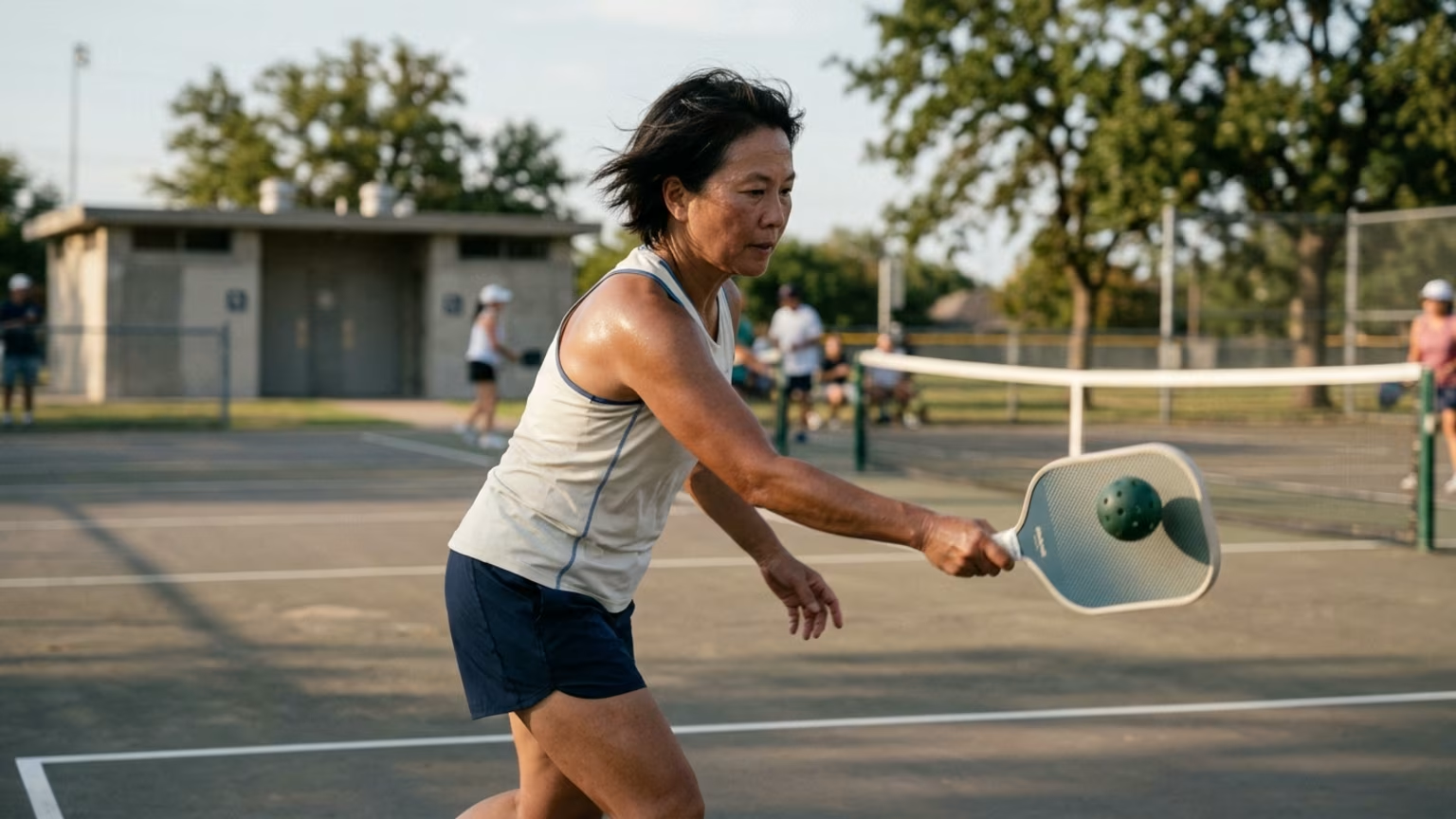
A recent live-play test of a silent pickleball highlights its value for practice, but standard balls still perform better for match play and power control.

An evidence check on sports supplements like tart cherry juice. Learn why racquet sports players should prioritize core nutrition over functional foods.
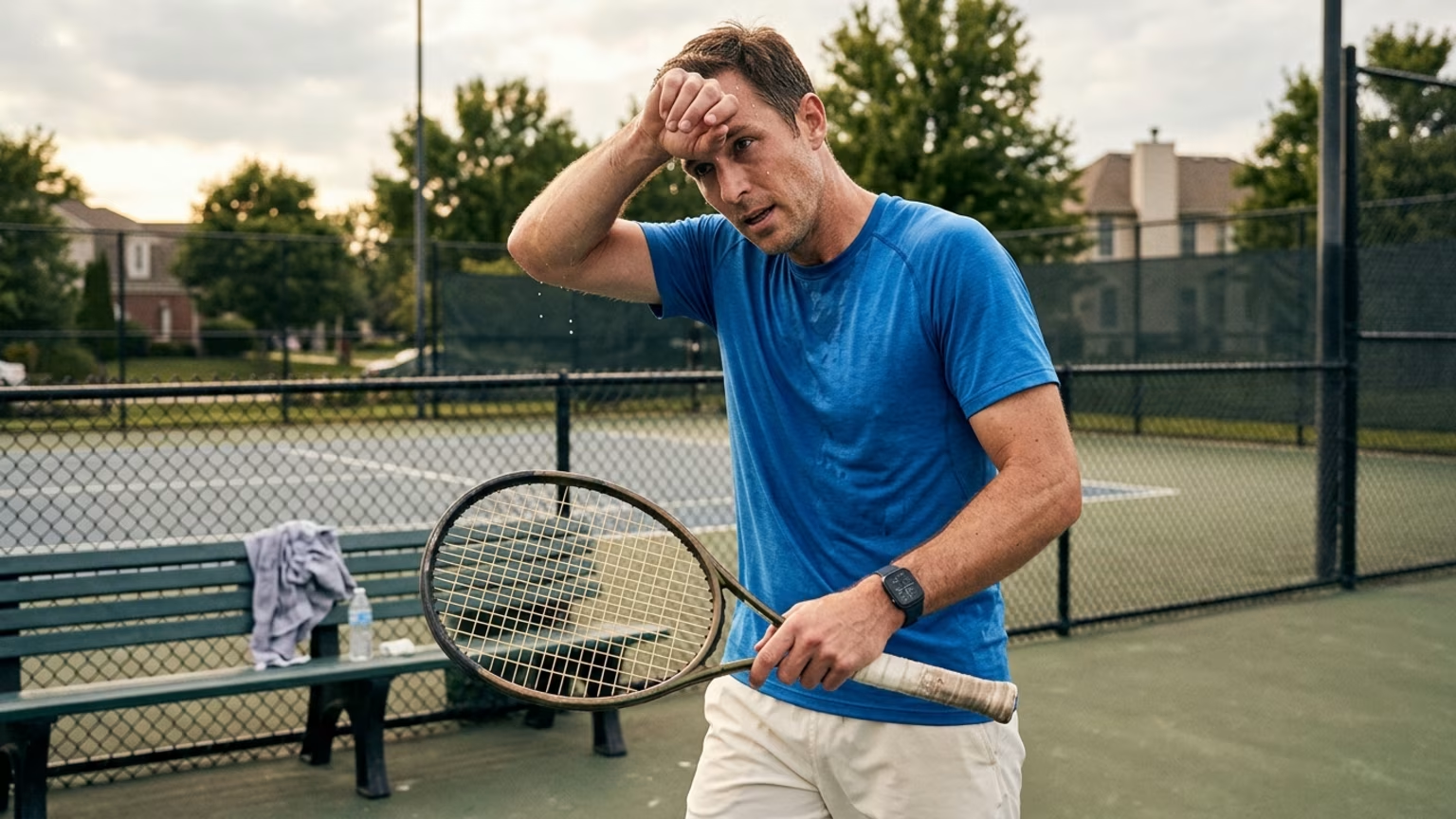
In late 2026, Oura analyzed wearable data to see how recreational tennis impacts heart health and recovery. Learn what this means for your athletic longevity.
Read practical guidance for better movement, smarter preparation and a game that keeps working for you.
explore the Blog
