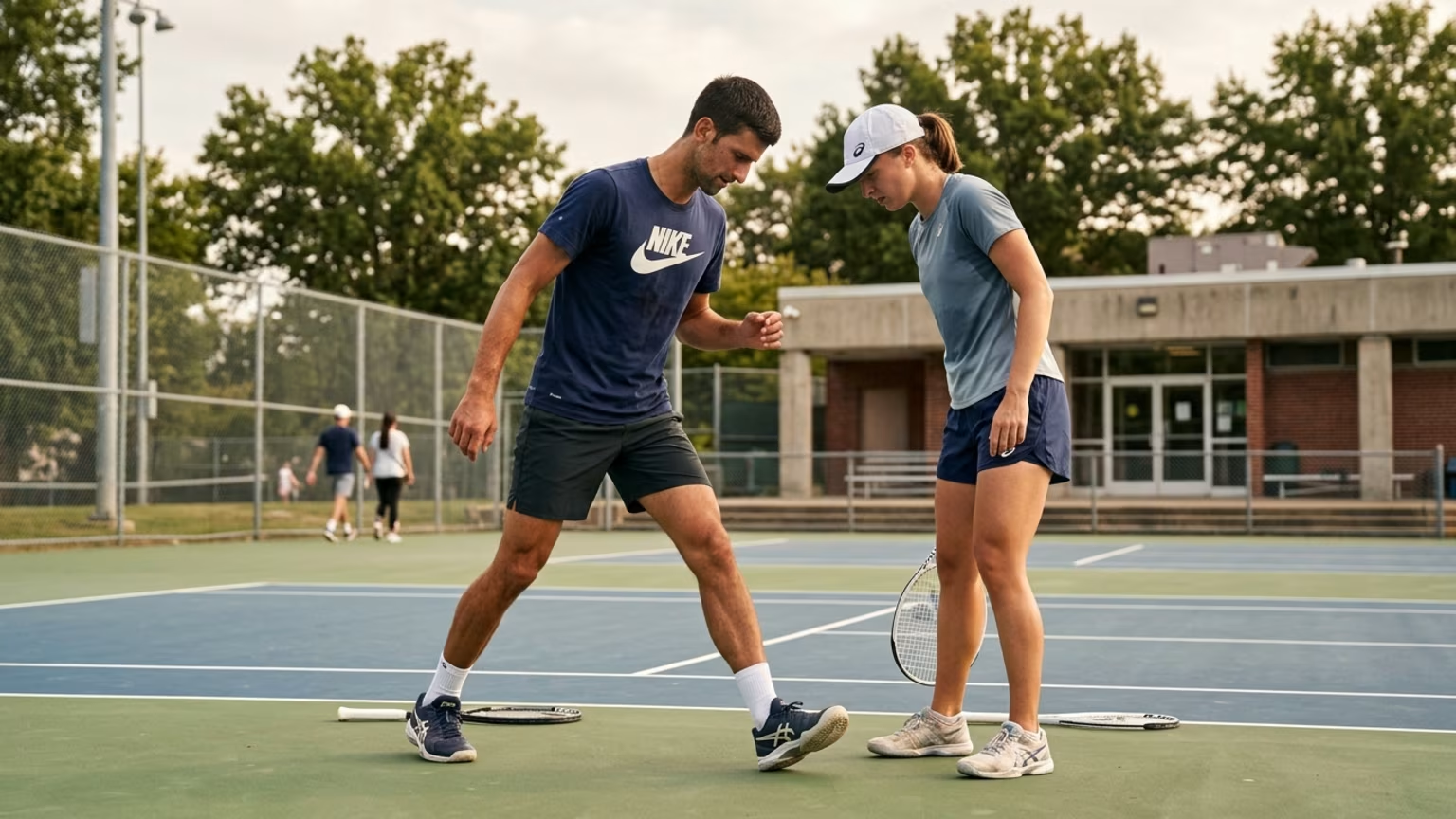

Novak Djokovic recently detailed his evolving return stance to Iga Świątek during practice. Here is how adult players can safely adapt their court setup.




In late September 2026, footage from a joint practice session ahead of the Beijing tournament appeared to show Iga Świątek asking Novak Djokovic about her return position. According to a report by Yahoo Sports, the video captured a brief but highly detailed technical exchange where Djokovic explained how his own setup has evolved over his career. This peer-to-peer discussion between two dominant champions offers a clear look at how professional players continually adjust their mechanics for better balance and court movement.
The interaction provided a specific example of elite players discussing the practical nuances of footwork and match preparation. Yahoo Sports noted that the practice footage appeared to show Świątek actively seeking advice on her return stance. In his response, Djokovic did not offer a strict formula, but rather shared his personal progression and physical adaptations. He detailed the specific positional shifts that have accompanied his changing game.
Djokovic explained that he currently tries to stand a little wider and open his feet more during his service return. He described this current approach as a middle ground stance. He contrasted this setup with two distinct phases from his past. When he was younger, he utilized a much more forward-bent stance to receive serve.
Later, about five or six years earlier, he transitioned to a slightly backward-leaning position before settling into his current mechanics. His wider stance with open feet represents a continuous adaptation to the demands of the modern returning game. The brief exchange ended with Djokovic noting that they would talk more, mentioning some pressure from his coach to keep moving, while Świątek thanked him for the insight. Tenis News reported that this particular interaction took place during practice as both players prepared for the Beijing tournament.
Professional players refine their mechanics based on years of specific physical feedback and elite coaching. Djokovic characterizing his current stance as a middle ground highlights a highly important reality for recreational athletes. There is no single correct return position that works for every player across their entire playing life. Adult recreational players should view this practice exchange as a prompt to evaluate their own court positioning carefully.
Trying to perfectly replicate an elite player's stance without considering your own physical capacity often causes frustration on the court. A wider stance with open feet might improve stability and preparation for a seasoned professional. However, recreational players must assess whether a similar position actually feels comfortable and allows them to push off efficiently. Any change to your base setup directly shifts how force travels through the lower body during a quick split step.
Instead of copying a tour-level technique outright, use these insights to start a conversation with a qualified coach. Your goal should be finding a stable position that lets you prepare comfortably and react without unnecessary physical strain. Adjusting your starting position is a practical way to build smarter footwork for better court coverage, but it must be done gradually. If a new stance causes persistent discomfort, it is best to step back and find a more natural position.
The physical requirements of a strong ready position remain consistent across tennis, padel, and pickleball. Adapting your stance requires adequate lower body strength and the ability to maintain balance under tension. Modifying your foot placement to improve reaction times demands careful attention to how your joints handle the new angles. Jumping into a wide, unfamiliar stance can easily overload the hips and knees if the surrounding muscles are not properly prepared.
In our experience, proper lower body preparation changes the equation entirely for adult players. As one of our team members noted regarding a shift in court sports: "When I first started playing pickleball, I noticed how many people skipped warming up entirely. They would jump straight out of their cars and right up to the kitchen line. I tried doing that and immediately pulled a calf muscle."
"Pickleball requires just as much explosive lateral movement as tennis, just in a tighter space. Since then, I always spend five minutes doing dynamic lunges and ankle rolls. It changes everything about how confident I feel pushing off the baseline."
Proper preparation makes experimenting with wider stances much safer and more effective. Before you try opening your feet more on a service return, ensure your hips and ankles have the necessary mobility. Taking time to warm up properly supports maintaining adequate range of motion and helps prevent stiffness during match play. Establishing a reliable physical routine around your setup is a key factor in supporting long-term athletic longevity on the court.
The brief practice court exchange in Beijing points to an ongoing tactical refinement at the highest levels of the sport. As professional servers continue to develop new angles and varying speeds, returners are forced to adapt their initial setups to optimize reaction times. Over the coming season, expect more tour players to tinker with their base positions, seeking their own middle ground for balance and quick preparation.
While professional athletes will keep modifying their footwork to handle extreme pace, the fundamental lesson remains highly practical. Stances and return positions are fluid, changing as players gain experience and as their physical capabilities shift over time. Adult players should watch these professional adaptations as evidence that technique is never strictly static. The most effective return stance will always be the one that supports your movement, protects your joints, and allows you to keep competing consistently.
Follow Evercourts for practical insights on tennis, pickleball and padel performance, movement, recovery and healthy ageing. Stay connected for new articles, research-led guidance and ideas to help you play well and keep playing for years.


An evidence check on sports supplements like tart cherry juice. Learn why racquet sports players should prioritize core nutrition over functional foods.
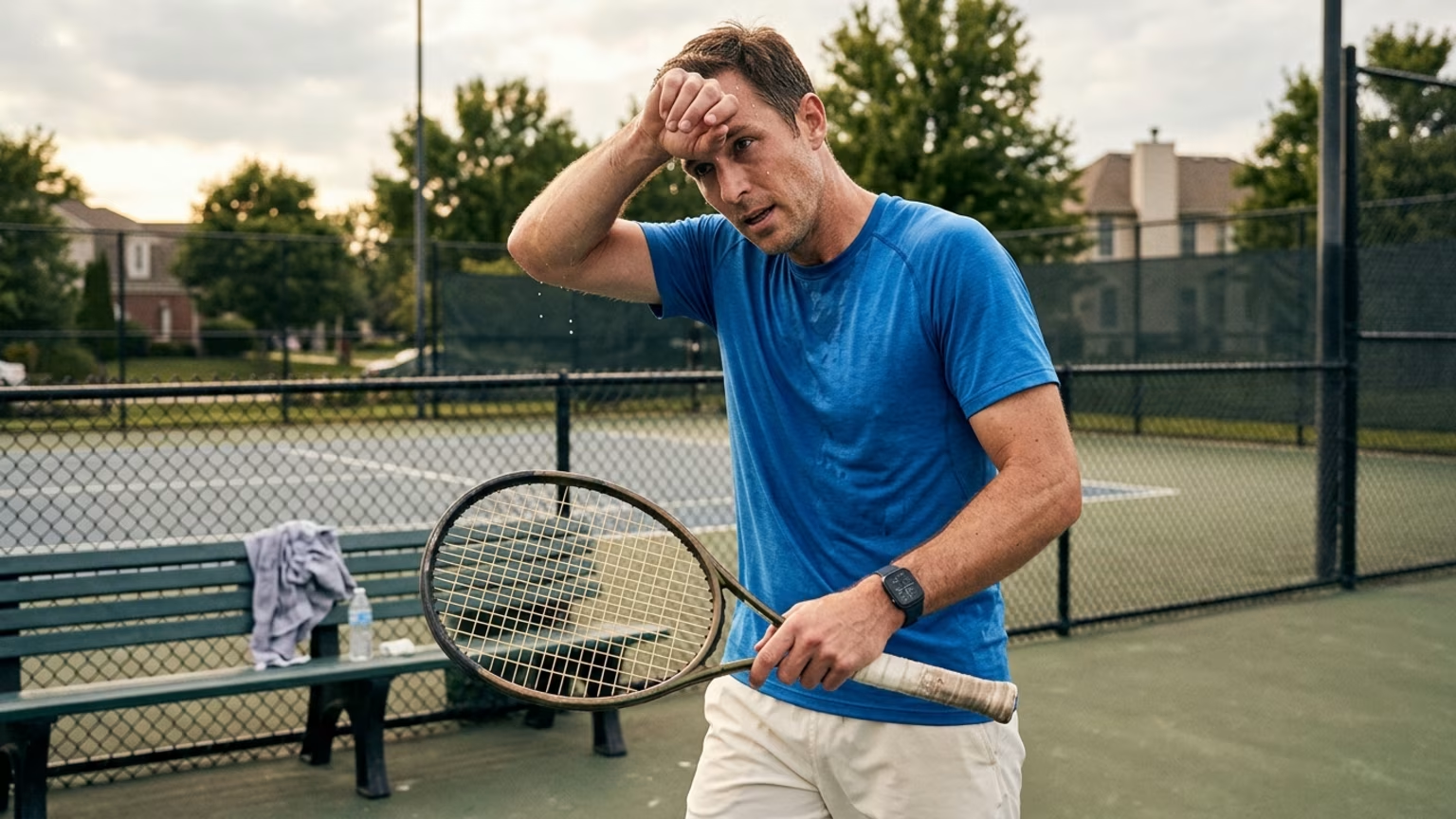
In late 2026, Oura analyzed wearable data to see how recreational tennis impacts heart health and recovery. Learn what this means for your athletic longevity.
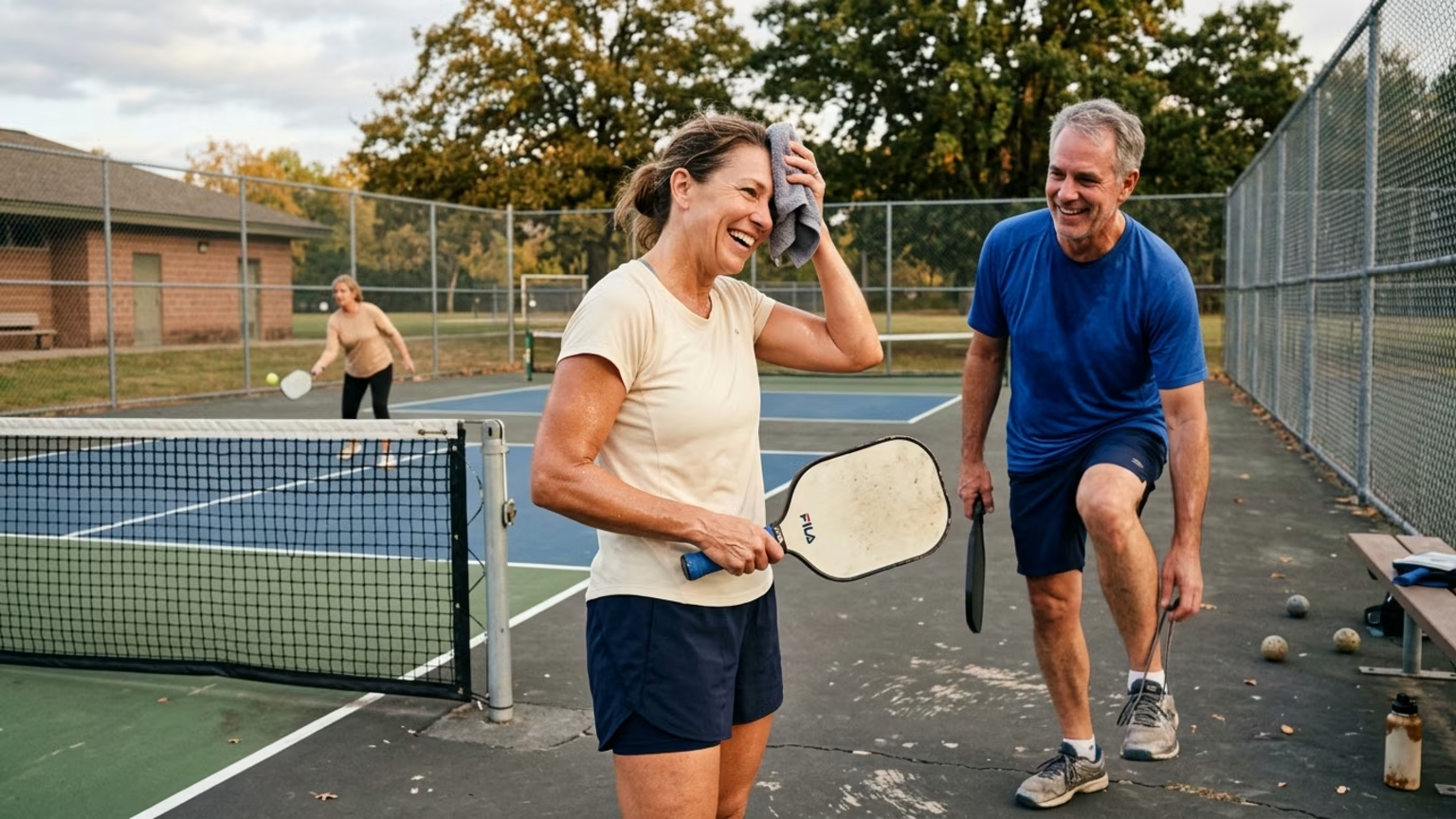
Recent guidelines emphasize gradual progression, dynamic warm-ups, and scheduled recovery to help adult racquet sports players maintain athletic longevity.
Read practical guidance for better movement, smarter preparation and a game that keeps working for you.
explore the Blog
