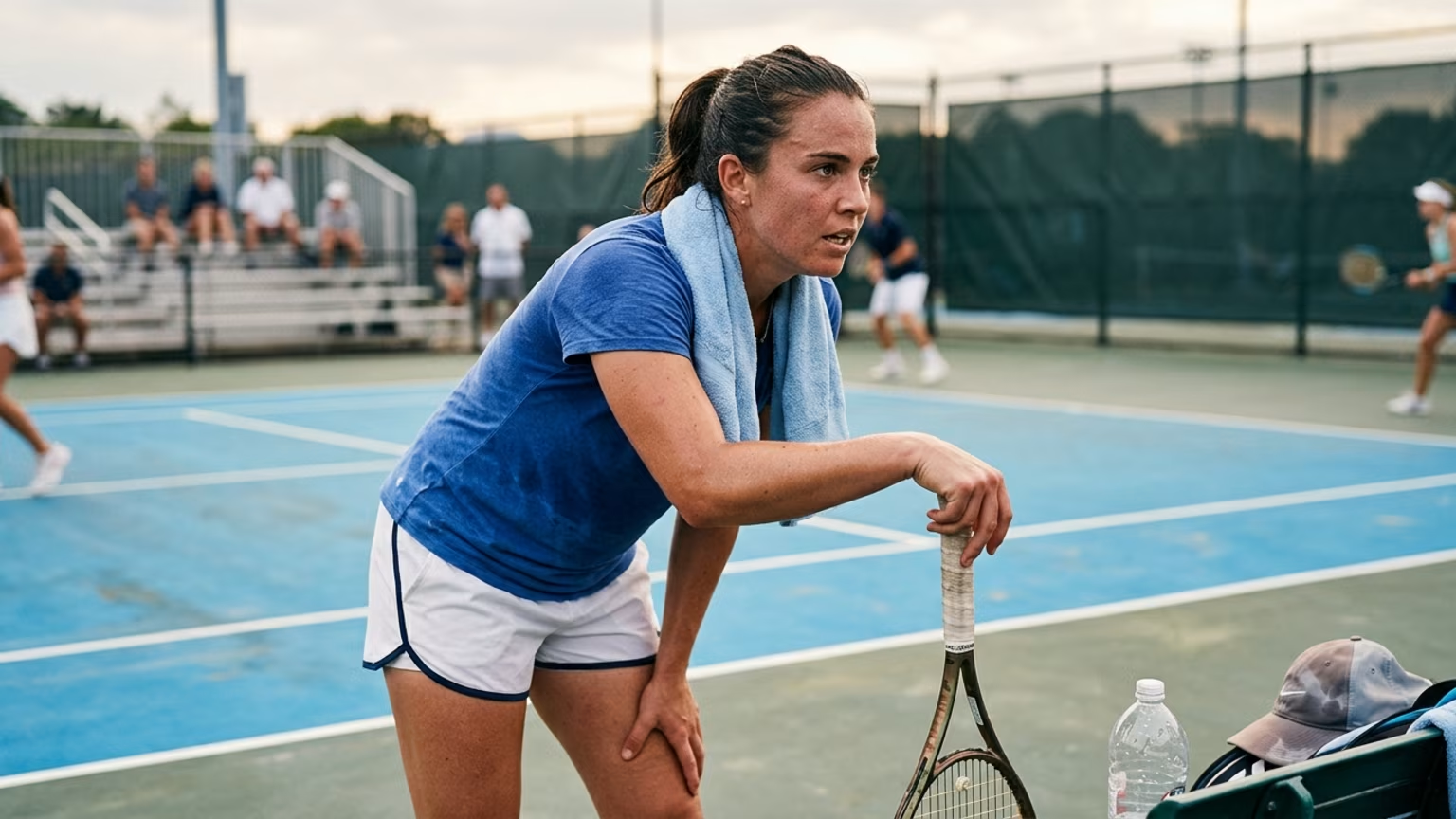

The 2026 Canadian Open saw early upsets for Zverev, Medvedev, and Fritz. Learn how adult tennis, pickleball, and padel players can manage summer match loads.




The professional tennis calendar does not care about your seeding. It only cares about your physical margins. The 2026 Canadian Open demonstrated this reality when Alexander Zverev, Daniil Medvedev, and Taylor Fritz all exited in the second round. For everyday players, these high-profile upsets offer a practical lesson in workload accumulation.
Top-tier players are accustomed to rigorous travel schedules and intense physical demands. However, the density of consecutive summer tournaments can test even the most conditioned athletes. When multiple seeded players fall early in a major event, observers often look for technical flaws. In reality, the physical toll of rapid scheduling is usually the decisive factor.
World No. 3 Zverev lost to Dutchman Tallon Griekspoor 6-7(3), 6-2, 6-4. Fourth seed Medvedev was beaten 6-3, 7-6(5) by another Dutch player, Botic van de Zandschulp. This match marked van de Zandschulp's first victory over the 2021 U.S. Open champion. Seventh-seeded American Taylor Fritz lost 7-5, 6-3 to Argentina's Thiago Agustín Tirante.
Fritz had just won the Washington Open days prior. That victory was his biggest title in nearly four years. These sudden departures left only four of the tournament's top 10 seeds in the draw. Such results remind us that continuous competition eventually catches up to everyone.
Modern fitness marketing sells the idea that athletes can endlessly outwork their fatigue. Social media feeds promote intense programs promising unlimited stamina and perfect physical recovery. The loudest message to players is that you can compete every single day if you simply try harder. Professional tournament results tell a very different and more grounded story.
The media often portrays professional losses solely as technical or mental failures. However, the physical context surrounding a match is frequently the most important variable. The rapid shift from European grass courts to North American hard courts creates a unique physical stress test. Ignoring this transition period often results in early tournament exits.
The transition between competitive events requires careful physical management. Fritz arrived in Montreal immediately after his significant title run in Washington. His demanding schedule left almost no time for meaningful physical adaptation or muscular rest. For adult recreational players, the lesson is that you cannot force your body to ignore a dense calendar.
The North American hard-court stretch follows Wimbledon directly. It also precedes the U.S. Open, which was scheduled to begin on August 23, 2026. This fast turnaround highlights how physical demands continuously stack up during busy summer schedules. Athletes simply need adequate time to recover between major physical efforts.
Many club players attempt to replicate the match volume seen on professional tours. They sign up for multiple weekly leagues and weekend tournaments without planning adequate rest. This approach typically leads to chronic stiffness and a gradual decline in match performance. Real athletic longevity requires treating rest as an essential component of your weekly schedule.
Changing playing surfaces is a highly demanding physical task for any court athlete. The transition from grass and clay to North American hard courts is one of the most demanding physical periods of the year. Moving between different surface speeds forces the lower body to adjust its movement patterns entirely. These sudden physical adjustments require immense muscular effort.
Surface transitions are moments when players are especially susceptible to injury. Hard courts are notoriously unforgiving on joints and connective tissues. They can easily aggravate previous physical problems in the lower body. The intense professional calendar leaves very little margin for players who are not fully healthy.
This pressure builds long before the first serve of a main draw. Practice weeks stacked directly onto travel days are where most lower-back and hip complaints begin. Recreational players see the same pattern when a heavy league week follows a tournament weekend. The load that breaks a body is rarely a single match; it is the week around it.
The mechanics of hitting a tennis ball change significantly when moving between court types. A fast hard court demands quicker preparation and more explosive lateral movements. These sudden requirements place increased stress on the knees, hips, and lower back. Proper physical conditioning is necessary to withstand these specific rotational and braking forces.
When you step onto a hard court, the friction forces your body to absorb more impact. Your footwear interacts differently with the ground, changing how you stop and change direction. These subtle differences accumulate over the course of a long three-set match. Failing to prepare for this physical impact increases your overall risk of injury.
Adult recreational players can avoid overplaying by adopting smarter season scheduling habits. Treat your heavy league weeks as a single training cycle rather than disconnected individual matches. If you play a tough weekend event, your primary focus on Monday should be active rest. Your body needs dedicated time to recover before your next competitive session.
It is crucial to build in transition time when you switch surfaces or return from travel. Do not make your first session back your most difficult physical effort. Allow your joints and muscles to adapt gradually to the new surface friction. Players who regularly transition between tennis, pickleball and padel must be especially mindful here.
Warming up properly is non-negotiable when transitioning to a new playing surface. A brief jog is not enough to prepare your body for hard-court impacts. Your preparation must include progressive movement, specific directional changes, and dynamic sports actions. Better court movement starts with a routine that actually prepares your joints for the specific surface ahead.
Use a simple next-day test to measure your true physical recovery status. If you wake up with persistent stiffness or altered walking mechanics, you need more rest. Pushing through significant joint pain rarely improves your performance on the court. Smart longevity game plans prioritize steady adaptation over rapid physical accumulation.
Always listen to how your body feels during a difficult summer match. If you experience unusual fatigue, do not force yourself to finish a casual set. Recreational athletes should focus on maintaining healthy aging practices to keep their physical capabilities intact. Establishing a repeatable match-day routine helps you listen to these crucial bodily signals.
You should also evaluate your tournament schedule carefully before the season begins. Choosing the right events helps you avoid the trap of continuous, exhausting competition. Properly choosing racquet sports competition events ensures you have adequate rest periods built into your calendar. A balanced schedule protects your physical health and keeps the game enjoyable.
Let go of the idea that a single poor performance defines your entire season. Even top professionals experience early exits during difficult schedule stretches. Separate your disappointment over a loss from your decisions about physical health and training volume. Maintaining your athletic longevity is the primary goal for any adult court athlete.
Sustainable performance in racquet sports requires carefully managing your match schedule, respecting surface changes, and prioritizing your physical recovery above all else.
Follow Evercourts for practical insights on tennis, pickleball and padel performance, movement, recovery and healthy ageing. Stay connected for new articles, research-led guidance and ideas to help you play well and keep playing for years.


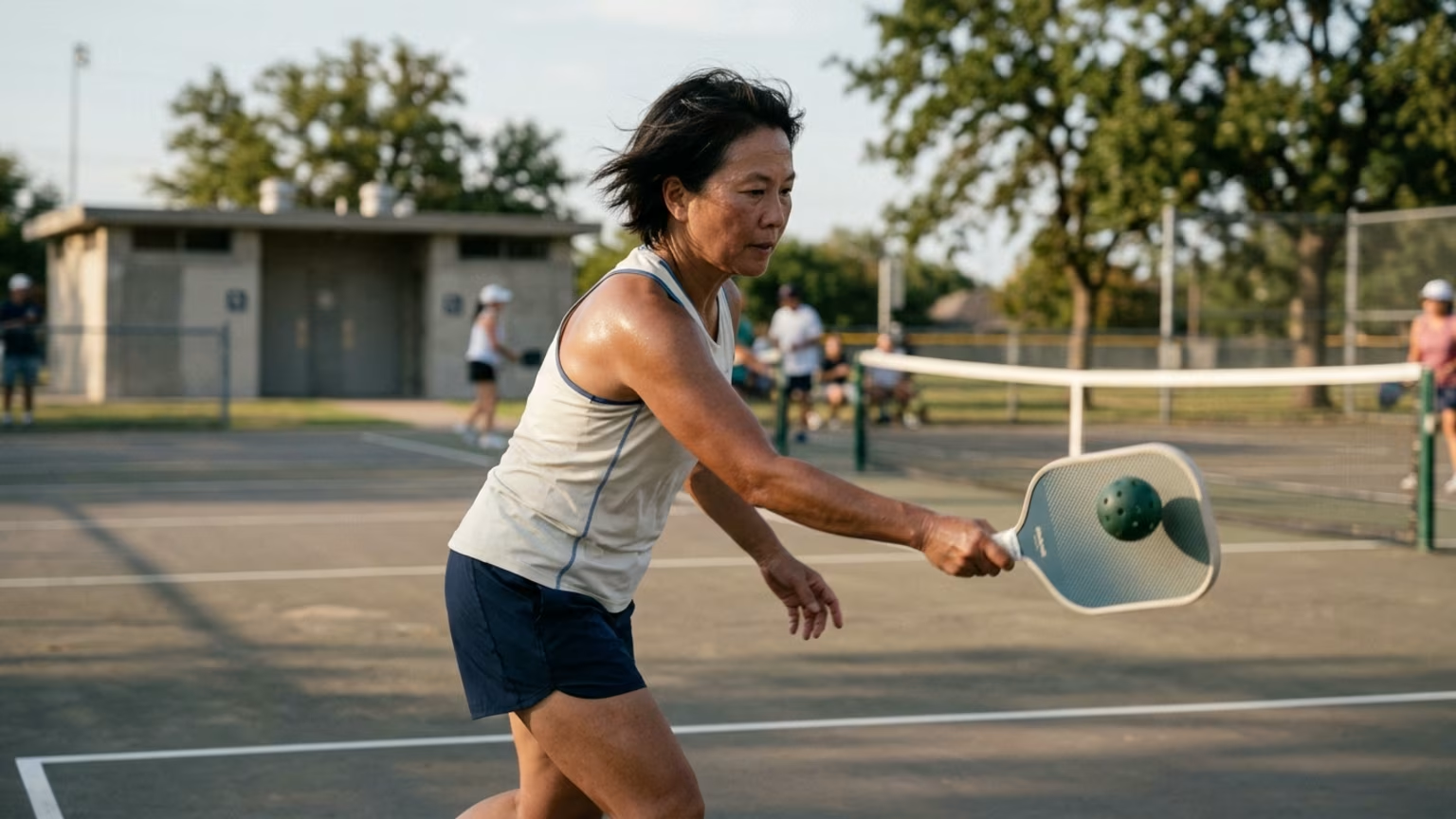
A recent live-play test of a silent pickleball highlights its value for practice, but standard balls still perform better for match play and power control.

An evidence check on sports supplements like tart cherry juice. Learn why racquet sports players should prioritize core nutrition over functional foods.
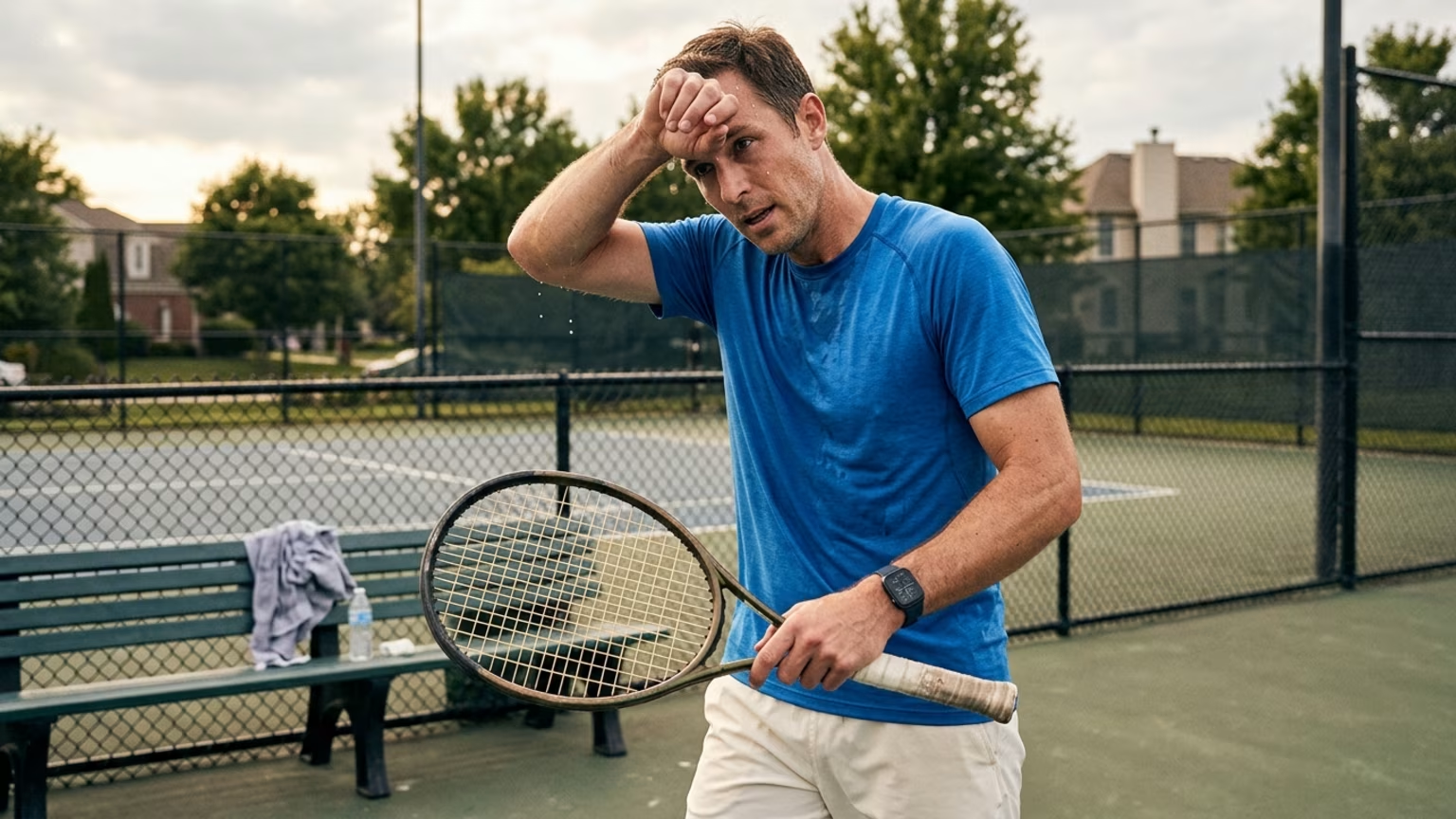
In late 2026, Oura analyzed wearable data to see how recreational tennis impacts heart health and recovery. Learn what this means for your athletic longevity.
Read practical guidance for better movement, smarter preparation and a game that keeps working for you.
explore the Blog
