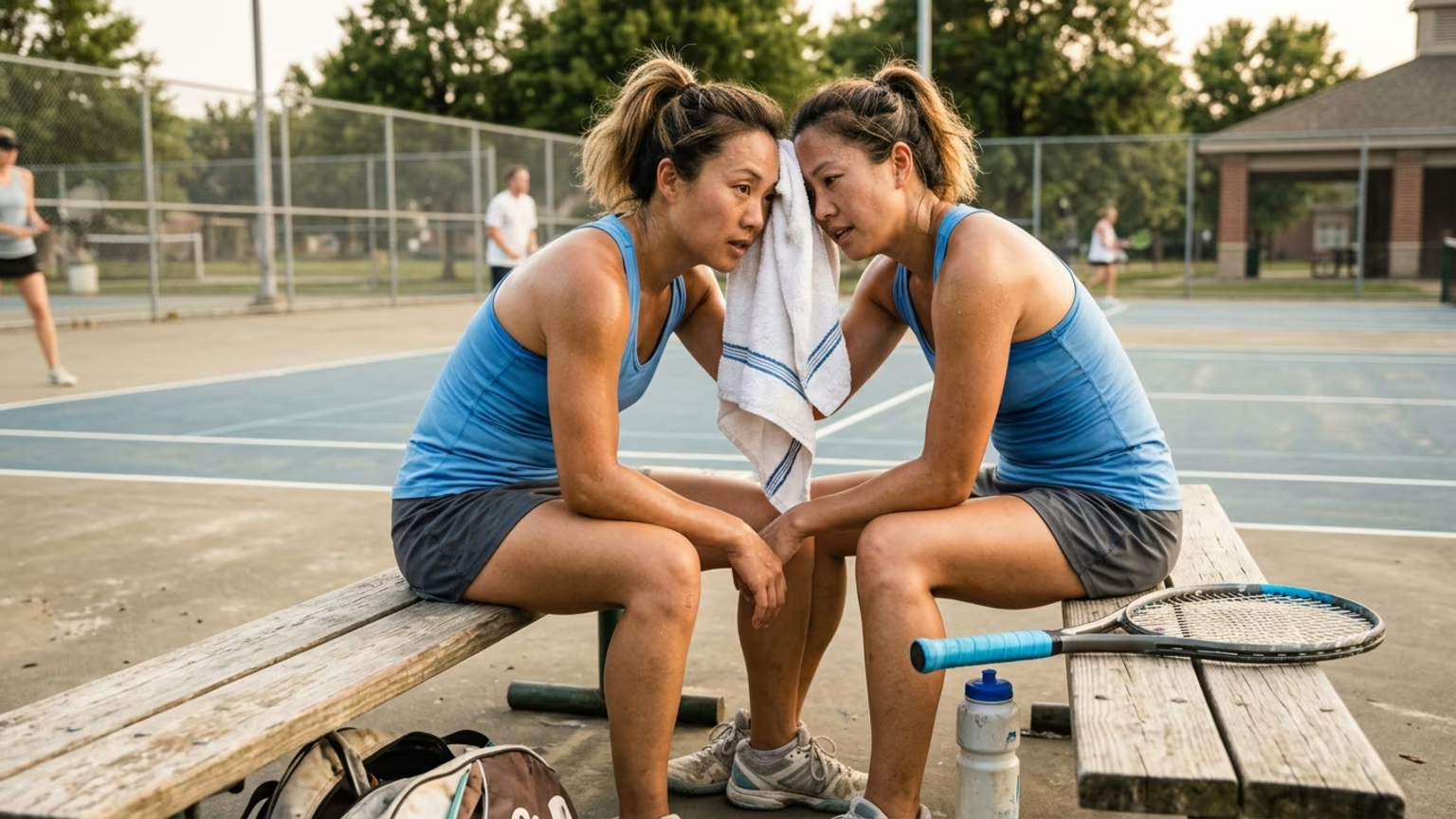

Learn how to manage physical exertion in padel and racquet sports. This guide covers rest intervals and healthy aging strategies for adult players.




Metabolic pacing in racquet sports is the conscious management of physical exertion and recovery between points to maintain consistent movement quality throughout a full session. Many adult players focus entirely on stroke technique or court positioning. They often overlook the hidden energy system that powers their movement. A casual padel game feels completely different in the first ten minutes than it does in the final ten minutes.
Managing that energy system effectively requires players to notice when fatigue starts changing their physical decisions. Effective pacing requires players to monitor their own movement and adapt their rest intervals based on personal fatigue levels. This deliberate approach ensures that the energy systems driving short sprints have adequate time to recover before the next rally. When players understand how to regulate their physical output, they can sustain their performance from the warm-up to the final point.
Tennis, pickleball, and padel challenge the human cardiovascular system uniquely due to their continuous cycles of explosive effort and brief rest. Players must constantly accelerate to reach the ball and then rapidly decelerate to recover their court positioning. These sudden changes of direction demand significant muscular endurance and power. Over the course of a long session, these repeated efforts steadily deplete your immediate energy reserves.
The structural differences between these sports directly influence how they fatigue the body. For instance, a 2025 padel-versus-tennis-doubles study detailed in a secondary report highlighted distinct timing patterns between the two games. The study found that average rallies lasted 6.50 seconds in padel and 4.87 seconds in tennis. The average between-point rest was 17.4 seconds in padel and 29.7 seconds in tennis.
These numbers reveal why padel players often feel a unique type of physical fatigue. The longer rallies combined with shorter rest periods mean the body has less time to clear metabolic waste before the next point begins. Pickleball also involves rapid exchanges at the net, requiring quick reaction times and frequent weight shifts. Understanding these specific structural demands helps players recognize why their legs might feel heavy late in a session.
Players who adapt their effort to these demands can maintain their court coverage habits effectively throughout the match.
Current sports science emphasizes that racquet sports are fundamentally intermittent activities that mix intense work with essential pauses. A secondary account of an eight-match World Padel Tour study noted that active rallies occupied roughly one third of total match time. The remaining two thirds of the match consisted entirely of pauses between points and transitions between games. This finding illustrates that a large portion of any court session is actually spent in a state of active recovery.
The moments between points are critical for clearing metabolic byproducts from your muscles. Breathing patterns and heart rate recovery during these brief pauses dictate how well you will move in the subsequent rally. Elite athletes deliberately use the entire allotted time between points to lower their heart rates and refocus. Recreational players should adopt this same habit to prevent their physical debt from compounding unmanageably.
Recreational players often make the mistake of treating a casual game like a continuous endurance event. The elite match data shows that rest periods are a fundamental part of the game structure. However, these professional observations cannot be blindly applied to everyday adult athletes. Playing level and physical condition heavily influence how quickly a player will reach their physical limits.
Court temperature and age also play major roles in this physiological process. Instead of following rigid hydration or rest formulas, players should observe their own movement quality and focus as play continues. Dehydration and heat can increase cardiovascular strain, making it harder to recover between points. Players should plan access to fluids and adapt their drinking to the conditions of their specific session.
There is no single universal hydration quantity that works for every recreational athlete. A smart approach involves noticing when you feel rushed or when your footwork becomes sluggish. These self-observation prompts are highly practical tools for managing exertion. When players acknowledge their individual fatigue levels, they can make tactical adjustments like slowing down between points or choosing different shots.
This type of self-awareness aligns perfectly with the idea that tactical pacing beats raw hustle on the court.
Understanding how to pace a demanding court session is vital for long-term healthy aging and sustained physical performance. Adult athletes who constantly push through severe fatigue risk compromising their mechanics and increasing joint stress. When the cardiovascular system tires, players often compensate by altering their footwork or swinging with poor posture. Over time, these small compensations can lead to recurring stiffness or unnecessary wear on the body.
Consistent pacing also prevents the sharp decline in decision making that usually accompanies physical exhaustion. When players become severely fatigued, they tend to attempt low percentage shots just to end the point quickly. These desperate tactical choices often require awkward lunges that place additional strain on vulnerable joints. Staying within a manageable aerobic threshold allows players to maintain both their physical form and their strategic clarity.
By actively managing exertion and taking appropriate rest, players protect their joints and muscles from catastrophic fatigue. This disciplined approach ensures that players can step onto the court multiple times a week without accumulating excessive physical debt. Athletic longevity is built on the ability to recover fully between sessions and play with consistent movement quality.
Players who adapt their energy output to their personal fitness levels will enjoy their time on the court much more. Recognizing that padel requires different physical strategies than tennis or pickleball allows adults to modify their schedules intelligently. This mindful approach to energy management is a foundational habit for anyone hoping to continue playing well into their later decades. It perfectly complements a smart functional strength program designed for racquet sports.
While self-observation and conscious pacing are excellent tools, some physical responses require professional medical evaluation. Players should consult a qualified physiotherapist or healthcare provider if they experience disproportionate fatigue that does not align with their exertion level. Persistent shortness of breath, unusual chest tightness, or prolonged dizziness are clear signals to seek expert medical advice.
Additionally, players should watch for localized joint pain or muscle stiffness that lingers for several days after a well-paced session. Minor soreness is a normal part of physical activity, but sharp pain or sudden swelling warrants a clinical assessment. A healthcare professional can help identify whether these symptoms stem from poor movement mechanics or underlying cardiovascular issues.
Returning to the concept of conscious physical management, the most capable players are those who listen to their bodies objectively. Knowing when to dial back your effort on the court is just as important as knowing when to ask for professional help. By managing your energy systems wisely and seeking advice when symptoms arise, you can keep enjoying your sport for years to come.
Follow Evercourts for practical insights on tennis, pickleball and padel performance, movement, recovery and healthy ageing. Stay connected for new articles, research-led guidance and ideas to help you play well and keep playing for years.


An evidence check on sports supplements like tart cherry juice. Learn why racquet sports players should prioritize core nutrition over functional foods.
In late 2026, Oura analyzed wearable data to see how recreational tennis impacts heart health and recovery. Learn what this means for your athletic longevity.
Recent guidelines emphasize gradual progression, dynamic warm-ups, and scheduled recovery to help adult racquet sports players maintain athletic longevity.
Read practical guidance for better movement, smarter preparation and a game that keeps working for you.
explore the Blog
