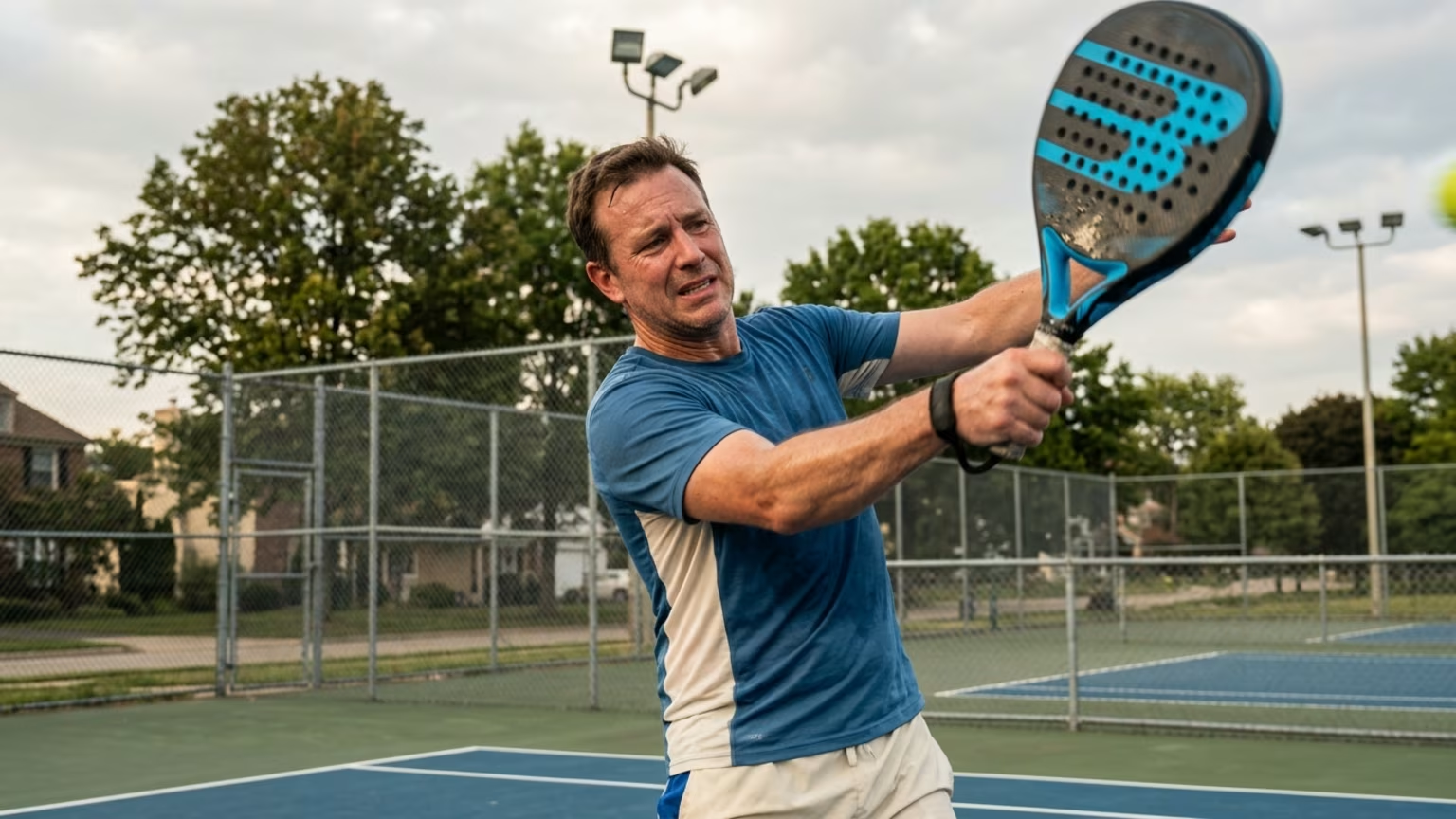

A recent Turkish report highlights the rise of padel shoulder. Here is how adult recreational players can manage overhead workloads to protect their joints.




On September 15, 2026, the Turkish news outlet Yeni Asır published a detailed report identifying a growing medical trend in racquet sports. The publication highlighted the rise of padel shoulder as a primary concern for the rapidly expanding player base in Turkey. As courts fill up with new participants drawn by the social accessibility of the sport, medical professionals are seeing a distinct shift in overuse complaints. The report examines how the unique demands of padel are testing the upper body in ways that differ significantly from traditional tennis elbow.
The Yeni Asır article connects this surge in shoulder complaints directly to the specific mechanical requirements of the sport. Padel demands frequent and repeated overhead actions, meaning building capacity for bandejas, víboras and smashes is a central requirement for any regular player. Players also make sudden explosive movements around the glass walls and tight corners of the court. According to the report, these environmental factors combine to create significant and repetitive shoulder load over the course of a match.
The coverage cites research indicating that shoulder injuries account for approximately 10% to 15% of reported padel injuries. Prof. Dr. Arel Gereli also places padel-related shoulder injuries in this exact 10% to 15% range. He notes that many of these upper body issues are not dramatic or acute traumatic incidents. Instead, they are gradual physiological problems that develop over time due to repeated loading and insufficient physical recovery.
Professional padel players manage massive overhead volume by utilizing a highly coordinated kinetic chain. They generate power from the ground up, using efficient footwork and complete body rotation to protect their smaller arm muscles. Recreational players often take a completely different and far less efficient approach. The Turkish coverage warns that injury risk increases sharply when players attempt to generate stroke power primarily from the shoulder instead of coordinating the whole body.
Adult amateur players are not automatically protected from these injuries just because they play at a lower intensity level. The Yeni Asır article points to the specific danger for individuals with limited previous racquet-sport experience. When these players suddenly begin scheduling several intense matches per week, their shoulder tissues do not have enough time to adapt to the new workload. Fatigue then quickly sets in, which can compromise joint stabilization and alter movement mechanics during those critical overhead strokes.
The modern lifestyle also plays a notable role in this equation for adult recreational athletes. The Turkish reporting connects prolonged desk, smartphone and tablet use with a forward-rounded posture and reduced scapular movement. This daily postural reality is presented as a plausible contributor to excessive shoulder loading during weekend overhead play. Players heading straight from an office chair to the padel court often lack the essential upper back mobility required to safely hit high balls.
Our team knows how easily this accumulation of fatigue and stiffness sneaks up on busy adults. I remember finishing a tough two hour padel match on a cold Tuesday night and waking up the next morning feeling like my lower back was locked in concrete. For a long time, I just accepted this as the price of playing hard in my forties. But once I started spending just ten minutes on targeted hip mobility before heading to the club, the stiffness almost completely vanished.
The lesson here is that targeted preparation changes how our bodies handle explosive sports, proving that pain is not a required part of athletic longevity. Taking ten minutes to properly prepare the body is a highly practical step for preparing for the first point on the court. It progressively raises body temperature and rehearses easy, controlled racquet movements before attempting full-power overhead strokes. When you prepare the joints properly, the shoulder does not have to absorb the shock alone.
While the shoulder deserves careful attention, a broader look at the clinical research provides important context for healthy aging on the court. A 2023 systematic review synthesized eight separate studies involving a total of 2,022 padel players. This comprehensive review estimated roughly three injuries per 1,000 training hours and eight injuries per 1,000 matches. The authors emphasized that these figures varied substantially between the different underlying studies, meaning players should view them as baseline estimates rather than precise individual predictions.
Interestingly, the same systematic review identified the elbow as the most frequently reported injury site. This was immediately followed by the knee, the shoulder and the lower back. This specific order confirms that while padel shoulder is a meaningful concern, it is not the single most common injury location in the sport. The review also reported that tendons and muscles were the tissues most often involved in padel injuries, which directly aligns with the Turkish article's focus on gradual overload.
Additional survey data highlights the sheer frequency of these physical complaints among everyday amateur players. A 2025 Belgian recreational-player survey reported 185 injuries among 457 respondents, yielding an exposure-based rate of 2.81 injuries per 1,000 playing hours. However, the Belgian survey’s 36.5% annual injury figure is not equivalent to the percentage of players who definitely sustained a medically diagnosed injury. It instead relies on retrospective questionnaires that capture a wide range of minor and major physical complaints.
The Turkish reporting describes the early warning signs of shoulder overload as mild pain or discomfort after serving or executing aggressive overhead strokes. The article clearly warns that these minor symptoms can progress into major limitations if ignored by the player. Persistent, worsening or function-limiting pain merits immediate assessment by a qualified sports-medicine clinician or physiotherapist. Catching a tendon issue early is far more effective for long-term joint health than attempting to play through a developing overuse injury.
Over the next season, expect recreational padel communities to shift their focus from reactive injury treatment to proactive workload management. As court numbers continue to grow globally and more beginners pick up racquets, the conversation will naturally move beyond simply treating the shoulder in isolation. Players will need to adopt a whole-body approach to conditioning, recognizing that the kinetic chain is completely interconnected from the feet to the hands. Balancing heavy padel matches with targeted strength training and vital rest days will become standard advice.
We anticipate a growing emphasis on technical coaching that prioritizes efficient mechanical movement over raw and uncoordinated power. Players who learn to respect fatigue and confidently step off the court when stroke quality declines will enjoy longer, more consistent playing seasons. Tracking matches, training sessions and high-volume overhead sessions will help players manage their exposure to the repetitive forces that cause muscle and tendon strain. By treating overhead volume as a measurable training load, adult players can sustain their performance and keep playing for years.
Follow Evercourts for practical insights on tennis, pickleball and padel performance, movement, recovery and healthy ageing. Stay connected for new articles, research-led guidance and ideas to help you play well and keep playing for years.


An evidence check on sports supplements like tart cherry juice. Learn why racquet sports players should prioritize core nutrition over functional foods.
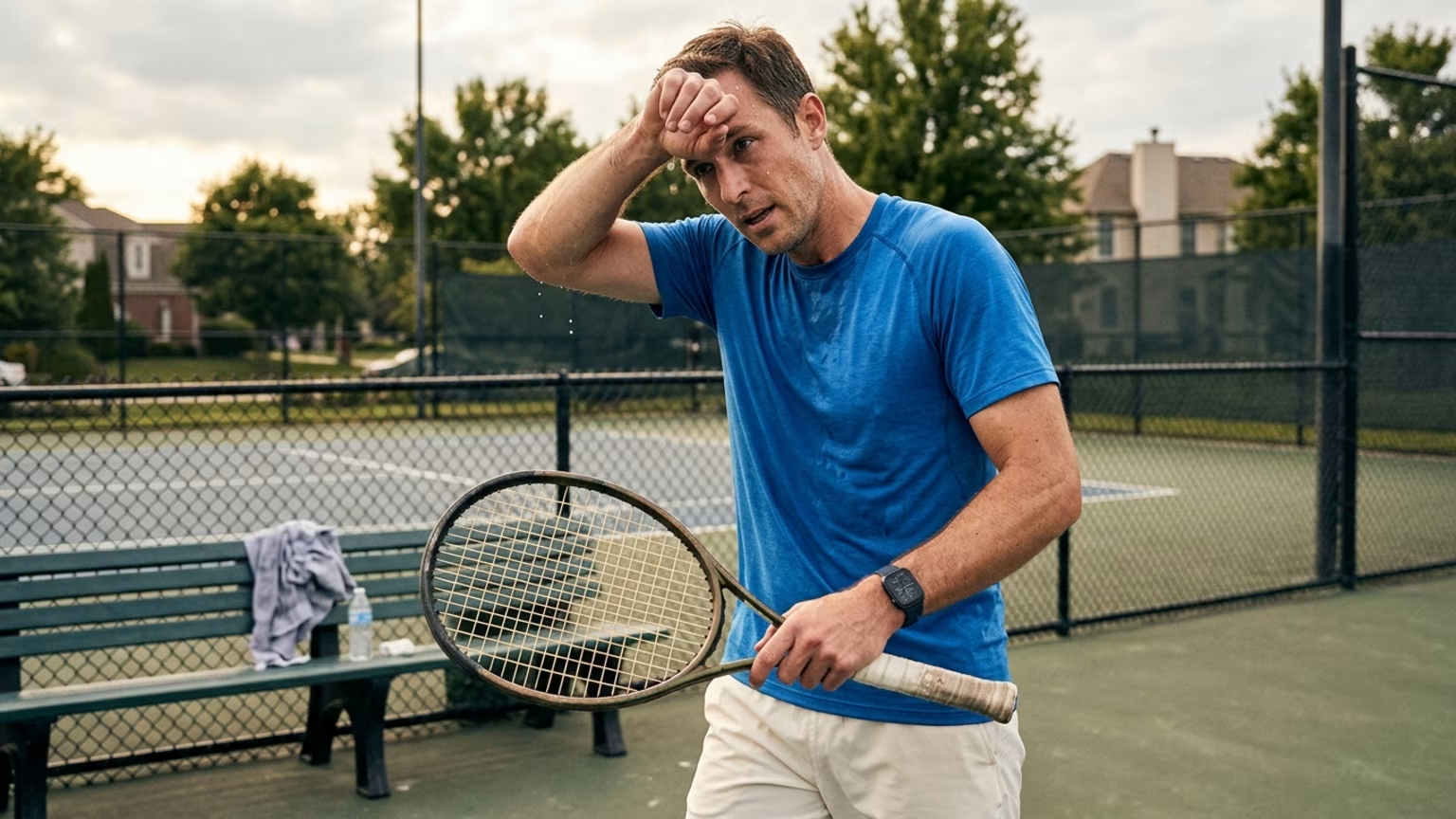
In late 2026, Oura analyzed wearable data to see how recreational tennis impacts heart health and recovery. Learn what this means for your athletic longevity.
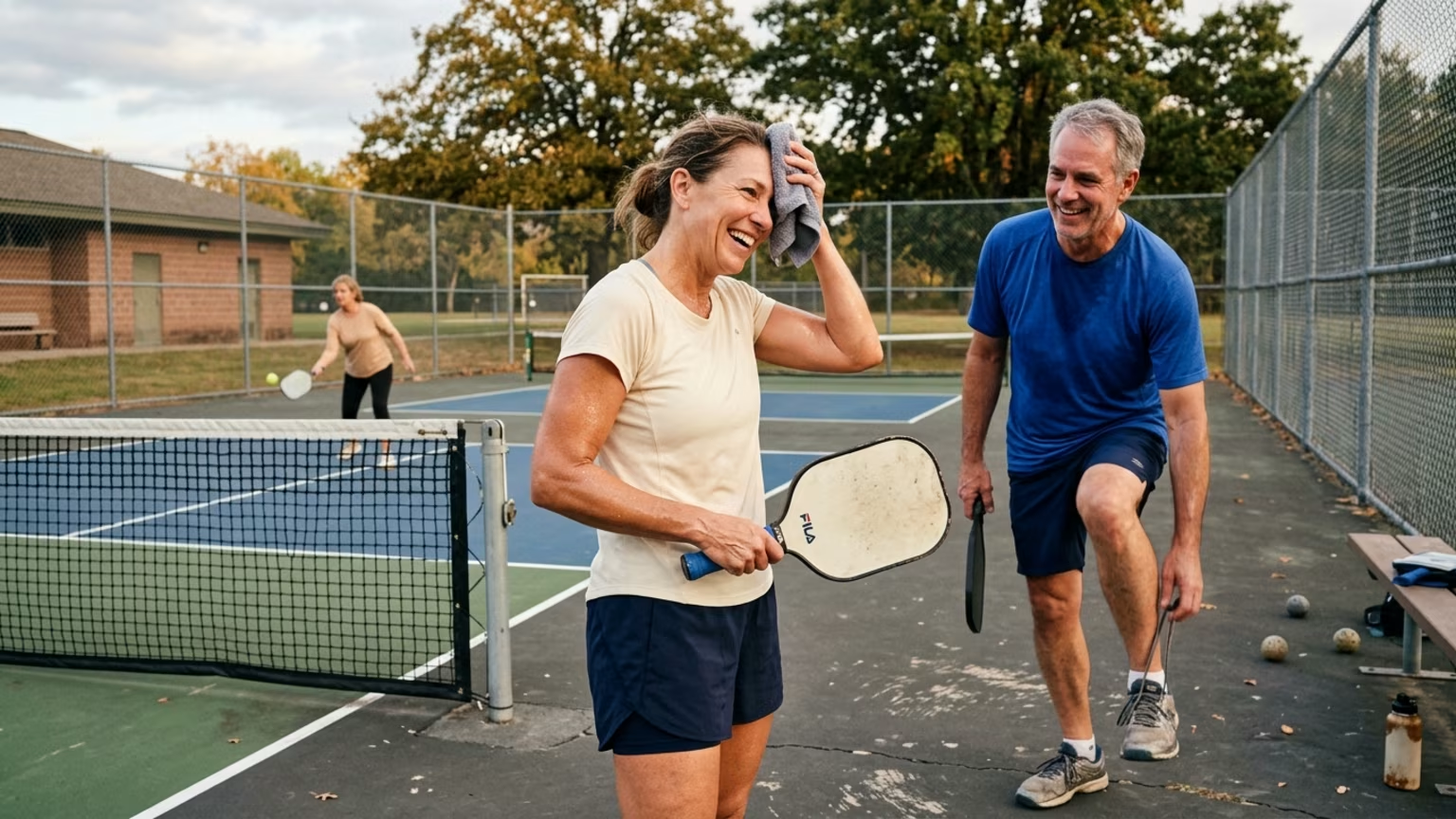
Recent guidelines emphasize gradual progression, dynamic warm-ups, and scheduled recovery to help adult racquet sports players maintain athletic longevity.
Read practical guidance for better movement, smarter preparation and a game that keeps working for you.
explore the Blog
