
An Austrian report positions padel as a practical transition sport for aging tennis players. Learn how court size and doubles play impact physical workloads.




On September 8, 2026, the Austrian publication MeinBezirk released a regional feature detailing how older adults can use padel to retain racquet skills and exercise. The report centers on a first-person trial by editor Birgit Bachhofner. She played against three experienced senior athletes who had played tennis for decades. The piece positions the sport as an accessible option for aging players who want to maintain their physical activity.
The Austrian feature operates as a local practitioner report rather than a clinical study. It offers a practical view of how lifelong athletes approach a new court format. The three senior players were between 60 and 70 years old. They used their trial to highlight the clear physical differences between traditional racquet sports and padel.
The Austrian trial involved players Heinrich Hentschel, Michael Zartl, and Gerhard Bezgovsek. The report highlights several specific design features that separate padel from traditional tennis. Padel uses a smaller court, playable Plexiglas walls, and lower-pressure balls. These specialized balls are the same size as standard tennis balls but travel at a noticeably slower speed.
The game is always played in a doubles format, meaning at least four people participate. The MeinBezirk piece suggests this structure creates more time to reach the ball. This extra reaction time often produces longer rallies and more frequent successful returns. Beginners can play alongside stronger players without being completely frustrated by the pace.
Participant Heinrich Hentschel told the publication that the doubles format felt more sociable. He also shared his observation that padel reduces the risk of injury. This remains a participant opinion rather than an independent medical conclusion. However, it accurately reflects a common sentiment among veteran players seeking manageable physical workloads.
Translating this regional report into practical advice requires looking at how adult recreational players actually move on the court. Elite padel features explosive overheads and aggressive net play. However, older recreational players can approach the game as a manageable transition from singles tennis. The smaller court and wall rebounds reduce the total distance a player must sprint during a point.
Players should not mistake a smaller court for a completely safe environment. A sports-health commentary cautions that padel still requires sudden turns, backward movement, and repetitive strokes. These physical demands can easily cause injury without proper physical preparation. In our experience, proper preparation is non-negotiable. As one of our team members notes:
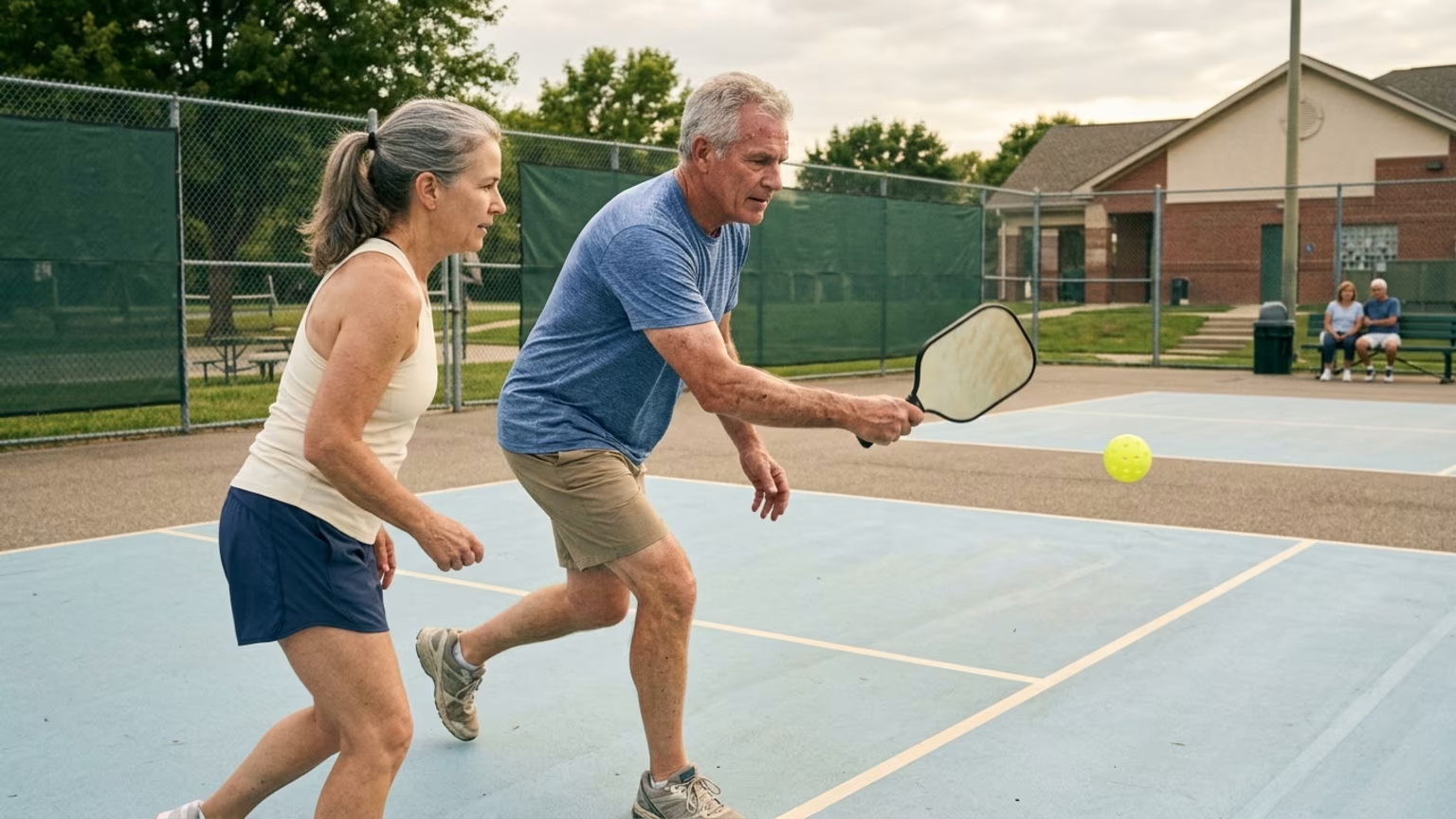
"When I first started playing pickleball, I noticed how many people skipped warming up entirely. They would jump straight out of their cars and right up to the kitchen line. I tried doing that and immediately pulled a calf muscle. Pickleball requires just as much explosive lateral movement as tennis, just in a tighter space. Since then, I always spend five minutes doing dynamic lunges and ankle rolls. It changes everything about how confident I feel pushing off the baseline."
The exact same discipline applies to anyone taking up padel. Moving to a smaller court format does not excuse players from completing a proper physical preparation routine. Implementing a structured court-ready warm-up drastically improves match readiness.
Moving to a new sport requires adapting to unfamiliar racket weights and ball reactions. Players moving away from tennis should focus on mastering deceleration and momentum control near the glass walls. To preserve athletic longevity, players need a progressive return-to-play approach. Adult players should begin with shorter sessions and allow for adequate recovery days.
Older athletes transitioning from tennis should treat padel as an option to reduce court coverage. It should not be viewed as a guaranteed injury-free substitute. Players will face a distinct learning curve during their initial sessions. Tennis experience transfers exceptionally well to timing and general ball tracking. However, predicting wall rebounds and managing the solid-faced racket requires entirely new movement patterns.
Adult players must also evaluate their playing environment carefully. Aging athletes should choose facilities with adequate lighting and safe access points. Appropriate footwear requirements and ample space around the court boundaries are essential safety factors. Older players should strictly avoid playing through persistent joint pain or dizziness.
The interest from older demographics aligns with massive global infrastructure growth. The International Padel Federation reported in 2026 that the sport has reached approximately 38 million players. This participation spans 178 countries and territories globally. Their data shows the global network now includes 85,000 courts and 27,000 clubs.
A separate report on the 2025 FIP World Padel Report noted the sport reached 70,000 courts at the beginning of 2025. It then exceeded 77,000 courts by the end of June that same year. This rapid growth illustrates a permanent shift in recreational sports preferences. As participation scales, medical researchers are gaining a clearer picture of common physical complaints.
A 2026 review analyzed injury data from 3,581 padel players. The researchers identified the elbow and shoulder as recurring upper-body injury sites. They also noted the knee and ankle as the primary problem areas for the lower body. These figures highlight why players need adequate physical preparation before stepping onto the court.
Older adults benefit significantly from regular court time. A systematic review links regular physical activity with better functional health, cognitive function and mental health. The same review notes that physical activity is especially important in later life. Combining that activity with cross-training between racquet sports can help distribute the physical workload safely.
A 2026 review on muscle health strongly supports combining racquet play with multicomponent resistance programs. These evidence-based programs are critical for reducing mobility disability in older adults with functional impairment. Court time should complement rather than replace dedicated strength and balance routines.
Looking ahead to the next season, we expect tennis facilities to heavily promote padel as a retention tool. Club operators will likely build introductory programs specifically designed for players over 60. These transitional clinics will prioritize wall tactics and modified movement patterns rather than aggressive overhead power. This operational shift will allow veteran racquet players to maintain their athletic longevity on a slightly smaller stage.
Follow Evercourts for practical insights on tennis, pickleball and padel performance, movement, recovery and healthy ageing. Stay connected for new articles, research-led guidance and ideas to help you play well and keep playing for years.


Understand calf and ankle demands in racquet sports, what injury research shows, and how gradual preparation can be scaled to current ability.

Understand padel’s movement demands and how practitioner guidance frames strength, balance and controlled direction changes alongside cardio.

How modest strength work can fit around tennis, pickleball and padel, with adaptable movement patterns and a clear look at the evidence.
Read practical guidance for better movement, smarter preparation and a game that keeps working for you.
explore the Blog
