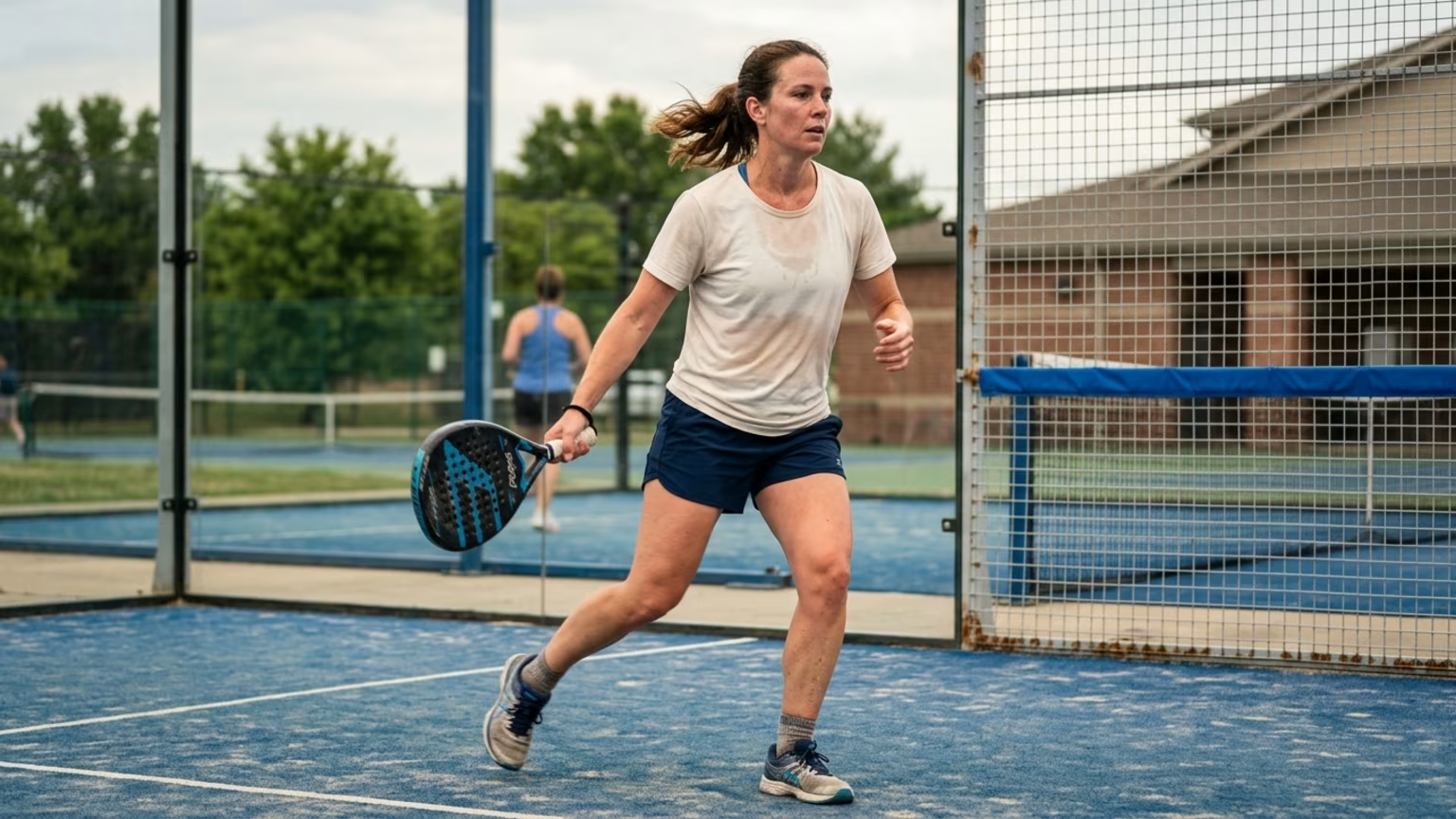

A 10-minute warm-up routine for padel, tennis, and pickleball. Learn how to prepare joints, rehearse lateral movement, and safely build court readiness.




Many recreational players rush onto the court, drop their bags, and immediately start hitting hard groundstrokes. This 10-minute protocol provides a progressive sequence to bridge the gap between arriving at the court and playing your first point. It helps players safely transition from a resting state to full match intensity.
Padel places unpredictable demands on the adult body. The sport combines short sprints, frequent starts, and lateral movement. It also involves retreats toward the glass and low returns. These actions require significant joint stability.
Our primary focus for adult racquet sports players is healthy aging and athletic longevity. This routine ignores complex fitness hype to focus entirely on capability and court readiness. The goal is to raise your heart rate gradually and mobilize the specific joints used in padel. It also prepares the body for controlled braking and re-acceleration.
By prioritizing movement quality over speed, this protocol helps players maintain their physical capabilities. It supports your ability to keep enjoying the sport for years. A proper warm-up readies the muscles for lateral demands without adding unnecessary pre-match fatigue.
A published 10-minute padel routine divides preparation into four clear stages. These stages include general movement for two minutes and mobility for three minutes. You then complete two minutes of activation and three minutes of ball work. The entire routine requires no equipment.
Start by walking or lightly jogging around the perimeter of the court for two minutes. You can include relaxed side-steps along the net, gentle heel flicks, and low high knees. The aim is to raise your heart rate gradually.
Keep the intensity low enough to maintain conversational breathing. This approach provides proper cardiovascular preparation before you begin hard hitting. It ensures your body is ready for sudden bursts of speed without forcing cold muscles to perform.
Spend the next three minutes on mobility exercises for your shoulders and wrists. You should also include hip and ankle movements to prepare your lower body for pivots. Perform forward and backward arm circles, shoulder rolls, and wrist circles.
A physiotherapy source notes that preparing the shoulder is critical before hitting hard overheads. If you have limited balance, perform gentle ankle and hip movements with support from the glass.
For the next two minutes, use shallow forward and lateral lunges. The objective is to rehearse the range of motion under full control. Keep the depth comfortable rather than forcing a deep stretch.
Dynamic movement is prioritized during this early phase of the routine. You should save long held static stretches for your post-match recovery. First-time players should reduce their range of motion and prioritize stable foot placement over speed.
Spend one minute practicing small split steps, side-steps, and short controlled stops. A padel-longevity source advises gradually rehearsing lateral steps, braking, and re-acceleration. You must stabilize your deceleration before competitive points demand it.
Older adults or players with stiff joints should use slow side-steps without crossing their feet. You can also use small, shallow split-step motions rather than full jumps.
Spend the final time shadowing easy forehands and backhands, then hit gentle volleys. Build from soft groundstrokes to controlled volleys before adding overheads. Delay lobs and bandejas until the very end of the routine.
A padel-longevity source advises progressing volume before intensity. Finish with easy volleys rather than match-speed overheads.
A 10-minute schedule should never be rigid. Players who are cold, stiff, or returning from a layoff often need more time to prepare their bodies. If your joints feel stiff, spend extra time on easy movement instead of sticking strictly to the two-minute mark.
You should progress your volume before adding intensity. The goal is to feel fully ready before you start swinging hard. If you need more time to feel prepared, take it. This practical 10-minute padel warm-up serves as a baseline guide rather than an absolute rule.
While this 10-minute structure works as a baseline, you should adapt it depending on the unique biomechanical demands of your chosen racquet sport. Padel, pickleball, and tennis all require different movement patterns.
Padel involves frequent retreats toward the glass, low returns, and repeated overhead strokes. Your warm-up must emphasize turning, backward movement, and shoulder preparation for the bandeja. Footwear is also a highly critical factor here. One padel source warns that running shoes are designed primarily for forward movement.
They recommend footwear with grip appropriate to the court surface without locking the foot during pivots. If you feel persistent pain that returns at every session, seek professional assessment rather than simply warming up longer.
When I first started playing pickleball, I noticed how many people skipped warming up entirely. They would jump straight out of their cars and right up to the kitchen line. I tried doing that and immediately pulled a calf muscle. That early mistake taught me to respect the specific physical requirements of smaller courts.
Pickleball requires just as much explosive lateral movement as tennis, just in a tighter space. Since then, I always spend five minutes doing dynamic lunges and ankle rolls. It changes everything about how confident I feel pushing off the baseline. Focus your pickleball tweaks on rapid side-steps, quick split steps, and low-stance mobility.
A reliable match day routine is just as essential for pickleball as it is for any other sport.
Tennis demands longer sprints and full-rotation groundstrokes from the baseline. You should extend the general movement phase to accommodate larger court coverage. Spend extra time shadowing full groundstrokes and serving motions before hitting the ball.
The progression from short-court rallies to full-court hitting is vital. It prepares the shoulders and hips for heavy top-spin shots. A 12-minute court-ready warm-up might be more appropriate for tennis players who need to prepare for baseline sprints. You must ensure your lower body is ready for hard stops on hard courts or slides on clay.
Follow Evercourts for practical insights on tennis, pickleball and padel performance, movement, recovery and healthy ageing. Stay connected for new articles, research-led guidance and ideas to help you play well and keep playing for years.


An evidence check on sports supplements like tart cherry juice. Learn why racquet sports players should prioritize core nutrition over functional foods.
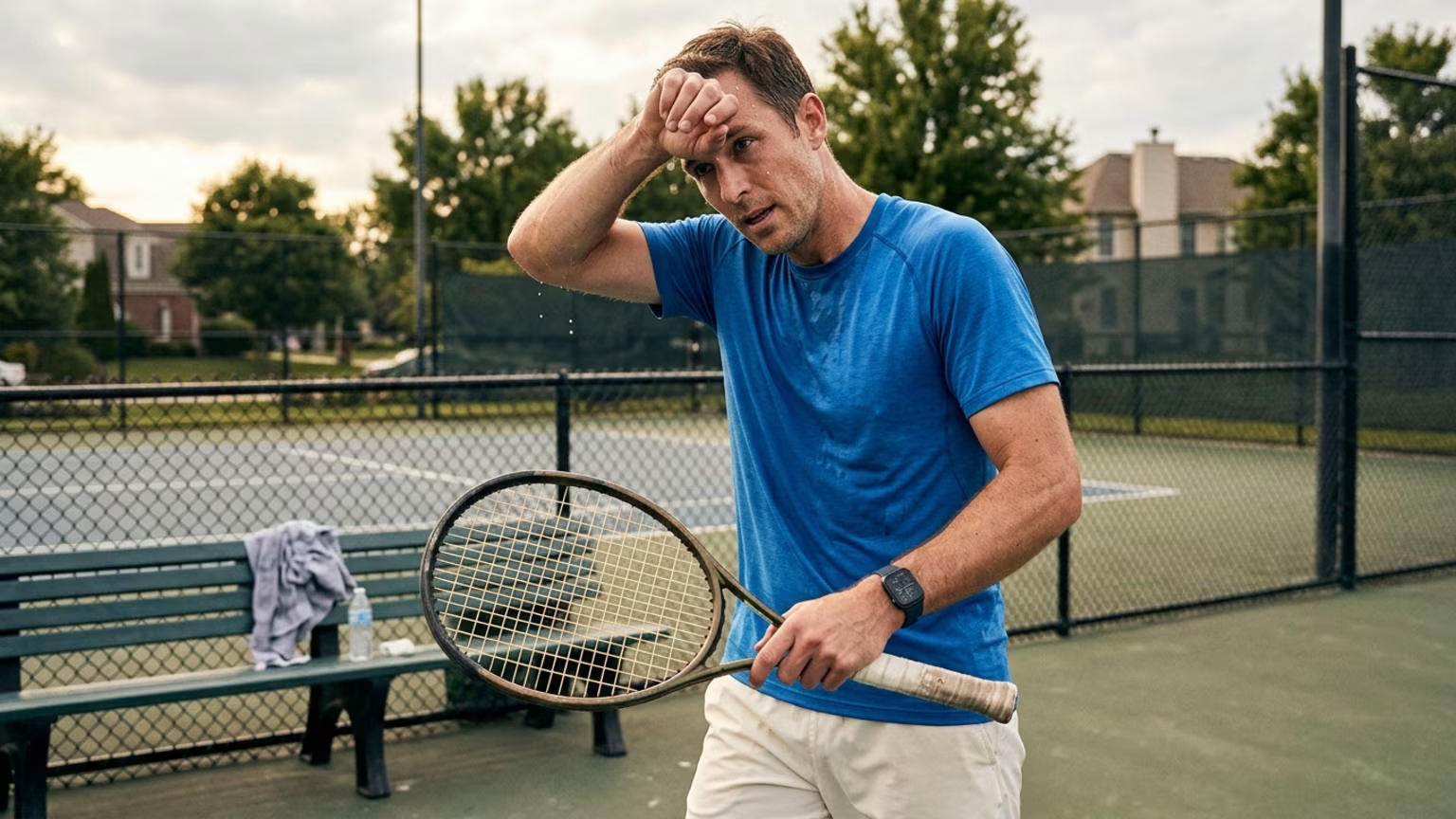
In late 2026, Oura analyzed wearable data to see how recreational tennis impacts heart health and recovery. Learn what this means for your athletic longevity.
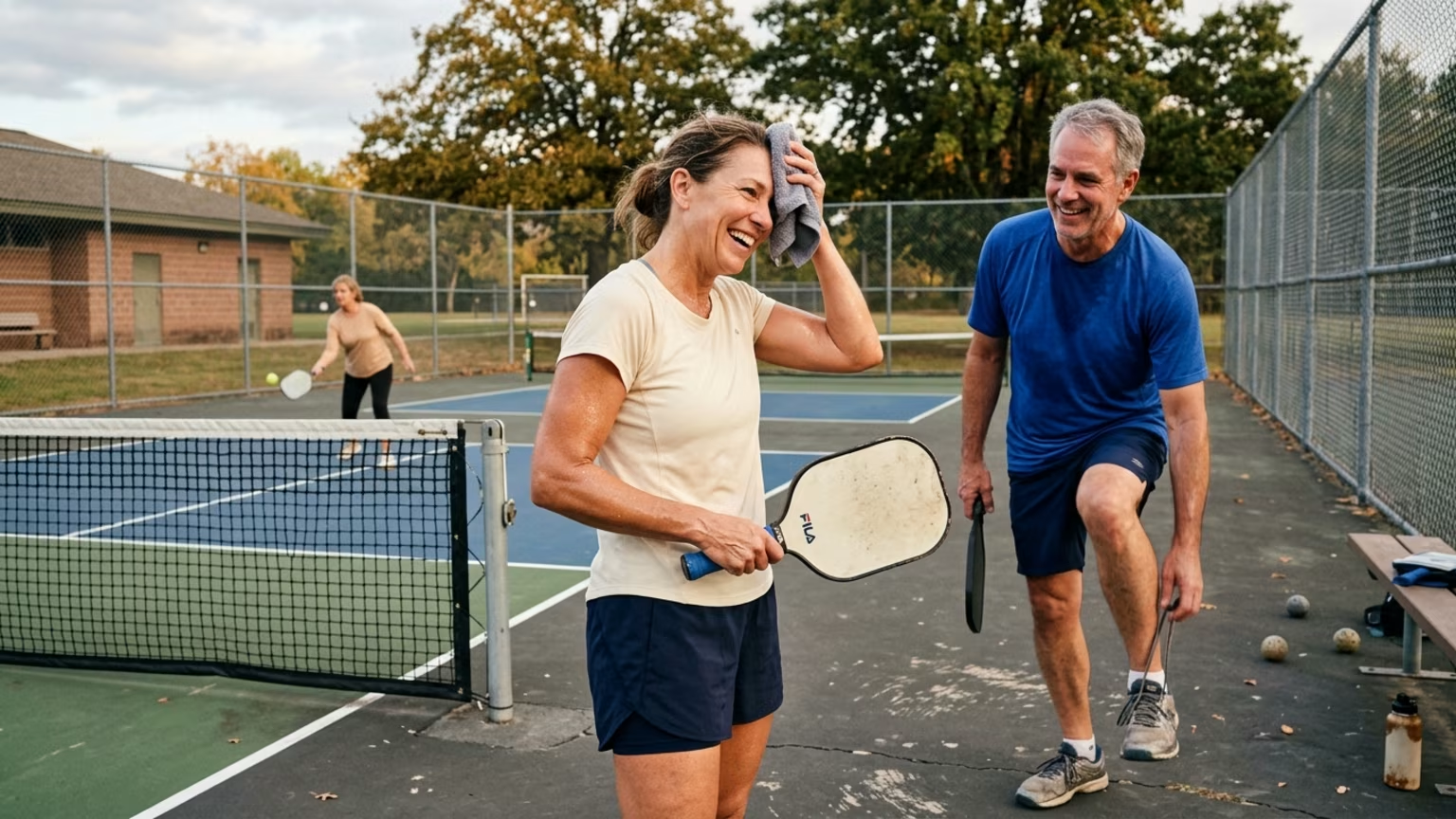
Recent guidelines emphasize gradual progression, dynamic warm-ups, and scheduled recovery to help adult racquet sports players maintain athletic longevity.
Read practical guidance for better movement, smarter preparation and a game that keeps working for you.
explore the Blog
