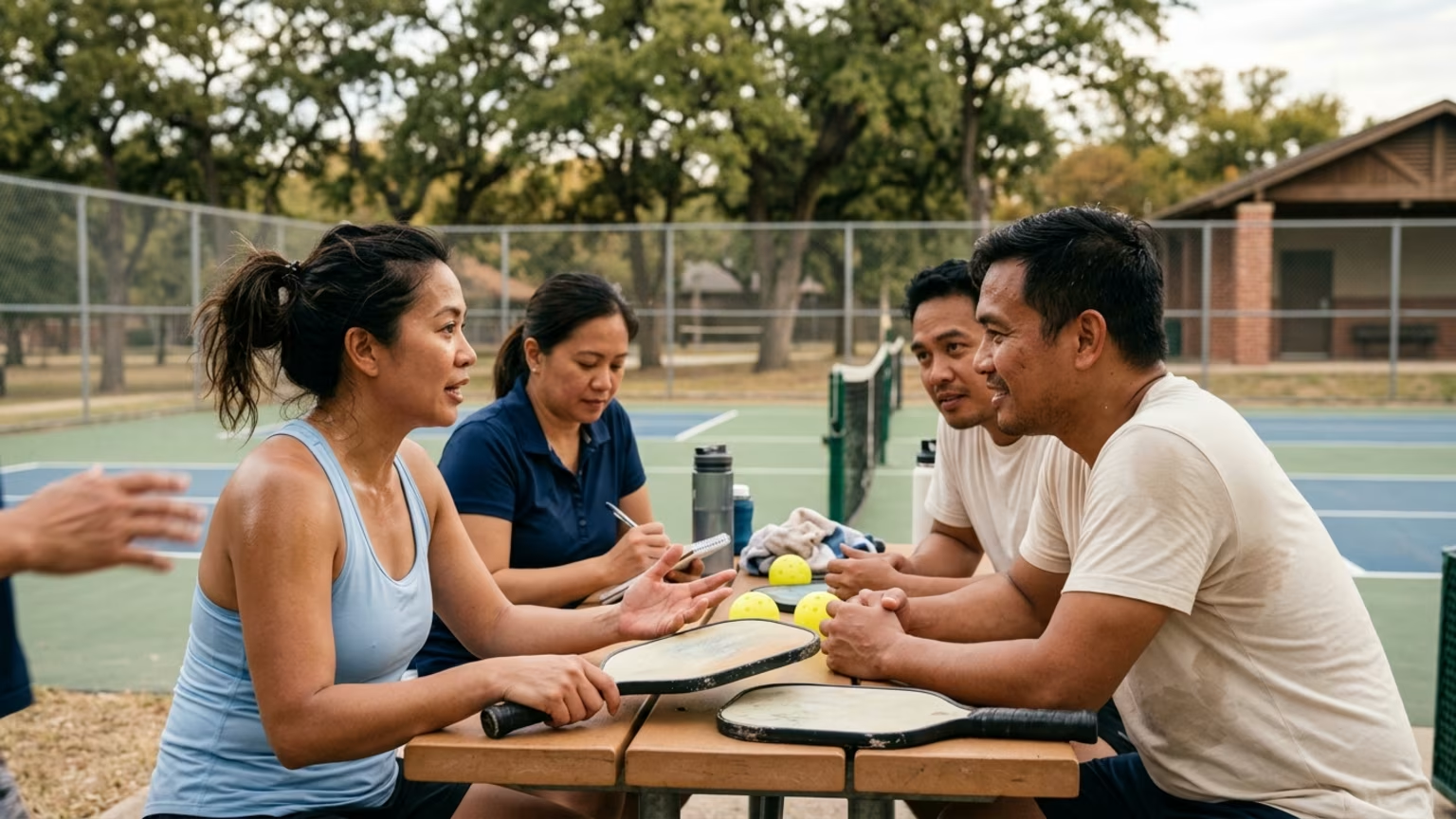

Former tennis players Leander Lazaro and Sarah Jane Lim-Narvasa detail how their transition to professional pickleball reshaped their preparation and recovery.




In late September 2026, professional pickleball players Leander Lazaro and Sarah Jane Lim-Narvasa detailed their lifestyle and preparation changes during a media roundtable. The Manila Times reported that the two former competitive tennis players discussed how their transition to professional pickleball has reshaped their physical routines and mental approach. The athletes recently represented the Philippines at the Pickleball World Cup. The national team secured an 11th-place finish among a field of more than 40 nations.
This international result provides a clear backdrop for their recent public discussion regarding the daily demands of professional court sports. The transition from tennis to a rapidly growing sport like pickleball requires distinct adjustments in physical preparation. Lazaro and Lim-Narvasa offered a detailed look at how they manage these changing requirements as their professional careers evolve.
The roundtable event introduced Lazaro and Lim-Narvasa as Herbalife pickleball ambassadors. They are actively promoting the company's "Better Every Day" campaign. The Manila Times described this campaign as an initiative encouraging exercise, proper nutrition, and consistent improvement. Both athletes explained that their current adult training regimen puts significantly more attention on off-court habits than their previous tennis careers did.
Specifically, they pointed to nutrition, hydration, sleep, strength training, and active recovery as their primary focus areas. Lazaro and Lim-Narvasa also discussed the intense physical demands of tournament days. During these events, competitive matches may run continuously from the morning into the evening. Both athletes are lactose intolerant, and they shared that they use Herbalife nutritional shakes to help meet their individual dietary needs.
BusinessWorld similarly reported that Lim-Narvasa credited a Herbalife shake with helping her sustain her nutritional requirements on competition days. However, Lim-Narvasa also emphasized during the roundtable that nutritional needs differ heavily from person to person. She cautioned that healthy living should be a daily practice, and she noted that any nutrition plan must align with an individual player's specific goals. Lazaro added that pickleball has helped him focus on elements he can control. He also noted that a supportive community has greatly benefited his overall mental well-being.
Professional athletes naturally structure their entire week around competition preparation. However, recreational players should view these routines as practical lifestyle prompts rather than strict performance prescriptions. Elite players might rely on specific, sponsor-provided products to manage tight tournament schedules. They also use these targeted items to navigate personal dietary restrictions like lactose intolerance.
For the everyday adult player, the most valuable takeaway is the shift in focus away from simply hitting balls. While younger athletes might get away with ignoring recovery, adult racquet sport participants must actively manage their lifestyle habits. This approach is essential to maintain regular, pain-free court time. Players must understand that adjusting your court coverage and physical exertion requires robust off-court support.
Evercourts advocates for this exact philosophy regarding athletic longevity. Maintaining joint health and muscular endurance allows recreational players to handle multiple matches in a single weekend. The goal is to feel capable on Monday morning rather than severely depleted. Focusing on consistent sleep and hydration provides a far better return on physical investment than chasing complex supplement regimens.
The athletes' emphasis on sleep, hydration, and strength training highlights that true preparation happens before you even step on the court. Recreational players do not need to mimic a professional ambassador's exact supplement routine to see benefits. Instead, weekend league participants should focus on building a consistent foundation of rest and proper fueling. These are practical, everyday considerations for players who want to sustain their physical capabilities.
Adapting these healthy habits helps adult players enjoy their sport for years without treating their bodies like elite machines. For example, switching between different racquet disciplines requires thoughtful physical adaptation. Incorporating diverse physical routines outside of regular match play can further support this overarching goal. The objective is to build athletic longevity through smart, sustainable choices rather than extreme dietary overhauls.
The physical demands of the sport underscore exactly why professional athletes prioritize strength and recovery. A September 2026 article from Racket Chronicle summarized older-adult pickleball injury evidence. The publication noted that falls, slips, and trips accounted for 43.1 percent of pickleball-related emergency room visits during its analyzed period. Furthermore, fractures made up 23.9 percent of those medical diagnoses.
However, the same article cautions that these figures cannot distinguish massive growth in the overall player pool from actual changes in injury risk. The report also described a cited training study regarding fall differences. That study's results were not statistically significant, and its design lacked randomized controls. These distinct limitations mean that emergency room counts do not establish a specific risk rate per hour of play.
They do, however, reinforce the value of the strength training and active recovery routines advocated by professional athletes. Preparing the body to handle sudden stops and lateral movements is incredibly crucial. Proper physical preparation can help mitigate the risks associated with tripping or losing balance during a fast-paced rally. Taking time to properly activate muscles before playing is a fundamental step.
Moving forward, regional pickleball scenes will likely mirror the competitive intensity discussed by Lazaro and Lim-Narvasa. BusinessWorld reported that both athletes expect local Philippine competition to rise rapidly over the coming seasons. They anticipate this growth as younger players enter the sport and more tournaments emerge locally. Lazaro specifically pointed to the growing number of local tournaments as a key factor in this competitive evolution.
This competitive shift is already visible with new, high-stakes professional events hitting the calendar. BusinessWorld highlighted the inaugural Maharlika Pilipinas Pickleball Tour stop scheduled for October 3 and 4 in Angeles City, Pampanga. This specific event featured P1 million at stake for the winning team. As regional tournament structures mature and financial incentives grow, expect more transitioning tennis players to publicly refine their off-court preparation protocols.
Follow Evercourts for practical insights on tennis, pickleball and padel performance, movement, recovery and healthy ageing. Stay connected for new articles, research-led guidance and ideas to help you play well and keep playing for years.


An evidence check on sports supplements like tart cherry juice. Learn why racquet sports players should prioritize core nutrition over functional foods.
In late 2026, Oura analyzed wearable data to see how recreational tennis impacts heart health and recovery. Learn what this means for your athletic longevity.
Recent guidelines emphasize gradual progression, dynamic warm-ups, and scheduled recovery to help adult racquet sports players maintain athletic longevity.
Read practical guidance for better movement, smarter preparation and a game that keeps working for you.
explore the Blog
