

Recent reporting in Perth shows how the rapid growth of pickleball is bringing new life to local tennis clubs as facilities adapt to rising participation.




On October 3, 2026, The West published a Perth focused report indicating that pickleball's rising popularity is bringing new life to some local tennis clubs. The report was updated on October 4 and described the sport as breathing new activity into struggling facilities. This shift highlights a changing landscape for racquet sports across Western Australia. Local clubs are increasingly integrating mixed programming to sustain their daily operations.
The regional reporting points to a notable transition in how local sports facilities operate and survive. According to a September 2026 report from Perth Is OK, Pickleball Australia had already reached more than 29,000 members. The same report noted the governing body had established 443 clubs nationally by that time. The Pickleball Association of Western Australia now lists active clubs and sessions on both sides of the river in Perth.
This local integration reflects a broader national trend in recreational sports management. A Ground News summary of recent reporting noted that pickleball now has an estimated 200,000 participants nationwide. The outlet also described the activity as the fastest growing sport in Australia. As more casual players seek out reliable places to play, existing tennis clubs become the natural choice for community action.
State governments are also stepping in to support regional racquet sports infrastructure as participation rises. For instance, the state government recently announced a focused investment in the Esperance Tennis Club. This funding will support greater participation, more coaching availability, and longer opening hours. The investment will directly benefit a regional club that currently serves more than 200 members.
For the adult recreational player, this development presents a mix of new opportunities and practical challenges. Shared facilities mean clubs can afford to stay open and maintain their grounds for everyone. However, rising participation across multiple sports can place pressure on existing amenities and court scheduling. You might find that court availability and space shape modern racquet sports in ways that require much more planning.
Players who are weighing their club options should look closely at how a facility manages its courts. Adding a new sport does not guarantee that prime tennis times will remain untouched by the changes. If you are evaluating club memberships in the current court booking era, ask specific questions about the programming schedule. Check if sessions are scheduled heavily on weekends or if drop-in times are protected.
When traditional tennis clubs integrate pickleball, they often start by painting blended lines on existing hard courts. This approach maximizes utility but creates a busy visual field that players must adjust to during fast rallies. A tennis player tracking a deep baseline ball must learn to ignore the shorter lines painted inside the court. Conversely, pickleball players using a modified tennis court often have to retrieve balls from much further away.
When a local tennis venue adds new court lines, the daily experience changes for the existing membership base. You should confirm whether shared courts have clear time allocations for each specific sport. Ask management how they handle overlapping tournaments or peak evening hours when both groups want access. Understanding these administrative details helps you avoid frustration when you just want to play a steady match.
Adult players should focus on the actual playing conditions rather than assuming a club is perfect just because it added a new sport. Increased foot traffic can mean aging facilities might struggle to keep up with the ongoing wear and tear. Visit the courts during peak hours to see how the club balances the competing demands of its members. You will want to ensure the playing surfaces are well maintained despite the higher usage rates.
The social atmosphere at a shared club often shifts dramatically when a new racquet sport is introduced. Pickleball is widely recognized for its accessible nature and highly social group dynamics on the court. This can bring a renewed sense of community energy to a club that may have felt quiet in previous years. However, players who prefer focused tennis practice will need to adapt to a livelier environment during shared hours.
The influx of new players often forces clubs to modernize their approach to court reservations and general access. Older facilities that previously relied on a simple whiteboard system are now shifting to digital booking platforms. This modernization helps prevent double bookings, but it requires players to plan their weekly matches further in advance. You must be proactive about securing your preferred time slots before the evening rush fills the schedule.
The data from recent regional reporting provides clear context for these local club changes across Western Australia. The Ground News summary points to a nationwide base of roughly 200,000 pickleball participants. This volume of casual and regular players creates significant demand for accessible and reliable court space. When hundreds of thousands of players need a place to hit, traditional tennis clubs are the most logical venues to absorb them.
At the organized level, the figures show a steady formalization of the sport across the country. The Perth Is OK report confirmed that Pickleball Australia held over 29,000 official members in September 2026. These members are spread across 443 national clubs that offer structured play and competitive events. This translates directly to local action in Perth, where sessions are actively scheduled across the metropolitan area.
There is a notable difference between the formal membership counts and the broader participation estimates. The 29,000 members registered with Pickleball Australia represent the core group of dedicated players who likely compete in official events. In contrast, the estimated 200,000 nationwide participants include casual players who might only play occasionally with friends. For a local tennis club, attracting just a fraction of those casual participants can completely change its financial outlook.
Regional investments demonstrate that facility upgrades are necessary to support this growing base of active players. The state government investment at Esperance Tennis Club shows how targeted funding can help venues manage their operations. With more than 200 members at that specific club, government support ensures better coaching availability and improved facility access. It is a clear indicator that public investment is actively following the rise in racquet sports participation.
Over the next season, expect more tennis clubs to experiment with dual programming to manage their operating costs. We will likely see a clearer division between facilities that permanently convert courts and those that rely on temporary lines. Clubs that successfully manage this transition will serve as a model for community sports planning across Australia. This ongoing shift will continue to demonstrate how format adaptability drives growth across racquet sports.
The true test for these facilities will be whether they can upgrade their infrastructure to match their growing membership rosters. Expanding the player base brings vital revenue, but it also demands better parking, updated clubhouses, and resurfaced courts. Clubs will need to balance the enthusiasm of new players with the expectations of longtime members to succeed. This balancing act will define the next era of healthy aging and athletic longevity for local racquet sports communities.
Follow Evercourts for practical insights on tennis, pickleball and padel performance, movement, recovery and healthy ageing. Stay connected for new articles, research-led guidance and ideas to help you play well and keep playing for years.


An evidence check on sports supplements like tart cherry juice. Learn why racquet sports players should prioritize core nutrition over functional foods.
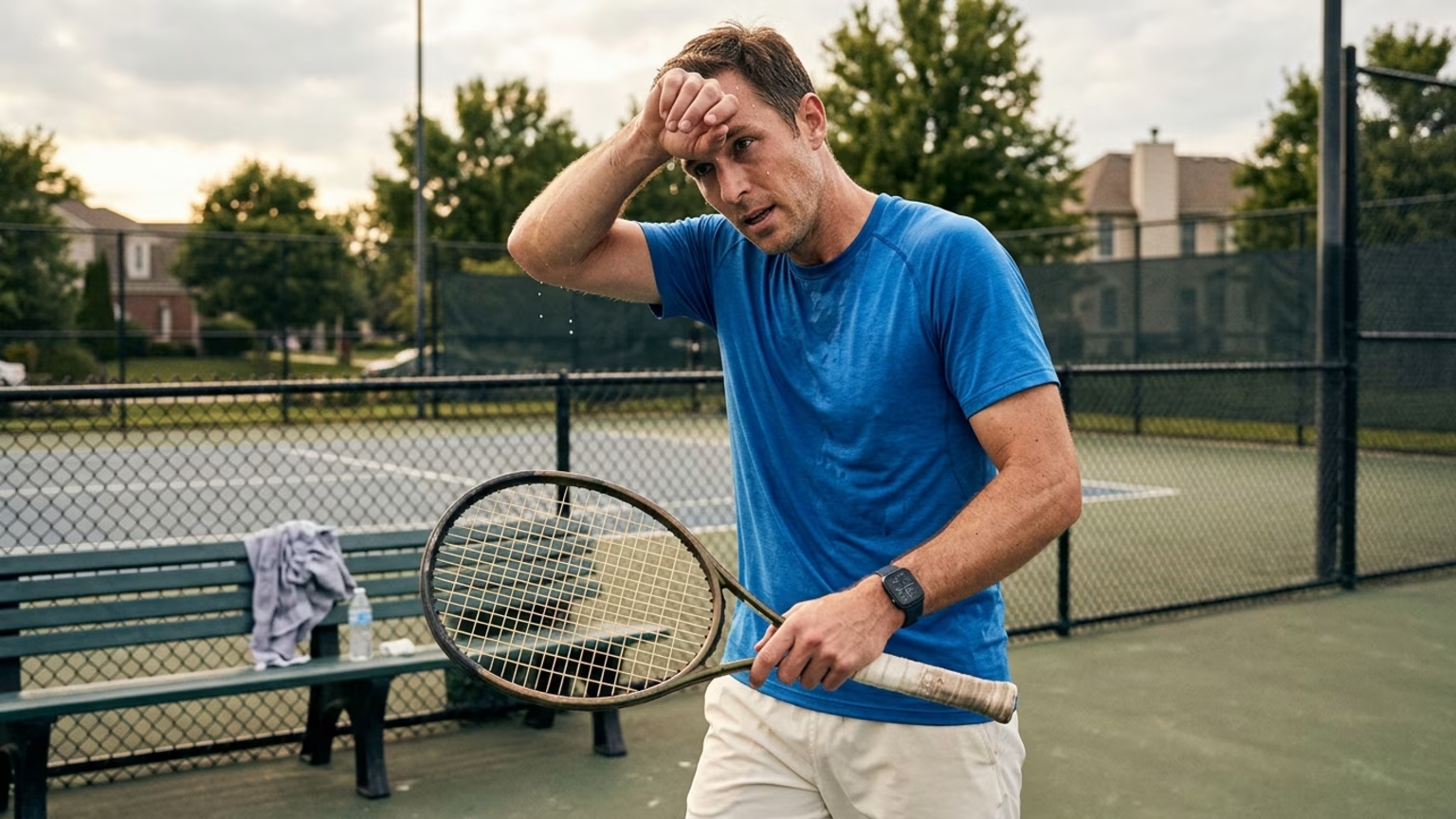
In late 2026, Oura analyzed wearable data to see how recreational tennis impacts heart health and recovery. Learn what this means for your athletic longevity.
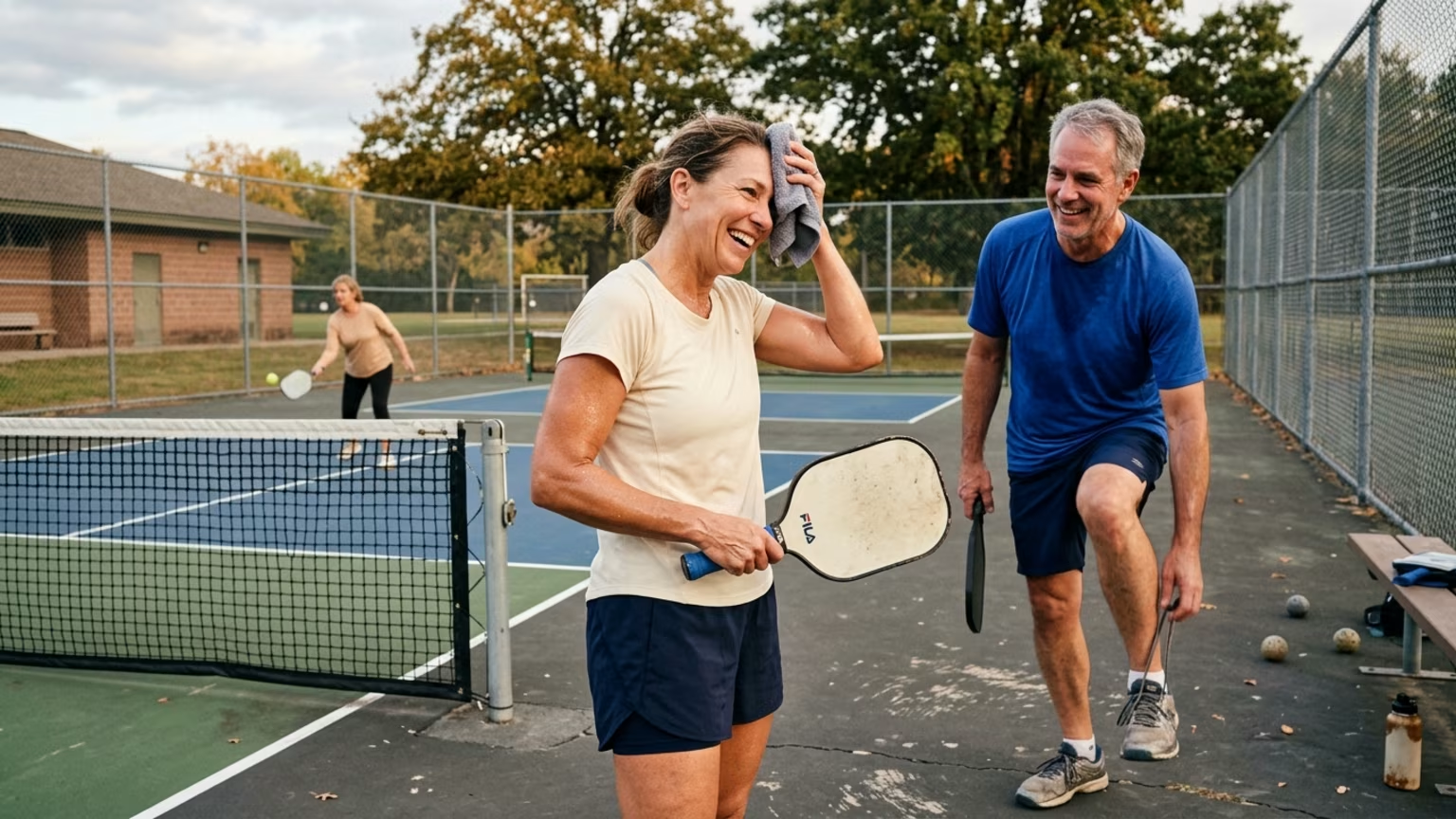
Recent guidelines emphasize gradual progression, dynamic warm-ups, and scheduled recovery to help adult racquet sports players maintain athletic longevity.
Read practical guidance for better movement, smarter preparation and a game that keeps working for you.
explore the Blog
