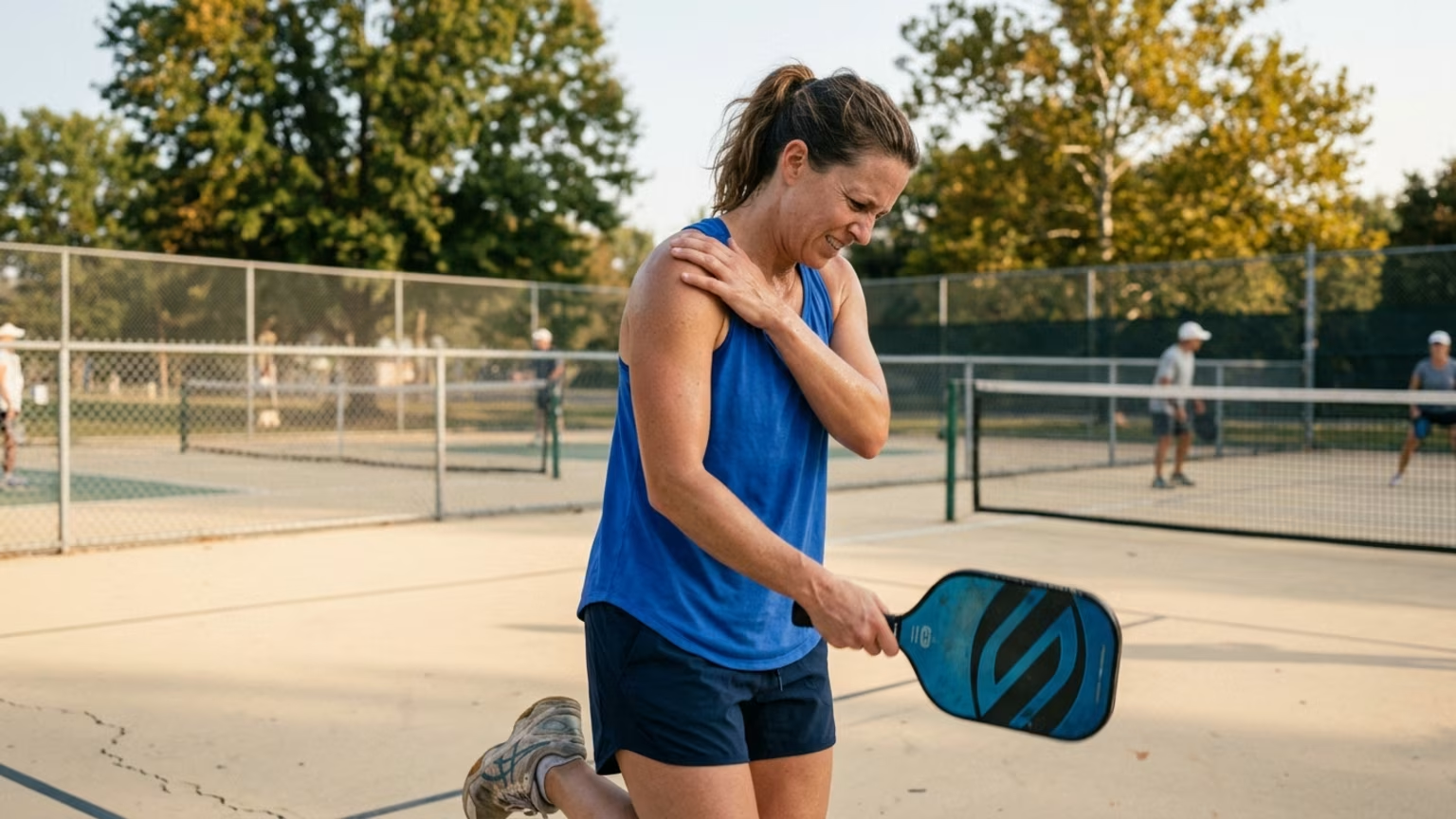

A breakdown of recent guidance on pickleball shoulder pain, covering kinetic chain mechanics, proper warm-ups, and load management for recreational players.




On September 19, 2026, The Dink published a detailed report titled “Pickleball Shoulder Pain: Protect Your Serve As You Age.” The report frames serve-related shoulder irritation primarily as a load management and overuse problem. Rather than treating shoulder pain as the result of a single traumatic event, the publication identifies sudden spikes in playing volume as the main culprit. Older recreational players can make serving more sustainable by adjusting their mechanics and managing their total playing time.
The new report details how arm-dominant serving mechanics and insufficient scapular muscle endurance contribute heavily to shoulder pain. The underhand pickleball serve does not impose the exact same overhead motion as a tennis serve. However, the repeated acceleration and deceleration required to strike the ball can still load the shoulder heavily. Furthermore, The Dink notes that overheads and hard drives generally load the shoulder even more than serves do.
This means players need to evaluate their entire session rather than just their serving volume. The Dink recommends generating force from the ground up to protect the joint during all these strokes. Force should originate in the legs, travel through hip and trunk rotation, and only then pass to the shoulder and paddle.
According to the USA Pickleball guidance cited by The Dink, players can generate serve pace through ground reaction force and trunk rotation. This approach protects the joint rather than relying solely on arm speed. The publication advises using a closed or semi-closed stance and initiating hip rotation before the paddle even moves. Proper footwork allows the lower body to generate momentum efficiently, which takes the burden off the smaller shoulder muscles.
During the swing, players are encouraged to use a relaxed pendulum motion. The official rules require players to maintain contact below the waist and keep the paddle head below the wrist. A full and natural follow-through is recommended over abruptly stopping the swing. Decelerating the paddle abruptly after contact often places significant and unnecessary stress on the posterior shoulder muscles.
Off the court, The Dink recommends combining gradual workload progression with specific physical preparation. This includes rotational core work, scapular strengthening, thoracic mobility exercises and resistance band training. Building this baseline capacity helps the shoulder support muscles absorb the repetitive demands of match play. Without this endurance, the rotator cuff fatigues quickly during long tournament weekends.
The publication does not prescribe a universal maximum number of serves per session for recreational athletes. Instead, it argues that monitoring the rate at which workload changes is far more important than a single serve count threshold. Avoiding sudden spikes in court time helps the body adapt to the stress gradually. Players should avoid jumping into a full weekend tournament if they have only played once a week during the prior month.
For professional players, serving mechanics are constantly analyzed to extract maximum power and tactical advantage. For adult recreational players, the daily reality is much different. The primary goal is usually finding a sustainable way to play multiple times a week without waking up stiff. The Dink notes that players seeking more pace should first improve their stance and sequencing before automatically swinging harder.
The publication cites former professional player Zane Navratil’s serve experiments to show that efficient mechanics often trump raw physical effort. A sports medicine guide published by The Standard similarly advises players to use core and torso rotation instead of relying mainly on the wrist. The Standard quotes injury prevention expert Li, who recommends five to ten minutes of dynamic movement to prepare the body.
This dynamic warm up should include arm circles, shoulder rotations, lunges and torso twists before any competitive play begins. In our experience, proper physical preparation is often completely overlooked at the recreational level. When I first started playing pickleball, I noticed how many people skipped warming up entirely. They would jump straight out of their cars and right up to the kitchen line.
I tried doing that and immediately pulled a calf muscle. Pickleball requires just as much explosive lateral movement as tennis, just in a tighter space. Since then, I always spend five minutes doing dynamic lunges and ankle rolls. It changes everything about how confident I feel pushing off the baseline.
This same principle applies to the upper body and the shoulder complex. A clinical guide from Roper St. Francis Healthcare reinforces this exact point about gradual preparation. The healthcare provider advises players not to move directly from the car into full speed play. They recommend loosening the arms and legs before competition and allowing adequate recovery days between training sessions.
While technique adjustments and proper warm ups can certainly help manage normal soreness, players must listen to their bodies. Both The Dink and Roper St. Francis direct players toward professional medical evaluation for concerning or acute symptoms. You should always seek professional medical care if you experience a painful pop, severe pain, swelling, weakness or restricted range of motion. Pushing through sharp pain is never a sustainable strategy for athletic longevity.
The shift toward smarter load management aligns closely with the demographic realities of current pickleball injury data. The Dink cites a 10 year review of emergency department visits covering the period from 2013 to 2022. This review reportedly found that approximately 91% of treated pickleball injuries involved players aged 50 or older. Furthermore, the mean patient age in that specific emergency dataset was 64.
The publication also cites a retrospective study of 204 patients treated in specialized hand and upper extremity clinics between 2015 and 2022. In this specific clinical setting, shoulder injuries represented 4.1% of upper extremity cases. Wrist fractures accounted for a much larger share, representing 31.4% of the clinical cases. The mean age of these patients was 65, and physical therapy appeared in 44.2% of the non-surgical cases.
It is worth noting that clinic based data can overrepresent people who specifically seek out specialist care. Therefore, these percentages should not be generalized to represent the entire playing population. The available academic search results do not establish a universal consensus injury rate or a definitive shoulder specific risk estimate. However, a 2026 Injury Epidemiology study did examine pickleball related injuries treated at a tertiary academic center over five years.
This ongoing research shows that court injuries remain an active area of medical study as the sport grows. The sheer scale of the sport makes these injury figures highly relevant for healthy aging. Industry reports citing SFIA data place U.S. pickleball participation at roughly 24.3 million to 24.5 million players in 2025. With such a massive population of adult players hitting the courts, avoiding overuse injuries is critical.
As the sport matures, we expect the culture around recreational play to shift significantly over the coming season. Instead of viewing shoulder pain as an inevitable consequence of getting older, players will increasingly treat it as a manageable mechanical issue. The focus will move away from isolated arm treatments and toward full body kinetic chain mechanics. We will likely see more adult players adopting structured, dynamic warm ups as a non-negotiable part of their court routine.
The days of walking straight from the parking lot into a competitive match will gradually become a thing of the past. By distributing physical load across the legs and hips, players will build a true foundation for athletic longevity. This proactive approach will help the aging player base maintain their physical capabilities and protect their joints. Ultimately, smarter mechanics and better load management will allow adults to continue playing the sport they love for years to come.
Follow Evercourts for practical insights on tennis, pickleball and padel performance, movement, recovery and healthy ageing. Stay connected for new articles, research-led guidance and ideas to help you play well and keep playing for years.


An evidence check on sports supplements like tart cherry juice. Learn why racquet sports players should prioritize core nutrition over functional foods.
In late 2026, Oura analyzed wearable data to see how recreational tennis impacts heart health and recovery. Learn what this means for your athletic longevity.
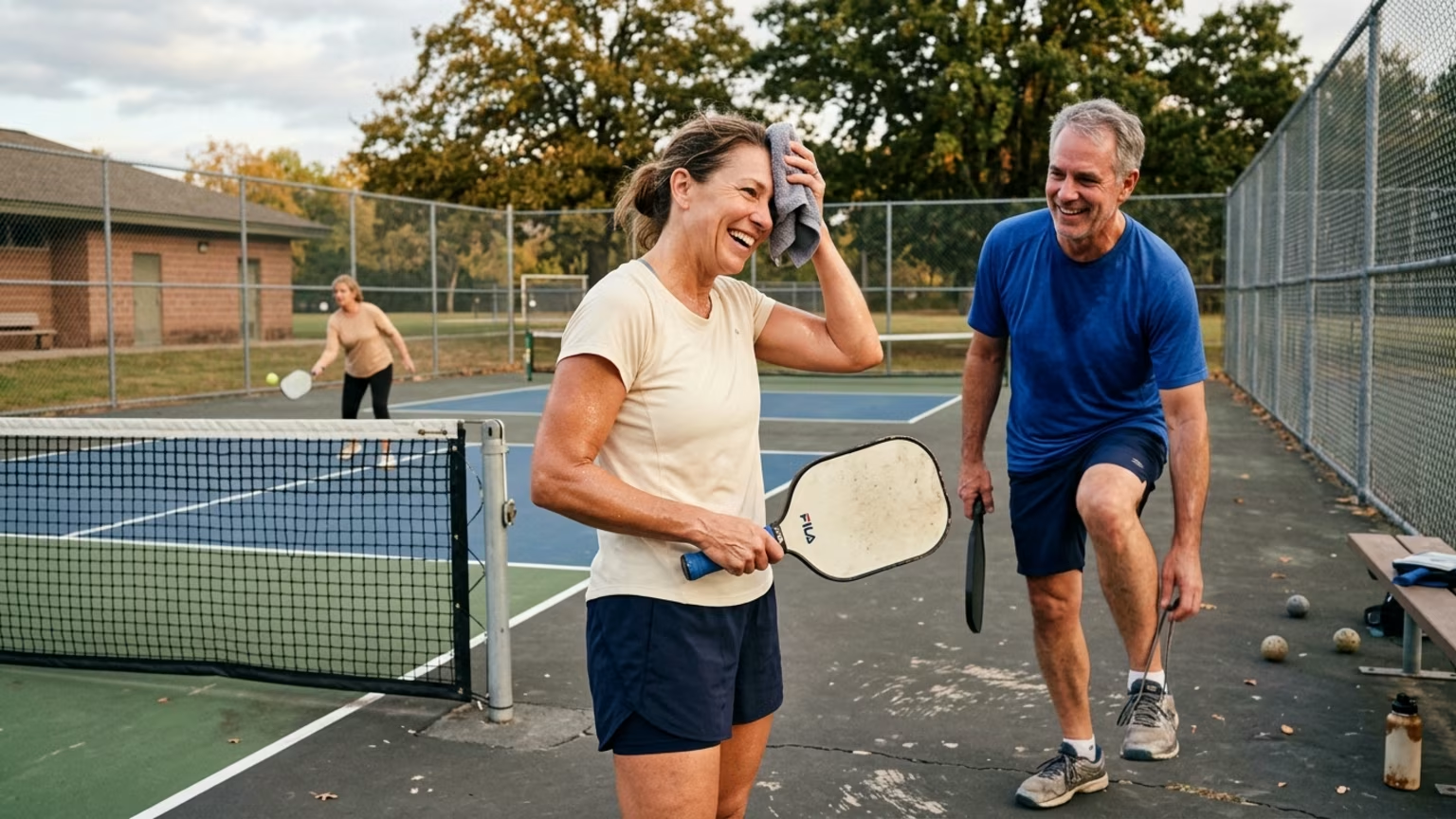
Recent guidelines emphasize gradual progression, dynamic warm-ups, and scheduled recovery to help adult racquet sports players maintain athletic longevity.
Read practical guidance for better movement, smarter preparation and a game that keeps working for you.
explore the Blog
