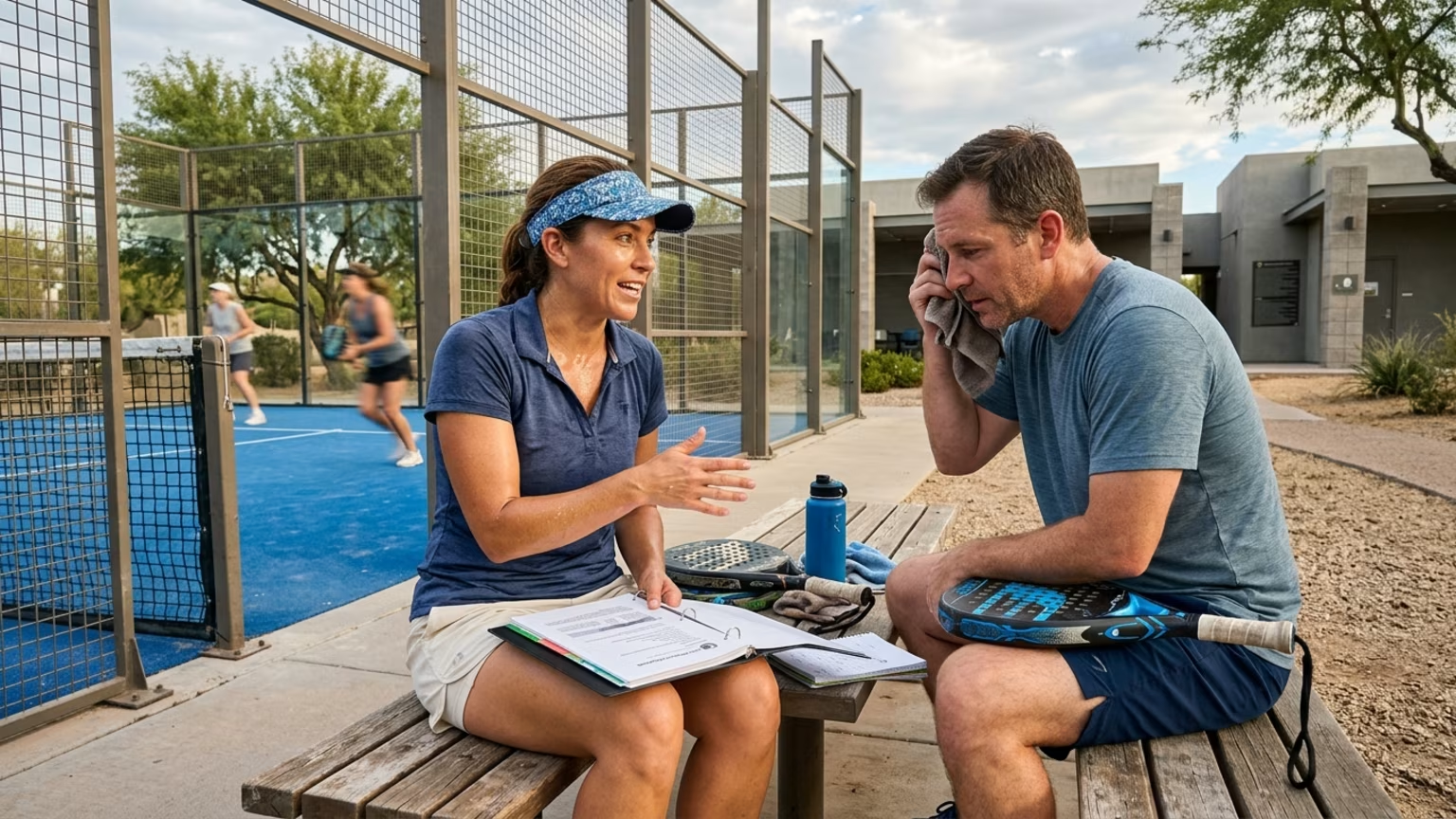

Evercourts answers your questions on padel coaching certifications, physical preparation, and how adult players can stay healthy on the court.




How do we properly prepare our bodies for the unique demands of padel, and how can we verify that our coaches are actually qualified to guide us?
Finding a certified coach and committing to targeted strength work are the non-negotiable steps for adult players transitioning to the padel court.
I remember finishing a tough two hour padel match on a cold Tuesday night and waking up the next morning feeling like my lower back was locked in concrete. For a long time, I just accepted this as the price of playing hard in my forties. But once I started spending just ten minutes on targeted hip mobility before heading to the club, the stiffness almost completely vanished. It taught me that we do not have to accept pain as a default state of aging.
There is some confusion surrounding the recent and ongoing coaching events in Germany. The DTB-related event calendar lists a C-Trainer specialist course, number 5 of 2026, in Stuttgart from August 27 to 29, 2026. The listing showed one available place when accessed. However, the accessible listing does not specify whether the Stuttgart course covers load management, technical progression, or injury prevention.
The public page does not identify the Stuttgart event as a padel course. It is simply listed as a general C-Trainer specialist course. Players and prospective coaches should know that distinct padel-specific education does exist in the German system. The calendar separately lists DTB Padel Basistrainer courses across the country.
This includes a targeted Willich session scheduled for August 29 to 30, 2026. That specific Willich course showed five places listed as available. Distinguishing between a general tennis qualification and a dedicated padel certification is important for anyone seeking specialized instruction. A general tennis background does not automatically equip a coach for padel.
Relying on unverified course titles can lead to mismatched expectations for both aspiring coaches and the players they eventually instruct. The German tennis organizations are clearly offering more than one type of education, which is a positive sign for the sport. However, clarity is crucial when selecting a certification pathway. A well-structured padel course should ideally focus heavily on the specific nuances of the glass court.
We recommend that players considering a new qualification verify the exact course title directly with the responsible regional tennis association. The public calendar does not provide formal module descriptions, examination requirements, or a complete DTB padel-coaching certification pathway. You should always confirm the discipline and assessment requirements before enrolling. Proper certification ensures that coaches understand the specific physical and tactical demands of the sport. Until the federation publishes documentation linking the Stuttgart event to padel, players should view it as a general coaching seminar.
Padel athlete Jesús Moya recommends gradual progression, strength and mobility work, and careful training-load management. Players moving into padel from another racquet sport should avoid assuming that existing technical skill equals padel-specific physical readiness. Moya advises against abruptly playing too much. Instead, he suggests gradually building basic strength around the legs and hips. Conditioning the adductors, hamstrings, calves and trunk is equally critical.
A sensible first session should include progressive movement preparation rather than an immediate start at match intensity. Dynamic activation is crucial for adult bodies. Gradually introducing lateral movements, directional changes, and accelerations will help prepare your joints for the specific loads of the sport. A dedicated 12-minute court-ready warm-up can make a significant difference in your recovery.
Players should also treat sleep, nutrition, hydration, and training-load control as foundational elements. Moya argues that these basics should not be replaced by passive recovery tools like ice baths or compression garments. Managing your weekly court time is the best way to support athletic longevity. True physical resilience comes from consistent routines rather than relying on quick fixes.
Adult recreational players often fall into the trap of scheduling consecutive matches when they first start playing padel. This enthusiasm is great, but it frequently leads to overuse issues if the body has not adapted. Taking rest days and focusing on mobility will actually improve your technical execution on the court. You will move better, hit cleaner shots, and feel less stiff the following morning.
While they share similarities, the movement demands differ significantly across these three sports. Tennis often requires longer sprints and heavier baseline loading. Pickleball involves rapid movements in a highly condensed space. Padel features frequent short movements, lateral changes of direction, and repeated acceleration.
Understanding how court geometry changes the physical toll on your body is vital for proper preparation. Padel also involves asymmetric loading due to the nature of the glass walls and frequent overheads. Moya specifically emphasized unilateral leg work and posterior-chain strength. He also recommended anti-rotation exercises, hip stability work, and shoulder conditioning for padel players. A comprehensive functional strength program for tennis, pickleball, and padel players should reflect these distinct variables.
You cannot train for padel exactly the way you train for singles tennis. Your conditioning routine must match the court you play on. A player transitioning from tennis to padel might have the cardiovascular base but lack the specific hip stability needed for constant corner pivoting. Pickleball players might possess excellent hand speed but struggle with the deep lunges required in padel.
Recognizing these biomechanical differences is essential for staying healthy on the court. Tailoring your off-court workouts will help you avoid the recurring aches that frustrate so many recreational athletes. A targeted approach ensures that your muscles can handle the unique deceleration patterns of each distinct racquet sport.
Adult players should ask prospective coaches how they scale court volume and movement intensity. A great coach will adjust recovery demands based on your individual training history, age, and current conditioning. They should also account for any past injury background before pushing your physical limits. You want an instructor who respects your need for breaking the recurring injury cycle rather than treating you like a junior prospect.
Always ask about their specific certifications and their continuing education. As we saw with the German calendar, a general qualification is very different from a targeted padel certification. A knowledgeable coach understands that technical progression is useless if the player is constantly sidelined by knee pain. They will incorporate movement efficiency and basic load management into their weekly lessons.
You should also look for a coach who emphasizes warm-ups and cooldowns as non-negotiable parts of the hour. If your coach immediately hands you balls to hit at full pace without any dynamic stretching, it is time to look elsewhere. The right professional will prioritize your long-term physical health alongside your technical skill. They know that your ultimate goal is to keep playing the sport you love for decades.
Finding the right guidance takes time, but it pays off in athletic longevity. A coach who communicates well and understands adult physiology is a vital asset for your game. They will help you improve your technique while keeping your body capable and resilient.
The right coaching and a dedicated focus on progressive movement are essential for any adult player learning a new racquet sport. By managing your training load and prioritizing targeted strength work, you can confidently enjoy the court for years to come.
Follow Evercourts for practical insights on tennis, pickleball and padel performance, movement, recovery and healthy ageing. Stay connected for new articles, research-led guidance and ideas to help you play well and keep playing for years.


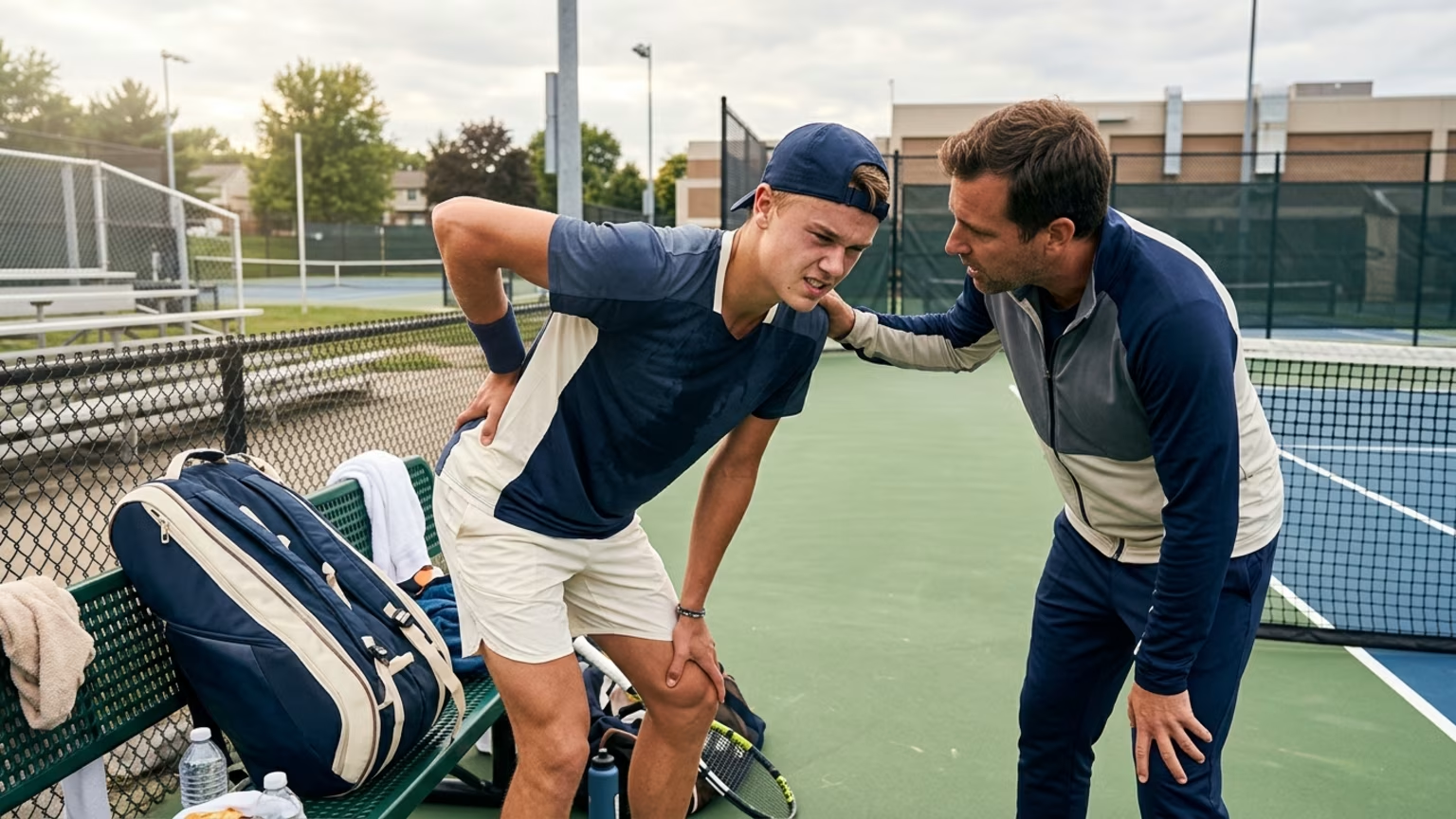
Holger Rune withdrew from the European Open with a back problem. The facts behind his decision and a grounded perspective for recreational players.

The Dink’s October 17 guide emphasizes deep returns, ball-height decisions and positioning against faster pickleball opponents.

A new report outlines padel and tennis gear trends. Learn how to assess adjustable rackets, sensor feedback and smart-court claims.
Read practical guidance for better movement, smarter preparation and a game that keeps working for you.
explore the Blog
