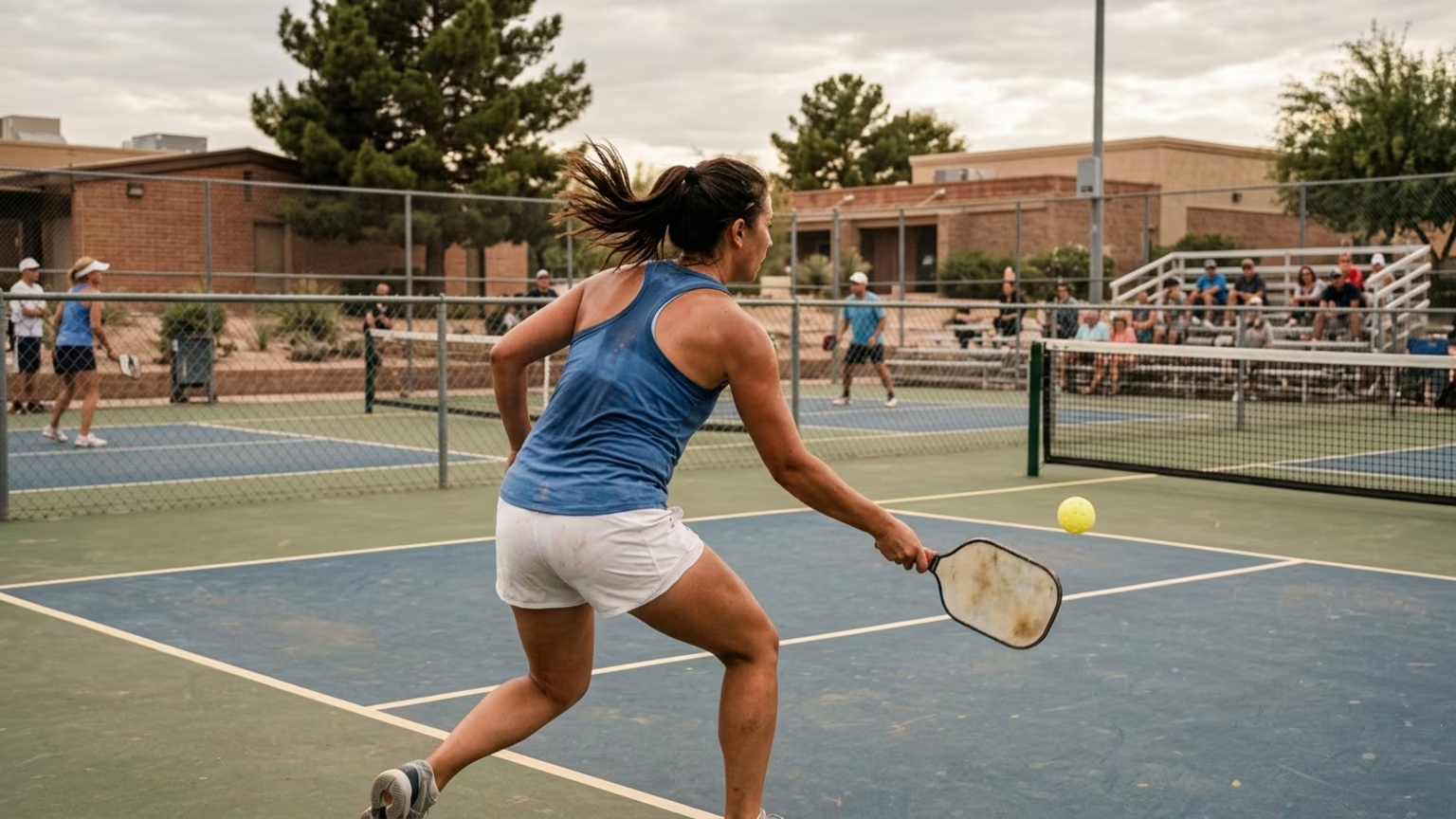

The PPA Veolia Arizona Open debuted a new seeding system and shorter match formats. Learn how these structural changes impact schedules, draws, and amateur player strategy.




On September 20, 2026, the PPA Veolia Arizona Open concluded at the Arizona Athletic Grounds in Mesa. This event marked the second tournament of the Professional Pickleball Association 2026 to 2027 season. It introduced the practical effects of a new World Pickleball Rankings seeding system and several shorter match formats. Competitors and fans experienced these structural shifts for the first time in official tournament play.
The Mesa tournament demonstrated exactly how the new World Pickleball Rankings system alters traditional brackets. According to Forbes, players ranked inside the top eight received byes into the round of 16 regardless of their tournament seed. Conversely, the highest ranked player in a specific discipline could start in the round of 64 if they fell outside the top eight. This created unusual draw scenarios that required careful bracket reading from both athletes and spectators.
The most visible example of this change occurred in men's singles. Andrei Daescu entered the event as the No. 47 seed but received a two round bye under the new rules. Forbes reported that Daescu had not played a professional singles draw in years and had never won a singles medal before the event. He eventually lost to No. 11 Federico Staksrud in the round of 16.
The Arizona Open also debuted a new finals format for all non major tour events. All four gold medal matches in Mesa used a best two of three games structure. This completely replaces the previous best three of five format for standard tour stops. The tour also eliminated all bronze medal matches beginning in September 2026. This means players losing in the semifinals will no longer play an additional match for third place.
Scheduling saw major adjustments to protect player welfare during the event. To avoid the midday sun in Mesa, the tour weighted matches toward morning and evening windows. Forbes noted that this decision followed heat related concerns at a previous event in North Carolina. However, this adjustment caused some critical quarterfinal matches to extend well past midnight.
The event results also provided clear examples of how replacement partnerships can reshape a tournament draw. Ben Johns partnered with Federico Staksrud in men's doubles after his usual partner, Tardio, withdrew following overseas competition. In women's doubles, Anna Bright was absent from the event entirely. This meant the usual partnership between Bright and Anna Leigh Waters did not compete, allowing Parris Todd and Rachel Rohrabacher to receive the top seed.
Adult competitors can draw several practical lessons from these professional structural changes. First, players should read the ranking system rather than just the printed seed line. A lower seeded player might still carry a protected ranking that completely alters the bracket. Always identify protected players before estimating your route through a local draw.
The shift to shorter championship matches changes court strategy entirely for competitive players. A best two of three format gives players less room to recover from a slow start. Adult competitors must treat the opening game as strategically critical from the first serve. Assuming a long match will provide time to find your rhythm is no longer a viable tactic. Players must develop strong mental composure and quick strategic adaptation to succeed in these faster championship sprints.
Late night scheduling also changes how players must approach their physical recovery. The Arizona event pushed some matches past midnight to avoid the daytime heat. We know firsthand how these disrupted schedules affect performance on the court. Our team used to think a tough conditioning block was the only way to improve court endurance.
Then we started tracking our sleep carefully during demanding tournaments. We noticed that on days with less than six hours of rest, our reaction time at the net was noticeably sluggish. We felt completely gassed by the second set of our matches. Prioritizing consistent rest did more for our late match stamina than any extra sprints ever did. Applying basic sleep and recovery strategies during demanding match schedules is the most effective way to maintain energy through a weekend.
Recovery is the true foundation of performance for healthy aging and long term athletic longevity. Proper preparation goes beyond just getting enough sleep between sessions. When we first started playing pickleball, we noticed how many people skipped warming up entirely. They would jump straight out of their cars and walk right up to the kitchen line.
We tried doing that once and immediately pulled a calf muscle during a lateral step. Pickleball requires just as much explosive movement as tennis, just in a tighter space. Since then, we always spend five minutes doing dynamic lunges and ankle rolls before playing. It changes everything about how confident we feel pushing off the baseline.
The Arizona event further demonstrated the tension between an expanding competitive schedule and player availability. Forbes reported that some competitors skipped Mesa entirely after returning from overseas competition. Others withdrew following the back to back Major League Pickleball finals and the North Carolina Slam. Adult players seeking long term court longevity should build in scheduled rest and avoid adding high intensity sessions immediately after a demanding tournament block.
Finally, expect partnership stability to impact your results during any tournament run. Johns and Staksrud played together as the top seed but lost in the round of 16 to No. 15 seeds Nicolas Acevedo and Yuta Funemizu. Recreational doubles players should remember that communication and court preferences matter immensely when partners lack practice time together. Maintaining consistent tactical discipline during early tournament rounds becomes much harder with an unfamiliar partner.
The Arizona Open provided concrete figures regarding the tour's current financial and operational scale. Times Now reported the total prize purse for the event was $1,063,327. Winners across all four professional divisions also earned 1,000 ranking points for their victories. These figures underscore the financial stakes of the newly implemented format changes.
On the court, Anna Leigh Waters completed an impressive double victory on September 20. She defeated Kate Fahey 11 to 9 and 11 to 4 in the women's singles final. Waters then partnered with Ben Johns to win the mixed doubles final over Rachel Rohrabacher and Christian Alshon. They won that championship match 11 to 3 and 11 to 6.
Times Now reported that this victory marked the 65th mixed doubles title together for Waters and Johns. In men's singles, Christopher Haworth secured his ninth career singles title after a challenging start. He recovered from a 10 to 12 opening game loss to Federico Staksrud before winning the next two games 11 to 9 and 11 to 6. Andrei Daescu and Christian Alshon took the men's doubles title against Yuta Funemizu and Nicolas Acevedo with a tight 15 to 13 third game victory after splitting the first two games 11 to 7 and 7 to 11.
Women's doubles featured Parris Todd and Rachel Rohrabacher winning over Tyra Black and Meghan Dizon. They secured the victory with scores of 11 to 4, 10 to 12, and 11 to 6. The event venue itself highlights the physical footprint required to host modern professional events. Forbes reported a new multi decade partnership between the tour and Arizona Athletic Grounds.
The Mesa facility features 41 courts available for professional play and daily training. The tour plans to use the expansive complex as a national junior development center moving forward. This indicates a shift toward permanent facility relationships rather than relying solely on individual event bookings.
The structural changes introduced in Arizona will test player adaptability throughout the remainder of the season. The new seeding system will likely produce more unpredictable early round matchups as top ranked players bypass traditional opening rounds. The elimination of bronze medal matches will simplify weekend schedules and slightly reduce the physical burden on players reaching the semifinals.
Evening scheduling will continue to be a necessary strategy for outdoor events in warm climates. Tours will have to balance heat avoidance against the sleep disruption caused by late night finishes. Watch to see how professional partnerships evolve as the shorter finals format rewards fast starts and punishes early competitive errors.
Follow Evercourts for practical insights on tennis, pickleball and padel performance, movement, recovery and healthy ageing. Stay connected for new articles, research-led guidance and ideas to help you play well and keep playing for years.


An evidence check on sports supplements like tart cherry juice. Learn why racquet sports players should prioritize core nutrition over functional foods.
In late 2026, Oura analyzed wearable data to see how recreational tennis impacts heart health and recovery. Learn what this means for your athletic longevity.
Recent guidelines emphasize gradual progression, dynamic warm-ups, and scheduled recovery to help adult racquet sports players maintain athletic longevity.
Read practical guidance for better movement, smarter preparation and a game that keeps working for you.
explore the Blog
