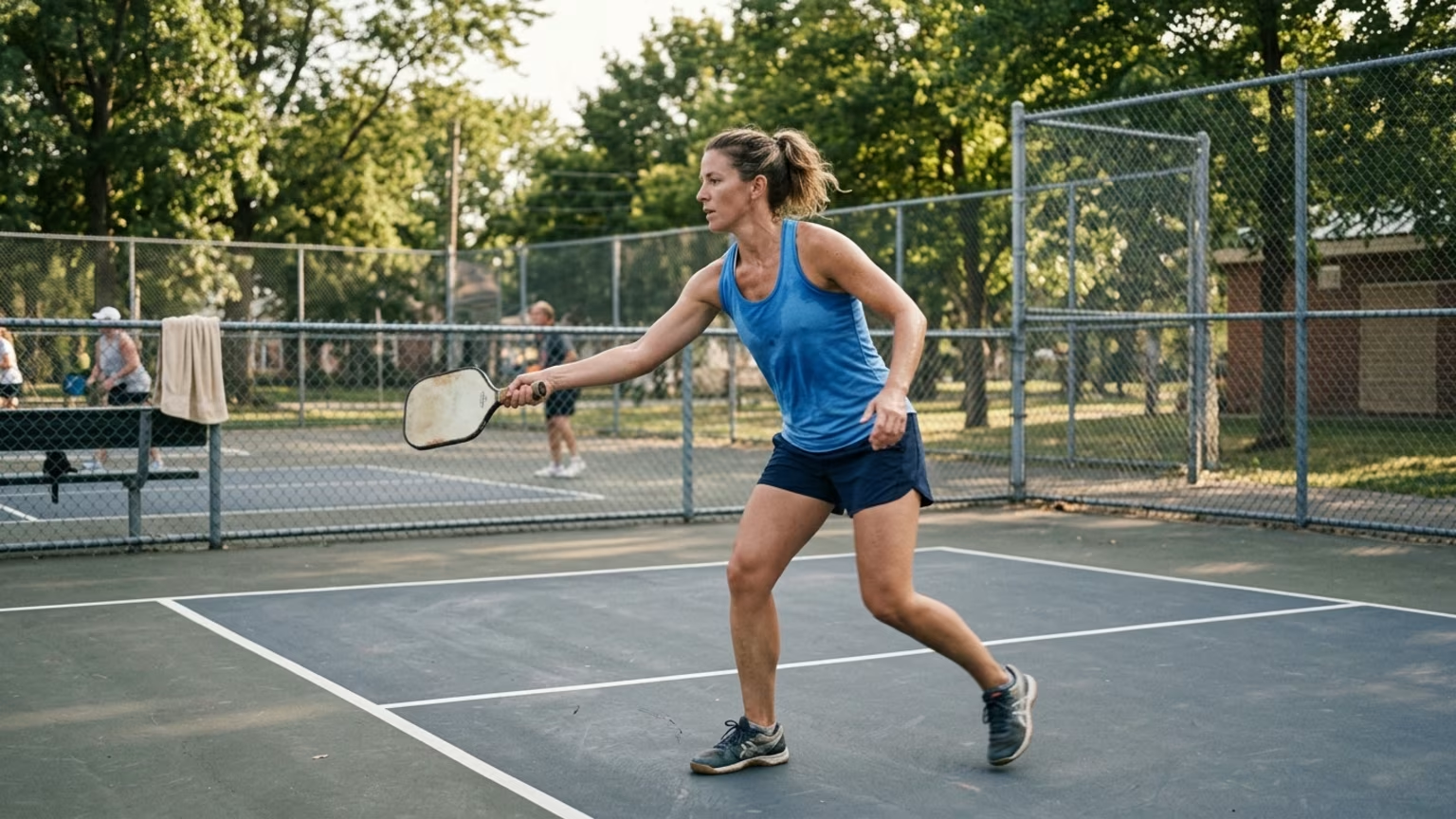

Evercourts breaks down the physical and logistical demands of racquet sports tournaments. Learn how to use arrival times for better pre-match preparation.




Adults who participate in racquet sports show a 47 percent lower risk of death from any cause and a 56 percent lower risk of cardiovascular death compared to non-participants, according to observational research on a British cohort of 80,306 adults.
Transitioning from social games to structured events changes how we approach physical activity. A recent cardiology explainer summarizes observational studies linking racquet-sport participation with lower mortality. The source cautions that these findings are associations rather than proof of cause and effect. However, these sports offer a highly effective way to accumulate moderate-to-vigorous physical activity.
The observational data from the cardiology explainer is critical for setting expectations. While the 47 percent lower risk of death is a powerful association, it is tied to sustained effort over time. The same British cohort study followed its 80,306 adult subjects for about nine years. This long-term tracking underscores that consistency is more important than short-term intensity.
This sustained effort supports long-term health outcomes. The Society of Behavioral Medicine reports that physical activity is associated with lower likelihoods of social isolation and severe loneliness in older adults. Joining a league adds regular social interaction to your routine. Yet, the physical demands of scheduled competition require deliberate preparation.
The body endures significant strain during these repeated explosive efforts. Players must repeatedly accelerate, decelerate, and change direction during a match. The joints absorb force with every sudden stop. Meanwhile, the muscular system powers rapid bursts toward the ball.
Our team has seen this lack of preparation firsthand. When I first started playing pickleball, I noticed how many people skipped warming up entirely. They would jump straight out of their cars and right up to the kitchen line. I tried doing that and immediately pulled a calf muscle.
Pickleball requires just as much explosive lateral movement as tennis, just in a tighter space. Since then, I always spend five minutes doing dynamic lunges and ankle rolls. It changes everything about how confident I feel pushing off the baseline. Following a structured pre-match routine is essential for any player.
The current verified research does not provide granular physiological metrics such as average heart rate. We must state plainly that data on specific distances covered during tournament play is absent from the available studies. Instead, the verified data focuses on the scale of participation. It also outlines the precise logistical metrics required by event organizers.
A United States analysis of 272,550 older adults found that racquet sports are associated with a 16 percent lower risk of death at a specified activity volume. To manage this high volume of active players, tournaments impose strict parameters. For example, USA Pickleball’s Golden Ticket event page lists skill levels ranging from 3.0 to 5.0. These events span age groups from 19 up to 80 and over.
Players may change their skill level or age group before registration closes. They are not allowed to make these changes after the deadline. Tennis organizations rely on equally precise frameworks to manage large player pools. The USTA 2026 Middle States Adult 55 & Over Section Championships require players to use the Match Tennis Team app.
This platform handles registration and lineups. It also manages court assignments, score reporting, and scorecard confirmation. The published instructions tell teams to arrive at least 30 minutes before scheduled matches. Captains must submit lineups at least 30 minutes in advance.
Captains face even stricter requirements for these events. They must report to the first-match site at least 45 minutes before the match. The instructions clearly state that schedules may change at any time. Players should check the app regularly to stay informed.
The USTA Northern Indiana update provides a concrete example of how tennis organizes its competitive pathways. This September 2026 update specifically directs people interested in Tri-Level League and Combo Doubles to local league coordinators. These coordinators serve as the primary point of contact for players trying to navigate local structures. Relying on these coordinators can significantly lower the stress of finding the right competitive fit.
This level of structure highlights the hidden mental workload of tournament play. Organizers note that penalties are assessed from when a match is called, not its scheduled start time. Players are also asked to bring enough water and ice for their matches. Furthermore, moving to an indoor backup facility may involve changes to timing or scoring format.
The current research does not supply verified physiological data to directly compare the physical toll of padel, pickleball, and tennis. We cannot base a cardiovascular comparison on these metrics because the specific data is not present in the studies. However, the data does show how these three sports differ in their structural demands. Proper planning is a vital part of managing court workload and longevity.
USA Pickleball and USTA tennis offer distinctly different pathways for entering organized play. The USA Pickleball Golden Ticket events place a heavy emphasis on partner coordination and direct registration. The burden falls entirely on the individual to ensure their entry is valid and complete. Tennis structures like the USTA Adult 55 & Over Section Championships often lean on team captains.
Pickleball events often feature highly structured and individualized formats. The Golden Ticket event uses round-robin play leading into playoff brackets. Its registration rules state that a doubles entry is not complete until both partners have registered, paid, and paired. Players are completely responsible for finding and agreeing with their own partners.
Tennis leagues frequently utilize regional structures that shift some organizational burden. A September 2026 USTA Northern Indiana update directs players to local league coordinators to find current opportunities. Regardless of the sport, the physical aftermath of competition remains a shared reality for adult players. Understanding these differences helps players prepare for the unique demands of each event.
Padel presents its own unique challenges, even though the provided research does not detail its specific tournament logistics. The enclosed court and continuous play demand constant readiness from the athletes. Players navigating the court during defensive sequences must maintain their mobility throughout the entire match. This highlights why pre-match preparation is universally critical across all three sports.
I remember finishing a tough two hour padel match on a cold Tuesday night and waking up the next morning feeling like my lower back was locked in concrete. For a long time, I just accepted this as the price of playing hard in my forties. But once I started spending just ten minutes on targeted hip mobility before heading to the club, the stiffness almost completely vanished. It taught me that we do not have to accept pain as a default state of aging.
Tournament instructions provide more than just rules for players to follow. They offer a practical blueprint for better physical preparation. The USTA Middle States requirement to arrive 30 to 45 minutes early should be viewed as a mandatory physical readiness window. Since a match can be called before its scheduled time, players must step onto the court fully prepared.
Translating tournament logistics into physical readiness requires a shift in mindset. Many players view the 30-minute arrival mandate as a bureaucratic inconvenience. Instead, this window is the perfect opportunity to bridge the gap between resting state and competitive intensity. Arriving early eliminates the mental stress of rushing to the venue.
Use this required early arrival time to execute a structured physical routine. Begin with dynamic movements before picking up your racquet. This ensures your body is primed for the sudden lateral bursts required in organized play. Preparing your muscles and joints in advance is the most reliable way to maintain your athletic longevity.
Follow Evercourts for practical insights on tennis, pickleball and padel performance, movement, recovery and healthy ageing. Stay connected for new articles, research-led guidance and ideas to help you play well and keep playing for years.


An evidence check on sports supplements like tart cherry juice. Learn why racquet sports players should prioritize core nutrition over functional foods.
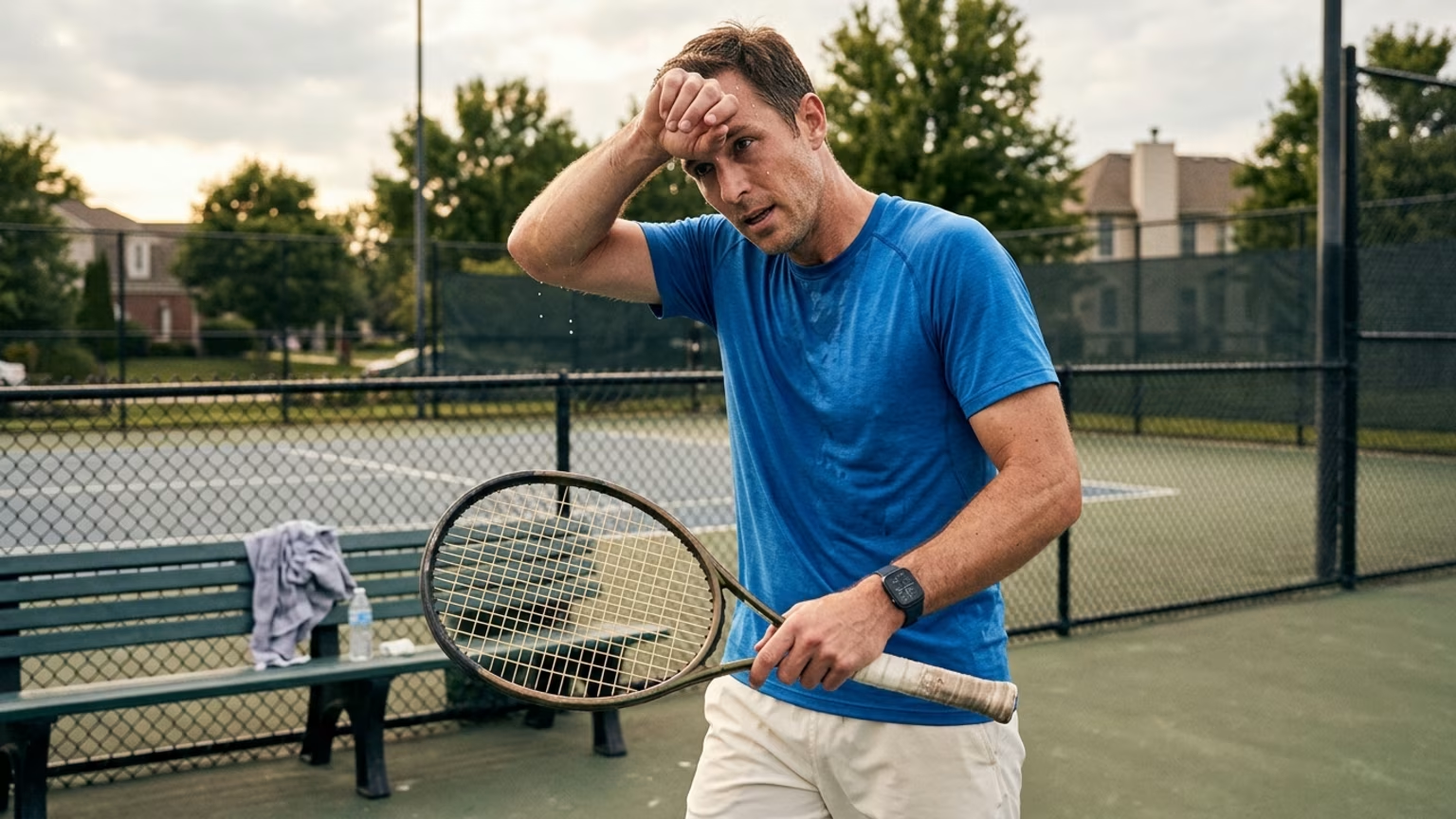
In late 2026, Oura analyzed wearable data to see how recreational tennis impacts heart health and recovery. Learn what this means for your athletic longevity.
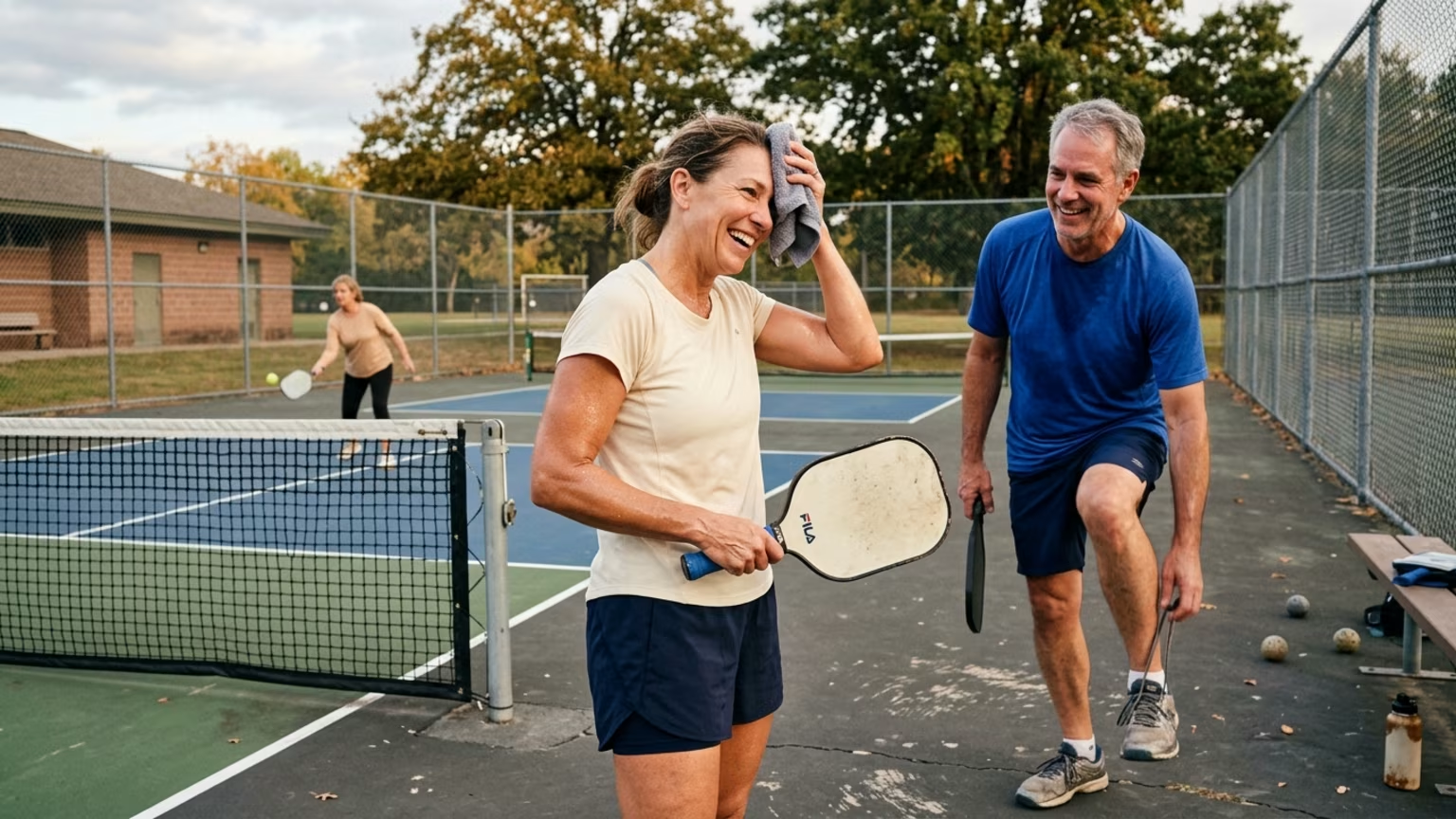
Recent guidelines emphasize gradual progression, dynamic warm-ups, and scheduled recovery to help adult racquet sports players maintain athletic longevity.
Read practical guidance for better movement, smarter preparation and a game that keeps working for you.
explore the Blog
