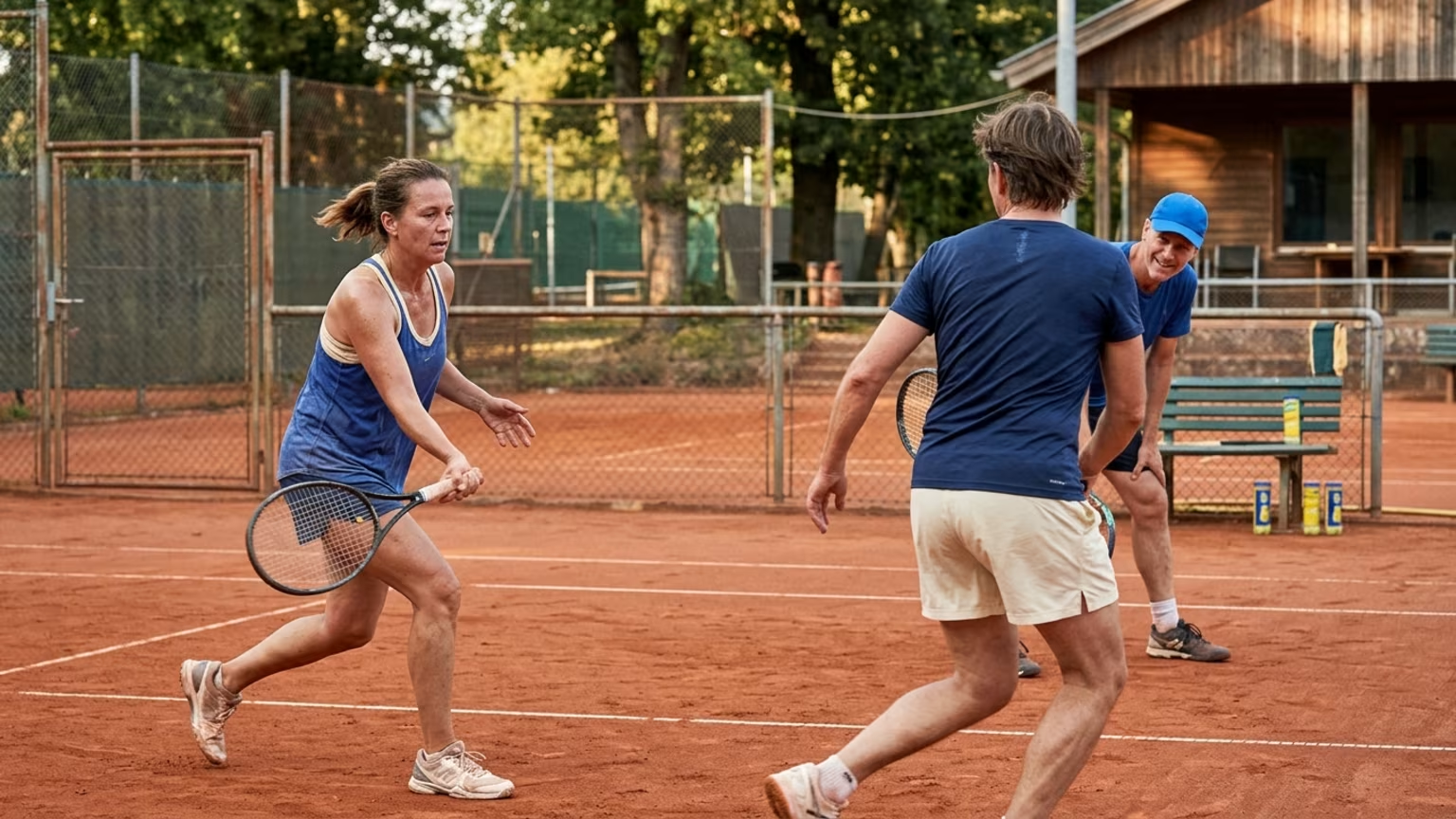

Learn how to audit racquet facilities beyond court space. Discover the pathways, social integration, and coaching methods that support healthy aging and play.




You walk into a new racquet facility on a Tuesday evening, scan the busy courts, and realize you have no clear way to get into a game. The question players constantly ask is how to find a club that actually helps them play consistently. The answer is that a club only supports your athletic longevity if it functions as a complete participation system rather than just a collection of courts.
It is very common to feel isolated when joining a new facility because participation is growing much faster than the programming infrastructure. U.S. tennis participation reached a reported 27.3 million players in 2025, a sixth consecutive year of growth and a 54% increase from 2019, according to data attributed to the United States Tennis Association. This incredible growth means facilities are busier than ever before. However, simply adding more court space does not automatically create a welcoming environment for new members.
When you choose a racquet sports club, you must look at how it actively builds social connections among its players. A 2026 study of group-based fitness contexts found that social capital was associated with exercise motivation and intention. The study identified trust and reciprocity as especially influential dimensions of social capital. For adult racquet players, this means that genuine community must go far beyond overcrowded open play sessions.
You need clear opportunities to form dependable relationships and become part of a reliable group. When touring a facility, you should ask how a new or returning player moves from their first contact to regular play. There should be a deliberate progression from an introductory clinic to a beginner league or partner matching service. Take the time to attend at least one open play session before committing to a membership.
Observe whether the staff actually knows regular players by name and if behavioral expectations are enforced. A strong club makes it incredibly easy to find suitable games without making you rely entirely on luck or existing friendships. Facilities should feature hosted sessions with named organizers who actively introduce new members to established groups. They should employ rotation systems that prevent the same players from monopolizing court time.
A high quality club focuses heavily on developing physical literacy rather than just teaching basic stroke mechanics to its members. Physical literacy is a lifelong combination of motivation and confidence. It also encompasses physical competence, knowledge, and understanding across your lifespan. A BMJ Open scoping review identified 67 studies of adult physical-literacy instruments and reported a gap in valid tools for measuring the knowledge domain.
You want to find a facility that measures success by your ability to manage effort and make smart decisions on the court. Take time to look at the programming ladder available to members across all skill levels. The club should offer clear steps from fundamental movement skills up to guided practice and advanced performance support. You should be able to advance your game without ever needing to seek instruction outside the club.
The coaching methods at the facility are another critical factor to assess during your initial audit. A good coach develops your tactical understanding, movement efficiency, and safe loading habits. They should teach you how to adapt across different playing partners and formats without micromanaging your every move. Ask how the staff modifies their sessions for varying experience levels within a single group.
Because adult physical literacy measurement remains incomplete, you must rely on practical observation. Watch a coaching session to see if instructors encourage self-assessment and autonomous decision making. A useful coaching session leaves you with practical skills you can apply independently during recreational play. You can measure your own progress by your attendance consistency and your ability to find suitable games independently.
The structural demands and player demographics differ significantly across these three major racquet sports. Pickleball participation in the United States reached 24.3 million players in 2025, up 22.8% year over year and 171.8% over three years, according to figures attributed to the Sports & Fitness Industry Association. The pickleball total includes approximately 16.8 million casual players and 7.48 million core players who played at least eight times. Because the majority of pickleball players are casual, a dedicated facility must excel at converting casual participants into regular core players.
A pickleball motivation study identified health and social interaction alongside competition and skill improvement as major motivation factors. Court access and convenience also ranked highly for these athletes. A great pickleball club will offer varied programming that satisfies all these different participant needs. Padel requires a similarly structured approach to player integration due to its rapid global expansion.
A 2025 World Padel Report figure cited in the search results counted more than 35 million players, 24,600-plus clubs, and 77,300 courts worldwide. The same source reported year-over-year growth of 16.1% in clubs, 15.2% in courts, and 42% in federation registrations. With such massive international expansion, padel clubs must have robust systems that can absorb new players safely. Tennis clubs usually have decades of experience organizing racquet sports competition events, while newer padel or pickleball venues might still be formalizing their competitive structures.
Make sure the specific facility you choose has a clear participation structure for your chosen sport. It is a massive advantage if a club allows players to move fluidly between tennis, pickleball, and padel programs. This variety helps prevent burnout and gives you fresh ways to challenge your movement skills. One single pathway will simply not suit every player who walks through the facility doors.
Building a racquet sports life that lasts requires an environment that deeply respects your need for physical recovery and adaptable play. In our experience, intelligent physical maintenance is entirely non-negotiable for competitive adults. As one of our team members notes: "I remember finishing a tough two hour padel match on a cold Tuesday night and waking up the next morning feeling like my lower back was locked in concrete. For a long time, I just accepted this as the price of playing hard in my forties."
The testimonial continues: "But once I started spending just ten minutes on targeted hip mobility before heading to the club, the stiffness almost completely vanished. It taught me that we do not have to accept pain as a default state of aging." A facility designed for athletic longevity will actively support this kind of long-term mobility framework and physical maintenance. You should ask management if warmups and recovery protocols are built into their standard instructional programs.
Coaches should deliberately account for fatigue and accumulated workload during their intensive practice sessions. Your club should also offer practical ways to scale down intensity without pushing you out of your social circle. There should be lower impact formats or modified play options for members returning from injuries. One 2026 study reported a positive association between perceived physical literacy and mental well-being, with belonging playing a partial mediating role.
Staying connected to your club community during periods of modified play is essential for your motivation. Pay attention to the physical infrastructure of the facility during your initial visit. Check if the court surfaces, lighting, seating areas, and changing facilities are appropriate for players prioritizing physical sustainability. The best clubs provide multiple ways to remain an active participant even when you cannot compete at maximum intensity.
The best facility for your athletic longevity is one that helps you continue participating as your goals and physical needs change. By auditing a club for progression pathways and true player integration, you can build a sustainable routine that keeps you on the court for decades.
Follow Evercourts for practical insights on tennis, pickleball and padel performance, movement, recovery and healthy ageing. Stay connected for new articles, research-led guidance and ideas to help you play well and keep playing for years.


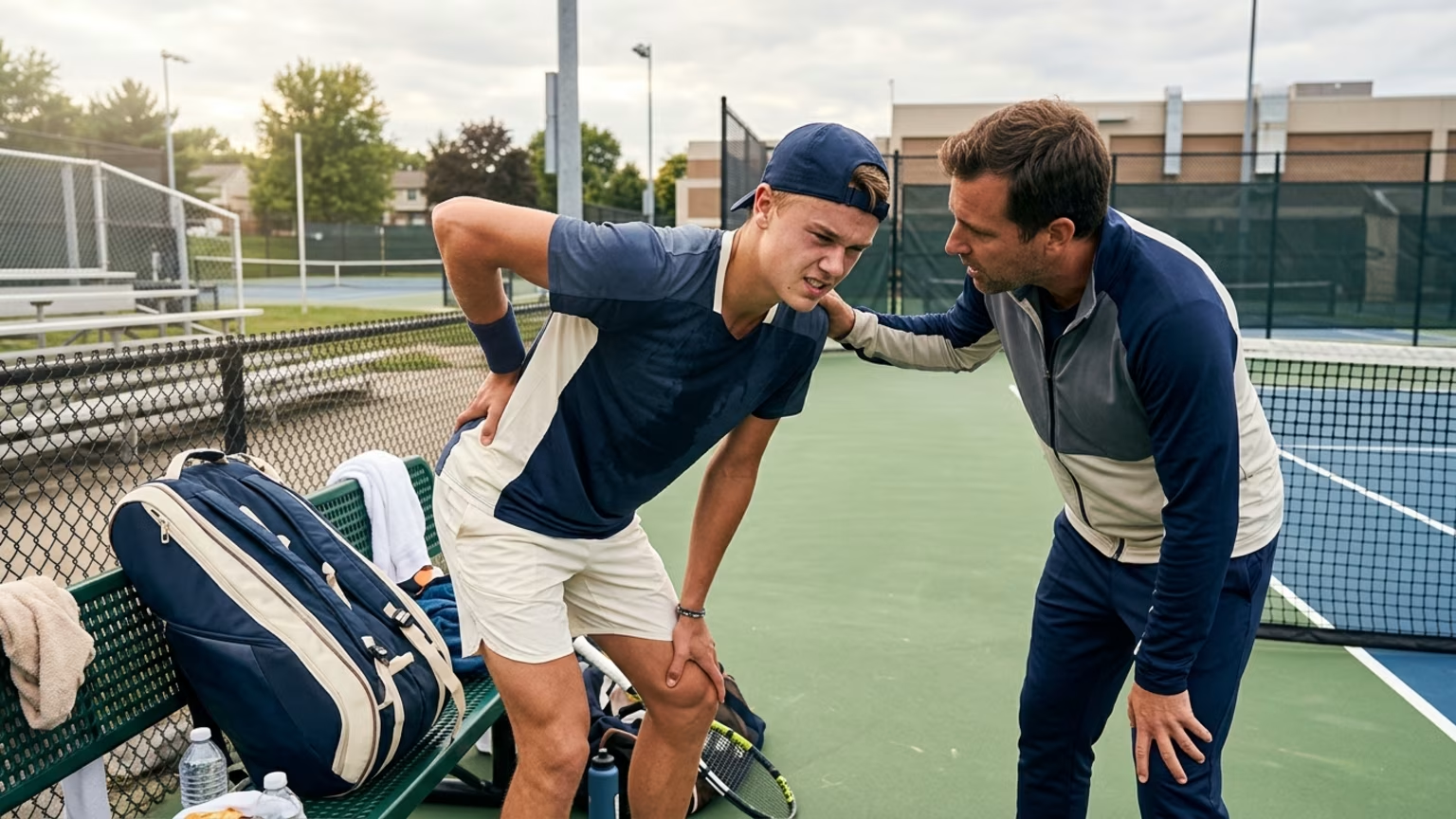
Holger Rune withdrew from the European Open with a back problem. The facts behind his decision and a grounded perspective for recreational players.

The Dink’s October 17 guide emphasizes deep returns, ball-height decisions and positioning against faster pickleball opponents.

A new report outlines padel and tennis gear trends. Learn how to assess adjustable rackets, sensor feedback and smart-court claims.
Read practical guidance for better movement, smarter preparation and a game that keeps working for you.
explore the Blog
