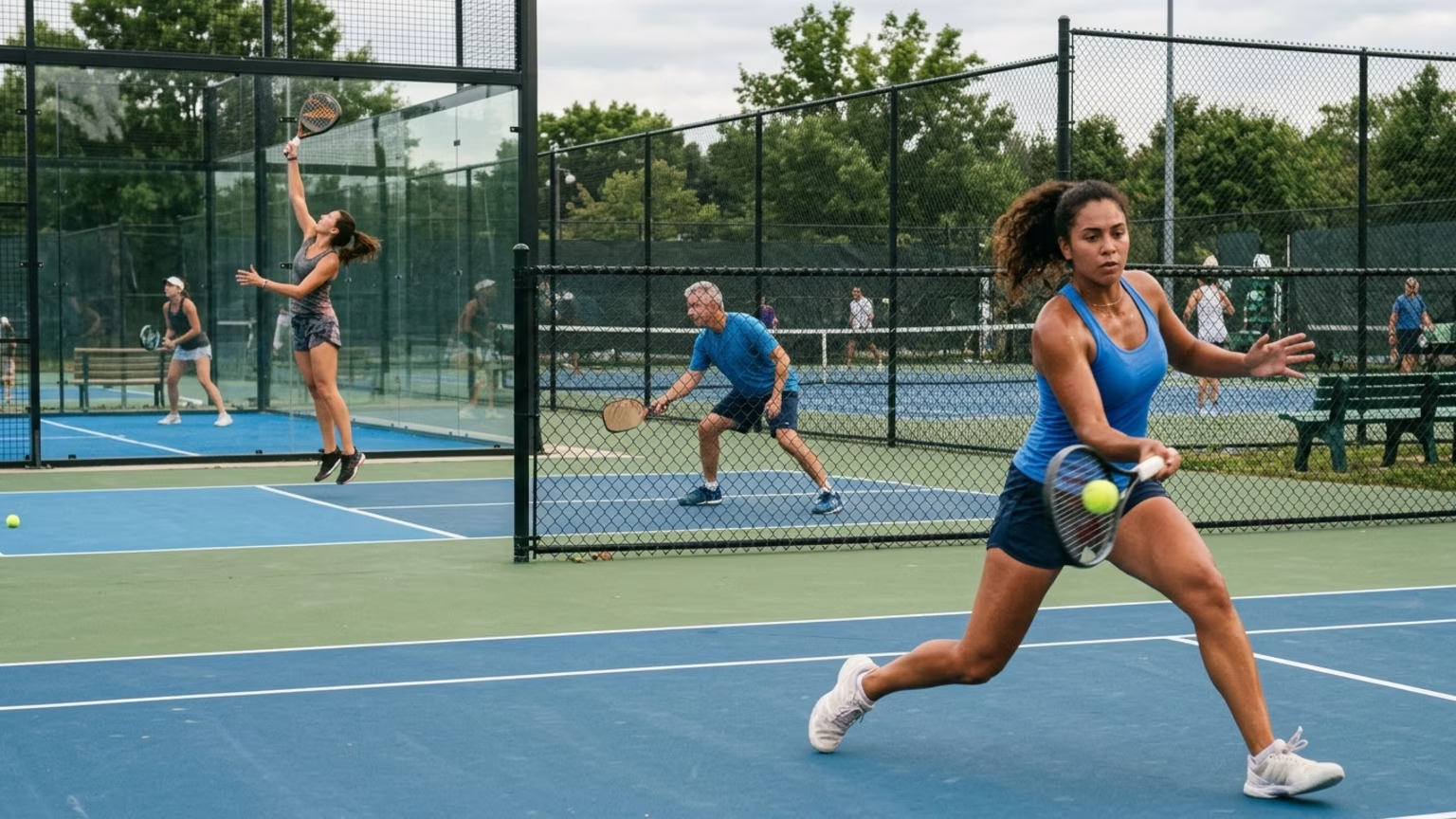

Learn how tennis, pickleball, and padel movement demands shape your ideal training plan. Build targeted strength and athletic longevity on the court.




Tennis demands immense physical capabilities due to its wide court dimensions and tactical requirements. Players must recover from wider angles and manage long runs to the ball repeatedly. Sports therapy research highlights that singles tennis features split steps, lateral shuffles, and crossover steps. It also includes lunges, pivots, and rotational strokes alongside repeated serves and overhead actions.
The tennis serve and ground strokes require coordinated force transfer from the legs through the trunk and into the hitting arm. This makes lower-body strength, trunk control, and shoulder capacity highly relevant training targets. A credible training plan needs more than pressing and arm exercises. It should develop the ability to brake, re-accelerate, and rotate under control. Players can learn more about managing these demands in a sustainable weekly training plan.
Cardiology guidelines confirm that tennis match play is sufficiently aerobic to satisfy cardiovascular-exercise recommendations for healthy adults. However, the actual load varies with ability, format, surface, and match intensity. Singles generally requires more court coverage than doubles, so singles players should devote more training time to acceleration, deceleration, and aerobic repeatability. Doubles players may need more work on short reactions, low-position endurance, balance, and rapid first steps.
Proper movement preparation is essential for managing these intense physical requirements. A practical strength menu might include split squats, lateral lunges, step-downs, and Romanian deadlifts. Calf raises, rows, and controlled medicine-ball rotational throws are also highly relevant. Training both force production and force absorption ensures players can safely manage the high peak loads of open-court tennis.
Pickleball typically involves less total court coverage than tennis. However, the smaller court does not make it movement-free. A physical-therapy analysis identifies short accelerations, sudden stops, and lateral movement as recurring pickleball demands. It also notes frequent lunges and reaching. Texas Health describes pickleball as a moderate-intensity, start-and-stop activity involving quick steps, lateral movement, and reaching.
The sport's non-volley zone creates a distinctive physical demand. Players often spend substantial time in a relatively low stance, making small lateral adjustments and reacting rapidly to balls at close range. This means a pickleball player may need more repeated low-position endurance, ankle mobility, and braking control than a recreational player might expect. Building a weekly mobility and movement plan can address these specific joint requirements.
When I first started playing pickleball, I noticed how many people skipped warming up entirely. They would jump straight out of their cars and right up to the kitchen line. I tried doing that and immediately pulled a calf muscle.
Pickleball requires just as much explosive lateral movement as tennis, just in a tighter space. Since then, I always spend five minutes doing dynamic lunges and ankle rolls. It changes everything about how confident I feel pushing off the baseline.
Singles pickleball increases the court-coverage requirement compared with doubles. A singles player might use short court shuttles, lateral bounds with controlled landings, split squats, and sled pushes. The volume should be adjusted around actual match play rather than added indiscriminately. The key is to gradually introduce low-volume acceleration and braking work.
Different training modalities offer unique advantages depending on the sport being played. Tennis singles requires lateral acceleration, recovery steps, and trunk rotation. A training menu of split squats, lateral lunges, and controlled rotational exercises is perfectly suited for the explosive demands of tennis. These exercises build the braking strength needed for wide balls and long runs.
Pickleball players need a routine suited for a stop-start nature. Goblet squats, lateral step-downs, and single-leg balance work build the low-position endurance required at the net. The key is to gradually introduce low-volume acceleration and braking work rather than jumping immediately into maximal sprint drills. Players can find guidance on this approach within a minimum effective dose training plan.
Padel presents an entirely different set of physical requirements. Specialist publications confirm that padel combines lateral movement, short sprints, rapid changes of direction, and reactions to unpredictable ball trajectories. A 2022 systematic review examined the activity profile and physiological demands of padel match play. The research highlights how closely padel training must match these chaotic multidirectional demands.
Descriptions of padel play highlight repeated overheads, directional changes, and leg strength. They also emphasize core stability and shoulder loading. Sports performance platforms explain that because padel involves repeated overhead strokes and smashes, shoulder training should include pulling and scapular-control work rather than relying only on pressing exercises. Training must account for these overhead decelerations to build structural resilience.
When choosing between generic fitness routines and sport-specific conditioning, the tailored approach is the definitive winner. Training the exact movement patterns you repeat on the court supports healthy aging and sustainable performance. Tennis Canada's injury-prevention guidance recommends gradual progression, strength training, and dynamic preparation. Implementing a racquet sports mobility progression provides the strongest foundation for long-term health.
An ACSM position-stand summary reports improvements in strength, power, and endurance with resistance training compared with no training. It also notes gains in gait speed, balance, and physical function. For older adults, balance and functional work deserve particular attention because maintaining movement quality is part of staying on court, not merely an injury-prevention add-on.
A player may cover less distance but experience high peak loads during braking, lunging, landing, or overhead deceleration. Matching your strength and mobility work to your specific sport prepares your joints for those exact moments. Adapting your preparation to your sport provides the strongest foundation for playing for life.
Follow Evercourts for practical insights on tennis, pickleball and padel performance, movement, recovery and healthy ageing. Stay connected for new articles, research-led guidance and ideas to help you play well and keep playing for years.


An evidence check on sports supplements like tart cherry juice. Learn why racquet sports players should prioritize core nutrition over functional foods.
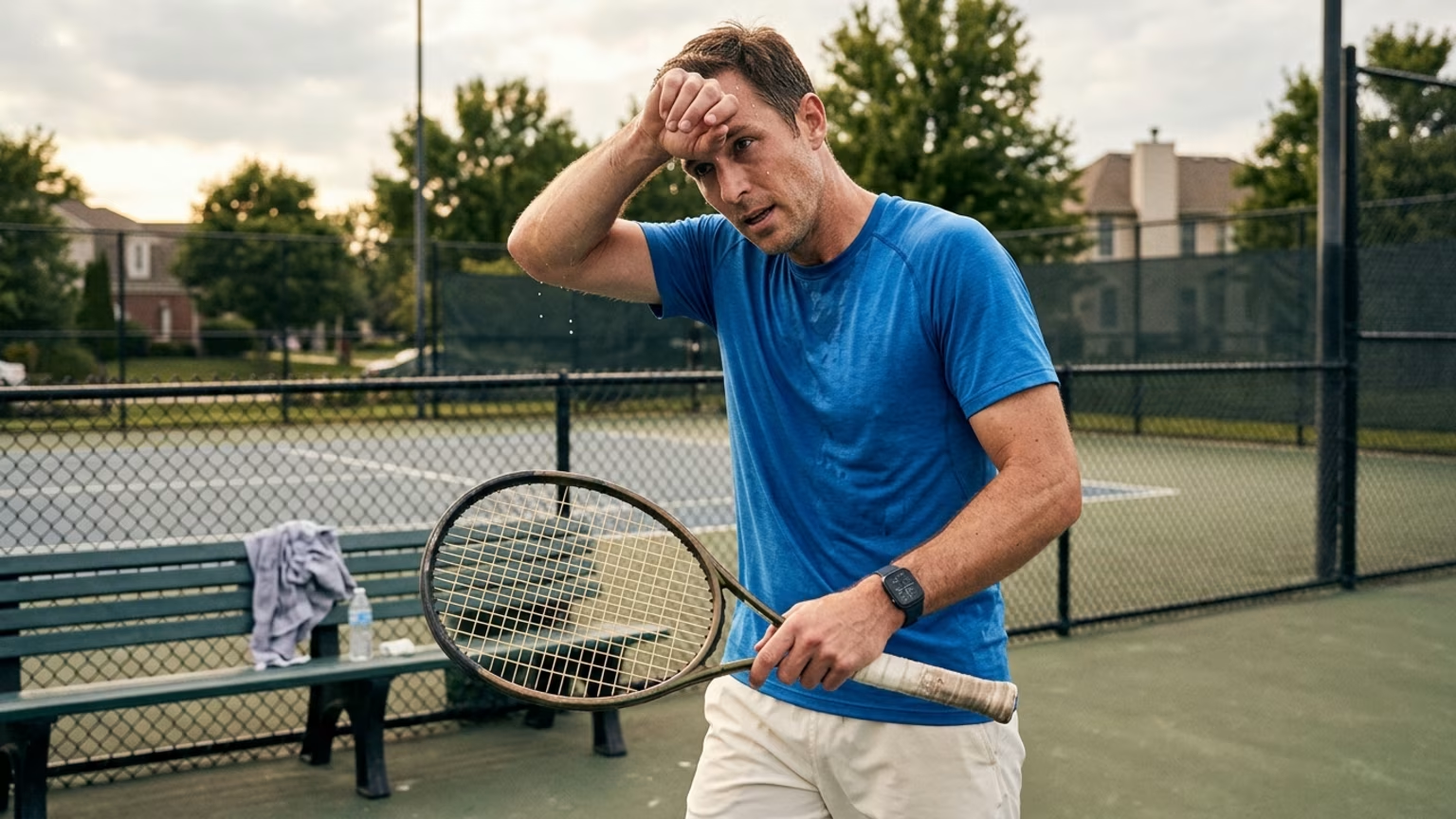
In late 2026, Oura analyzed wearable data to see how recreational tennis impacts heart health and recovery. Learn what this means for your athletic longevity.
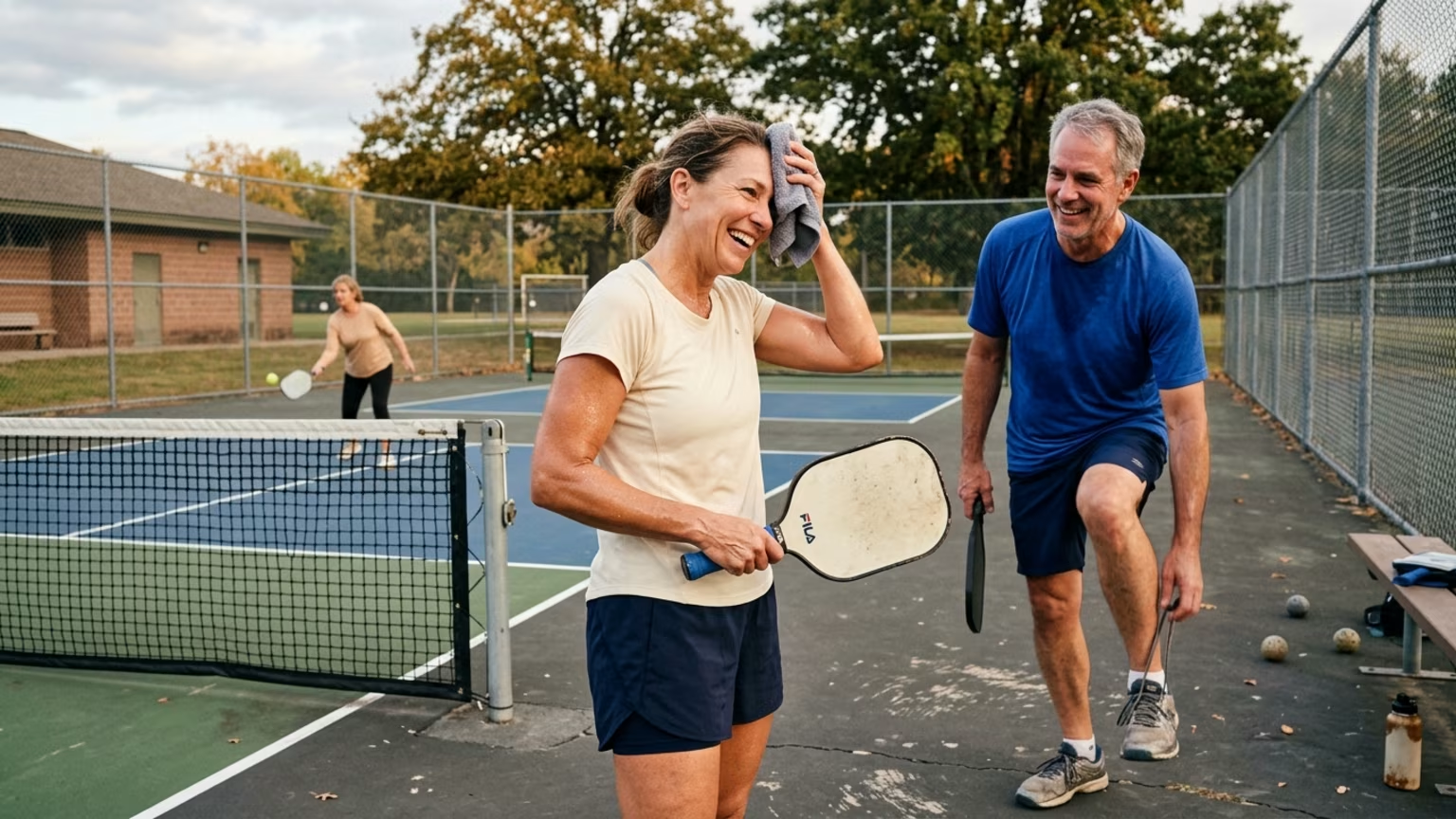
Recent guidelines emphasize gradual progression, dynamic warm-ups, and scheduled recovery to help adult racquet sports players maintain athletic longevity.
Read practical guidance for better movement, smarter preparation and a game that keeps working for you.
explore the Blog
