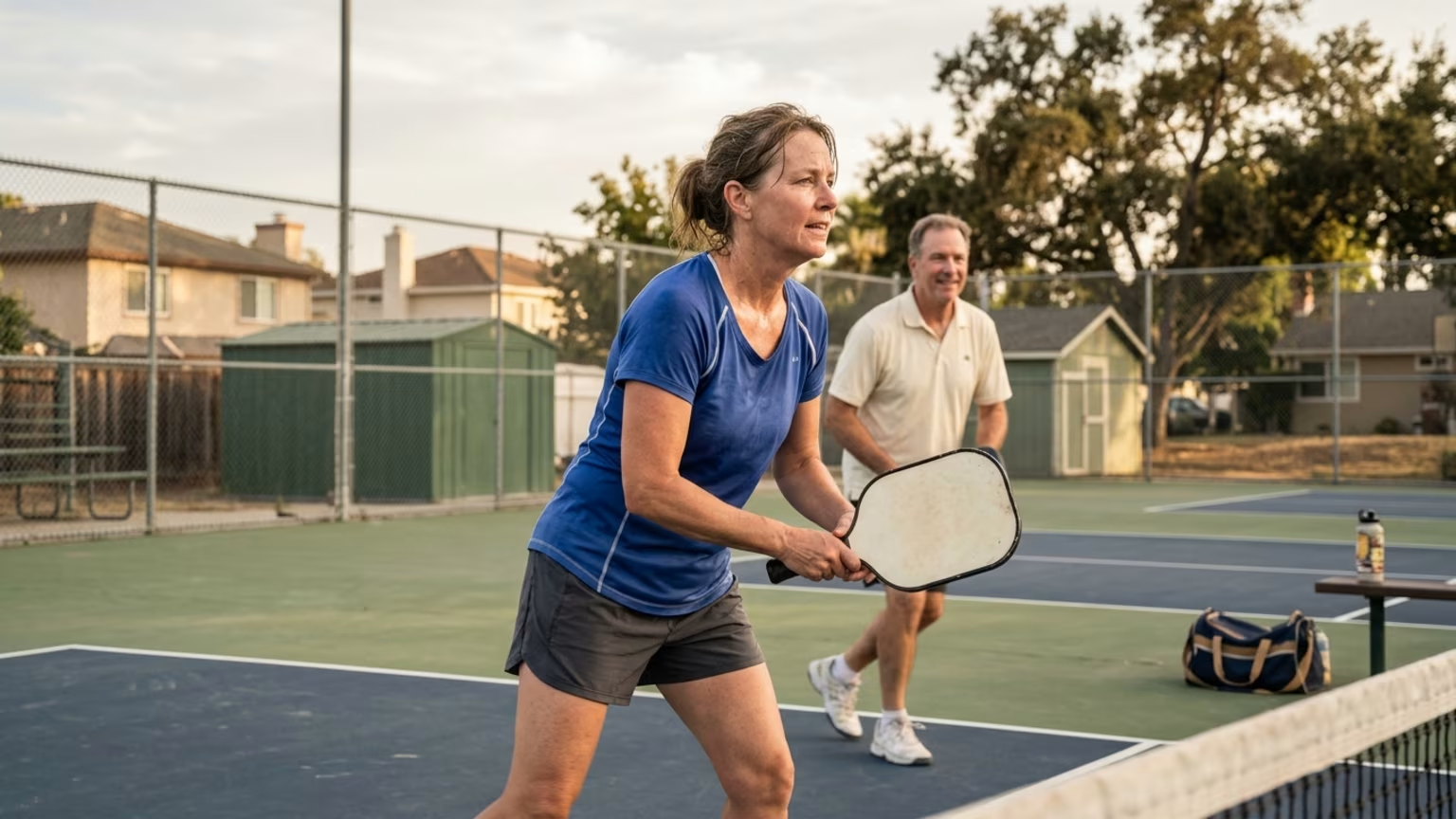

The Hindu recently explored how racquet sports impact healthy aging and healthspan. Learn what the mortality data means for your weekly court routine.




On September 13, 2026, The Hindu published the 50th episode of its Health Wrap program. The broadcast focused directly on healthy aging, longevity, healthspan and racquet sports. The news segment featured The Hindu Health Editor Ramya Kannan in conversation with Dr. Navin Gnanasekaran. Gnanasekaran serves as a longevity specialist and the head of radiology at Apollo Hospitals in Chennai.
The central theme of the episode is the critical distinction between lifespan and healthspan. Lifespan simply measures the total number of years a person remains alive. Healthspan measures the period a person spends in relatively good health with high functional capacity. The conversation treats racquet sports as a multifaceted form of physical engagement.
These activities combine cardiovascular exercise with essential social interaction and mental stimulation. The broadcast firmly positions racquet sports as one component of a broader healthy aging strategy. The experts addressed nutrition, sleep, muscle strength and cognitive health. They emphasized that these factors all contribute to athletic longevity.
The episode does not present tennis or padel as a standalone solution for aging well. Instead, it highlights that a durable body requires good habits across several different lifestyle domains. Recent scientific literature supports this cautious and comprehensive approach to court sports. A 2026 bibliometric review of pickleball research identified 285 publications indexed in major academic databases.
These databases included Scopus, PubMed and ScienceDirect. The review analyzed literature published from 2016 through February 2026. It reported that pickleball research has expanded sharply, particularly after the year 2024. Despite this rapid growth in publication volume, the scientific evidence base remains highly fragmented.
The review noted that the current literature is dominated by cross-sectional studies. There is still a noticeable lack of randomized controlled trials. Researchers identified two primary themes in the existing data. The first theme covers the potential health and psychosocial benefits of playing.
The second theme details serious injury risks for older adults. These documented risks include fractures, sprains and falls.
Professional racquet athletes operate within carefully controlled physical environments. Elite players rely on strength coaches, physiotherapists and strict load management protocols to preserve their healthspan. They follow specific off-season training blocks designed to build progressive muscle strength. When a professional steps onto the court, their body is already primed to handle the intense lateral forces.
Adult recreational players face a completely different reality. The weekend league player often views their time on the court as their only form of exercise. They might spend eight hours sitting at a desk before rushing to a Tuesday night match. This approach treats the sport itself as the sole conditioning tool.
The Hindu broadcast clarifies why relying solely on match play falls short of building durable athletic longevity. Racquet sports offer excellent aerobic exertion, but they do not automatically build the progressive strength required to protect your joints. When I first started playing pickleball, I noticed how many people skipped warming up entirely. They would jump straight out of their cars and right up to the kitchen line.
I tried doing that and immediately pulled a calf muscle. Pickleball requires just as much explosive lateral movement as tennis, just in a tighter space. Since then, I always spend five minutes doing dynamic lunges and ankle rolls. It changes everything about how confident I feel pushing off the baseline.
This practical experience aligns perfectly with current global health directives. The World Health Organization recommends that adults complete 150 to 300 minutes of moderate-intensity activity each week. Alternatively, adults can target 75 to 150 minutes of vigorous activity. However, the WHO guidance explicitly states that adults must also perform regular muscle-strengthening exercises.
Playing court sports handles the aerobic requirement very well. Yet, players must intentionally schedule resistance training to satisfy the muscle-strengthening mandate.
The scientific conversation around healthy aging relies heavily on large population studies. A major cohort study of 80,306 adults from England and Scotland provides key data for this topic. Researchers tracked these participants to determine how different types of exercise influenced long-term survival rates. The study found that participation in racquet sports was associated with a lower risk of all-cause mortality.
The researchers calculated a hazard ratio of 0.53 for all-cause mortality among racquet sports participants. This finding included a 95 percent confidence interval ranging from 0.40 to 0.69. A hazard ratio below 1.0 indicates a lower statistical risk of the event occurring. Therefore, the data suggests a significant reduction in overall mortality risk for those who play.
The same cohort study also examined specific cardiovascular health outcomes. It reported a strong association between racquet sports participation and cardiovascular mortality risk. The hazard ratio for cardiovascular deaths was 0.44. This specific metric came with a 95 percent confidence interval of 0.24 to 0.83.
However, we must approach these impressive statistics with grounded realism. These findings are associations derived from an observational cohort. They do not constitute proof that playing tennis or squash directly causes a longer life. The results likely reflect broader lifestyle differences among players.
People who play racquet sports often have different baseline fitness levels, incomes and access to healthcare facilities. They may also benefit from the strong social connections built at local clubs. You cannot simply prescribe two matches a week to add a specific number of years to your life.
Recreational athletes must read the research accurately to avoid false expectations. The British mortality study grouped all racquet activities into a single broad category. Therefore, its results should not be treated as separate evidence for tennis, pickleball or padel. Each sport imposes unique physical demands and carries a distinct injury profile.
The rapid growth of newer sports requires players to be diligent about their specific physical preparation. The 2026 pickleball review underscores why context is so vital for adult players. The literature clearly documents psychosocial benefits and improvements in overall social capital. Yet, it simultaneously highlights the serious risk of falls and fractures among older adults.
You cannot enjoy the cardiovascular benefits of a sport if an ankle sprain keeps you sidelined. This reality makes dedicated strength and conditioning for healthy aging an absolute necessity for adult players. Players who are returning after a long break need to manage their return carefully. The same rule applies to athletes managing arthritis or recovering from an injury.
You must adjust your intensity and rebuild your tolerance for lateral movement slowly. Modified court dimensions or lower-intensity doubles matches can help you remain active while protecting your joints. The social interaction and mental stimulation remain high even when the physical pace is reduced. The overarching lesson is that more court time is not automatically better for your healthspan.
Your playing volume must closely match your physical capacity and your recovery habits. Prioritizing consistent sleep and solid nutrition is just as important as perfecting your serve. True athletic longevity for racquet sports players requires a deeply balanced lifestyle. Adult players should build continuity rather than chasing occasional extremes in their schedule.
The cited racquet sports study provides encouraging population data, but it does not identify a magic number of weekly matches. The safest interpretation is that regular participation is linked to favorable outcomes when combined with overall healthy habits. Creating a racquet sports life that lasts means taking ownership of your physical preparation off the court.
Over the next few years, sports science will shift away from studying racquet sports as a single broad category. Researchers will publish more longitudinal data that separates the distinct physical impacts of padel, pickleball and tennis. This targeted approach will gradually replace cross-sectional surveys with specific randomized controlled trials focused on injury prevention. As the evidence matures, players will receive highly specialized load management protocols tailored to their exact sport.
We will see athletic guidelines evolve to emphasize mandatory resistance training alongside regular court play. This shift will ensure that adults can sustain their healthspan across multiple decades of competition.
Follow Evercourts for practical insights on tennis, pickleball and padel performance, movement, recovery and healthy ageing. Stay connected for new articles, research-led guidance and ideas to help you play well and keep playing for years.


A recent live-play test of a silent pickleball highlights its value for practice, but standard balls still perform better for match play and power control.

An evidence check on sports supplements like tart cherry juice. Learn why racquet sports players should prioritize core nutrition over functional foods.
In late 2026, Oura analyzed wearable data to see how recreational tennis impacts heart health and recovery. Learn what this means for your athletic longevity.
Read practical guidance for better movement, smarter preparation and a game that keeps working for you.
explore the Blog
