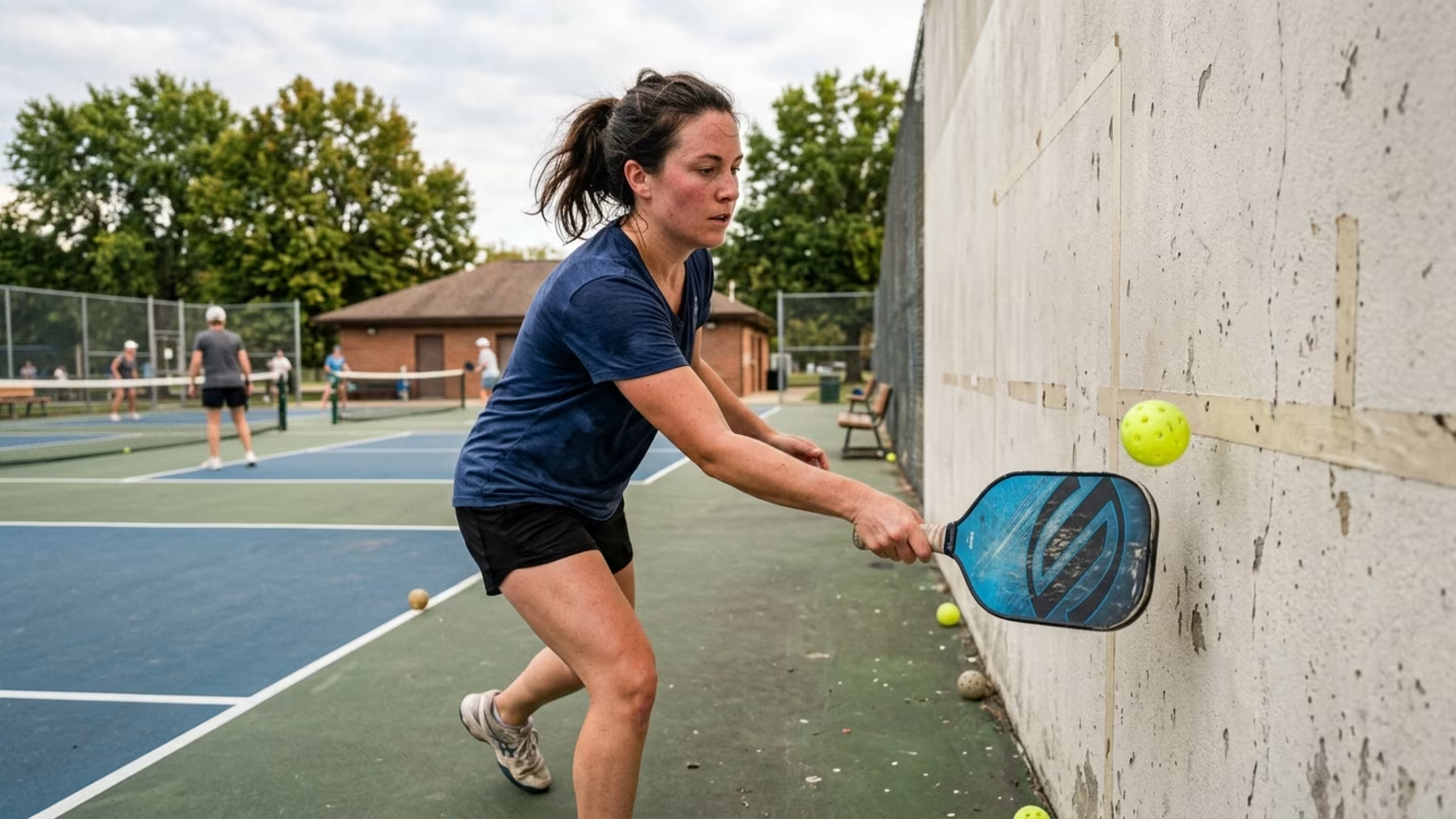

The Dink detailed five solo pickleball wall drills for partner-free practice. Learn how these short skill sessions fit into a balanced athletic routine.




On September 21, 2026, The Dink published an instructional guide titled "The 5 Wall Drills That Build Real Pickleball Skills Without a Partner." The media team at The Dink created this practical guide around a series of solo exercises demonstrated by Ed Ju. This recent coverage provides a structured method for players to practice their paddle mechanics when they cannot organize a live match. For adult recreational players looking to increase their hand speed, the guide offers a simple blueprint for independent training.
The guide outlines five specific training components for players to execute against a garage wall or a dedicated rebounder. The sequence begins with warm-up dinking from approximately 7 feet away for two to three minutes. Players then progress to volley dinks before moving into sets of 30 forehand repetitions and 30 backhand repetitions. The routine finishes with a transition sequence of a dink followed by a speed-up and a block.
The Dink recommends completing these exercises in a 15 to 30 minute session. A full workout might begin with five minutes of dinking and three minutes of a crisscross coordination drill. Players then complete five minutes of volley dinks and seven minutes of forehand and backhand volleys. The session concludes with a final 10 minute sequence of the speed-up and block progression.
The crisscross drill involves bumping the ball from the paddle face to the non-paddle hand. Players repeat this motion on both sides and then alternate between their forehand and backhand. The publisher presents this specific exercise as a practical way to develop grip awareness and hand softness. The guide states that players who practice three to four times a week may see noticeable improvement within two to three weeks.
Throughout the exercises, the guide emphasizes using compact mechanics. A controlled dink demonstration in the article shows approximately six inches of paddle movement. Players are instructed to keep the contact point in front of their bodies. Moving slightly closer to the wall for volleys helps reinforce this forward contact position.
The guide sensibly advises players to begin the speed-up sequence with a block before attempting counterattacks. This progression adds complexity only after a player can handle the initial rebound speed. Once the block feels stable, the player can introduce full speed offensive shots. The Dink notes that players should alternate between their forehand and backhand until their form breaks down.
For the adult recreational player, a wall provides highly valuable and immediate technical feedback. It will quickly expose an open paddle face or excessive grip pressure because the ball returns predictably. However, players should view the specific performance claims in this guide as coaching advice rather than established clinical research. The routine provides excellent essential footwork skills practice, but it does not replace a complete athletic program.
The article claims that volley dinking can cut an opponent's reaction time roughly in half. It also asserts that a right-handed backhand covers approximately 75 percent of the reachable court area. Furthermore, the guide states that a plain wall provides 90 percent of the benefit of a dedicated rebounder. These specific figures are practical practitioner assessments rather than peer-reviewed scientific findings.
A wall will always return the ball immediately and predictably relative to a live opponent. Therefore, it cannot fully train a player to read body language or adapt to an irregular rally pace. Real matches require constant adjustments to court positioning and shot selection. While a wall builds excellent hand speed, it does not simulate the chaotic nature of a live doubles match.
Medical literature has reported pickleball-related injuries, so solo practice should always progress sensibly. Repeated volleys and high-speed counters can stress the wrist, elbow and shoulder. Players must remember to rest between volley sets and stop if fatigue begins to alter their swing mechanics. Understanding these limits is crucial for preventing beginner pickleball injuries during solo sessions.
I remember finishing a tough two hour padel match on a cold Tuesday night. The next morning, my lower back felt incredibly stiff and unyielding. I initially thought I just needed to hit more practice volleys to build court endurance. However, I quickly realized that spending ten minutes on targeted hip mobility resolved the stiffness far better than rote paddle repetition.
The growing demand for partner-free practice options directly reflects the massive expansion of racquet sports. A secondary summary of the Sports & Fitness Industry Association 2026 report notes that 24.3 million people in the United States played pickleball in 2025. That total includes 16.8 million casual players and 7.48 million core players. With court availability frequently stretched thin by this high volume of participants, finding space for live drills is increasingly difficult.
The sheer number of casual players means that many adults are learning the sport outside of formal club environments. Without a dedicated coach, these players rely heavily on digital media and instructional guides to develop their technique. The 16.8 million casual players identified in the industry data represent a massive audience for accessible independent training methods. A simple garage wall provides an immediate entry point for these individuals to practice without booking an expensive court.
The Dink has clearly recognized this sustained trend toward independent practice routines. In a separate practice plan article published on September 9, 2026, the same outlet advised players to use a wall twice per week. These rapid repetitions can help recreational players maintain their touch when court reservations are scarce. For those switching between tennis, pickleball and padel, a wall offers a convenient way to adjust to different paddle weights.
Over the next season, recreational pickleball players will likely shift toward more deliberate and structured solo training habits. Instead of just showing up to play matches, adults will increasingly adopt brief skill sessions to maintain their reaction times. Wall practice will become a standard supplement to weekly match play as court crowding continues. The integration of solo drills into everyday routines marks a maturing phase for the sport.
However, players will get the most value when they treat the wall as just one part of a comprehensive athletic routine. Solo practice plans will increasingly prioritize movement quality over sheer repetition volume. Players who want to maintain their physical capabilities will pair their wall sessions with lower-body strength and mobility routines. Adult players will ultimately benefit from resources that treat them like true racquet athletes.
Follow Evercourts for practical insights on tennis, pickleball and padel performance, movement, recovery and healthy ageing. Stay connected for new articles, research-led guidance and ideas to help you play well and keep playing for years.


An evidence check on sports supplements like tart cherry juice. Learn why racquet sports players should prioritize core nutrition over functional foods.
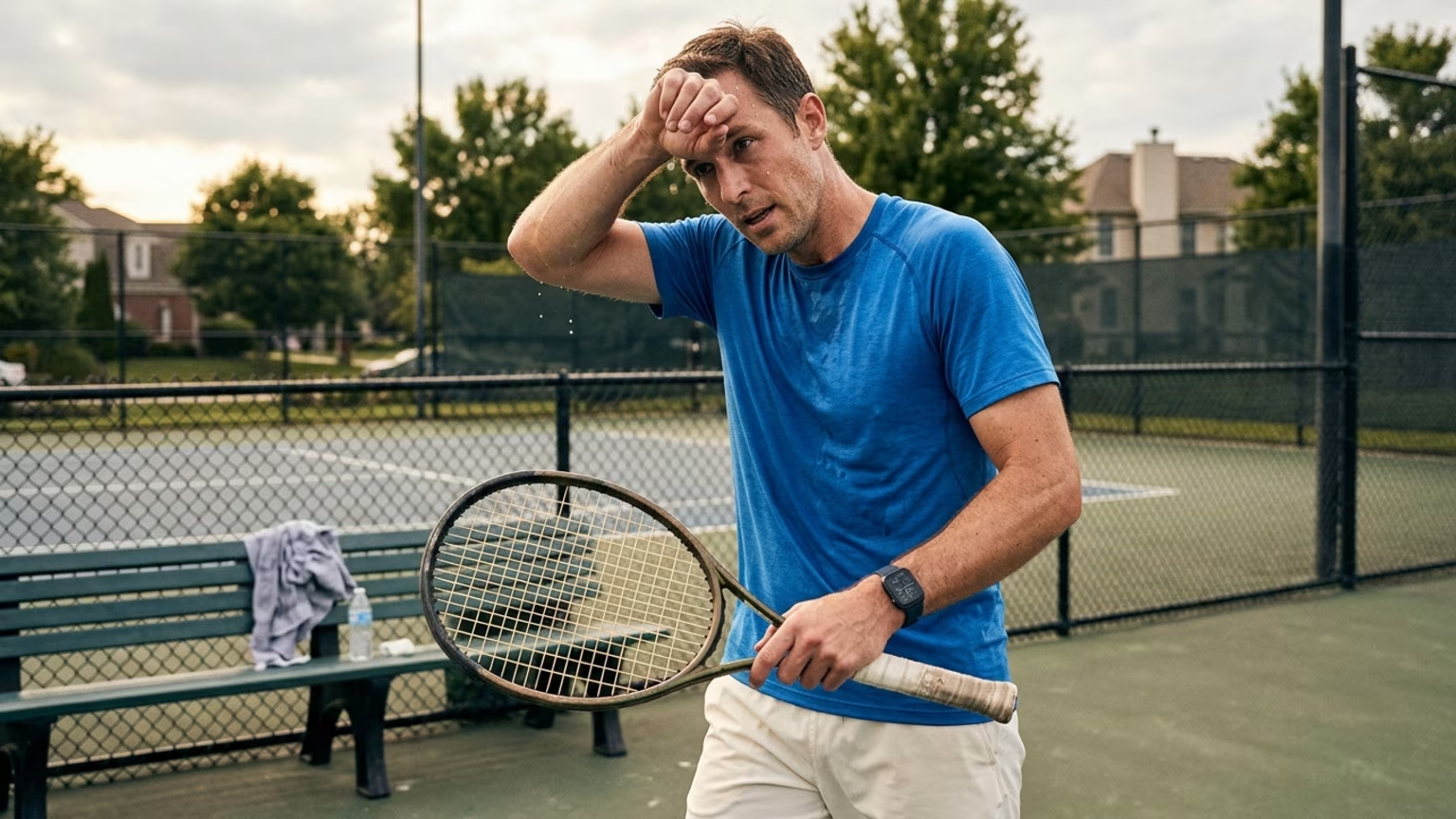
In late 2026, Oura analyzed wearable data to see how recreational tennis impacts heart health and recovery. Learn what this means for your athletic longevity.
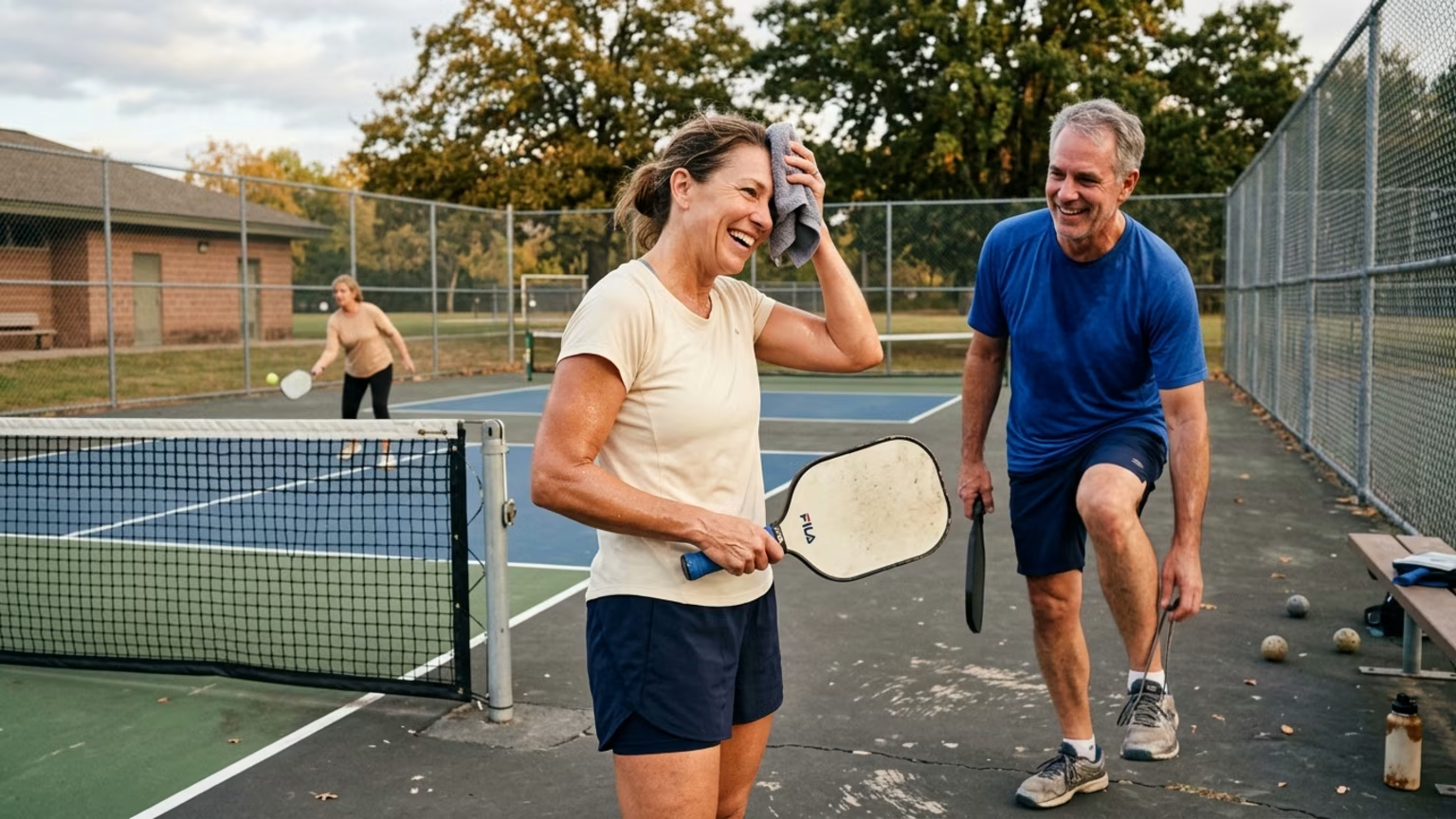
Recent guidelines emphasize gradual progression, dynamic warm-ups, and scheduled recovery to help adult racquet sports players maintain athletic longevity.
Read practical guidance for better movement, smarter preparation and a game that keeps working for you.
explore the Blog
