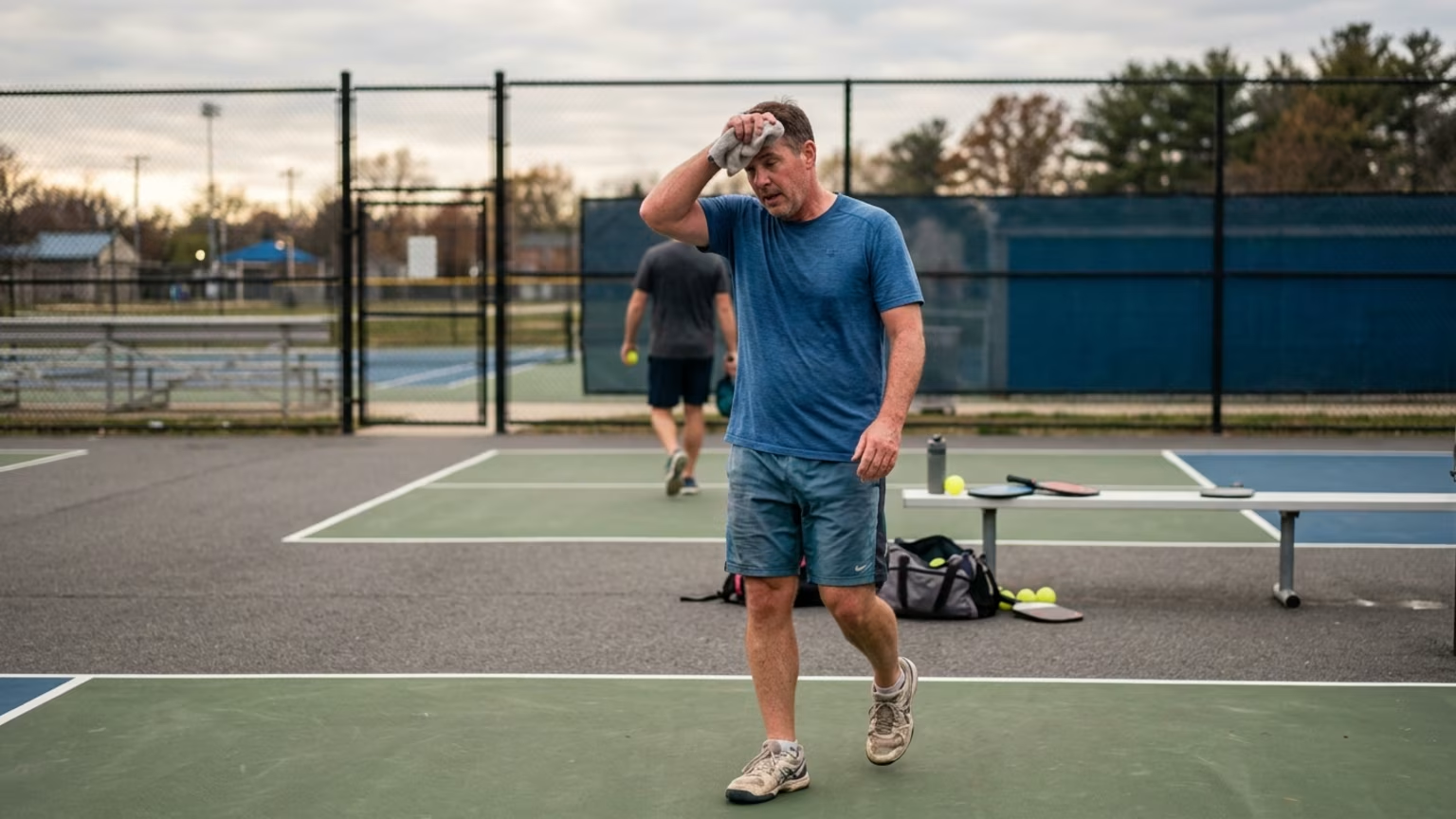

A recent report highlights resistance training as the most effective way to maintain muscle strength. Learn how racquet players can apply this research.




On October 3, 2026, Kompas.id published an English-language report detailing how strength training is the most effective way to maintain muscle strength as people age. The article, credited to Ester Lince Napitupulu, notes that the English version was AI-translated. The report centers on findings from Christopher Hurst, a senior research associate at Newcastle University in Australia. Hurst argues that resistance exercise should form the foundation of healthy-aging programs to preserve physical independence.
The timing of this report highlights a growing focus on functional capacity over simple cardiovascular fitness. The publication distinguishes strength-focused exercise from activities like walking or cycling, which it describes as primarily improving cardiovascular and pulmonary health. By isolating muscle maintenance as a separate requirement, the report provides a clear directive for active adults. It establishes that maintaining muscle strength is crucial for long-term mobility and daily function.
The report explicitly links muscular strength to critical daily functions. Hurst notes that strength training can enhance walking speed, rising from a chair and overall mobility. Muscle tissue is also described as important for joint stability, balance and providing physical reserve during illness or injury. Resistance training options listed in the article include dumbbells, gym machines, resistance bands and body-weight movements like squats.
Hurst points to several barriers that prevent older adults from participating in resistance programs. These include low confidence, uncertainty about how to start, fear of injury and unsuitable fitness centers. To counter this, the article emphasizes that it is never too late to begin a routine. Hurst says people in their 80s and 90s can build or maintain strength with appropriate support.
According to the report, beginners may achieve significant strength gains with just one weekly session. The general recommendation advises muscle-strengthening work once or twice weekly to support everyday function. This routine should target the legs, hips and back. It should also include work for the abdomen, chest, shoulders and arms.
The report advises beginning gradually, increasing difficulty over time and adapting exercises for joint pain or chronic conditions. The article also features commentary from Ken Nosaka of Edith Cowan University regarding eccentric exercise. Nosaka offers an alternative to the idea that exercise must be exhausting by favoring eccentric movements. He notes that these exercises, such as slowly lowering into a chair, can be done without a gym.
Professional racquet sports athletes maintain dedicated strength programs to ensure joint stability and athletic longevity. For the adult recreational player, the practical implication is that court time alone cannot replace targeted resistance work. Many amateur players assume that frequent matches provide all the necessary conditioning for healthy aging. However, the Kompas report clearly separates cardiovascular activities from the distinct benefits of resistance training.
Relying exclusively on tennis, pickleball or padel for fitness often neglects necessary muscle development. Adult players should treat court time and resistance work as serving completely different physical purposes. The report emphasizes working the legs, hips and back to support explosive court movements. Understanding why heavy squats fail tennis and pickleball players helps players choose smarter, more practical body-weight movements instead.
Simple exercises such as squats, step-ups and push-ups offer a highly accessible starting point. Players returning after a long break or managing existing health conditions should follow the article's advice to seek qualified professional support. The goal is to build strength that transfers to the court safely and effectively. Gradually increasing the difficulty of these exercises ensures steady progress without overwhelming the joints.
While the Kompas report does not specifically evaluate racquet sports, its foundational principles apply perfectly to court athletes. Implementing resistance work addresses the exact functional capacities required to chase down a drop shot or maintain a low defensive stance. You do not need a complicated gym routine to protect your joints and improve balance. Consistent, targeted effort is the most reliable way to stay active and competitive for years to come.
The report provides concrete metrics regarding repetition ranges and training frequency. According to the article, lighter loads performed for 20 to 25 repetitions may yield improvements similar to 10 repetitions with a heavier load. This outcome is conditional on high effort, requiring muscles to feel tense and fatigued at the end of a set. This flexibility allows players to adjust their training based on joint soreness or available equipment.
Frequency recommendations in the report are equally practical for busy adult athletes. The article states that beginners may achieve significant strength gains with just one weekly session. The broader general recommendation is to complete muscle-strengthening work once or twice weekly. This manageable frequency means balancing match play and strength training to prevent injuries is achievable for almost any schedule.
The research also relays an Edith Cowan University claim regarding eccentric movements. The report highlights a finding that just five minutes of daily eccentric exercise can improve strength. While the article notes that these movements may offer benefits with less effort, the specific research methods are not detailed. Still, the metric reinforces that short, focused interventions can provide meaningful value.
As sports science increasingly separates cardiovascular conditioning from muscular strength, amateur training habits will undoubtedly shift. Over the next season, expect recreational leagues and clubs to advocate more strongly for complementary resistance routines. Players will increasingly view simple strength exercises as a mandatory baseline for continued court participation. The integration of short eccentric movements and low-equipment exercises will likely become standard practice for athletic longevity.
Racquet sports players will prioritize accessible home routines to support their match performance and maintain their independence. Ultimately, acknowledging that court play alone is insufficient for muscle maintenance will drive a healthier, more resilient generation of amateur athletes. The emphasis will move away from exhausting gym sessions toward sustainable, function-focused movements that keep players on the court.
Follow Evercourts for practical insights on tennis, pickleball and padel performance, movement, recovery and healthy ageing. Stay connected for new articles, research-led guidance and ideas to help you play well and keep playing for years.


An evidence check on sports supplements like tart cherry juice. Learn why racquet sports players should prioritize core nutrition over functional foods.
In late 2026, Oura analyzed wearable data to see how recreational tennis impacts heart health and recovery. Learn what this means for your athletic longevity.
Recent guidelines emphasize gradual progression, dynamic warm-ups, and scheduled recovery to help adult racquet sports players maintain athletic longevity.
Read practical guidance for better movement, smarter preparation and a game that keeps working for you.
explore the Blog
