

Veteran coach Rick Macci outlines key court positioning tactics for Alexander Zverev. Learn how adult recreational players can adapt these baseline strategies.




On September 18, 2026, veteran tennis coach Rick Macci outlined specific tactical changes Alexander Zverev must make to challenge Jannik Sinner and Carlos Alcaraz consistently. Speaking to Florida Tennis, the former coach of Serena Williams and Andy Roddick stated that Zverev needs to alter his court positioning and returning patterns. This detailed interview followed Zverev's 2026 US Open victory. The win gave the German his second major title of the season after his previous triumph at Roland Garros.
Macci's central recommendation requires Zverev to stand much closer to the baseline when returning serves. Instead of retreating deep into the court, Zverev should use his backhand to take the ball on the rise. Macci advised the 2026 major champion to commit to moving forward on short balls. Rather than waiting behind the baseline, Zverev needs to move through his approach shots and finish points at the net.
Macci noted that Zverev has not made major tactical changes recently. He attributed part of the German's recent breakthrough to Sinner's knee injury and Alcaraz's 139-day absence. Sinner and Alcaraz had split all four majors during the previous two seasons. Macci believes Zverev must build confidence and take more chances to sustain his success.
Macci emphasized taking more calculated risks and making opponents uncomfortable from the first exchange. Sinner and Alcaraz are unlikely to lose points through unforced errors against Zverev consistently. Therefore, Zverev must take more responsibility for creating discomfort and controlling the center of the court. Macci described Zverev as having long possessed elite underlying physical tools for his size.
Adult recreational players often fall into the trap of retreating far behind the baseline during difficult matches. However, professional advice must be adapted carefully for club-level realities. Standing too close reduces your reaction time and makes heavy serves difficult to handle. Instead of camping directly on the baseline, club players should try moving forward by a modest amount during returns.
This physical adjustment takes time away from the opponent while protecting your balance and recovery. Our team at Evercourts consistently sees how court placement dictates match outcomes for amateur athletes. Finding the proper distance allows you to redirect the ball without requiring excessive power or perfect technique. Understanding proper court positioning concepts gives recreational players a clear map for when to hold their ground.
Taking the backhand on the rise is a specific timing skill you can practice during cooperative rallies. Start with a comfortable pace and a predictable bounce height before introducing variation into the drill. The primary purpose is to neutralize the ball earlier rather than hitting it harder. This approach keeps you engaged in the point without forcing low-percentage winners from difficult positions.
A simple rule helps players decide when to attack short balls effectively during competitive play. First, ask if you can reach the short ball while staying physically balanced. Next, check if you can hit the approach shot with enough margin over the net. Finally, ensure you can recover forward rather than stopping abruptly after making contact.
If the answer to these three questions is yes, you should move through the ball and continue forward to the net. If the answer is no, use height or angle to regain control of the point. Forcing a low-percentage winner from an awkward stance rarely pays off in the long run. This forward movement relies heavily on your physical foundation and proper pre-match preparation.
When I first started playing pickleball, I noticed how many people skipped warming up entirely. They would jump straight out of their cars and right up to the kitchen line. I tried doing that and immediately pulled a calf muscle. Pickleball requires just as much explosive lateral movement as tennis, just in a tighter space.
Since then, I always spend five minutes doing dynamic lunges and ankle rolls. It changes everything about how confident I feel pushing off the baseline. Confident baseline push-offs are essential for executing the aggressive return positions Macci describes. Mastering basic split step timing is the bridge between a good warm-up and a successful aggressive stance.
For older players, successful aggression should always leave the body prepared for the next shot. A balanced approach shot followed by a controlled recovery is much more useful than a spectacular sprint. Overextending on a forward sprint often produces an awkward stop that strains the lower body. Athletic longevity requires you to prioritize controlled movements over erratic bursts of speed.
In padel and pickleball, this concept means recognizing when a ball permits movement toward a stronger court position. The exact positioning should not be transferred mechanically between the different racquet sports. Court dimensions, bounce behavior, net height, and tactical patterns differ significantly across these disciplines. The common lesson is to identify safe opportunities to occupy better court space while preserving your physical recovery options.
Zverev entered the post-US Open period as the No. 2 player in the PIF ATP Rankings. According to ATP Tour reports, he compiled 24 Grand Slam wins against two losses in 2026 before the US Open final. He also reached the quarterfinals at all four majors in 2026 for the first time in his professional career. This impressive consistency indicates that Macci's comments address closing a narrow performance gap at the very top of the sport.
The Yahoo report notes that Zverev remained behind Sinner in the rankings despite moving ahead of Alcaraz. His serving numbers provide crucial context for his attacking potential. ATP reported that Zverev won 57.7 percent of his second-serve points in 2026. This figure ranked third on tour at the time of publication and surpassed his previous career best of 55 percent.
A more effective serve creates predictable first-ball situations that enable aggressive positioning. Macci added that indoor conditions might make these adjustments easier because Zverev could serve at a higher percentage indoors. A reliable serve allows a player to dictate the terms of the rally from the very first strike. ATP coverage highlighted Zverev's early decision to retrieve a drop shot and execute a drop volley in the US Open final.
This aggressive net play aligns perfectly with Macci's call for a greater willingness to move forward. Building efficient court movement habits allows players to replicate these decisive forward actions safely. Professional players rely on these movement patterns to sustain high-level performance throughout gruelling tournament schedules.
Over the next season, the men's tour will test whether Zverev can maintain this aggressive identity against a fully healthy field. As Sinner and Alcaraz compete regularly, Zverev will face increasing pressure to execute these forward movements consistently. We expect his return positioning to become a primary indicator of his match confidence in major tournaments. If top players adopt this tighter baseline strategy, it will force opponents to develop more varied serving patterns to survive.
The ability to finish points at the net will likely separate the top tier of players from the rest of the professional pack. Recreational players should watch how often Zverev crosses the service line during neutral rallies. His progress will offer a practical blueprint for turning defensive baseline battles into proactive offensive opportunities. Adapting these principles safely ensures that athletes can enjoy competitive tennis for years to come.
Follow Evercourts for practical insights on tennis, pickleball and padel performance, movement, recovery and healthy ageing. Stay connected for new articles, research-led guidance and ideas to help you play well and keep playing for years.


An evidence check on sports supplements like tart cherry juice. Learn why racquet sports players should prioritize core nutrition over functional foods.
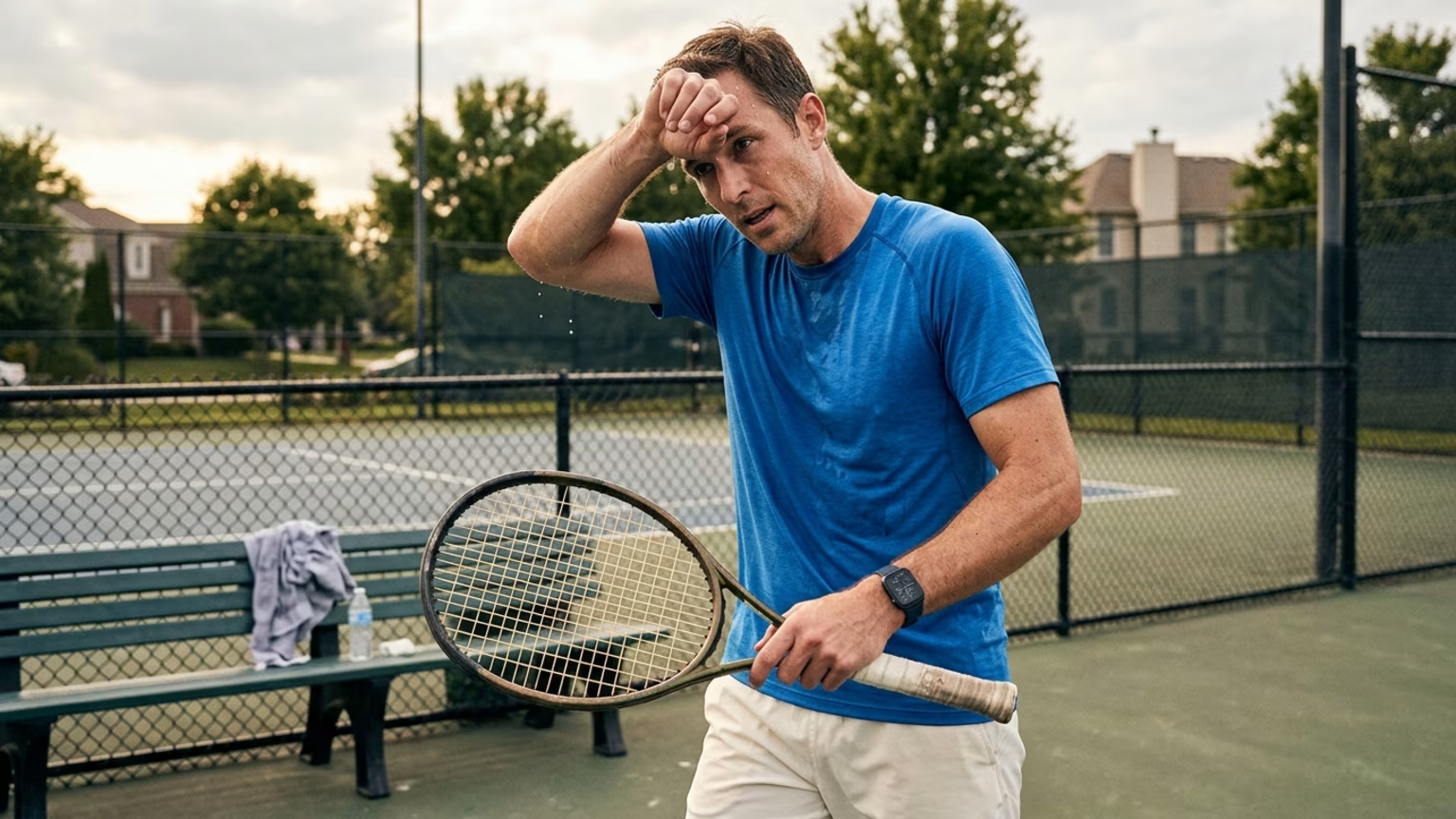
In late 2026, Oura analyzed wearable data to see how recreational tennis impacts heart health and recovery. Learn what this means for your athletic longevity.
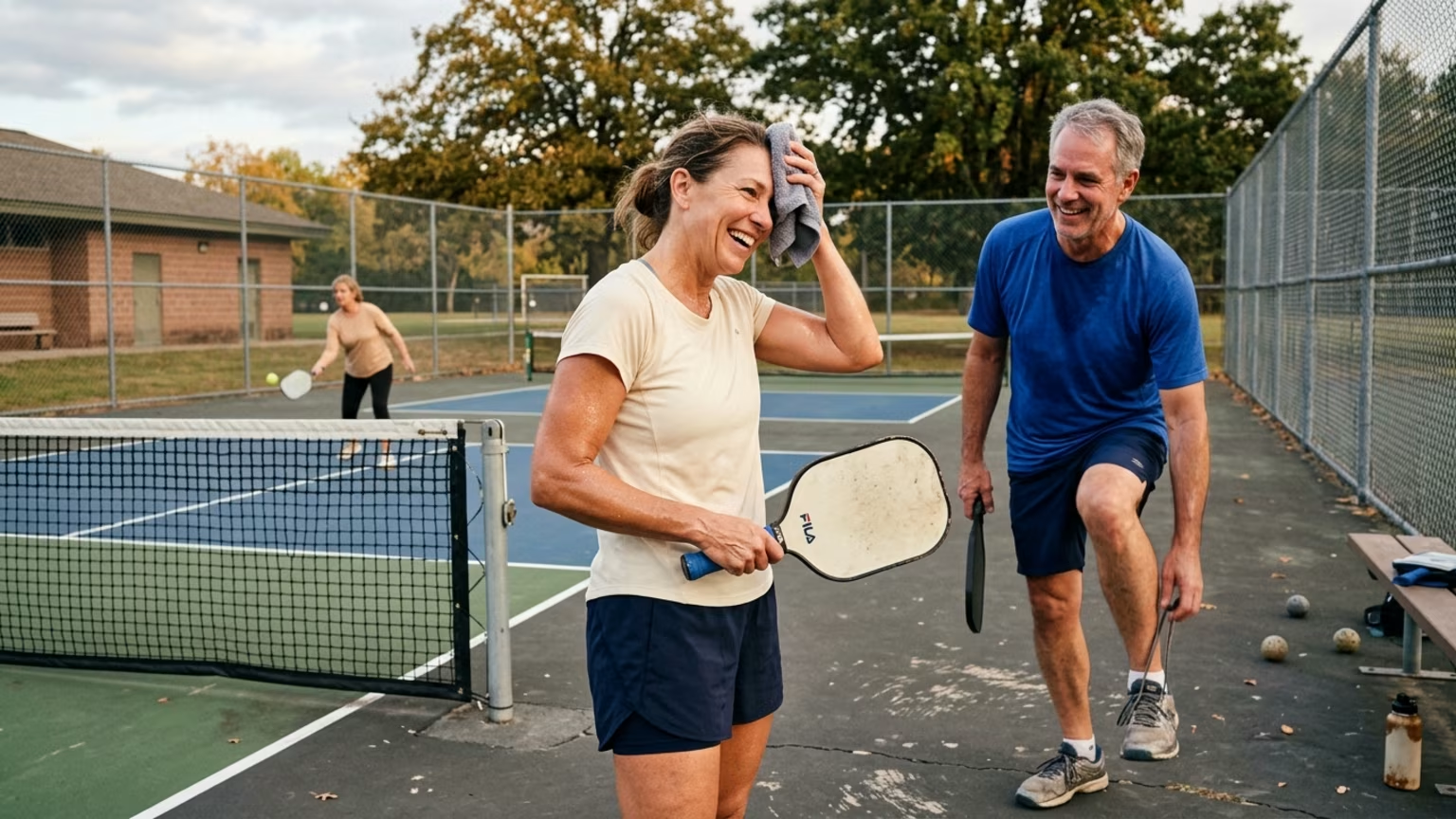
Recent guidelines emphasize gradual progression, dynamic warm-ups, and scheduled recovery to help adult racquet sports players maintain athletic longevity.
Read practical guidance for better movement, smarter preparation and a game that keeps working for you.
explore the Blog
