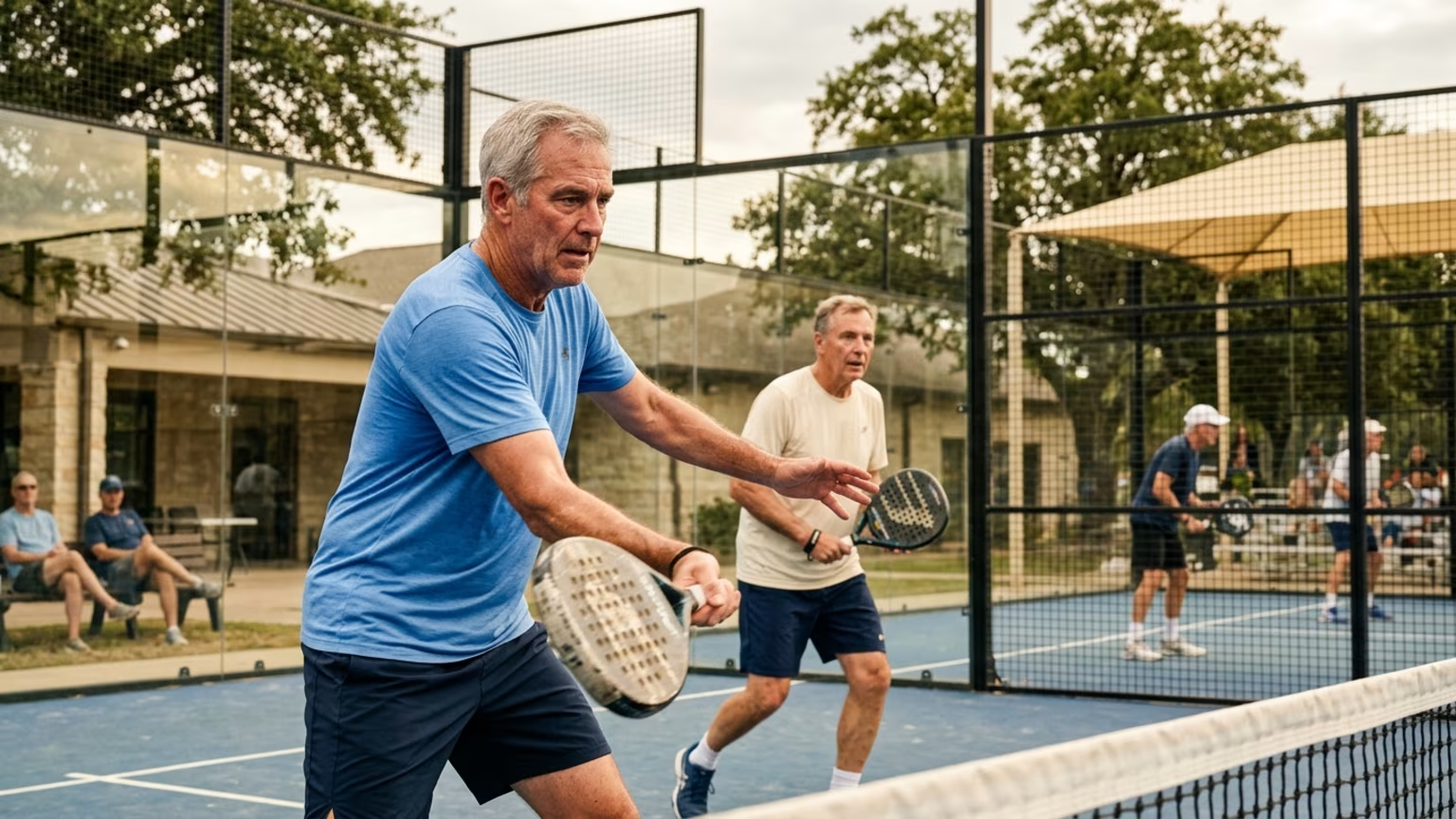

The scheduled second LTA Padel National Championships in Bristol established a competitive pathway for older adults with over-40, over-50, and over-60 senior draws.




The Padel Paper published a preview on October 1 detailing that the second LTA Padel National Championships were scheduled for October 1 to 4, 2026. The tournament was set for Rocket Padel Bristol. This event establishes a clear formal structure for competitive padel in the United Kingdom. It provides a venue for both open-division professionals and dedicated age-group competitors.
Bringing a national championship to a dedicated facility highlights the organizational growth of the sport. Players arrive expecting high-level competition and structured scheduling. The inclusion of multiple divisions requires significant logistical planning from tournament directors. This format allows players of varying experience levels to witness top-tier match play in person.
According to the preview, the championships include men’s and women’s open categories alongside dedicated senior draws. These senior brackets accommodate players aged over 40, over 50 and over 60. Establishing these specific age divisions provides a structured goal for older adults who maintain high competitive standards. The Padel Paper reported a total prize fund of £10,400 and available LTA ranking points for the event.
The available coverage identified Aimee Gibson and Catherine Rose as the defending women’s open champions. Louie Harris and Alex Loughlan were named as the defending champions in the men’s open draw. The preview also noted that Great Britain number one Christian Medina Murphy was partnering Alfonso Patacho in the men’s open competition. These high-profile entries guarantee a strong level of play at the top of the draw.
Spectator admission for the event was listed as free. Fans unable to attend the Bristol venue could stream the tournament via Onside TV’s YouTube channel. Providing accessible viewing options helps build a sustained audience for competitive padel. The preview coverage focused primarily on these logistics and defending champions rather than detailing the exact draw sizes.
While the prize money and ranking points outline the professional stakes, the preview did not break down the exact financial distribution. It also left the specific ranking-point values by division unspecified. Players looking to enter future iterations of the event must confirm eligibility and age cutoffs directly with the LTA. Understanding these administrative details is a necessary part of managing a competitive calendar.
The decision to run open and senior draws concurrently creates a unique tournament atmosphere. It allows amateur competitors to share the venue with the top-ranked professionals in the country. This shared environment builds a strong community connection within the sport. It also gives younger players a clear view of the long-term competitive pathways available to them.
According to the preview, the exact format of the matches within the senior draws was not heavily detailed. Tournament officials typically use standardized scoring, though age-group events sometimes feature modified formats to manage fatigue. Ensuring matches stay on schedule is a primary concern for any event director managing multiple divisions. The smooth execution of the tournament schedule relies heavily on predictable match durations.
For the elite padel player, events like the LTA National Championships are about securing national ranking points and earning a share of the prize fund. Professional competitors build their annual schedules around these high-stakes weekends. They must balance heavy practice loads with adequate recovery to peak at the right time. Their training focuses on explosive power and sustained tactical execution over multiple days.
Elite players often travel with dedicated support teams to manage mid-tournament soreness. They utilize strict nutritional protocols and advanced recovery tools between matches. This level of support allows them to push their bodies closer to the absolute limit. Their livelihoods often depend on advancing through the open draw.
The reality for the adult recreational player looks quite different. The announcement of over-40, over-50 and over-60 draws serves as a concrete example of competitive opportunities organized by age. Weekend league players can view this tournament structure as proof that formal pathways exist for long-term play. It shows that maintaining court fitness into later decades has a direct competitive outlet.
However, competing in these senior categories requires careful physical preparation. Adult players cannot simply replicate a professional training camp without risking significant joint strain. Instead, older competitors should focus on structuring a padel training week that prioritizes recovery and workload management. Balancing intense match play with targeted strength work is essential for healthy aging in racquet sports.
The physical demands of a tournament weekend are cumulative. Playing multiple matches over three or four days challenges the lower body and the core. Recreational players entering senior draws must maintain solid mobility to handle the frequent changes of direction. Mastering essential footwork skills helps mitigate the fatigue that often sets in during the later stages of a draw.
Adult recreational players manage their own physical maintenance while balancing careers and family obligations. Preparing for an over-50 or over-60 draw requires a pragmatic approach to training volume. It means prioritizing sleep, adequate hydration, and sensible warm-up routines over grueling practice sessions. Staying healthy enough to complete a weekend tournament is a victory in itself.
The inclusion of older age brackets also highlights the tactical evolution required as players age. Pure power and raw speed naturally decline, placing a premium on court positioning and shot selection. Senior competitors often rely on defensive patience and precise lobs to force errors from their opponents. This strategic shift makes age-group tournaments highly technical and fascinating to watch.
Seeing organized age divisions at a national level validates the time adult players spend on mobility work. A stiff lower back or a tight shoulder can easily ruin a long-planned tournament weekend. Consistent strength training provides the resilience needed to survive the repetitive lunging and rotating inherent in padel. Those who manage their workloads effectively are the ones still competing in the over-60 draws.
For the weekend player, the existence of an over-40 or over-50 draw changes how they might view their local club matches. Routine games can transition into targeted preparation for a regional or national event. Having a specific date on the calendar helps maintain focus during off-court conditioning sessions. It provides a tangible reason to prioritize joint health and cardiovascular fitness throughout the year.
Adult players must critically assess their own physical readiness before committing to a multi-day event. The excitement of a national championship can easily lead to overexertion and subsequent injury. A pragmatic approach involves listening to your body and recognizing the difference between normal muscle fatigue and sharp pain. For the everyday player, regular local matches still require you to focus on adapting your movement to protect your knees and lower back.
Looking ahead, the development of senior divisions in national racquet sports tournaments will likely become more standardized. As the player base matures, the demand for structured, age-appropriate competition will increase. Governing bodies will need to refine their scheduling models to accommodate the specific physical needs of older adults. This includes managing match times to ensure adequate rest between rounds.
Tournament organizers may begin implementing stricter ranking criteria and regional qualifiers if entry numbers in senior categories continue to rise. A clear, transparent qualification process helps adult players plan their competitive year with greater certainty. It also prevents the early rounds of a national championship from becoming logistically overwhelming. Clear communication regarding age cutoffs and eligibility rules will be essential.
The visibility of events at venues like Rocket Padel Bristol sets a benchmark for future national championships. Facilities hoping to host major tournaments must prove they can handle the simultaneous demands of professional and senior brackets. This requires ample court space, dedicated warm-up areas, and reliable scheduling. The success of this dual-format approach will influence how upcoming national events are pitched and operated.
Ultimately, the commitment to offering robust senior draws reflects a broader understanding of athletic longevity in padel. The focus is shifting from merely accommodating older players to actively showcasing their competitive standard. As more adults recognize they can compete formally well into their sixties, the depth of these divisions will improve. Expect future national schedules to treat the senior brackets as a core pillar of the competitive calendar rather than a secondary feature.
Follow Evercourts for practical insights on tennis, pickleball and padel performance, movement, recovery and healthy ageing. Stay connected for new articles, research-led guidance and ideas to help you play well and keep playing for years.


An evidence check on sports supplements like tart cherry juice. Learn why racquet sports players should prioritize core nutrition over functional foods.

In late 2026, Oura analyzed wearable data to see how recreational tennis impacts heart health and recovery. Learn what this means for your athletic longevity.
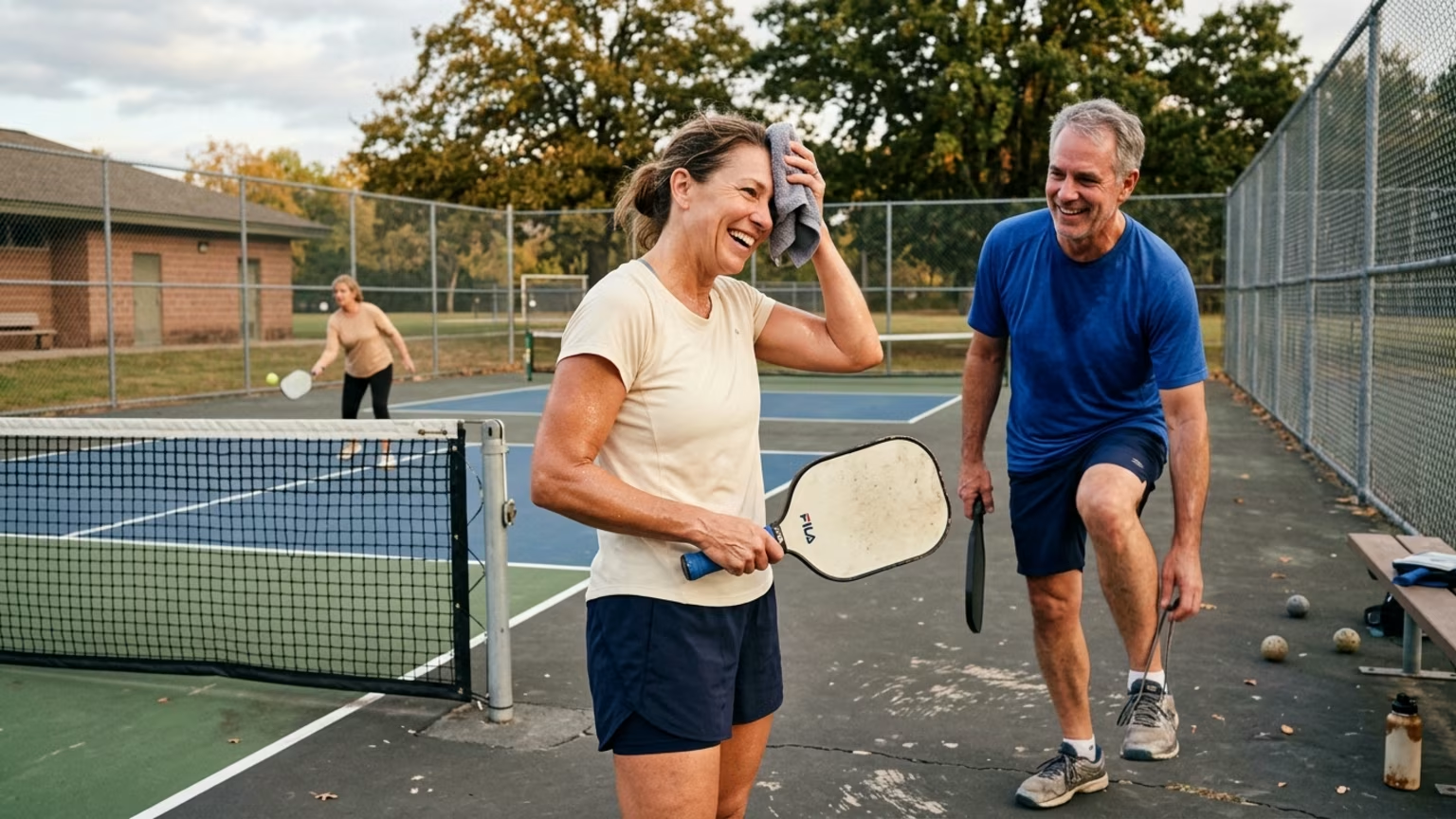
Recent guidelines emphasize gradual progression, dynamic warm-ups, and scheduled recovery to help adult racquet sports players maintain athletic longevity.
Read practical guidance for better movement, smarter preparation and a game that keeps working for you.
explore the Blog
