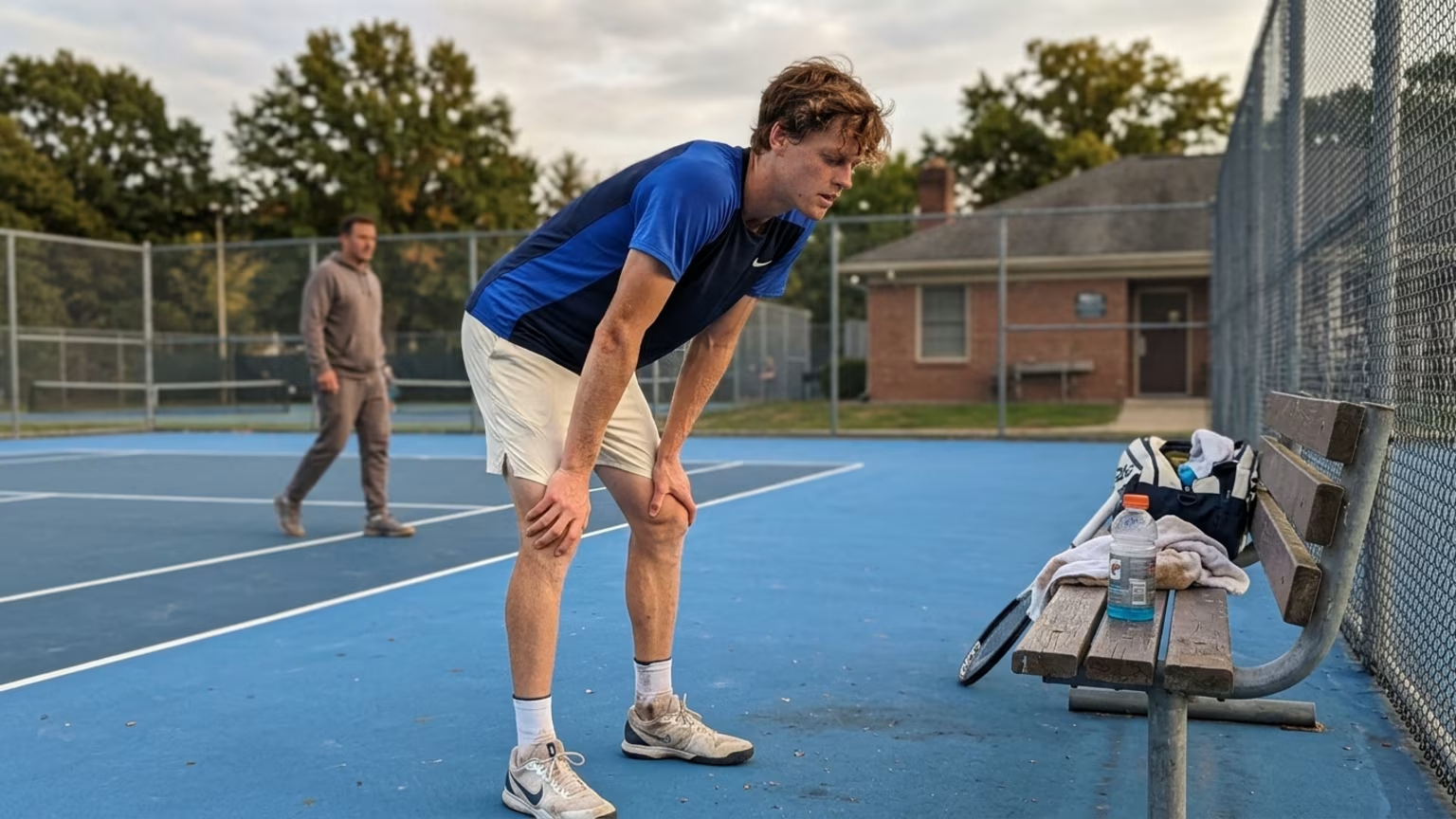

Jannik Sinner withdrew from the 2026 Shanghai Masters to continue his conservative knee recovery. What his extended absence teaches amateur racquet players.




On October 3, Jannik Sinner announced he would miss the Rolex Shanghai Masters. The tournament was scheduled for October 7 through October 18. This withdrawal extends an absence from competitive tennis that has lasted more than three months. Sinner has not competed since defeating Alexander Zverev in the Wimbledon final on July 12.
The Shanghai withdrawal is the latest in a series of missed events for Sinner. During this extended layoff, he also missed the North American hard court swing. This included missing the US Open and the China Open in Beijing. In his public statement, Sinner said he had hoped to play and was sorry to miss the fans.
His quoted announcement did not detail a specific medical diagnosis or treatment plan. However, Daily Sabah reported that Sinner is dealing with extra-articular tendon inflammation in his right knee. The outlet noted he is pursuing a conservative recovery approach rather than rushing back to the court. Citing Italian media, Daily Sabah also reported that Sinner consulted French knee specialist Bertrand Sonnery-Cottet in Lyon.
The specialist reportedly recommended continuing non-surgical treatment for the knee condition. Sinner won the Shanghai title in 2024 by defeating Novak Djokovic in the final. His current withdrawal means he will not defend that title in 2026. This prolonged absence underscores a careful approach to a persistent physical issue.
The handling of this injury provides a clear view into modern athletic rehabilitation strategies. While fans eagerly await his return, the primary focus remains on reducing the tendon inflammation completely. The choice to avoid surgery highlights the effectiveness of targeted physical therapy and progressive load management. These conservative methods take time, which explains the prolonged absence from the ATP tour.
Elite athletes face immense pressure to compete, yet they still prioritize adequate recovery time when structural issues arise. Daily Sabah reported a record of 44 wins and 3 losses for Sinner in 2026 before this absence. He had also secured six titles during that highly dominant stretch of the season. Despite those impressive results, he chose to prioritize a conservative rehabilitation plan over immediate competition. Walking away while holding top form requires immense discipline.
Professional athletes understand that an upcoming event does not dictate biological readiness. For adult tennis, padel and pickleball players, this is a vital concept for athletic longevity. Amateur players often make the mistake of rushing their recovery to meet a local tournament deadline. Tendon inflammation requires patience and a gradual rebuilding of physical capacity before resuming high level play.
Tendon issues in racquet sports are notoriously stubborn if they are not allowed to settle completely. Players often feel better during daily activities and mistakenly assume they are ready for the explosive movements of tennis. This false sense of security leads to rushed comebacks and recurring inflammation cycles. Patience during a layoff often prevents minor issues from becoming chronic problems later.
Recreational players dealing with persistent knee symptoms should seek an individualized assessment from a qualified professional. You cannot force a tendon to heal faster simply because you have a match scheduled this weekend. Recreational players should view conservative treatment as an active process rather than just passive rest. A proper return requires progressively loading the tendon and rebuilding the surrounding muscle strength.
Elite players do not simply wait for the pain to stop before returning to full competition. They undergo rigorous functional testing to ensure the joint can handle sudden directional changes. Adult players should adopt a similar mindset by testing their movement in controlled environments first. Building adaptable pre match routines can help ensure court readiness without adding unnecessary fatigue.
Evercourts consistently emphasizes that managing court time is essential for long term joint health. Players who want to keep enjoying racquet sports for years must learn to listen to their bodies. A scheduled competition is never proof that a player is physically ready to compete. Understanding how racquet sports support healthy ageing requires respecting the recovery process.
The decision to withdraw from a major Masters event carries significant ranking and statistical implications. Sinner was the defending champion in Shanghai, a status tied to substantial ranking points. Reuters reported that Alexander Zverev could reach the number one ranking by winning both Beijing and Shanghai. This highlights the severe competitive cost of Sinner taking extended time away from the tour.
The pressure to return is compounded by the upcoming European indoor swing later this year. Daily Sabah reported that Sinner has ranking points to defend at Vienna, the Paris Masters, and the ATP Finals. Skipping Shanghai means forfeiting a chance to secure his current ranking position against rising competitors. However, prioritizing recovery over points is a calculated move to preserve his career trajectory.
Elite tennis operates on a continuous cycle where missed events directly impact player standings. Professional players weigh the risk of losing their seeding against the risk of worsening a structural injury. The choice to step back from the tour requires confidence in one's overall physical foundation. It proves that managing a lingering injury is more critical than a single tournament appearance.
As the 2026 season moves toward the indoor courts, Sinner's schedule remains undefined. The reporting named Vienna as a possible next opportunity, but a confirmed return date has not been established. The broader trend indicates that conservative management of joint issues is becoming standard practice. Professionals are increasingly willing to sacrifice short term tournament appearances to ensure long term physical durability.
This strategic patience will likely influence how players approach the demanding final months of the ATP calendar. The grueling nature of consecutive tournaments often forces athletes into difficult decisions regarding their health. We expect to see a continued emphasis on physical therapy and non-surgical interventions for wear and tear injuries. Analyzing what pro tennis withdrawals reveal about physical limits shows that tactical rest is a powerful tool. For recreational players, this evolving mindset reinforces the importance of playing the long game for continuous health.
Follow Evercourts for practical insights on tennis, pickleball and padel performance, movement, recovery and healthy ageing. Stay connected for new articles, research-led guidance and ideas to help you play well and keep playing for years.


An evidence check on sports supplements like tart cherry juice. Learn why racquet sports players should prioritize core nutrition over functional foods.
In late 2026, Oura analyzed wearable data to see how recreational tennis impacts heart health and recovery. Learn what this means for your athletic longevity.
Recent guidelines emphasize gradual progression, dynamic warm-ups, and scheduled recovery to help adult racquet sports players maintain athletic longevity.
Read practical guidance for better movement, smarter preparation and a game that keeps working for you.
explore the Blog
