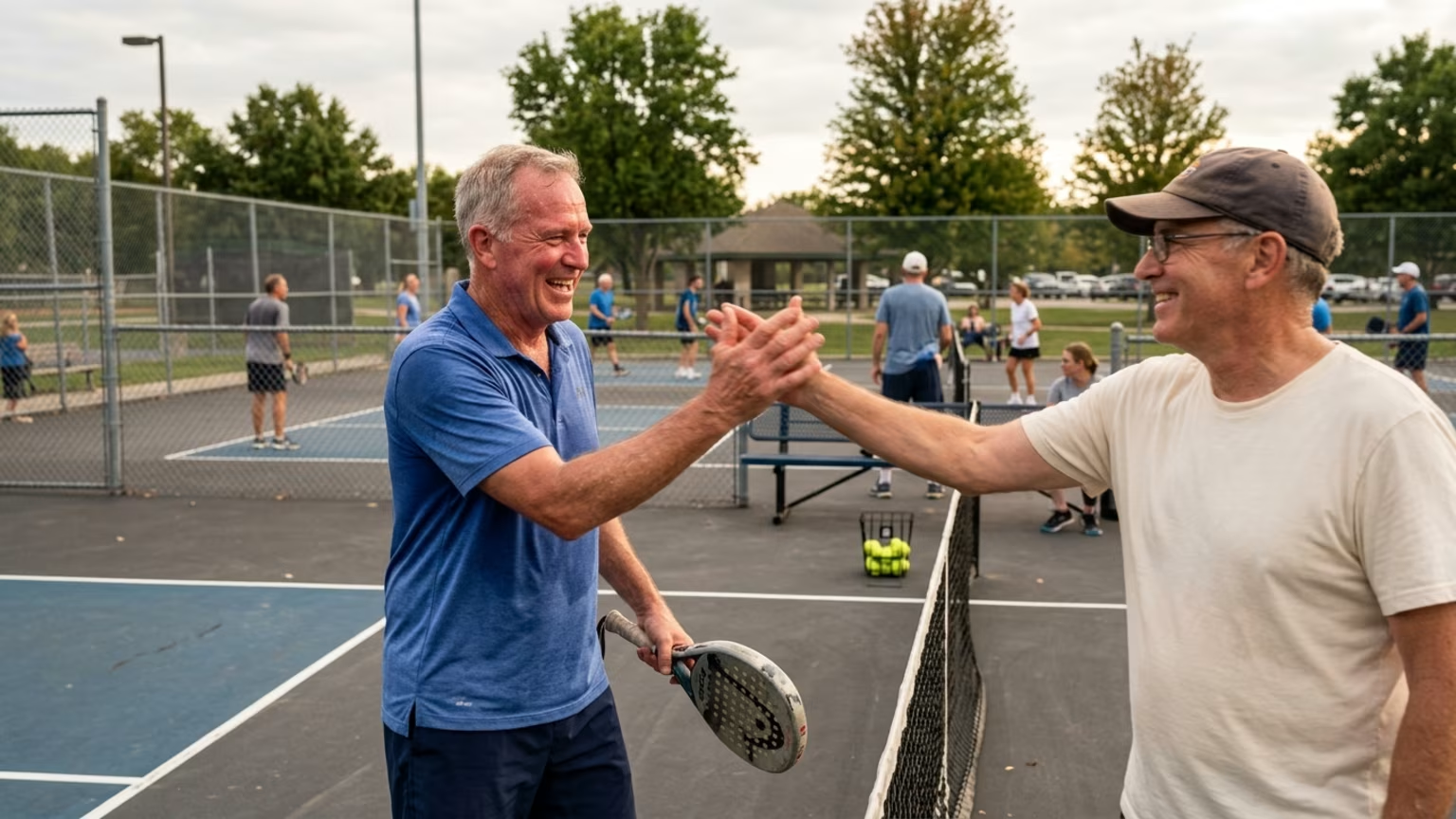

Spain and Argentina swept the opening round of the FIP Senior World Cup. Here is how adult padel players can apply these workload and recovery strategies.




On September 11, 2026, the FIP Senior World Cup final stage opened in Buenos Aires with emphatic team victories. Spain and Argentina demonstrated their depth immediately in the opening round. The multi-age team event runs through September 19. Both nations showed exactly why they remain traditional powers in international padel.
The FIP Senior World Cup brings together teams from across the globe for formal group competition. The team format requires deep rosters to field competitive pairs across every age bracket. These divisions span from 40+ all the way up to 60+ categories. Building a team that can win five matches requires exceptional organizational depth. According to the International Padel Federation, defending men's champion Argentina started their campaign flawlessly. They secured a commanding 5-0 victory over Uruguay.
Argentina fielded Miguel Lamperti, one of the most recognizable veteran players in the draw, from the very first round. The Spanish men matched that dominance by defeating Egypt 5-0. The women’s squads from both nations mirrored this early success. Spain’s women won their first tie 5-0 against Lithuania. Argentina’s women defeated Switzerland by the exact same 5-0 margin. Both countries established an immediate psychological edge in the early stages of the championship.
The underlying game statistics reveal the sheer scale of these opening victories. Tennis Tonic reported that Spain’s men completed a clean sweep over Egypt without surrendering a single game. Every single men's match in that tie ended in a flawless 6-0, 6-0 scoreline.
The women’s results were nearly as decisive across the board. Spain’s women conceded only one game across five matches against Lithuania. Argentina’s women dropped just three games against Switzerland. These figures highlight the immense talent pools within the Spanish and Argentine senior systems.
However, these sweeps stand in sharp contrast to the rest of the opening day. Other nations faced much tighter battles on the court. Australia defeated Venezuela 3-2, Denmark beat Paraguay 3-2, and Germany edged Great Britain 3-2. This competitive range highlights the distinct gap between the traditional powers and the wider global field.
While a 5-0 sweep is impressive, it does not provide a complete physical blueprint for everyday players. The event reporting confirms the match scores and the participating athletes. However, it does not outline specific training protocols used by these national squads. It also lacks details on their age-adapted recovery plans.
A club player can certainly take inspiration from experienced athletes competing at a high level. Yet, we must translate these results carefully to avoid injury. Adult recreational players should not assume that a professional team approach can be copied without modification. Athletic longevity depends on adapting your routine to your own physical realities.
You cannot judge your physical readiness solely by how many sets you played on a given day. A fast-paced match against aggressive opponents takes a very different physical toll than a steady baseline rally. Recognizing this difference helps you structure your Padel Articles reading and your actual training sessions more effectively. For an older player, listening to how your body responds to different match intensities is crucial for long-term health on the court.
Many adult players fall into the trap of measuring their effort purely by the clock. Two hours of intense defensive scrambling will drain your reserves far faster than two hours of controlled attacking play. Adjusting your weekly schedule based on match intensity prevents chronic fatigue. This careful pacing helps you avoid overuse injuries that commonly sideline veteran athletes. Players preparing for major age-group tournaments can learn a lot from senior preparation strategies used across multiple racquet sports.
Recovery must be treated as a core performance pillar rather than an optional bonus. Managing your rest intervals is just as important as your forehand technique. Our team has learned this lesson firsthand. I used to think a tough conditioning block was the only way to improve my court endurance. Then I started tracking my sleep. I noticed that on days I slept less than six hours, my reaction time at the net was noticeably sluggish, and I felt gassed by the second set. Prioritizing consistent rest did more for my late match stamina than any extra sprints ever did. Recovery is the true foundation of performance.
Listening to your body and managing muscle soreness will keep you playing consistently week after week. Ignoring early signs of fatigue often leads to prolonged absences from the court. By building rest days into your weekly schedule, you allow your joints and soft tissues time to heal.
Padel inherently rewards good positioning and sharp anticipation over sheer running speed. Choosing a higher-percentage shot reduces the number of emergency movements you have to make. Using height and depth effectively keeps you from scrambling out of position. You can let the ball do the work instead of your legs.
The best veteran players understand that positioning always beats speed. When you watch elite senior matches, you rarely see frantic sprinting. Instead, you see players using the walls intelligently to buy themselves time. By keeping your shots deep and low, you force your opponents backward. This strategy allows you to hold the net with minimal physical exertion.
Every shot you take has a physical cost attached to it. Players who preserve their balance are much better equipped to maintain quality late in a match. Refining your essential footwork skills is a highly effective way to manage your energy output. Efficient movement reduces unnecessary wear on your joints.
Building court stamina requires balancing your match play with proper preparation. You can mix steady aerobic work with brief bursts of controlled intensity. Make sure your warm-up routine properly prepares your joints for these demands. Using a structured 10-minute padel warm-up ensures your muscles are ready before the first point is played. Consistency in your preparation will yield better long-term results than occasional heavy training blocks.
Older athletes benefit from maintaining their explosive power, but high-intensity efforts need careful management. Pushing through joint pain to finish a heavy conditioning session is never advisable. A well-rounded physical program supports your ability to step onto the court feeling fresh and capable.
As the FIP Senior World Cup continues through its final rounds, we expect to see closer margins of victory. The initial sweeps by Spain and Argentina confirm their elite status in international padel. However, the tighter 3-2 ties elsewhere in the draw show that global competition is deepening. Over the next season, we anticipate that national federations will begin sharing more formalized frameworks for senior conditioning. As older age brackets grow in prominence, structured load management will become just as critical as technical skill. Watching how top veteran players pace themselves will offer valuable lessons for recreational athletes everywhere.
Follow Evercourts for practical insights on tennis, pickleball and padel performance, movement, recovery and healthy ageing. Stay connected for new articles, research-led guidance and ideas to help you play well and keep playing for years.


An evidence check on sports supplements like tart cherry juice. Learn why racquet sports players should prioritize core nutrition over functional foods.
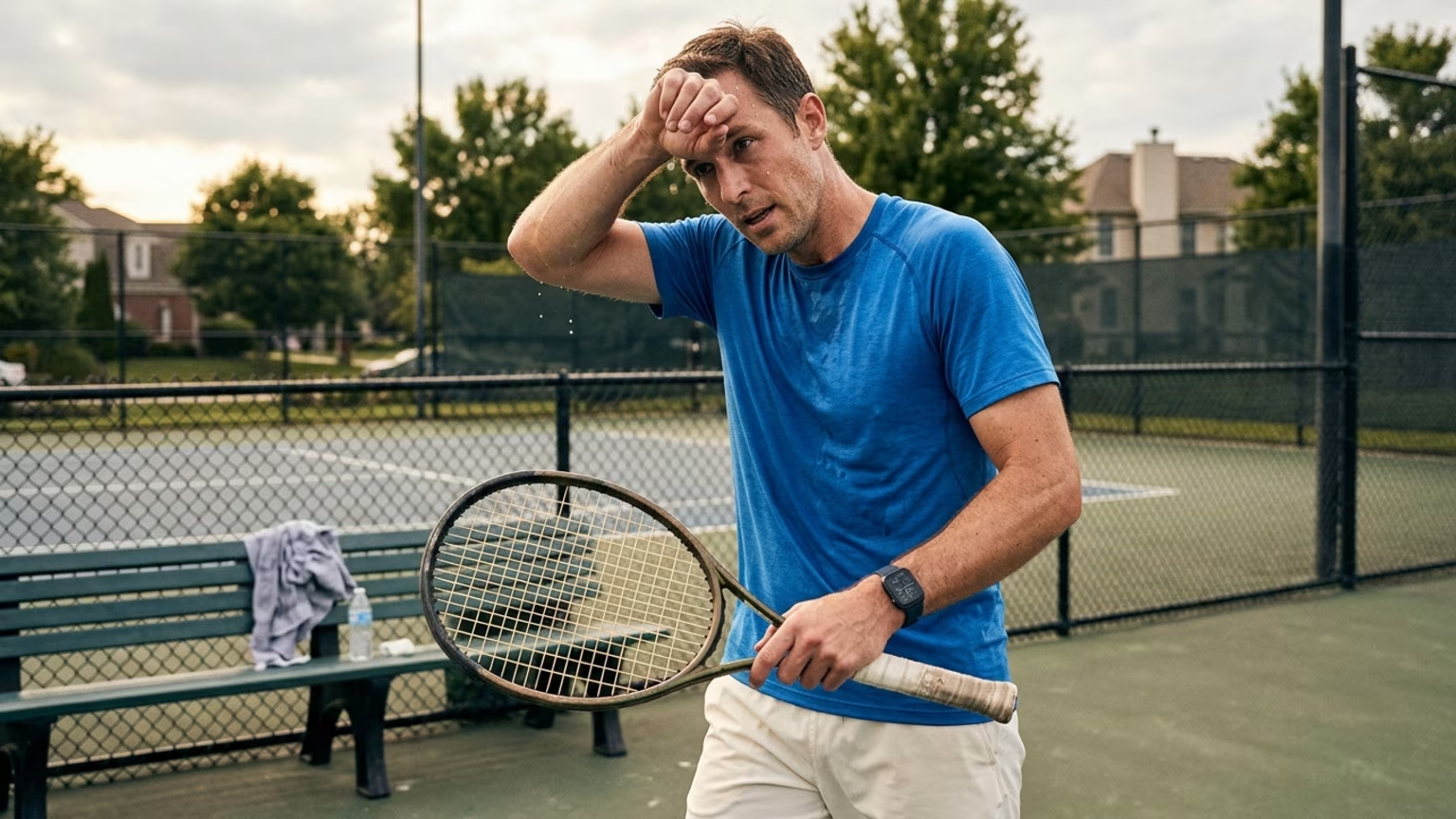
In late 2026, Oura analyzed wearable data to see how recreational tennis impacts heart health and recovery. Learn what this means for your athletic longevity.
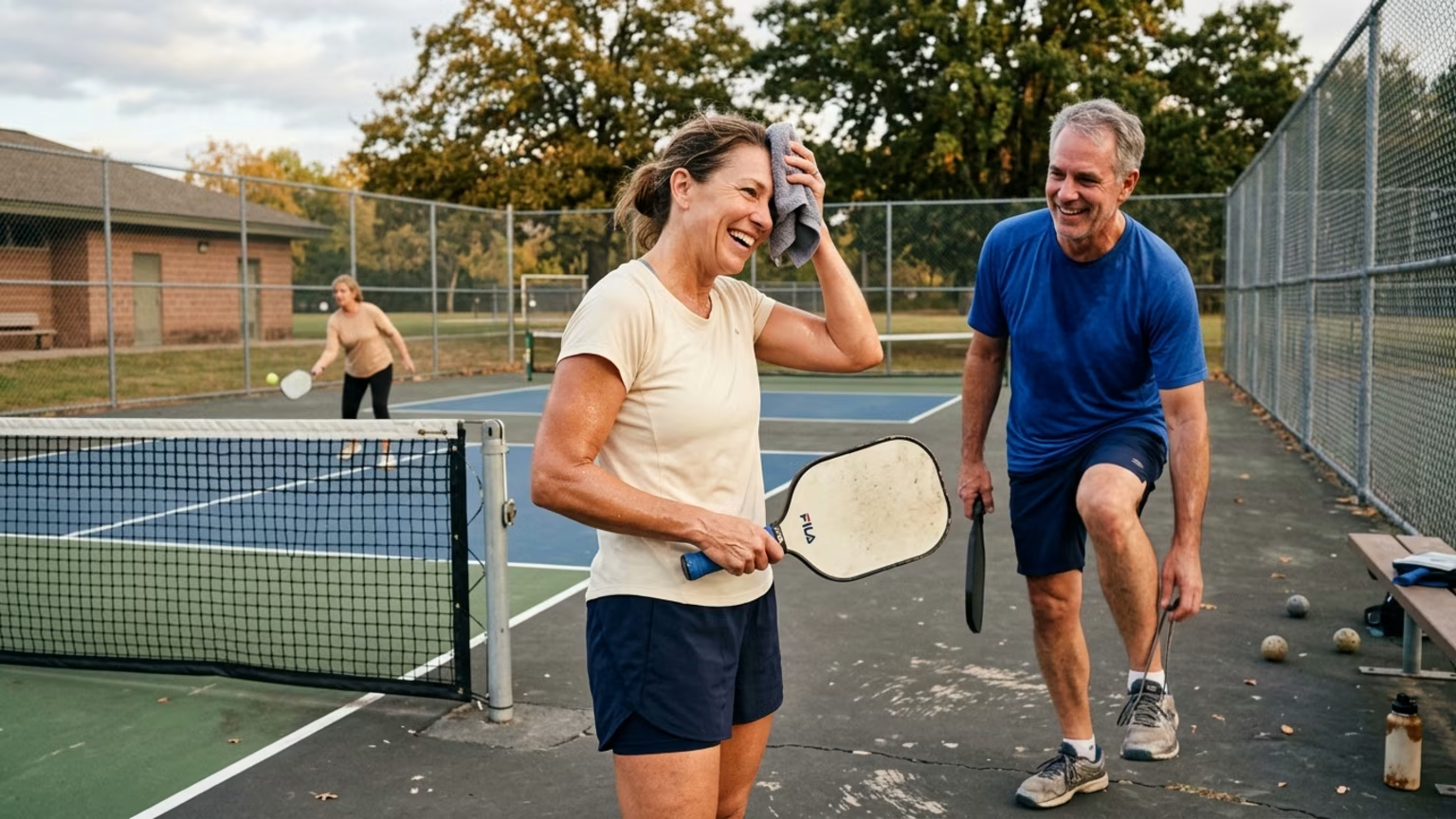
Recent guidelines emphasize gradual progression, dynamic warm-ups, and scheduled recovery to help adult racquet sports players maintain athletic longevity.
Read practical guidance for better movement, smarter preparation and a game that keeps working for you.
explore the Blog
