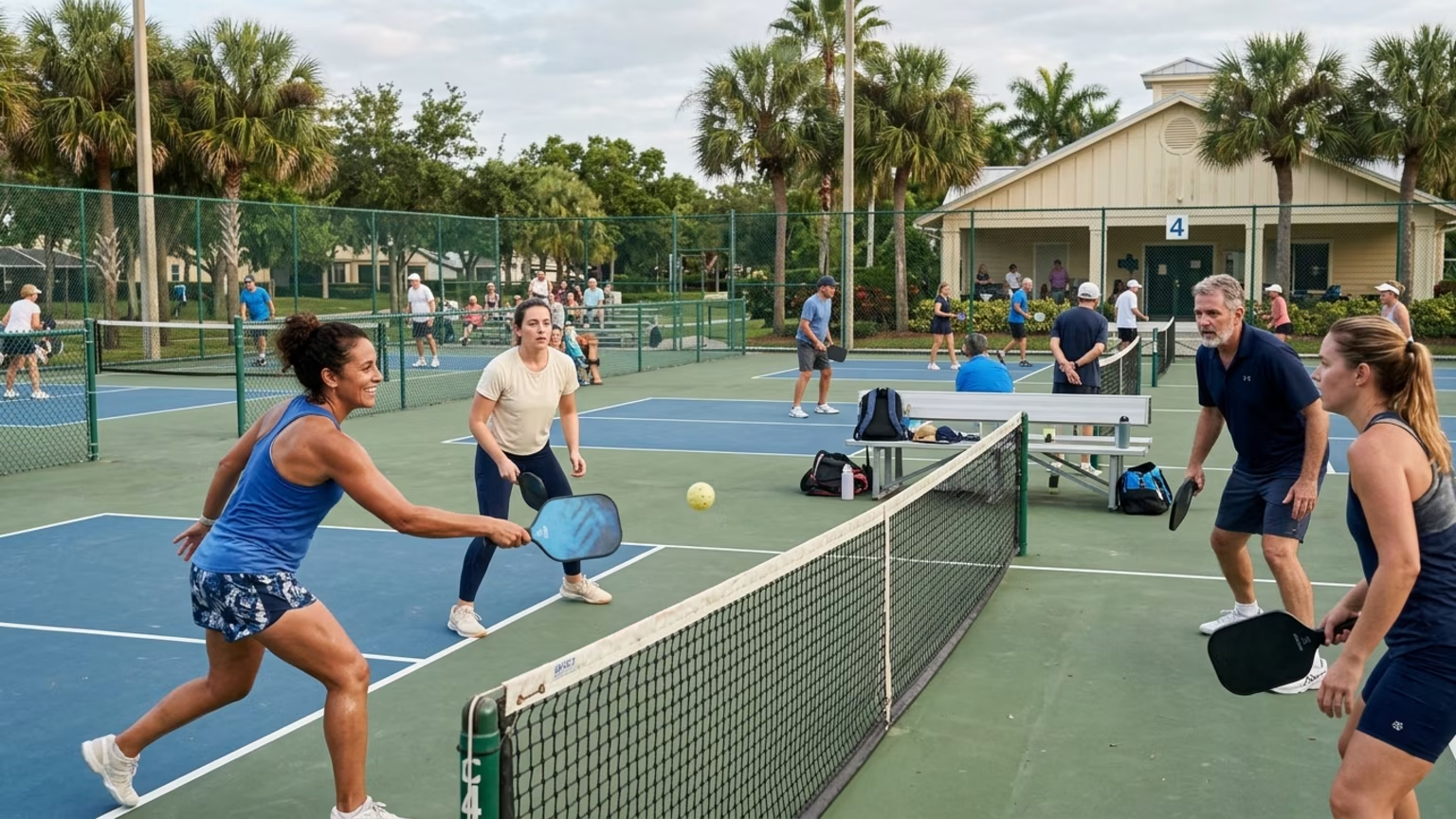

CourtSource ranked St. Pete Athletic the No. 1 U.S. pickleball club in 2026. Learn what this shift toward multi-court social venues means for adult players.




In September 2026, CourtSource named the St. Pete Athletic Paddle and Social in St. Petersburg, Florida, the No. 1 facility in its Top 100 Pickleball Clubs in the United States ranking. This announcement marks a definitive moment for the racquet sports industry. The ranking reflects a transition from simple court rentals to comprehensive social destinations. CourtSource evaluated clubs using four broad factors: facility scale or size, playability, access, and amenities.
The organization also reviewed coaching, leagues, locker rooms, dining, fitness and recovery options, social areas, and the overall environment. CourtSource excluded general fitness facilities, portable net setups, and country clubs where pickleball was secondary from their review. CourtSource said sponsorships, advertising relationships, and paid subscriptions did not affect consideration or placement.
The St. Pete Athletic facility operates on a massive scale. Empower Pickleball reports that the approximately 50,000-square-foot facility offers professional playing surfaces alongside fitness and recovery amenities. The venue also features coworking areas, dining, bar service, and year-round programming. The club has 14 professional indoor pickleball courts, a full-service restaurant, and three bars under one roof.
A separate industry report describes the facility as having 14 pickleball courts, two padel courts, and six table tennis courts. The Tampa Bay Times quoted the ranking as praising the club for “rich amenities” and “outstanding services.” The publication noted an environment where players want to stay all day, highlighting its “unsurpassed value.”
A Florida-focused report says the club is open to the public, while membership provides additional benefits. The report also highlights all-day dining, cocktail service, trivia, and mixology classes. Co-owner Reuben Pressman said the club was built with community at the center of its decisions. He stated that the goal was to create a place where people would want to stay after playing.
CourtSource director of court intelligence Andrew Wyatt echoed this philosophy. He described leading clubs as combining courts with programming, hospitality, environment, and community. He noted that great clubs remove friction from play and add reasons to stay.
For the adult recreational player, this shift toward premium hospitality venues changes how we approach our weekly matches. Professional or elite players usually train in dedicated, high-performance environments focused strictly on athletic development. Weekend league players, on the other hand, are increasingly drawn to clubs that blend competition with immediate post-match dining and socializing. While having a restaurant and bars on site makes showing up easier, it can blur the line between a serious workout and a purely social outing.
When a club feels like an entertainment venue, it is easy to forget the physical demands of the sport. When I first started playing pickleball, I noticed how many people skipped warming up entirely. They would jump straight out of their cars and right up to the kitchen line. I tried doing that and immediately pulled a calf muscle.
Pickleball requires just as much explosive lateral movement as tennis, just in a tighter space. Since then, I always spend five minutes doing dynamic lunges and ankle rolls. It changes everything about how confident I feel pushing off the baseline. Players focusing on athletic longevity should maintain this discipline regardless of a club's luxury offerings.
You might easily find reasons to linger at the bar after a match. Still, true physical maintenance requires dedicated mobility work and proper rest. Treat the fitness and recovery amenities as helpful support systems rather than guaranteed solutions for aches and stiffness. Evaluating what you are paying for in a racquet club requires looking past the social perks to ensure the environment supports your actual playing goals.
Players aiming for athletic longevity must navigate these premium spaces strategically. Treat recovery amenities as optional support, not a substitute for evidence-based medical care, strength work, sleep, or individualized rehabilitation. A venue that makes it easy to play regularly is incredibly useful, but players should still balance court time with dedicated strength training. You should never assume that a facility ranked highly for its amenities is automatically the best option for advanced instruction, tournament preparation, or rehabilitation.
Players can use a multi-sport setup strategically to support their physical health over a long season. Pickleball can provide a familiar social and competitive outlet, while padel or table tennis may offer variety and different movement demands. However, it is crucial to progress gradually rather than adding volume abruptly just because the courts are available. The best venue ultimately depends on how realistically a player will use its specific courts and services.
The sheer volume of venues considered for this ranking highlights the rapid professionalization of recreational racquet sports. CourtSource tracks more than 18,300 published venues and 76,500 pickleball courts across all 50 U.S. states. Florida remains a major hub for these facilities. Florida accounted for 11 clubs in the complete Top 100 and five of the Top 10, according to Empower Pickleball.
Other high-ranking Florida facilities include The Fort in Fort Lauderdale at No. 3, and The Replay Club in Boynton Beach at No. 5. Pictona at Holly Hill ranked No. 6, while the USOP National Pickleball Center in Naples ranked No. 10. Pickle & Pint in Largo was the other Tampa Bay area venue identified in the Tampa Bay Times report, placing No. 70.
This infrastructure boom is supported by massive national participation numbers. A 2026 industry report citing Sports & Fitness Industry Association data says 24.3 million Americans played pickleball in 2025. This represents an increase of 22.8% from 2024. The same reported SFIA figures distinguish between 16.8 million casual players who played one to seven times during the year and 7.48 million core players who played at least eight times.
While pickleball drives the bulk of facility traffic, other sports are finding a foothold in these mixed-use spaces. A separate report puts 2025 U.S. padel participation at approximately 1.07 million people. This shows that pickleball remains much larger nationally, while padel serves as a smaller adjacent market. Integrating both sports allows operators to maximize their square footage while giving players access to different movement patterns and challenges.
Choosing a club with structured programming can help casual participants transition safely into that core player category. Ultimately, the goal of frequenting any facility is to maintain consistent, healthy physical activity over time. General physical activity evidence remains relevant to adult players seeking long-term performance. A 2026 PubMed-indexed study of 147,414 adults found that 150 minutes per week of moderate-intensity activity was associated with lower mortality than no activity.
The study reported a hazard ratio of 0.70 for participants meeting this threshold. Consistent training and sensible progression remain vital, regardless of where that activity takes place.
As we look ahead to the next season, the St. Pete Athletic model will likely become the blueprint for new facility development across the country. Operators will continue moving away from simple court rentals in favor of comprehensive memberships that bundle sports, workspaces, and dining. We expect to see more venues adopting the multi-sport approach, using padel and table tennis to complement their primary pickleball offerings.
This evolution means adult recreational players will have more options to combine their athletic routines with their social lives. However, the true test for these high-end clubs will be their ability to sustain player development and organized competition. Facilities that successfully balance premium hospitality with rigorous, well-structured leagues will define the next era of racquet sports culture.
Follow Evercourts for practical insights on tennis, pickleball and padel performance, movement, recovery and healthy ageing. Stay connected for new articles, research-led guidance and ideas to help you play well and keep playing for years.


An evidence check on sports supplements like tart cherry juice. Learn why racquet sports players should prioritize core nutrition over functional foods.
In late 2026, Oura analyzed wearable data to see how recreational tennis impacts heart health and recovery. Learn what this means for your athletic longevity.
Recent guidelines emphasize gradual progression, dynamic warm-ups, and scheduled recovery to help adult racquet sports players maintain athletic longevity.
Read practical guidance for better movement, smarter preparation and a game that keeps working for you.
explore the Blog
