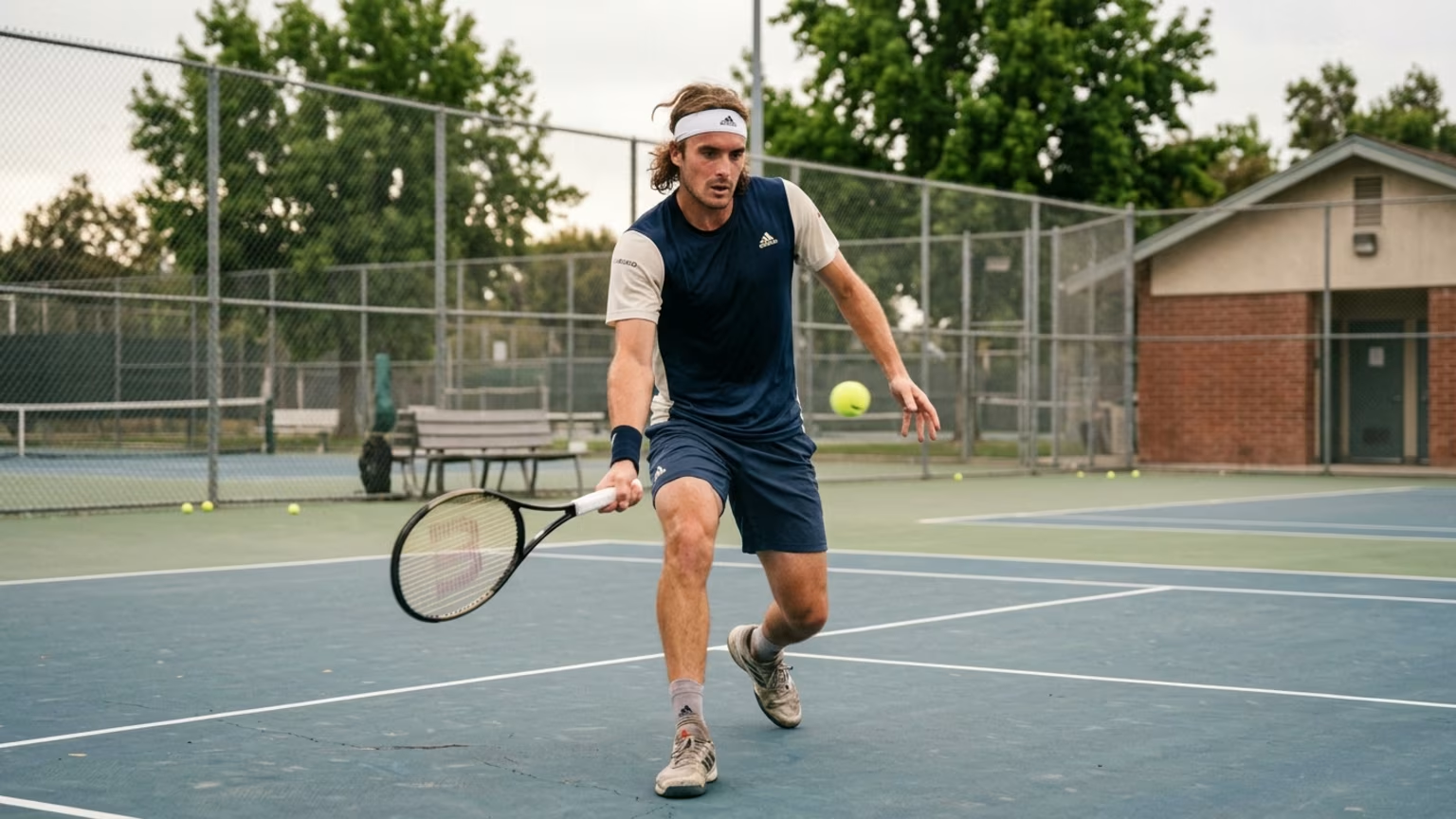

Stefanos Tsitsipas shifted his sleep schedule to build a disciplined morning routine. Learn how consistency can help amateur tennis and pickleball players.




At a pre-tournament press conference during the 2026 Winston-Salem Open, Stefanos Tsitsipas discussed major changes to his daily routine. The tennis professional stated he had begun going to bed earlier after previously identifying as a night owl. He explained that this adjustment was designed to improve his sleep rhythm and support his wider training goals on the court.
Tsitsipas noted that this lifestyle change had been underway for approximately six months. He had traditionally found his inspiration, peace, and best moments late at night while others were asleep. However, he deliberately became more of a morning person to start his daily routines earlier. This shift required changing habits he previously valued to prioritize his career.
In August 2026, he mentioned that he was training hard, eating well and attempting to improve his sleep rhythm. He described his past sleep schedule as a previous problem and noted that sleeping somewhat earlier had helped him. Tsitsipas linked these earlier routines with a feeling of greater discipline in his life. He stated that this disciplined approach is helping him build the best version of himself professionally.
These small daily tasks and consistent habits are part of a broader effort to take his tennis performance forward. He credited his partner with helping him establish these stronger life foundations. His comments highlight a player-led lifestyle change rather than a formal medical intervention. This steady approach to daily preparation shows a long term commitment to his craft.
The routine adjustments were tested shortly before his opening match in Winston-Salem. In that specific match, Tsitsipas defeated Jenson Brooksby 6-4, 7-6(6), according to the official tournament report. A single match cannot perfectly separate the effects of sleep timing from fitness, tactics, or match circumstances. However, the victory provided an immediate competitive backdrop for his updated lifestyle approach.
After the match, Tsitsipas emphasized the importance of mindset when playing crucial moments. He noted that many players can hit the ball well but that a strong mindset helps a player step up under pressure. His current approach appears to involve not only sleep timing but also mental execution and daily discipline. A consistent routine provides a reliable structure that players can lean on during stressful competitive situations.
When a professional athlete changes their daily schedule, they usually have the freedom to restructure their entire day. Adult recreational players must fit tennis, pickleball, or padel around work shifts and family responsibilities. Attempting a dramatic overnight change to wake at dawn might not be realistic or sustainable for everyone. The practical lesson is not that early risers always play better. Instead, players should focus on establishing a reasonably stable schedule that leaves them alert for matches.
In our experience, building resilient habits often requires testing what actually works for your body over time. I remember finishing a tough two hour padel match on a cold Tuesday night and waking up the next morning feeling like my lower back was locked in concrete. For a long time, I just accepted this as the price of playing hard in my forties. But once I started spending just ten minutes on targeted hip mobility before heading to the club, the stiffness almost completely vanished. It taught me that we do not have to accept pain as a default state of aging.
Small consistent actions create the foundation for athletic longevity. If morning practice is essential for your schedule, you might test whether an earlier routine improves your warm-up quality. Some players find that organizing their gear the night before makes them more willing to complete mobility work. You can prepare your body for match day with a steady routine without needing to copy a professional schedule exactly.
A sustainable habit is always better than a rigid rule that creates added stress. Players should avoid sacrificing their evening recovery or social life indiscriminately just to wake up earlier. The primary goal is a sustainable schedule that supports long-term participation in racquet sports. Shifting gradually is often the most effective method for active adults. Players who currently sleep late can move their bedtime and wake time earlier in small steps rather than attempting an instant change.
The strongest relevant guidance on this topic comes from the American Academy of Sleep Medicine. The AASM recommends that adults obtain at least seven hours of sleep per night on a regular basis to promote optimal health. They also advise people to go to bed when they feel sleepy. The organization suggests aiming to wake at the same time each day, including weekends, to keep the body's internal clock on track.
This supports the practical value of consistency over simply forcing an early bedtime on a rigid clock. It also aligns with guidance from the Centers for Disease Control and Prevention. The CDC includes seven or more hours of sleep among its healthy living recommendations for adults. Sleep is placed alongside physical activity and nutrition as a core component of overall health.
These public health recommendations serve as a baseline rather than a guaranteed formula for winning tennis matches. Moving your bedtime earlier without allowing enough time for sleep could actually undermine the intended benefit. A realistic routine might include a consistent wake time, a quiet wind-down period, and a short morning activation sequence.
Tsitsipas reported making his routine changes over a six-month period. Recreational players testing a new schedule should similarly track their own outcomes for two to four weeks. Recording your estimated sleep duration and morning alertness can help you manage your court workload safely over multiple training cycles.
It is important to remember that these strategies are practical lifestyle adjustments. Players with ongoing sleep difficulty should consult a qualified healthcare professional. The available guidance does not provide treatment for insomnia, sleep apnea, or other specific medical conditions. Routine adjustments work best as part of a general commitment to physical readiness.
The focus on fundamental habits will likely continue to shape professional racquet sports through the next season. We expect more athletes to openly discuss their daily routines as a critical component of their overall preparation. This transparent approach shifts attention away from pure physical talent and places it on the disciplined execution of daily tasks. As the modern playing calendar demands more travel and frequent matches, lifestyle consistency will remain a primary tool for maintaining form.
Players at all levels are beginning to view recovery as an active process rather than just passive rest. The emphasis will move toward building a complete performance plan that integrates sleep, nutrition, and structured warm-ups. Integrating habits that help technical confidence and sleep preparation will become standard practice across tennis, pickleball, and padel communities. Consistency builds the foundation for athletes who want to keep playing strong competitive matches for years to come.
Follow Evercourts for practical insights on tennis, pickleball and padel performance, movement, recovery and healthy ageing. Stay connected for new articles, research-led guidance and ideas to help you play well and keep playing for years.


Compare racquet, paddle and court-shoe upgrades by fit, feel, surface and budget, with practical demo checks and a clear buying priority.

Understand calf and ankle demands in racquet sports, what injury research shows, and how gradual preparation can be scaled to current ability.

Understand padel’s movement demands and how practitioner guidance frames strength, balance and controlled direction changes alongside cardio.
Read practical guidance for better movement, smarter preparation and a game that keeps working for you.
explore the Blog
