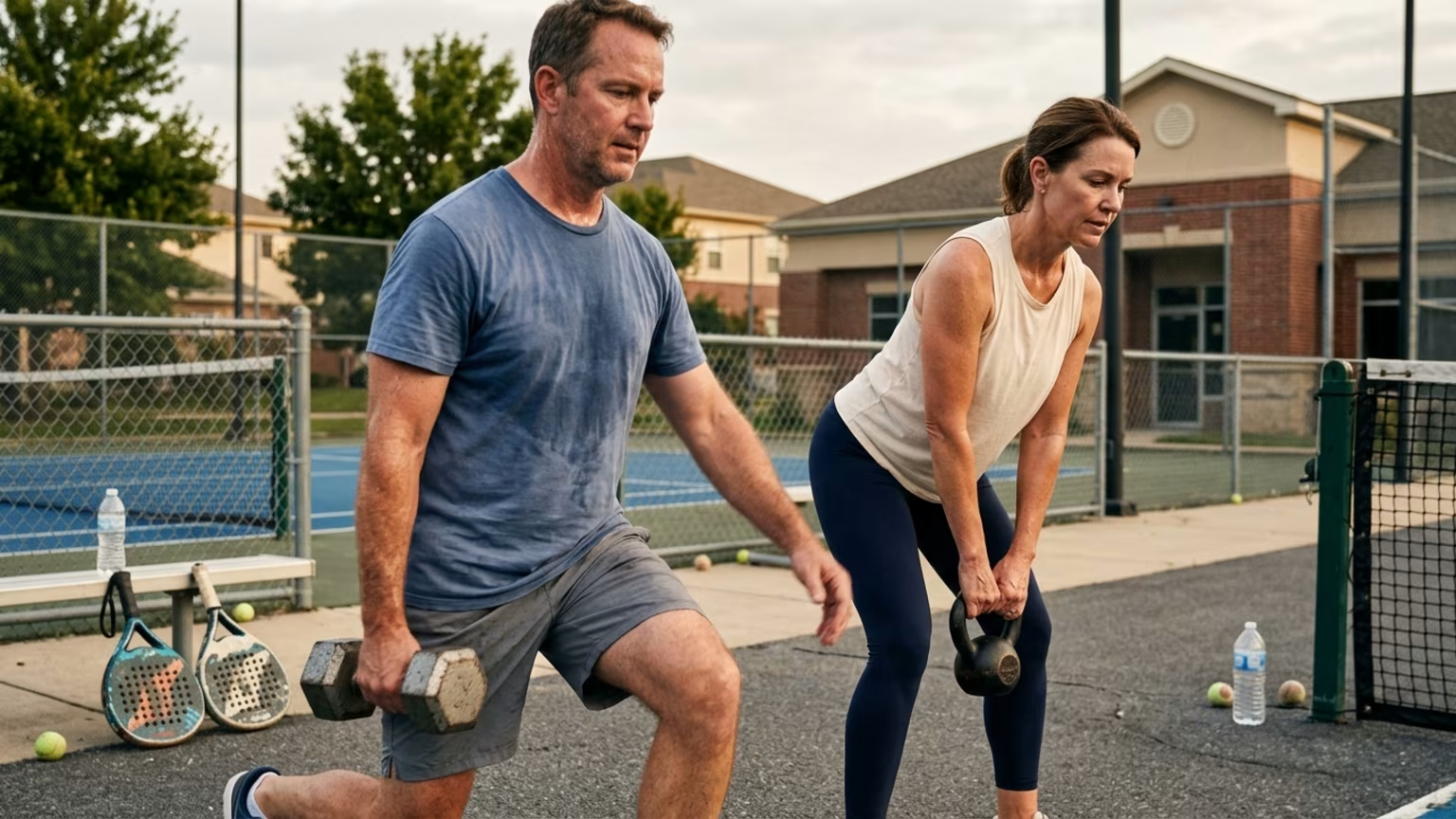

Discover a time-efficient, two-day strength training program designed specifically for padel players to build court capacity and support healthy aging.




Padel is a dynamic sport that requires repeated acceleration and abrupt braking. Players must perform lateral movements, trunk rotations and frequent overhead strokes. Research on women’s padel indicates that physical and physiological demands vary heavily. These demands shift depending on the specific task and the amount of court space available.
According to match-analysis reports on Fueletics, the real playing time accounts for roughly 40 percent of total match time. This means players constantly transition between explosive effort and brief recovery. Padel is not just an endurance activity. The sport demands short bursts of movement followed by intense braking and rapid repositioning.
"When I first started playing pickleball, I noticed how many people skipped warming up entirely. They would jump straight out of their cars and right up to the kitchen line. I tried doing that and immediately pulled a calf muscle."
"Pickleball requires just as much explosive lateral movement as tennis, just in a tighter space. Since then, I always spend five minutes doing dynamic lunges and ankle rolls. It changes everything about how confident I feel pushing off the baseline."
The same principles apply perfectly to the physical demands of padel. The lower limbs and upper limbs take the brunt of the heavy work during a match. Players frequently reach and brake from awkward staggered positions. This specific movement pattern places significant stress on the ankle, foot, knee and shoulder.
Most general fitness programs focus heavily on bilateral strength and maximum weight capacity. A generic lower-body routine might emphasize heavy squats or leg presses. These exercises build overall leg strength but rarely challenge pelvic stability on one leg. They completely miss the specific braking forces required to stop quickly during a tight point.
Upper body training in commercial gyms often skews heavily toward pressing movements. Recreational lifters usually prioritize the chest and arms to build visual muscle. Padel strokes require strong force transfer through the back and hips instead. Building pulling strength is far more critical for posture and for decelerating the racquet safely.
Traditional core work is another area of massive misalignment for court athletes. Generic abdominal routines rely heavily on simple flexion exercises like sit-ups or crunches. Padel players need the ability to resist unwanted rotation while reaching for a wide ball. A generic routine simply does not prepare the trunk for the rotational forces of a high-speed stroke.
Adding high-volume leg or shoulder work can drastically reduce recovery time. This makes a generic bodybuilding program much less sustainable for active players. It is difficult to perform well on the court when your legs are exhausted from a heavy gym session. Players need a smarter strength training approach that fits naturally around their weekly matches.
The World Health Organization recommends muscle-strengthening activity involving all major muscle groups on at least two days per week. Evercourts applies this standard to create a minimalist two-session framework. This approach balances the explosive demands of court movement with adequate recovery time. The goal is to build specific capacities without creating excessive muscle soreness.
Single-leg control provides a massive advantage for padel players. Exercises like split squats improve stability for reaching and striking effectively. Standard bilateral exercises cannot replicate this specific court advantage. You must be able to control your knee and foot while standing on one leg.
This focused control helps athletes manage the chaotic reality of live play. You rarely get to hit a shot from a perfectly balanced stance. A solid strength base built on unilateral exercises makes those awkward reaching shots much safer. It gives you the foundation to push back toward the center of the court quickly.
Generic leg presses simply lock your body into a completely stable machine. They do not force your hips and knees to coordinate under pressure. Unilateral training challenges the stabilizing muscles that prevent your knees from caving inward. These stabilizing muscles are exactly what keep you safe when lunging for a drop shot.
Pulling strength is another distinct advantage for racquet sports players. Repeated overhead strokes place a sustained demand on the shoulder complex over a long match. Rows and pulldowns support the upper back and improve your ability to handle deceleration. Pushing movements are fine, but pulling movements actually keep your shoulders balanced and resilient.
This directly impacts your ability to sustain a high level of play. When the upper back is weak, players often compensate by altering their swing mechanics. Maintaining a complete functional strength program ensures your posture remains upright late in the game.
Calf and ankle capacity are equally critical for multidirectional movement. The ankle absorbs high braking forces and powers repeated push-offs from the turf. General leg training often neglects single-leg calf work and controlled deceleration entirely. Our team recommends adding isolated calf raises to support these specific and vital demands.
Strong calves and ankles allow you to change direction with more confidence. Weak lower limbs often lead to sluggish footwork and poorly positioned shots. By focusing on the lower leg, you directly improve your lateral agility and court coverage.
Trunk rotation control helps you generate power while protecting your lower back. Anti-rotation exercises teach the trunk to transfer force efficiently during a swing. This helps you resist unwanted movement when you are stretched wide for a volley. It is a much better use of gym time than performing endless static planks.
Most gym-goers think of core training as something done laying flat on the floor. Padel requires your trunk to be active while your feet are moving rapidly. A solid anti-rotation exercise trains the muscles to brace against rotational pull. This functional approach directly translates to better control during high-speed rallies.
This targeted approach helps you balance strength training and court time effectively. You focus only on the physical qualities that actually matter for your sport. You can get in and out of the gym quickly while still protecting your joints.
A targeted minimalist program definitively beats a generic gym routine for staying on the court. Tailoring your sessions to single-leg control and pulling strength directly supports the realities of racquet sports. This specific approach addresses the actual movement patterns that cause physical wear and tear over time. Generic bodybuilding splits simply demand too much recovery to remain practical during a busy playing season.
Public health guidelines strongly support this consistent and moderate approach to training. For older adults, WHO specifically recommends multicomponent activity emphasizing functional balance and strength on three or more days per week. Mixing a two-day strength plan with brief balance practice offers the most sustainable path forward. This allows you to build capacity safely without compromising your upcoming matches.
A focused routine protects your body while leaving enough energy for competitive play. Consistent and precise preparation is the best way to maintain your athletic longevity. The goal is to remain capable of playing and enjoying the sport for years to come. Keep moving well, and we will see you on the court.
Follow Evercourts for practical insights on tennis, pickleball and padel performance, movement, recovery and healthy ageing. Stay connected for new articles, research-led guidance and ideas to help you play well and keep playing for years.


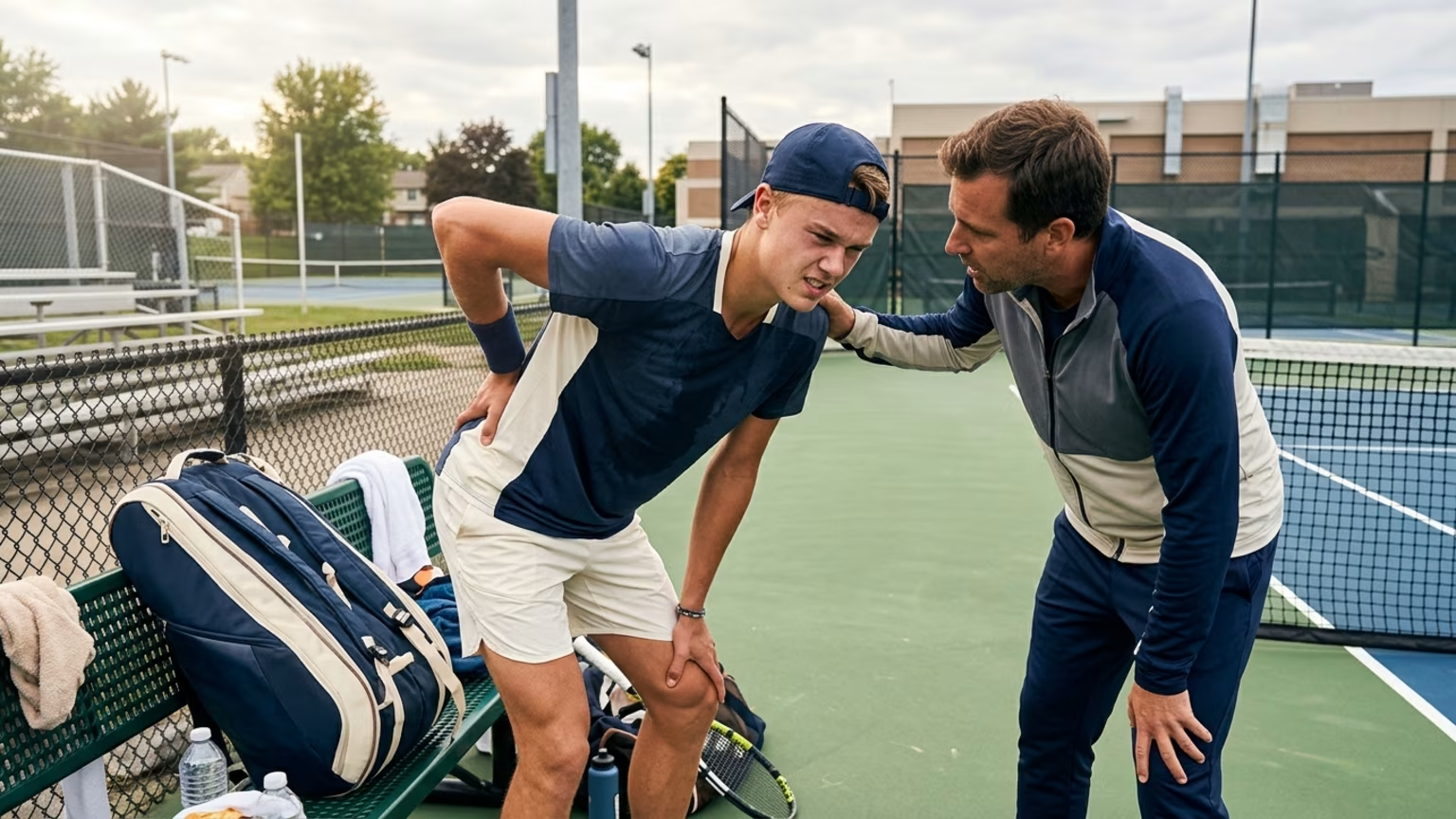
Holger Rune withdrew from the European Open with a back problem. The facts behind his decision and a grounded perspective for recreational players.

The Dink’s October 17 guide emphasizes deep returns, ball-height decisions and positioning against faster pickleball opponents.

A new report outlines padel and tennis gear trends. Learn how to assess adjustable rackets, sensor feedback and smart-court claims.
Read practical guidance for better movement, smarter preparation and a game that keeps working for you.
explore the Blog
