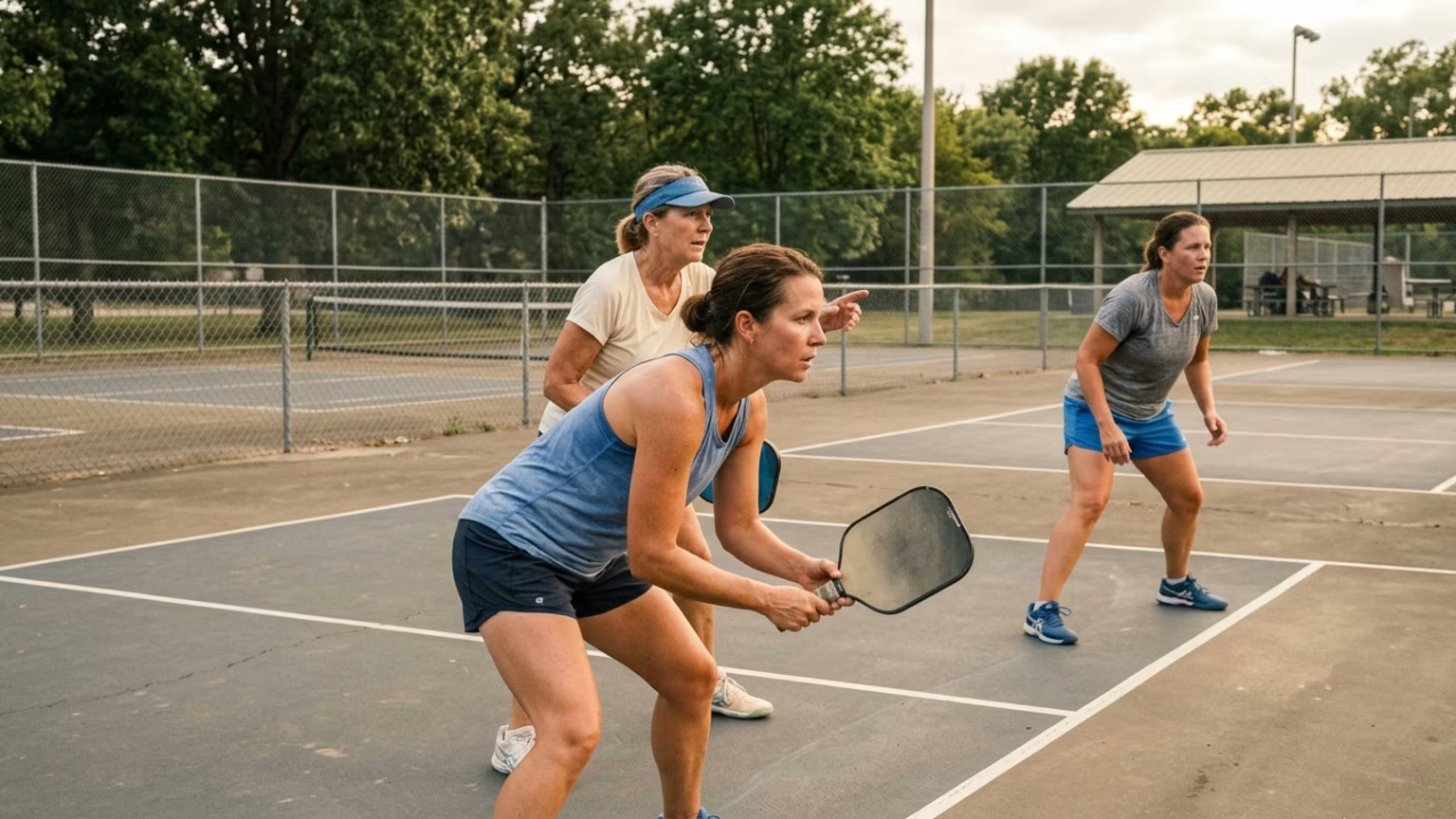

Learn how The Dink's three court positioning tells help pickleball players read the third shot earlier, improve movement efficiency, and protect joint health.




A pickleball player watches a deep serve push the returner backward toward the fence. Instead of sprinting to the kitchen in a blind panic, they take a single forward step. This deliberate pause defines tactical anticipation on the court. The Dink recently published an analysis featuring coach CJ Johnson that perfectly illustrates this sequence.
Prevailing fitness marketing insists that better court coverage requires relentless agility drills. Influencers constantly promote exhausting sprint intervals and plyometric jumps as mandatory for all players. The reality is that early anticipation saves far more energy than sheer foot speed ever will. Reading the game intelligently is the true foundation of athletic longevity.
Many recreational players believe they must sprint aggressively after every single serve. They assume that reaching the net rapidly is the ultimate tactical advantage. This frantic approach often results in scramble steps, poor balance, and rushed third shots. It also places immense mechanical stress on the lower body during long weekend sessions.
Adult racquet sports players need movement efficiency to maintain their physical capabilities. Rushing blindly into the transition zone compromises balance and leaves players vulnerable to deep returns. The Dink highlights this disconnect by noting that 64 percent of surveyed people incorrectly predicted a common positioning scenario. The tactical goal is to join the 36 percent who read the situation correctly before reacting.
Social media feeds frequently highlight professional athletes performing extreme agility sequences. These clips condition recreational players to view aggressive sprinting as a baseline requirement for success. However, elite footwork is rooted in anticipation rather than blind physical exertion. Adult players trying to replicate sheer speed without the underlying anticipation often end up exhausted.
A calmer approach relies on reading the opponent rather than simply running fast. Players can process critical visual information before the return is even struck. This proactive assessment creates a noticeable gap between frantic rushing and controlled positioning. Understanding court positioning transforms how much physical effort is required to win a point.
The tactical framework presented by The Dink outlines three specific visual tells. The first tell focuses on the returner's starting position and the serve's depth. The article states that a serve clearing the net by approximately 3 feet is more likely to land deep. When a serve lands within 4 feet of the baseline, the returner is usually pushed backward.
Hitting a forward shot while moving backward severely limits the quality of the return. The Dink describes this specific backward body movement as negative energy. This momentum conflict greatly increases the probability of a short or weak return. Recognizing this physical limitation is the critical first step in deciding when to advance.
The second tell involves assessing the returner's recovery path after they strike the ball. A player pushed behind the baseline cannot reach the non-volley zone in time for the fourth shot. The third tell looks at the non-returner's position during the point. If that player is several steps left of the center line and one step off the line, they cannot cover a short return easily.
Their poor positioning creates an immediate geometrical advantage for the serving team. The non-returner is effectively taken out of the play before the return even crosses the net. When all three indicators align, players get a green light to take one step forward. In the slow-motion example discussed by CJ Johnson, the server is already 2 to 3 feet inside the court by the opponent's bounce.
This subtle movement relies on controlled momentum rather than a frantic sprint. It allows players to prepare for the third shot with a highly stable base. Target selection relies heavily on observing how opponents recover from a disadvantaged position. Another Dink strategy article advises aiming a third shot at the opponent who is still moving.
This tactic is extremely useful when one opposing player has already stabilized at the kitchen line. Forcing a transitioning player to hit a difficult shot amplifies the pressure of a deep serve. Understanding these mechanics directly influences injury management and joint preservation. A 2026 bibliometric review notes that pickleball research spans health promotion and injury risk.
Lower-body stress is a documented reality for active adult players. A summary by The Fit Pickler shows that more weekly court hours correlate with more reported injuries. Relying on tactical reads alone is not a complete strategy for physical preservation. Adult players must also focus on recovery, load management, and structured preparation.
As one of our Evercourts editors noted regarding physical preparation: "I used to think a tough conditioning block was the only way to improve my court endurance. Then I started tracking my sleep. I noticed that on days I slept less than six hours, my reaction time at the net was noticeably sluggish, and I felt gassed by the second set."
They continued: "Prioritizing consistent rest did more for my late match stamina than any extra sprints ever did. Recovery is the true foundation of performance." Combining a rested body with smarter tactics creates a highly resilient player. Quality sleep naturally improves your visual processing speed during rapid exchanges at the net.
Clinicians at the University of Texas Health Science Center at San Antonio outline practical baseline precautions. They recommend warming up thoroughly, wearing proper court shoes, staying hydrated, and stopping when pain appears. These sensible habits do far more for your health than extreme fitness trends. Proper footwear serves as the physical foundation for every tactical movement you make.
A reliable pair of appropriate court shoes provides the lateral stability needed for sudden directional changes. Court shoes are specifically designed to handle the rigorous lateral forces generated during a match. Running shoes lack this lateral support and can dangerously increase the risk of ankle rolls during aggressive stops. Pairing excellent anticipation with the right equipment creates a safer environment for healthy aging.
Targeted physical conditioning also plays a crucial role in maintaining court capabilities. A summarized 12-week randomized controlled study observed senior pickleball players with a mean age of approximately 66. The program combined balance, strength, and mobility training for the participants. The trained group reported fewer falls during play at five months compared to the control group.
Load management is another critical component of a sustainable racquet sports routine. The Fit Pickler report notes that lower-body injuries appeared frequently in the summarized study. These issues included calf, knee, ankle, hamstring and foot problems. Soft-tissue injuries such as strains were actually more common than fractures among the observed participants.
This data reinforces why movement efficiency is absolutely vital for adult athletes. Reducing unnecessary court mileage directly addresses common sources of soft-tissue strain. Players should also focus on coordinated movement with their partner after hitting the ball. The Dink recommends that teammates close toward the kitchen together following the third shot.
However, they caution that the third shot itself should be played from behind the baseline. This sequence ensures a stable position before advancing into the transition zone. Every tactical decision should ultimately serve the goal of playing efficiently and safely. A player who can read the third shot earlier avoids the frantic scrambles that lead to joint irritation.
Modest adjustments to your positioning routine will pay off over years of continuous play. True performance optimization is about consistency, balance, and intelligent movement.
Reading opponent positioning before the return allows players to dictate the third shot with balanced momentum rather than desperate speed.
Follow Evercourts for practical insights on tennis, pickleball and padel performance, movement, recovery and healthy ageing. Stay connected for new articles, research-led guidance and ideas to help you play well and keep playing for years.


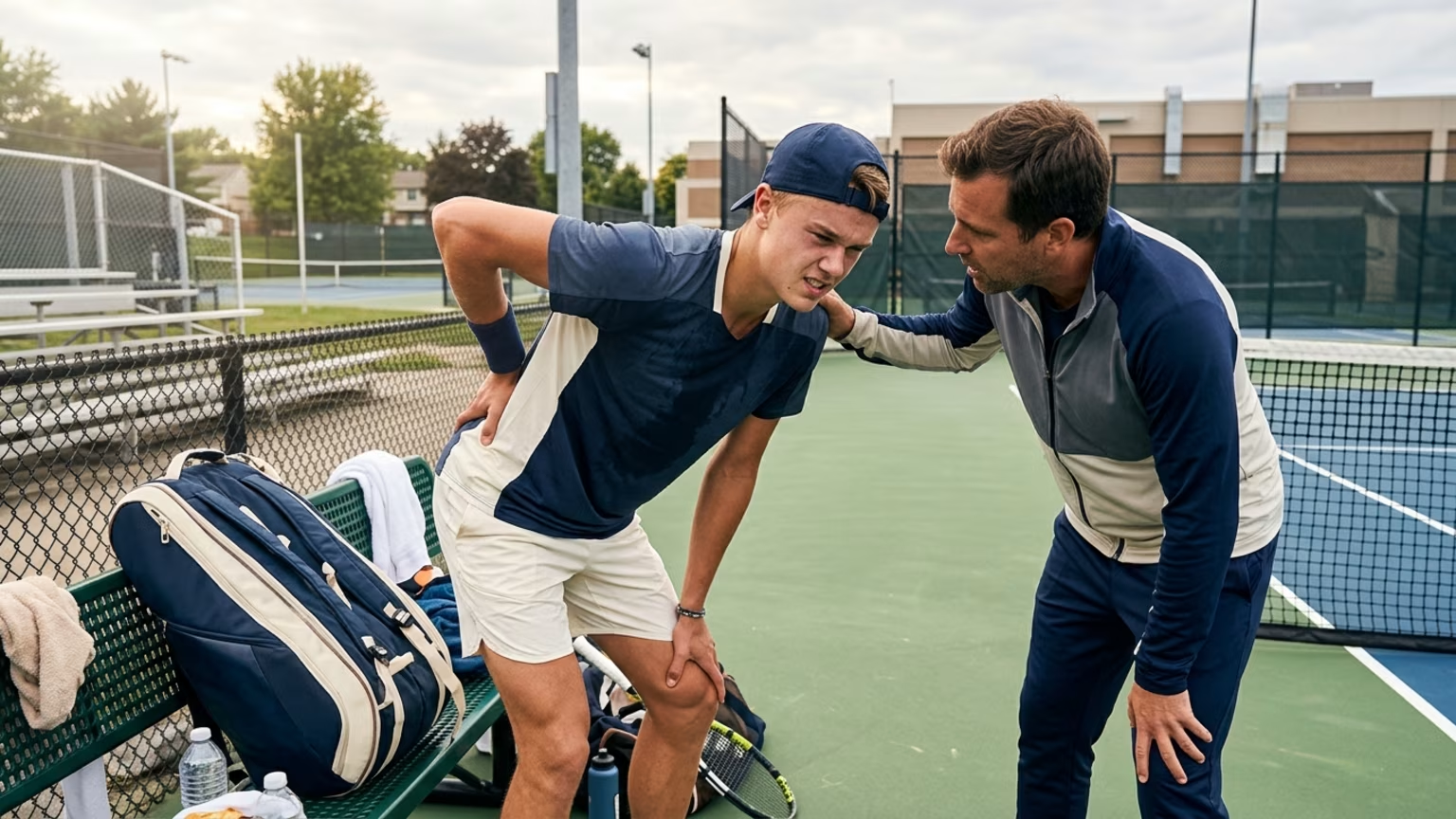
Holger Rune withdrew from the European Open with a back problem. The facts behind his decision and a grounded perspective for recreational players.

The Dink’s October 17 guide emphasizes deep returns, ball-height decisions and positioning against faster pickleball opponents.

A new report outlines padel and tennis gear trends. Learn how to assess adjustable rackets, sensor feedback and smart-court claims.
Read practical guidance for better movement, smarter preparation and a game that keeps working for you.
explore the Blog
