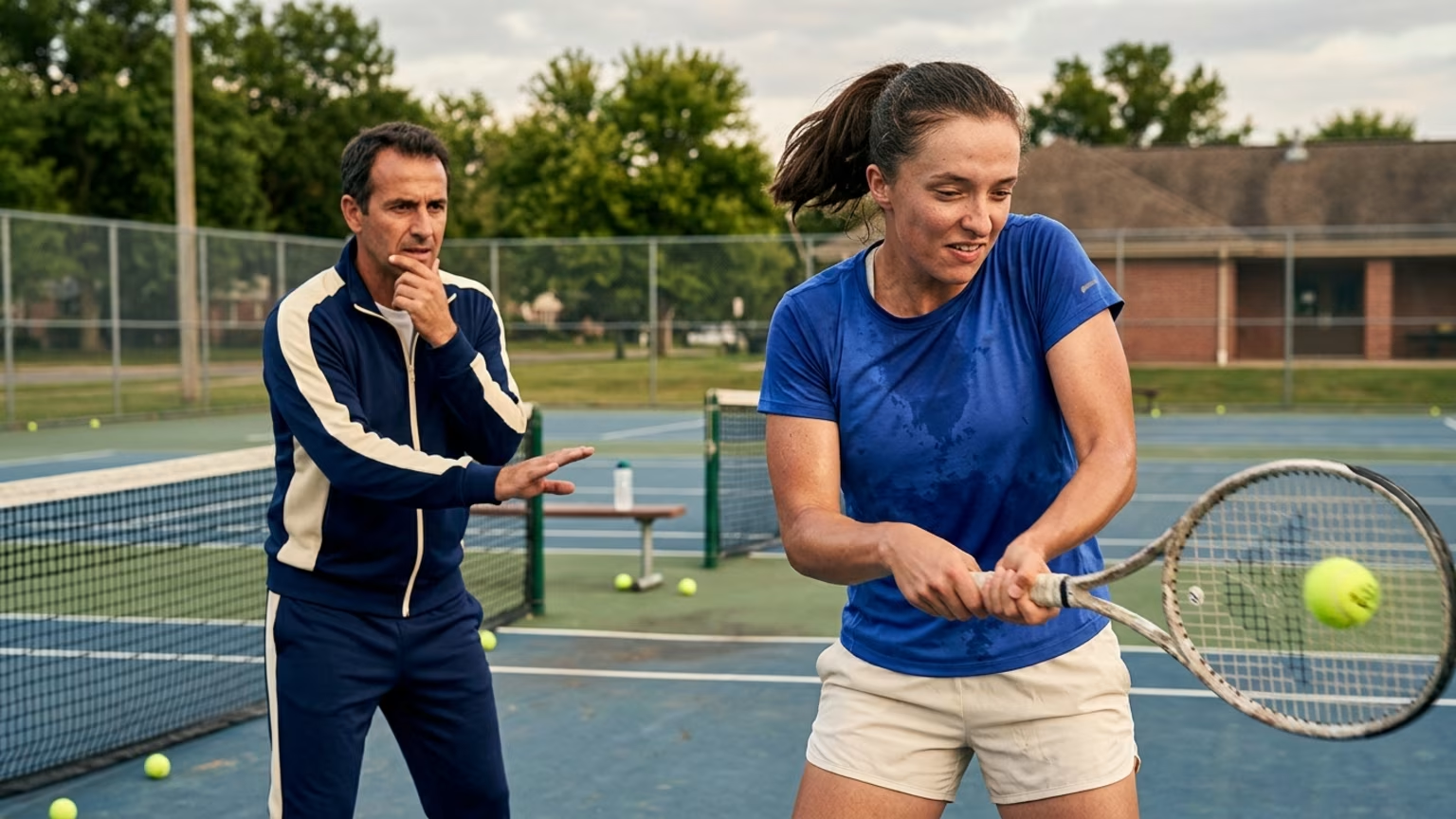

Francis Roig recently advised Iga Świątek to slow her rally tempo. Learn how adult racquet sports players can use controlled pacing to extend their court time.




On September 18, 2026, tennis coach Francis Roig published an interview detailing his recent tactical work with Iga Świątek. Roig explained that his primary goal was to change how the world-class player constructs her points. The central concept he introduced during their time together was both simple and demanding. He stated that Świątek needed to play tennis, not ping-pong.
This philosophy rejects an overly rapid rhythm where every ball is hit immediately and aggressively. Instead, it promotes a calmer, more controlled rally structure.
Roig reported that he and Świątek moved to Barcelona for 15 intensive training sessions. During these sessions, the coach proposed changes to her movement patterns, her swing, and her overall use of acceleration. He specifically asked for greater calm during rallies, more use of the forehand, and more spin on the backhand. According to Roig, the plan was to keep the ball in the air slightly longer and to create more time between shots.
By giving the ball more flight time, a player has a precious extra fraction of a second to recover their court position. He connected excessive pace with increased match stress. Roig noted that when play becomes too fast, everything happens much faster. He argued that this is not necessarily the best match solution for every situation.
A player can accelerate selectively while still avoiding the rapid rhythm that Roig associates with ping-pong style exchanges. He also criticized Świątek for standing too close to the baseline behind the second serve. His alternative was for her to stand farther back, use momentum from the baseline, and look for an easier ball to regain control. This adjustment allows the player to step into the court with authority rather than retreating on their heels.
Importantly, this approach was not presented as a rejection of her athletic strengths. Roig praised her excellent footwork, good strokes, physical condition, and movement ability. The interview describes a player-specific tactical adjustment rather than a universal instruction to play defensively. His stated objective was to preserve control while using her movement and physical qualities more effectively.
For professional athletes, adjusting tempo is about fine-tuning an elite skill set. For adult recreational players, these tactical ideas offer a blueprint for reducing rushed decision-making. Attempting maximum pace on every ball often leads to unforced errors and unnecessary physical strain. A relentless need to hit hard can wear down a player's joints over the course of a competitive season.
Instead, treating rally tempo as something you can vary deliberately is a smarter approach. It is a practical adaptation of Roig's stated aim of giving the ball more time in the air. Roig's advice about second serve positioning translates well to everyday club matches. On a vulnerable second serve, players can experiment with starting slightly farther behind the baseline.
After producing a controlled return, they can move forward into the court. This proactive stepping motion helps transfer body weight efficiently through the shot. The correct distance will depend on the player's speed, return quality, opponent, and court surface. This allows players to organize a return rather than attempting to win the exchange immediately.
We can see how prioritizing tactical pacing over raw hustle helps preserve a player's energy throughout a long set. Using movement as a resource for time is far more efficient than merely chasing faster exchanges. Efficient movers read the incoming ball early and position themselves to hit a balanced shot. In rushed baseline rallies, prioritizing a ball that is deep and high enough to clear the net safely is key.
Shaping the ball with dependable spin is usually better than a low-percentage attempt to hit through the opponent. However, more spin requires technical practice and can initially increase arm fatigue if not executed properly.
Roig's approach preserves a player's physical strengths while changing how those strengths are used to construct points. Instead of sprinting wildly to hit a winner on the run, a player can move efficiently into a balanced position. This subtle shift transforms court coverage from a reactive scramble into a proactive strategy. It empowers players to rely on steady mechanics rather than desperate lunges.
When players deliberately choose to hit with more height, they immediately change the geometry of the point. A high ball naturally pushes the opponent backward and forces them to generate their own pace. This tactic is especially effective against aggressive players who thrive on feeding off an opponent's rhythm. By changing the tempo, you disrupt their timing and create an opportunity to take control.
In our experience at Evercourts, the need for deliberate pacing and preparation applies across all racquet sports. When our team first started playing pickleball, we noticed how many people skipped warming up entirely. They would jump straight out of their cars and right up to the kitchen line. We tried doing that and immediately recognized the risk of a pulled calf muscle.
Pickleball requires just as much explosive lateral movement as tennis, just in a tighter space. Since then, we always spend five minutes doing dynamic lunges and ankle rolls. Incorporating a dedicated match readiness routine changes everything about how confident we feel pushing off the baseline. It allows us to build points with patience rather than panic.
We must remember that adult players should distinguish tactical fatigue from physical warning signs. A calmer rally pattern may reduce decision pressure, but it is never a substitute for proper conditioning and technical coaching. The same principle transfers cautiously to pickleball and padel. Players must avoid confusing constant speed with quality play.
You can look for a little more time, better spacing, and a more repeatable next ball. At the same time, we must recognize that court dimensions, bounce dynamics, and movement demands differ across sports. You cannot simply apply tennis court positioning to a padel match without adjusting for the walls.
The broader health data supports the idea of playing smartly to stay on the court longer. A 2026 report summarizing a large British analysis found that racket sport participation was associated with a 47 percent lower risk of death from any cause compared with no participation. That same report noted a 56 percent lower risk of cardiovascular death for players. These mortality figures are observational associations rather than proof that specific tactics cause these outcomes.
However, the available reporting reinforces the value of sustainable participation. We know that long matches place significant recovery demands on the nervous system. By managing your physical exertion during points, you can reduce these demands and bounce back faster. Reviewing a post match recovery guide can help players address the physical toll of competitive play.
Understanding how pacing impacts recovery helps adult players realize why a slightly slower rally tempo is so beneficial. Proper physical preparation remains essential for anyone looking to execute these tactical adjustments safely. Without adequate conditioning, even a controlled game plan will eventually lead to fatigue and poor form.
It is highly beneficial for adult players to preserve movement capacity through strength and mobility work. Improving essential footwork skills through targeted training supports the kind of purposeful court positioning Roig advocates. A well-rounded physical foundation allows players to dictate the pace rather than simply reacting to it.
Over the next season, we expect more coaches and players to evaluate tempo as a flexible tactical tool rather than a fixed identity. The heavy emphasis on rapid, first-strike tennis will likely face pushback from those who prioritize point construction and physical control. As players across all levels look to maintain their competitive edge, the focus will shift toward using spin, spacing, and deliberate pacing to manage match stress.
The ability to selectively accelerate while avoiding chaotic exchanges will become a defining skill for successful players. Treating tempo as a variable allows athletes to dictate the terms of engagement without constantly redlining their physical output. We anticipate that discussions around match strategy will increasingly mirror conversations about healthy aging and sustained performance. Tactics that preserve a player's physical resources will rightfully gain as much attention as sheer power.
Follow Evercourts for practical insights on tennis, pickleball and padel performance, movement, recovery and healthy ageing. Stay connected for new articles, research-led guidance and ideas to help you play well and keep playing for years.


An evidence check on sports supplements like tart cherry juice. Learn why racquet sports players should prioritize core nutrition over functional foods.
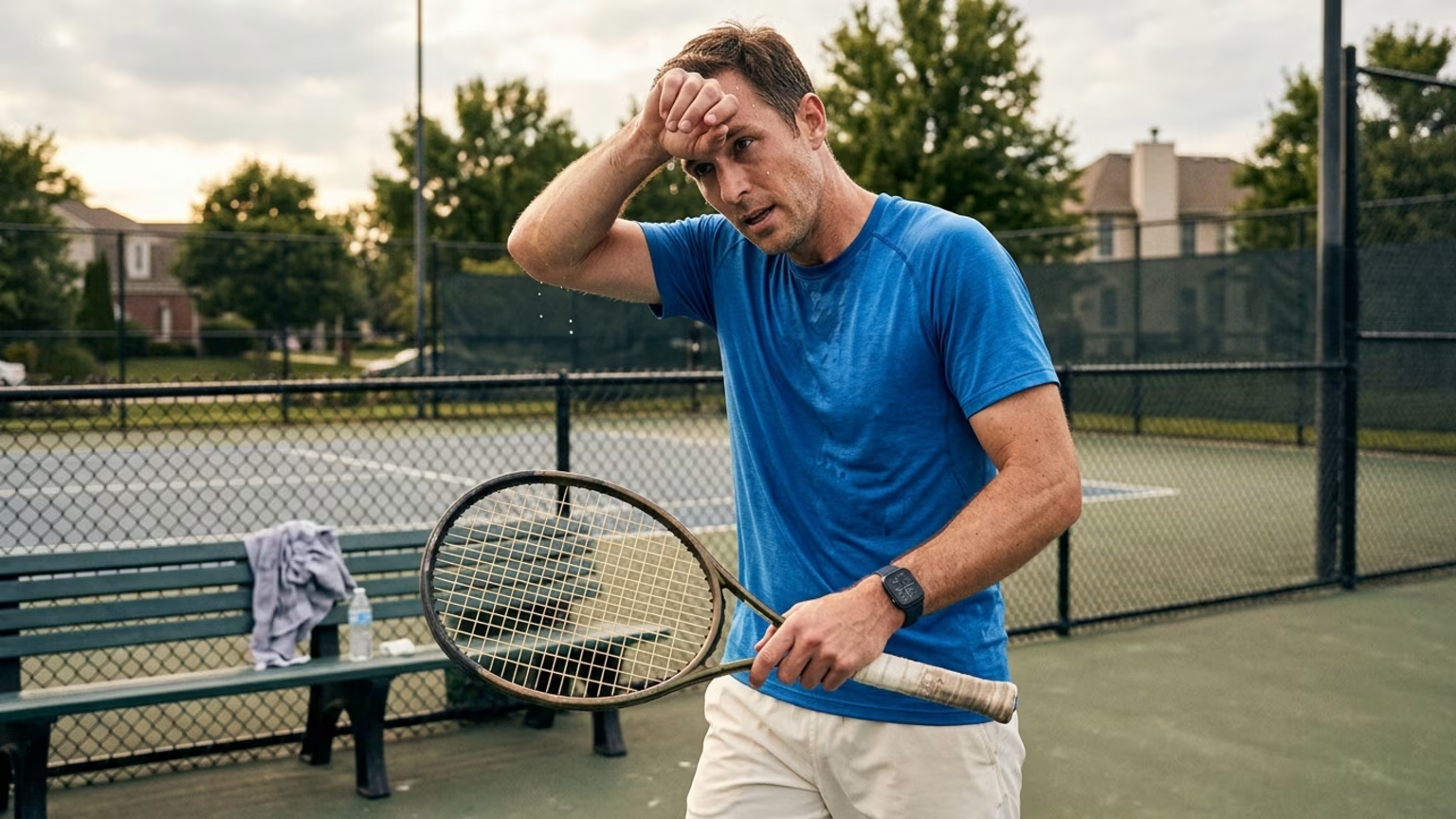
In late 2026, Oura analyzed wearable data to see how recreational tennis impacts heart health and recovery. Learn what this means for your athletic longevity.
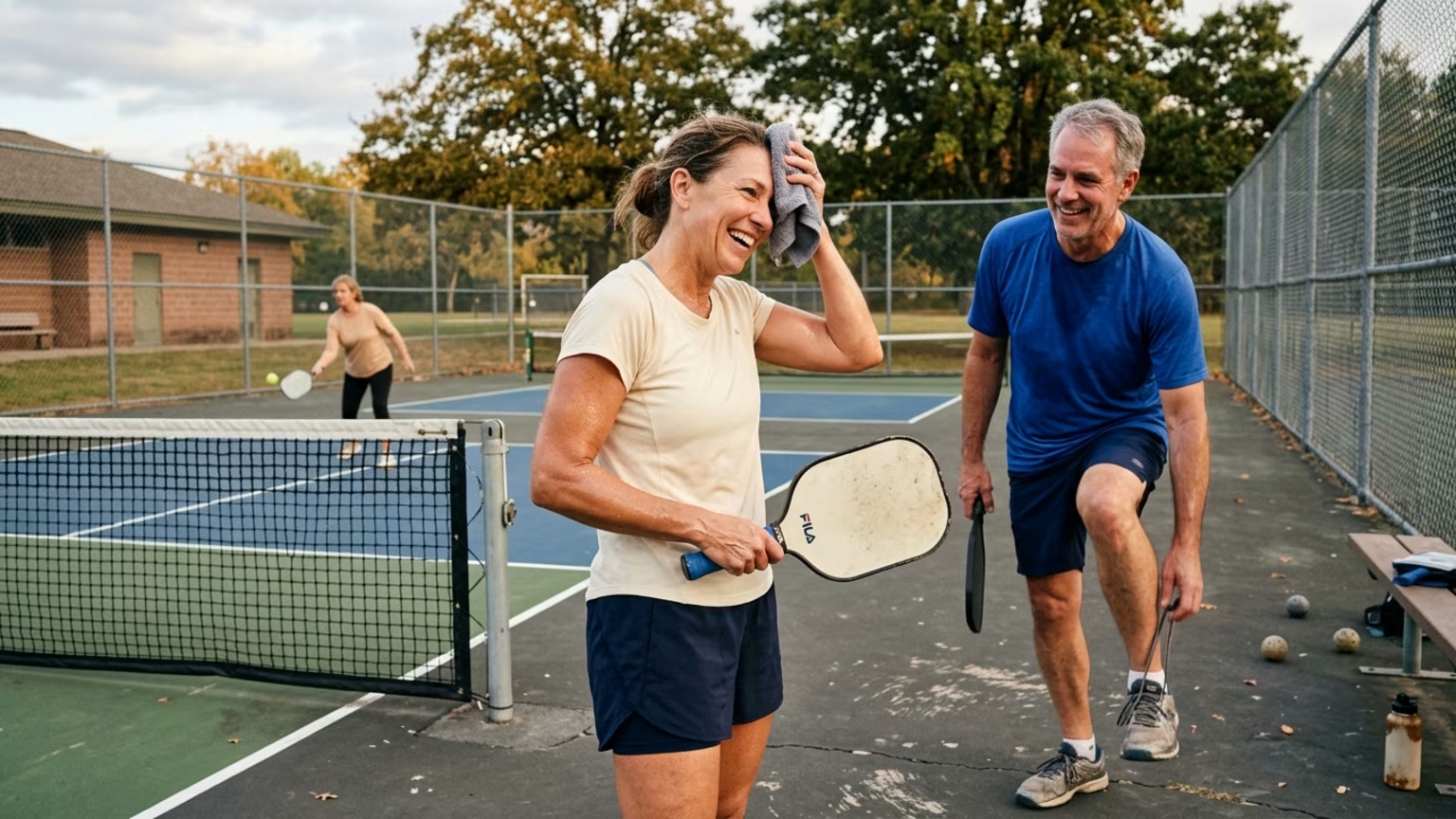
Recent guidelines emphasize gradual progression, dynamic warm-ups, and scheduled recovery to help adult racquet sports players maintain athletic longevity.
Read practical guidance for better movement, smarter preparation and a game that keeps working for you.
explore the Blog
