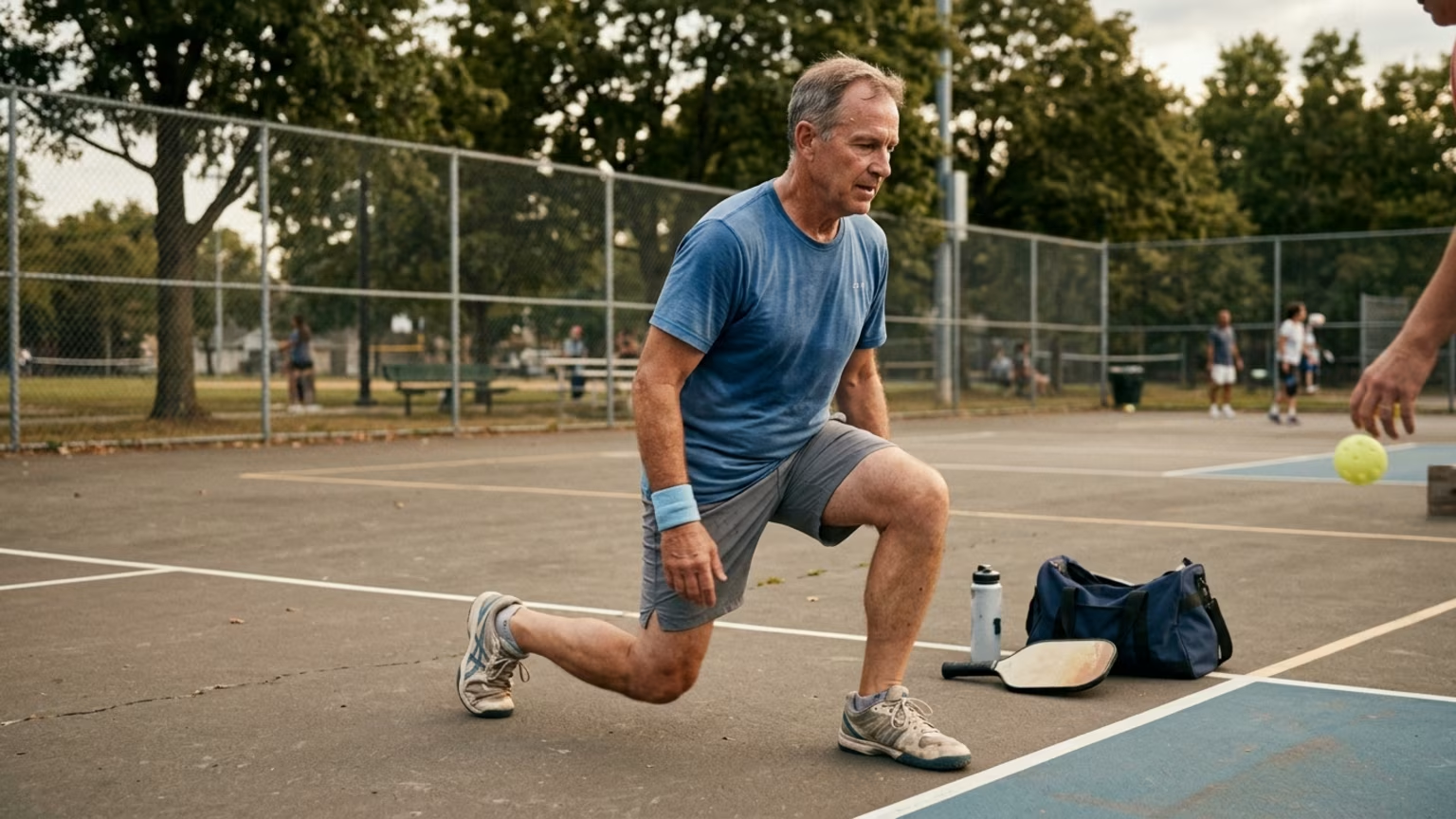

A practical guide for older tennis, pickleball, and padel players on using a five-exercise morning routine to build balance, strength, and court stability.




A 2026 meta-analysis of 29 randomized trials involving 6,367 older adults found that exercise interventions were associated with fewer fall-related injuries. This data matters because players like 72-year-old Pilates instructor Liz Hilliard show us that staying active requires dedicated stability work. Her approach reminds us that functional strength acts as a protective foundation for athletic longevity. Readers frequently ask: how can players over 60 improve their balance and court stability without spending hours in the gym? A practical morning routine of five functional exercises can build the single-leg control and lateral strength needed for racquet sports.
Maintaining this physical baseline helps older players move efficiently during challenging matches. It also ensures that the physical demands of competition do not overwhelm an unprepared nervous system. By building stability before stepping onto the court, older athletes can focus on their strategy instead of worrying about unexpected slips.
On August 28, 2026, Vanitatis reported that Hilliard recommends a specific five-exercise morning sequence for adults over 60. The routine combines single-leg balance with heel-to-toe walking and lateral band walks. It also includes supported heel raises and controlled chair rises. Hilliard presents this sequence as a way to train reaction time and functional strength. She notes it also supports proprioception and vestibular-related balance demands.
Focusing on balance exercises at home ensures that players address movement patterns not always covered during matches. Simply playing matches does not automatically correct underlying weaknesses in calf strength or lateral hip stability. Older adults often lose this functional independence slowly over time if they do not practice these specific movements. Implementing a brief morning habit provides a consistent daily stimulus for the body.
Traditional weight lifting often ignores the sensory challenges required for athletic movement. Machine-based exercises seat the user and eliminate the need for natural stabilization. Hilliard’s proposed routine forces the body to manage its own center of gravity in open space. This kind of functional engagement builds a robust foundation for older adults.
The first movement requires standing on one leg while keeping the torso upright and hips level. Participants can eventually close their eyes for as long as safely possible before switching sides. Closing the eyes substantially increases the challenge by removing visual information. Players should start with their eyes open and hold a stable support nearby until control is reliable.
The second exercise is a simple heel-to-toe walk for 10 steps. You place the heel of one foot directly in front of the toes of the other. Treat this heel-to-toe walk as a precision drill rather than a race. You should take slow steps to ensure absolute control and stop immediately if your balance deteriorates.
The third movement involves a controlled lateral walk with a resistance band around the ankles or thighs. This specific motion strengthens the hip abductors while keeping the knees softly bent. You must perform these lateral band walks with small steps to maintain tension. Avoid allowing the knees to collapse inward or the trunk to sway excessively during the movement.
For the fourth exercise, you use a firm chair to perform supported heel raises. You rise slowly onto the balls of the feet, hold for two to three seconds, and lower under control. Finally, the fifth exercise is a hands-free chair sit-to-stand. You lean the torso slightly forward to stand and then lower slowly back to the seat.
These specific movements directly support the physical demands of tennis, pickleball, and padel. A tennis player needs robust single-leg control to decelerate after a wide serve return. Padel players rely on lateral hip stability to track balls off the glass. Pickleball demands fast reactions and the ability to stabilize through the calves during quick kitchen exchanges.
The court surface also influences how much stability work a player needs. Hard tennis courts place a heavy premium on shock absorption and calf strength. The artificial turf used in padel requires excellent grip and lateral knee control to manage sudden stops. Pickleball players often compete on varied surfaces that demand constant ankle stabilization and quick directional changes.
Integrating lower body strength exercises off the court keeps you capable on the court. "I remember finishing a tough two hour padel match on a cold Tuesday night and waking up the next morning feeling like my lower back was locked in concrete." "For a long time, I just accepted this as the price of playing hard in my forties." "But once I started spending just ten minutes on targeted hip mobility before heading to the club, the stiffness almost completely vanished." "It taught me that we do not have to accept pain as a default state of aging."
Racquet sports provide excellent aerobic conditioning for healthy aging. However, they do not always offer the progressive balance work required for true injury resistance. A reported eight-week pickleball intervention was actually associated with improvements in pre-frailty, functional fitness, and quality of life. Coupling court time with balance and proprioception training creates a well-rounded athletic profile.
Many older athletes wonder if they should prioritize yoga or Pilates for their morning routines. The Vanitatis report says Hilliard believes yoga particularly supports proprioception and mobility. However, she suggests it provides fewer stimuli for the vestibular system and the strength needed for unexpected instability. A 2026 PubMed-indexed review actually found that Pilates showed the most favorable estimate for dynamic balance among evaluated modalities.
Older players should measure their progress in months rather than days. Rushing to perform hands-free chair rises can compromise technique and invite unnecessary joint pain. You should focus entirely on the slow lowering phase of each movement to build resilient tissues. Consistency matters far more than achieving high repetition counts during your morning sessions.
The World Health Organization recommends a weekly combination of aerobic activity and muscle strengthening for older adults. They also advise adding multicomponent balance-and-strength work on three or more days per week. Five daily exercises cannot entirely replace a complete training program. They do offer a highly accessible starting point to prepare your body for competition.
Players returning to competition after a break should adapt these movements carefully. Sit-to-stands without using the hands may be too demanding for people with significant leg weakness or joint pain. Anyone with persistent dizziness or a history of falls should consult a physical therapist before trying eyes-closed balance drills. A sensible approach is to plan your weekly training carefully to avoid overloading the nervous system.
Building morning habits around functional balance transforms how older adults experience movement on and off the court. By committing to these steady exercises, players can trade the fear of falling for the quiet confidence of enduring stability.
Follow Evercourts for practical insights on tennis, pickleball and padel performance, movement, recovery and healthy ageing. Stay connected for new articles, research-led guidance and ideas to help you play well and keep playing for years.


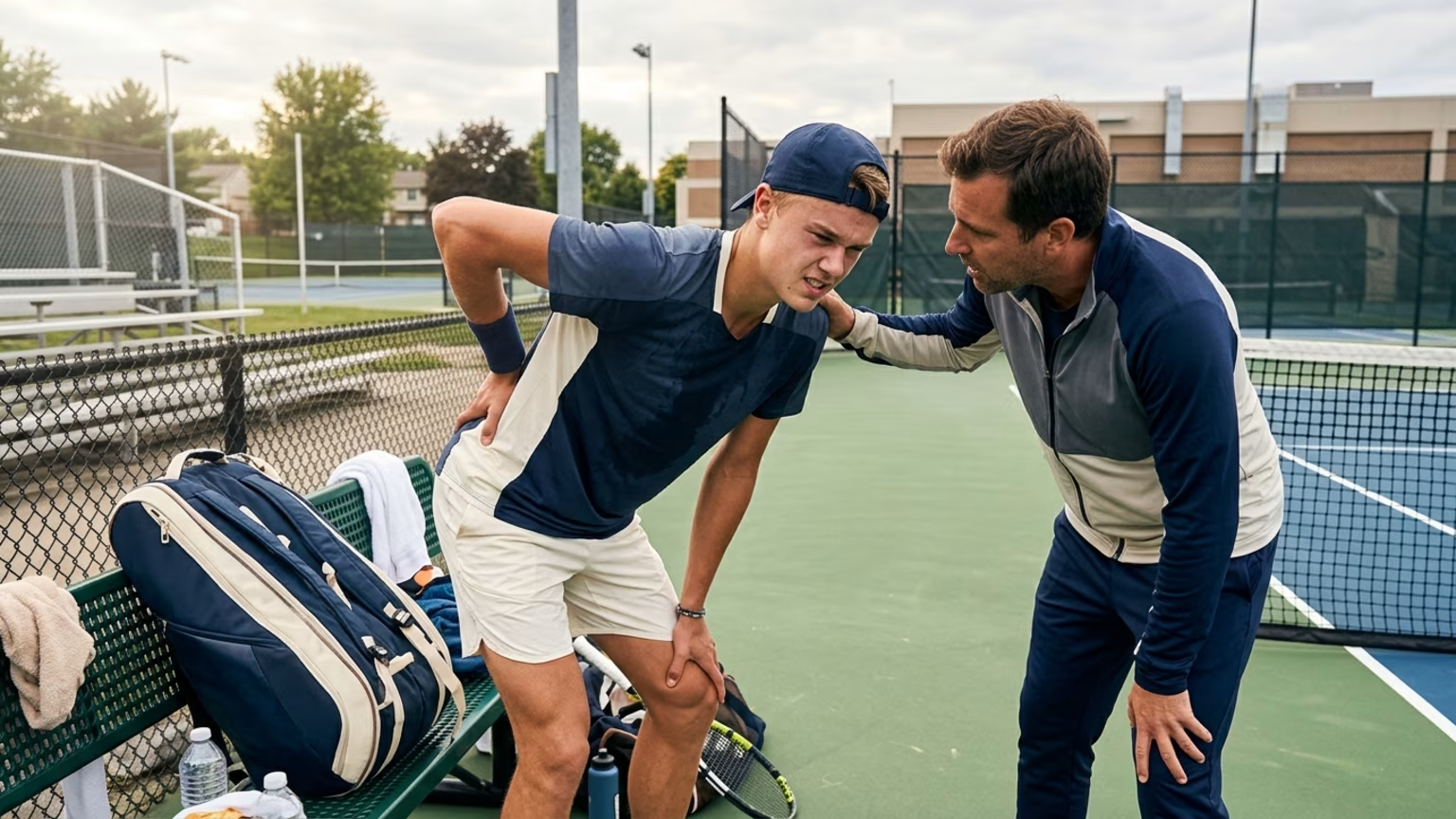
Holger Rune withdrew from the European Open with a back problem. The facts behind his decision and a grounded perspective for recreational players.

The Dink’s October 17 guide emphasizes deep returns, ball-height decisions and positioning against faster pickleball opponents.

A new report outlines padel and tennis gear trends. Learn how to assess adjustable rackets, sensor feedback and smart-court claims.
Read practical guidance for better movement, smarter preparation and a game that keeps working for you.
explore the Blog
