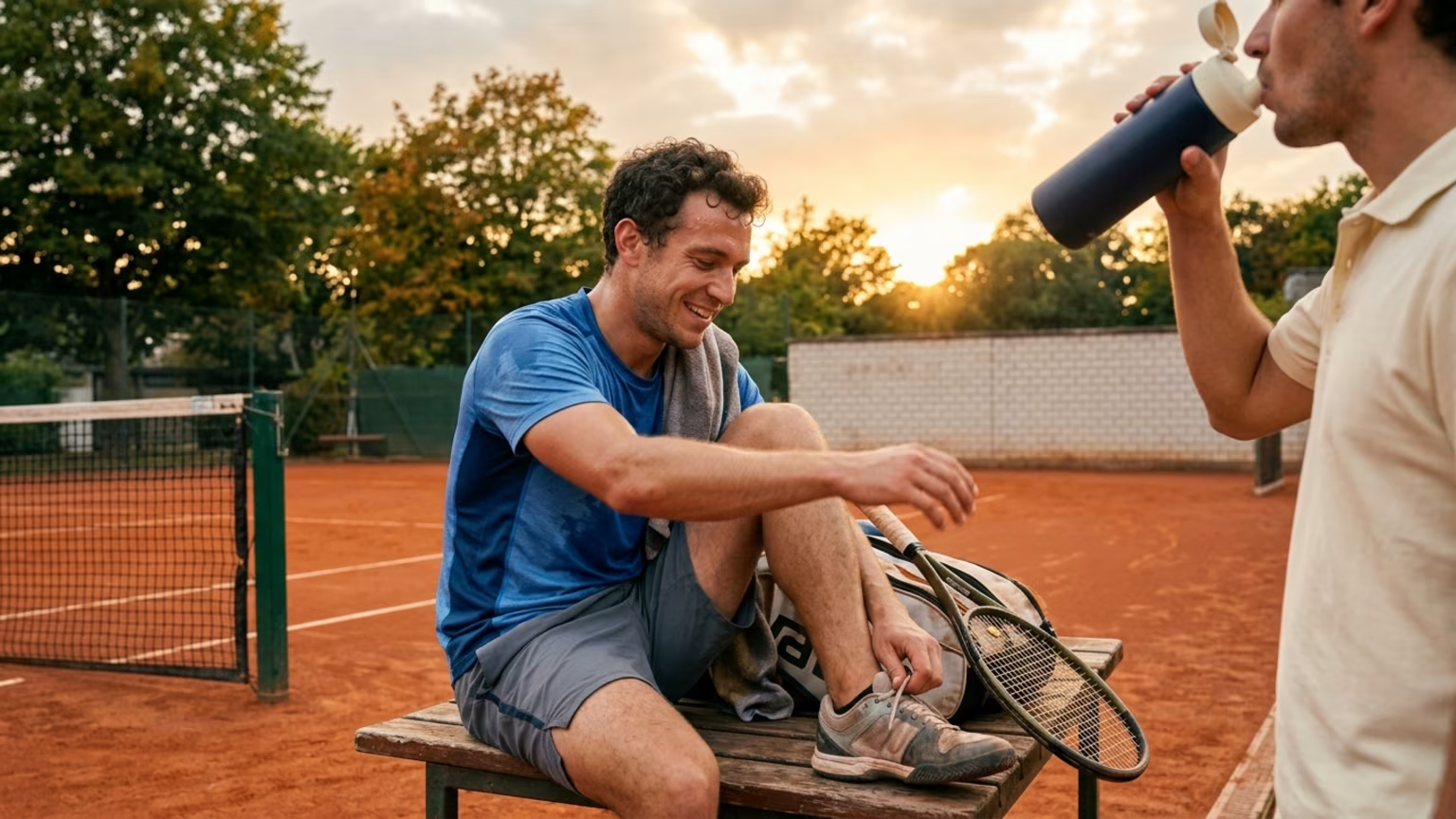

Build a practical post-match ritual to improve your court recovery. Learn why consistent habits beat overcomplicated sports science for healthy aging.




Sarah sat on the bench after a grueling third set. She stared at a massive tub of whey protein. She forced down a chalky shake while shivering in her wet clothes. It was a miserable end to a great match.
You have heard it a million times: you must consume a massive protein shake within thirty minutes of finishing your match or your recovery is ruined. Here is why that is outdated. The modern reality is that adult recreational players do not need to treat every club match like a rapid turnaround professional tournament. Current recovery evidence most consistently supports adequate energy availability and individualized fluid intake over rigid timing rules.
I remember finishing a tough two hour padel match on a cold Tuesday night and waking up the next morning feeling like my lower back was locked in concrete. For a long time, I just accepted this as the price of playing hard in my forties. But once I started spending just ten minutes on targeted hip mobility before heading to the club, the stiffness almost completely vanished. It taught me that we do not have to accept pain as a default state of aging.
We simply need routines that actually fit our lives. A defensible post-match ritual can be organized around the sequence you already follow. The primary goal is to make returning to the court manageable. Consistent habits are always better than perfect but stressful protocols.
It is easy to understand why racquet players obsess over strict recovery protocols. We watch professionals carefully mix their specific drinks during changeovers and monitor their heart rates meticulously. We hear commentators talk about customized nutrition plans and high tech recovery tools. Naturally, we assume we should copy them to protect our own bodies.
When you want to keep playing racquet sports for years, you want the best strategies available. The bad advice usually comes from misinterpreting specialized sports science. High carbohydrate replacement targets are mostly applicable when an athlete has another demanding session within four hours. Most of us are not playing another match that soon.
According to a recent review, an athlete facing a very short recovery window might need approximately 1.0 to 1.2 grams of carbohydrate per kilogram of body weight per hour. They might also need a high-quality protein feeding and sodium fluids. We took these specific guidelines meant for compressed tournament schedules and misapplied them to our regular Tuesday night doubles.
Players end up stressed about finding the perfect supplement rather than eating a normal meal. This obsession creates unnecessary friction. We forget that the foundation of a long playing career is consistency. The evidence supports treating supplements as optional and context-dependent rather than as the core foundation of your recovery.
The grounded reality of recovery is far less stressful. Tennis-specific guidance on What to Eat After a Workout prioritizes gradual rehydration and a balanced meal containing carbohydrate and protein. It also suggests a short period of walking or light mobility if it feels appropriate. You do not need to chug a rigid formulation the second you step off the court.
Active recovery is actually optional rather than compulsory. One evidence review concludes that active recovery can be useful, but it does not appear to be essential for everyone. A gentle walk or mobility sequence might feel psychologically meaningful. However, players should not interpret the evidence as requiring exercise immediately after every match.
Nutrition guidance is similarly adaptable. A post-exercise target of roughly 20 to 40 grams of protein is recommended by The Science of Post Workout Nutrition. The real key is distributing high-quality protein across the day at approximately three to four hour intervals. Your recovery is not ruined if you wait to eat a normal dinner at home. Proper training and match habits are built on regular balanced eating.
Hydration should also be scaled to your actual session. The source The Two-Hour Window recommends aiming to replace about 125 to 150% of fluid lost over the following few hours. This amount should be tailored to the athlete, the measured deficit, and the weather conditions. It is not a universal fixed volume instruction for every single match.
A helpful post-match ritual should fit seamlessly into your actual club routine. Before leaving the court, take a few minutes to walk slowly. This is a moment to notice any unusual fatigue or symptoms. You should respond appropriately rather than push through discomfort. Effective post-match cool-downs should feel restorative.
Next, change out of your wet clothing promptly. A simple club bag should include a dry shirt, clean socks, and a light layer. While this is not a clinical medical intervention, changing helps you stay comfortable. This simple step makes the transition from competition to recovery much easier.
You can then begin drinking gradually. Tennis guidance recommends regular rehydration, while broader sports-nutrition guidance suggests scaling replacement to measured fluid loss. Track your weight before and after particularly long sessions to estimate your fluid deficit. Use this measurement as an individual tracking tool rather than a stressful universal target.
If a full meal is not immediately available, eat a convenient snack to bridge the gap. Yogurt with fruit, a sandwich, or milk and a banana are all excellent choices. Tennis-specific guidance cautions players to choose easily digested foods and avoid an excessively large meal immediately after play. Later, you can eat a normal balanced meal.
Finally, care for your equipment before you leave. Wipe down the racket handle and frame, remove visible court debris, and empty wet clothing from the bag. A two minute reset to dry your bag and check your strings makes your next session much easier. These steps remove friction from your next court visit.
You can also write a short note about the match while it is fresh. Recording how your body felt helps you track your physical tolerance over time. Noting which tactical pattern worked helps you prepare for better sessions tomorrow. This is a self-monitoring suggestion, not a validated performance test.
The New Golden Rule: Do not force an elaborate clinical protocol when a simple, consistent habit is what actually supports healthy aging. Recovery is about making the transition from competition to rest as smooth as possible. You are designing a racquet sports life that prioritizes sustainable routines over rigid rules. Players with medical conditions, unusual symptoms, or persistent pain should seek individualized professional advice.
Make the journey home part of your regular routine. Prepare your dry clothes, your accessible snack, and a realistic plan for your next meal before you even leave the club. If your drive is long, avoid turning the trip into an excuse to delay eating and drinking indefinitely. You simply want to establish a steady transition toward rest.
Once you are home, focus on a calm evening and adequate sleep. Tennis-specific guidance highlights sufficient sleep and advance planning as essential parts of the broader recovery picture. You do not need to overcomplicate the process to see real benefits. When you remove the stress from your post-match sequence, you are much more likely to repeat it consistently.
Actionable Takeaway: Pack a clean, dry shirt and a simple carbohydrate snack in your bag today.
Follow Evercourts for practical insights on tennis, pickleball and padel performance, movement, recovery and healthy ageing. Stay connected for new articles, research-led guidance and ideas to help you play well and keep playing for years.


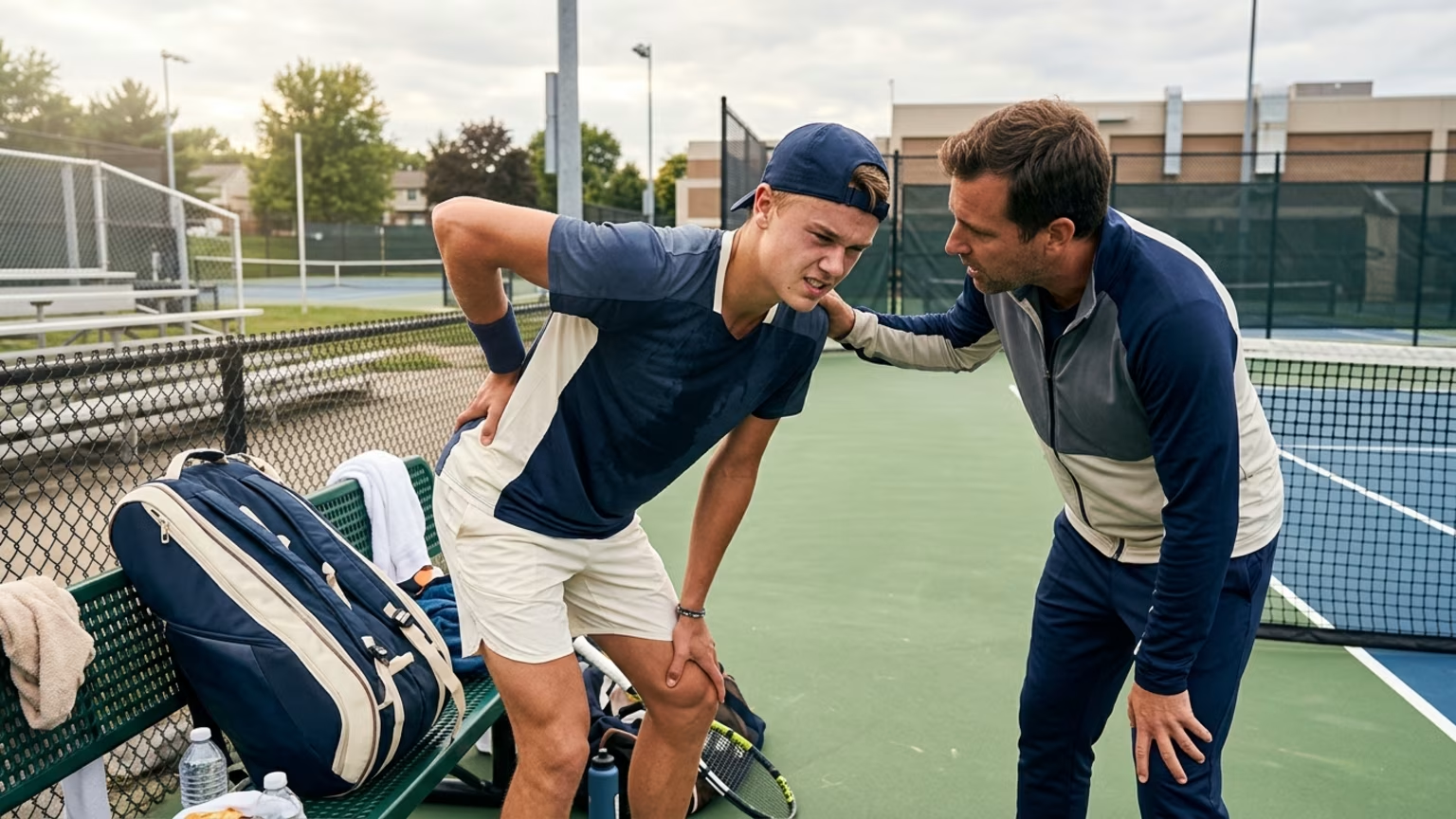
Holger Rune withdrew from the European Open with a back problem. The facts behind his decision and a grounded perspective for recreational players.

The Dink’s October 17 guide emphasizes deep returns, ball-height decisions and positioning against faster pickleball opponents.

A new report outlines padel and tennis gear trends. Learn how to assess adjustable rackets, sensor feedback and smart-court claims.
Read practical guidance for better movement, smarter preparation and a game that keeps working for you.
explore the Blog
