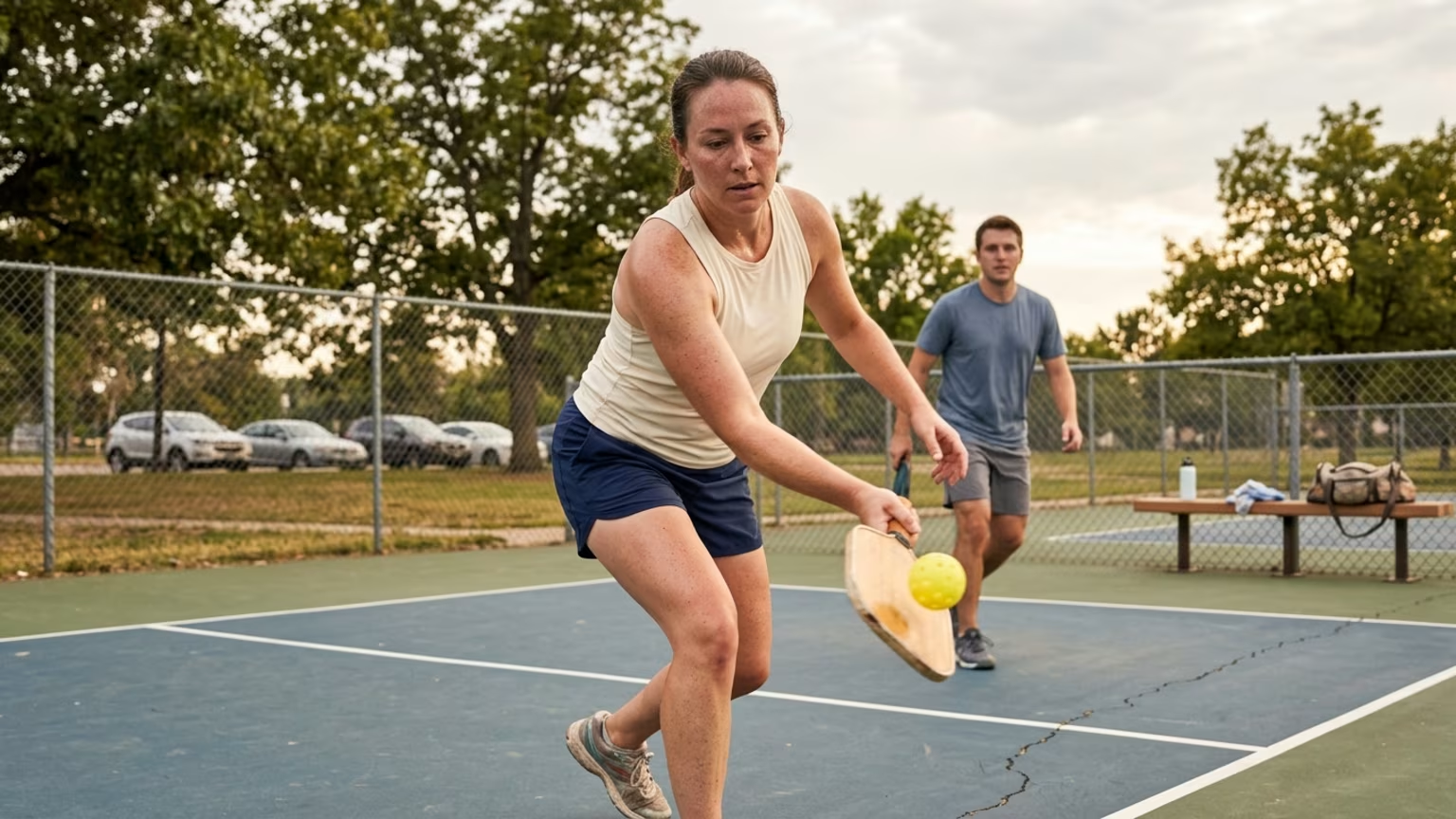

The ODDS Longevity symposium highlights how adult racquet athletes can proactively build strength and cardiovascular health before physical decline begins.




On September 19, 2026, ODDS Longevity organized a closed-door symposium in New Delhi titled "The Silent Decade." The central focus was understanding human health and physiological change before noticeable aging or disease begins. Medical experts and health professionals gathered to discuss how physical capacity shifts long before routine symptoms become obvious. The event highlighted the importance of identifying measurable changes early to maintain physical resilience.
The symposium introduced a preventive framework for tracking physical health over time. Asad Hussain, founder and CEO of ODDS Longevity, described longevity as an ongoing practice of understanding your body, measuring what matters and acting before disease begins. The core program discussed was the Quantified Health Program. This system combines health data, medical science and expert guidance to identify early changes in physical capability.
Although some coverage uses the ages of 35 to 45 to define this silent decade, the primary report refers more generally to understanding the body before or around your thirties and forties. Discussions centered on two main evaluation concepts. The Mechanical Age Quotient focused heavily on strength, mobility and physical capacity. Meanwhile, the cardiometabolic discussion, identified as ODDS AXION, addressed early metabolic changes and cardiovascular health.
The event also highlighted a six-month case study involving structured, supervised training. According to the symposium report, this program showed improvements in VO₂ max, strength and overall physiological capacity. While specific baseline numbers and training protocols were not published, the underlying message remains practical. Proactive training and dynamic assessments provide a different perspective than traditional static medical tests alone.
Dr Ashok Rajgopal, Group Chairman of Orthopaedics at Medanta, noted that physiological age and chronological age can differ. He contrasted static laboratory tests with dynamic evaluations of the body. Both types of assessment are necessary to build a complete picture of health. A patient might be clinically within range on a routine test but still lack genuine physical resilience.
Other medical leaders emphasized the value of long-term predictive models. Dr Praveen Chandra, Chairman of Interventional Cardiology at Medanta, discussed using gene testing, biochemical markers and lifestyle assessments. He suggested these tools can help make a thirty-year prediction of heart disease occurrence in people aged twenty, twenty-five and thirty.
The symposium featured perspectives from numerous medical and wellness disciplines. Discussions covered orthopaedics, cardiology, endocrinology and diagnostics. Experts also explored nutrition, women’s health, movement and personalized recovery strategies. The event incorporated practices like Pilates, yoga and breathwork alongside clinical science.
Tanya Malik Chawla, a functional nutritionist, described biohacking as the conscious control of biology through data, habits and environment. The report cautioned that biohacking and recovery practices should be integrated meaningfully with medical science. These methods should not be adopted merely because they are currently popular.
For adult recreational racquet athletes, this focus on the silent decade offers a crucial shift in perspective. Many players assume their weekly matches provide enough exercise to maintain their long-term health. The reality is that playing tennis, pickleball or padel is a sport, not a complete conditioning program. Match play offers intermittent high-intensity activity, but it does not consistently cover all major muscle groups.
Players who want to preserve their capacity should treat their midlife years as an active training phase. This means adding regular aerobic and strength work outside of standard match play. World Health Organization guidance commonly suggests accumulating 150 to 300 minutes of moderate aerobic activity weekly. This should be combined with muscle-strengthening work on at least two days per week.
Adopting simple two-day strength workouts for court athletes ensures you address areas that match play neglects. Consistency in these external training habits is what keeps you on the court. It is very easy to wait for a sudden performance drop or a nagging injury before changing your routine. The symposium's preventive message suggests measuring your physical capacity before obvious problems emerge.
We have found this approach essential within our own team at Evercourts. I remember finishing a tough two hour padel match on a cold Tuesday night and waking up the next morning feeling like my lower back was locked in concrete. For a long time, I just accepted this as the price of playing hard in my forties. But once I started spending just ten minutes on targeted hip mobility before heading to the club, the stiffness almost completely vanished.
It taught me that proactive intervention works far better than reacting to physical decline. Adult players should monitor practical indicators like match endurance, repeated-sprint ability and movement quality. You should evaluate these markers over several months rather than judging your fitness from one bad match. Incorporating a smart longevity game plan with sustainable match habits helps you track these trends accurately.
The central case study presented at the symposium involved structured, supervised training. While the exact protocol was not detailed, the implication for racquet athletes is clear. You should seek qualified supervision when beginning demanding training or managing a medical condition. A generic fitness class might not address the specific rotational demands of your sport.
If you notice recovery taking longer, it is time to adjust your off-court conditioning. It is also important to approach trendy recovery metrics with a grounded mindset. Wearable devices provide useful estimates for identifying general trends in your VO₂ max or resting heart rate. However, a watch-generated estimate is not equivalent to a clinical laboratory test.
Use these tools for self-monitoring, but rely on structured, progressive strength work to actually build physical capacity. Building a strong foundation requires deliberate effort beyond just stepping onto the court. Adding strength work progressively is essential, especially if you are returning from an injury. Preserving muscle and strength for lifelong racquet sports is entirely possible when you stop viewing physical decline as inevitable.
Over the next few seasons, the conversation around healthy aging in racquet sports will move further away from reactive injury management. Players will increasingly adopt proactive screening and dynamic capacity testing as standard parts of their routine. We expect to see more integration between clinical health assessments and everyday performance tracking. Clubs and coaching programs will need to acknowledge that playing the game is only one piece of a sustainable athletic lifestyle.
The concept of a pre-symptomatic training window will likely encourage players to prioritize structured physical preparation much earlier in life. Instead of waiting for a doctor to suggest lifestyle changes, athletes will seek out data to guide their off-court training. As the focus shifts toward measuring resilience and tracking longitudinal health data, adult athletes will be better equipped to maintain their court performance for decades to come.
Follow Evercourts for practical insights on tennis, pickleball and padel performance, movement, recovery and healthy ageing. Stay connected for new articles, research-led guidance and ideas to help you play well and keep playing for years.


An evidence check on sports supplements like tart cherry juice. Learn why racquet sports players should prioritize core nutrition over functional foods.
In late 2026, Oura analyzed wearable data to see how recreational tennis impacts heart health and recovery. Learn what this means for your athletic longevity.
Recent guidelines emphasize gradual progression, dynamic warm-ups, and scheduled recovery to help adult racquet sports players maintain athletic longevity.
Read practical guidance for better movement, smarter preparation and a game that keeps working for you.
explore the Blog
