

A three-decade pickleball journey highlights the functional and social benefits of athletic longevity, supported by recent healthy aging and mobility research.




In August 2026, The Straits Times interviewed 73-year-old Elaine Yong to discuss her long career in racquet sports. Yong first began playing pickleball in Singapore in 1996 after seeing a television advertisement for the sport. Her ongoing participation spans thirty years of equipment changes and infrastructure growth. This milestone offers a clear look at how sustained play supports athletic longevity for older adults.
Yong told reporters that her very first paddle was a $55 plywood model. She used that durable wooden equipment for 18 years before finally transitioning to a modern carbon-fibre design. Her move to carbon fibre reflects the standard choices seen among competitive players today. Despite her age, Yong maintains a highly active tournament schedule.
Her recent competitive results are extensive and global. She earned three gold medals, two silver medals and one bronze at the Vietnam World Pickleball Championship in April 2024. Later that year, she secured a bronze medal in the women’s 70-plus doubles category at the English Open in Birmingham.
The environments where she plays have also transformed significantly since 1996. The Straits Times reported that a company named PickleMall is installing temporary courts inside Singapore shopping centres, and this initiative is backed by Leapmotor, equipment brand Joola and venue partner CapitaLand. Their pop-up courts operated at Sengkang Grand Mall from August 18 to 30, 2026. The tour then moved to Junction 8 from August 31 to September 6, with further stops scheduled at Aperia Mall and Geneo Mall through January 2027.
Yong’s international medal count is impressive, but her story is ultimately about the value of consistent routines. I remember finishing a tough two hour padel match on a cold Tuesday night and waking up the next morning feeling like my lower back was locked in concrete. For a long time, I just accepted this as the price of playing hard in my forties. But once I started spending just ten minutes on targeted hip mobility before heading to the club, the stiffness almost completely vanished. It taught me that we do not have to accept pain as a default state of aging.
For the adult recreational player, longevity on the court requires gradual progress rather than immediate intensity. Yong experienced a leg injury early in her playing career and took a temporary pause from competition. Adapting after an injury is far more effective than abandoning movement entirely. Players must learn to build consistency first before chasing aggressive tournament schedules.
Social connection is another foundational pillar for staying active. Yong explicitly noted that while winning medals matters, players should never lose a friend over a match. Our team at Evercourts has found that choosing a club that prioritises social play can keep players returning week after week. When players focus on community, they are more likely to maintain the weekly routines that support healthy aging and athletic longevity.
Equipment upgrades should also be practical and problem-driven. Moving from a wooden paddle to a carbon-fibre model makes sense when the new gear offers better control or comfort. Recreational players should choose equipment that feels appropriately weighted for their specific swing mechanics. Our team often advises players to test different gear options when deciding when to upgrade a tennis racquet or pickleball paddle.
A reported randomized trial evaluated an eight-week pickleball program for older adults dealing with pre-frailty. The study found that 42 percent of participants assigned to the pickleball group were no longer classified as pre-frail after the intervention. By comparison, only 8 percent of the control group saw similar improvements. These findings demonstrate that structured sports activity can yield measurable health changes.
The trial measured functional capabilities rather than just sport-specific skills. Researchers documented improvements in 30-second chair stands, arm curls, shoulder flexibility and six-minute walking distance. The participants also reduced their sedentary time and reported better physical and mental quality of life. These functional metrics are crucial because they translate directly to better everyday mobility off the court.
Social isolation among older adults is another area where routine play shows positive associations. A national survey of 825 U.S. adults aged over 50 analysed loneliness levels based on playing habits. The data showed that current pickleball players reported lower loneliness than people who had never played the sport. This evidence reinforces the value of community-based activity programs.
The survey adjusted for age and sex alongside physical activity, smoking and chronic conditions. After these adjustments, people who had never played had 1.53 times the odds of loneliness compared with active players. Interestingly, former players had 1.95 times the odds of loneliness compared with those currently playing. Current players also reported an average of 3.6 social connections made through the sport, compared with just 1.6 for former players.
Looking ahead, the next season will likely bring a stronger focus on accessible community infrastructure. The mall-based court models operating in Singapore demonstrate a clear shift toward bringing the sport directly to where people live and shop. Operators are recognizing that removing travel barriers is essential for maintaining consistent participation among adults. As player demographics continue to broaden, we expect venue operators to design facilities that cater equally to casual players and competitive athletes.
Clubs will need to develop dedicated programming that supports older adults through supervised, progressive play. Facilities that successfully integrate social spaces with their courts will thrive by keeping their members active and engaged for the long term. These environments will ultimately redefine what successful healthy aging looks like in racquet sports.
Follow Evercourts for practical insights on tennis, pickleball and padel performance, movement, recovery and healthy ageing. Stay connected for new articles, research-led guidance and ideas to help you play well and keep playing for years.


How modest strength work can fit around tennis, pickleball and padel, with adaptable movement patterns and a clear look at the evidence.
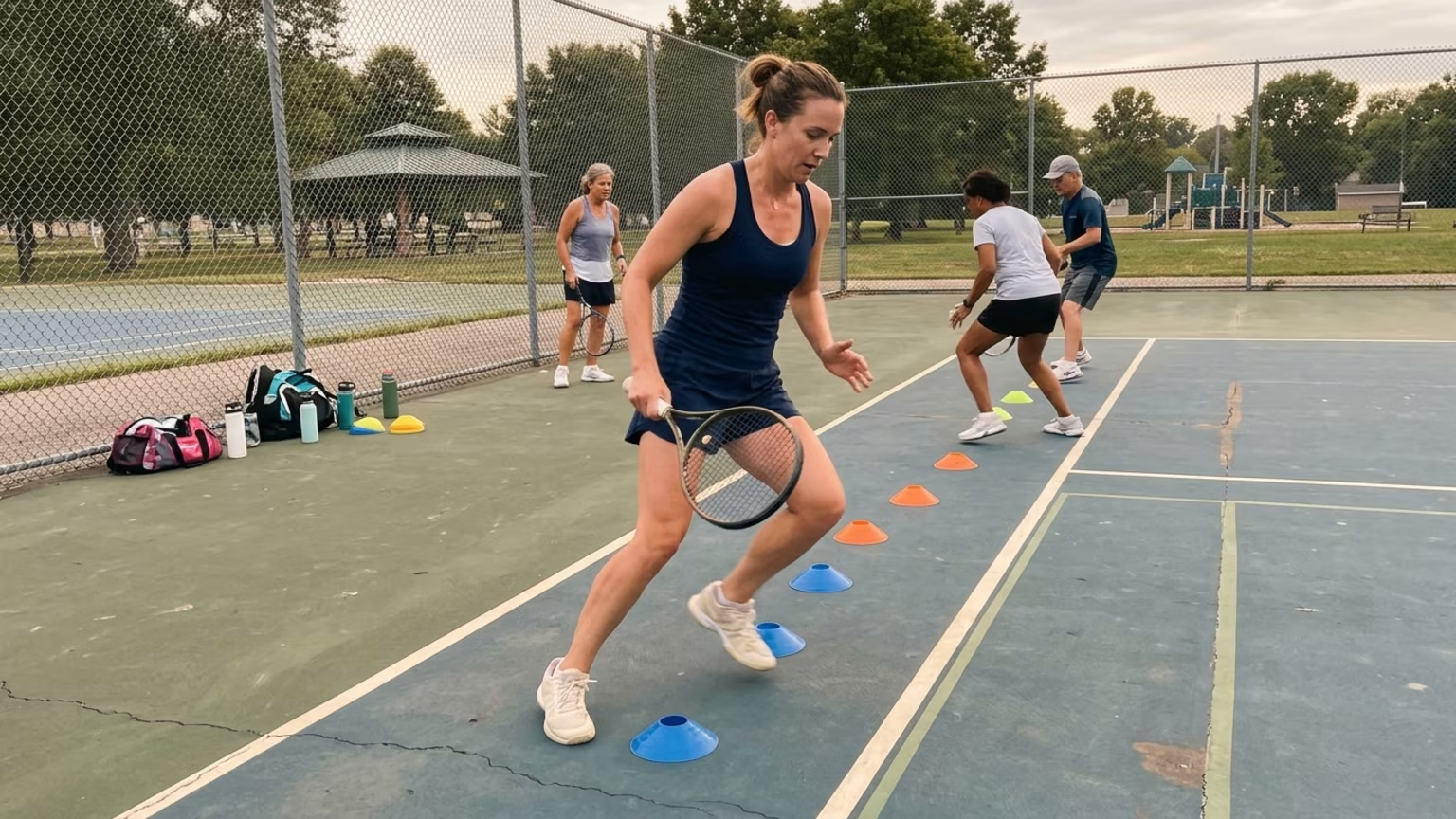
Build a warm-up from easy movement to court footwork and strokes, with clear evidence limits and guidance on when to seek professional advice.
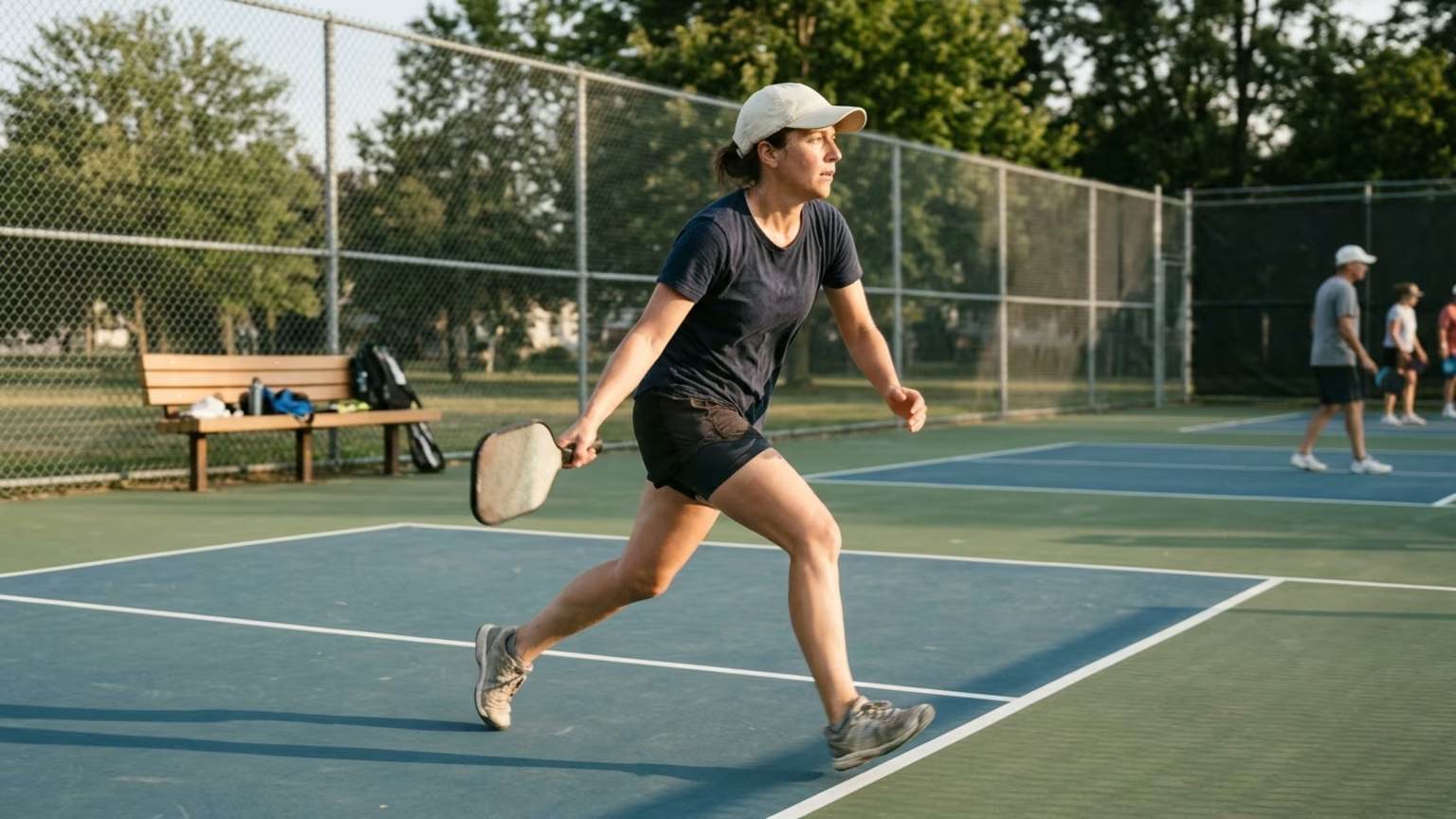
An evidence-led look at pickleball lunges, balanced recovery, movement practice and when to seek professional advice.
Read practical guidance for better movement, smarter preparation and a game that keeps working for you.
explore the Blog
