

Toni Nadal proposed reducing tennis racquet sizes to slow the professional game. Learn what this unforgiving equipment debate means for recreational players.




On October 9, 2026, La Gazzetta dello Sport reported Toni Nadal’s proposal to reduce tennis racquet head sizes as a specific method for taking power out of the modern professional game. In a detailed interview published by the outlet on October 8, and subsequently updated on October 9, the prominent coach called for the sport of tennis to deliberately slow down. Nadal suggested that introducing smaller racquets would directly make it harder for athletes to hit the ball as forcefully. He positioned this idea as a necessary response to the escalating pace and physical intensity currently seen on the professional tour.
The conversation initiated by Nadal arrives at a time when the physical toll of competitive racquet sports is heavily scrutinized. Professional matches frequently feature baseline rallies struck with immense pace and heavy topspin. Nadal believes that addressing the physical specifications of the racquet itself could effectively regulate this modern style of play. By limiting the tool used to generate such speed, he argues that the sport could naturally mandate a more manageable rhythm for the athletes involved.
Nadal’s perspective is rooted in observing the accumulating physical strain on modern competitors. He argued that incredibly fast play, repeated physical impacts, constant running, and abrupt braking all place sustained stress on elite players. He specifically noted that hard courts and the sheer speed of the modern ball compound these grueling physical requirements. The combination of these factors, according to his assessment, necessitates a structural change to how the game is played.
To address this, Nadal proposed that smaller racquet heads would fundamentally alter the mechanics of a professional rally. La Gazzetta dello Sport explained that reducing the head size would make the game significantly less forgiving for the player striking the ball. With a smaller string bed, professionals would face a harder time making clean, consistent contact during high-speed exchanges. This reduction in forgiveness would leave players with less opportunity to seek an aggressive winner on every single shot.
It is crucial to note that this idea remains purely a coaching and equipment proposal rather than an active regulatory shift. Coverage from La Tercera reported that Nadal’s suggestions, including the shift to smaller racquets, had not been announced as official changes by international tennis authorities. Another report from Tennis World similarly described the racquet-size suggestion as one of several proposals that tennis governing bodies had not adopted. For now, the dimensions of professional racquets remain unchanged.
Translating this professional debate to the local courts requires a pragmatic look at how everyday athletes actually play the sport. For the adult recreational player, a proposal designed to handicap elite professionals should never be confused with established medical guidance or a universal equipment recommendation. Nadal’s objective is to curb the overwhelming power of the world's best athletes, not to provide a proven injury-prevention intervention for the weekend league participant. The sources reviewing this proposal do not establish a causal link between smaller racquet head sizes and a reduction in amateur injury rates.
In fact, La Gazzetta dello Sport explicitly noted that smaller heads require far more accurate contact to generate an effective shot. For an amateur player who does not possess professional-level footwork or timing, an unforgiving racquet can easily lead to awkward mechanics and increased arm strain. Mis-hits on a smaller frame transmit harsh vibrations directly to the wrist and elbow, which is counterproductive for any player hoping to maintain their athletic longevity. A smaller racquet demands a level of precision that most recreational players simply cannot replicate under pressure.
Instead of adopting restrictive professional setups, recreational players should select their gear based on individual fit, comfort, and their own swing capabilities. A moderately sized, forgiving racquet often helps adult players maintain consistent depth without overswinging or compromising their form. Players dealing with the recurring aches and stiffness of racquet sports should prioritize equipment that supports their natural mechanics. Understanding the physical demands of the sport is key, which is why preparing the body properly before a match provides a more reliable foundation for health than changing racquet head sizes.
Furthermore, the physical realities of the professional tour simply do not map perfectly onto amateur play. While Nadal rightly points out the toll of constant running and abrupt braking on hard courts, the recreational game is played at a vastly different speed. Everyday athletes benefit more from refining their footwork and court positioning to reduce sudden, jarring stops. By focusing on sustainable movement and evaluating their current gear, players can make smart equipment choices that genuinely suit their actual level of play.
The rationale behind Nadal's proposal is tied to significant shifts in how the modern game is played and experienced. According to the reporting from La Gazzetta dello Sport, spin has risen by an average of 20 percent to 50 percent compared with earlier eras of tennis equipment. The intense mechanical effort required to generate this massive rotation, combined with the relentless pace of the ball, takes a documented toll on the athletes. The same article stated that player fatigue has increased by more than 20 percent in the contemporary professional game.
However, it is important to contextualize these figures when discussing equipment rules and player health. The available material reporting these statistics does not provide the underlying study, the specific measurement methods used, or the exact comparison period. Consequently, these percentages should be viewed strictly as figures reported by the publication to illustrate the perceived intensity of the modern tour. They do not represent an independently verified clinical evidence base showing that modern racquets inherently cause injuries, nor do they prove that a smaller string bed would reverse these fatigue trends.
This data highlights an important distinction in racquet sports performance. Elite tennis matches demand a specific physical threshold that amateur play rarely replicates. While professionals may struggle with the amplified power and rotation enabled by modern string beds, those same technological advancements often allow older adult players to clear the net and sustain rallies with less effort. Therefore, altering the geometry of the racquet to limit performance metrics makes sense only within the context of the professional circuit.
Looking ahead to the next professional season, the conversation surrounding player physical load, equipment rules, and game speed will almost certainly continue to develop. While international tennis authorities have not adopted Nadal’s specific proposal for smaller racquets, the underlying concerns about tour fatigue and hard court impacts are gaining visibility. Governing bodies are likely to face ongoing pressure to evaluate how racquet technology, ball speed, and court surfaces interact to affect the health of top-tier athletes. This scrutiny may eventually lead to comprehensive studies regarding equipment and player longevity.
For adult recreational players, the evolution of this debate serves as a reminder to separate professional equipment regulations from personal gear decisions. Over the next year, players should continue to monitor these high-level coaching discussions without feeling compelled to overhaul their own tennis bags. The most effective approach for amateur athletic longevity will remain rooted in practical habits and proper court preparation. By prioritizing consistent physical conditioning, choosing appropriately forgiving equipment, and practicing efficient movement patterns on the court, players can safely manage their physical wear and keep enjoying the sport for years to come.
Follow Evercourts for practical insights on tennis, pickleball and padel performance, movement, recovery and healthy ageing. Stay connected for new articles, research-led guidance and ideas to help you play well and keep playing for years.


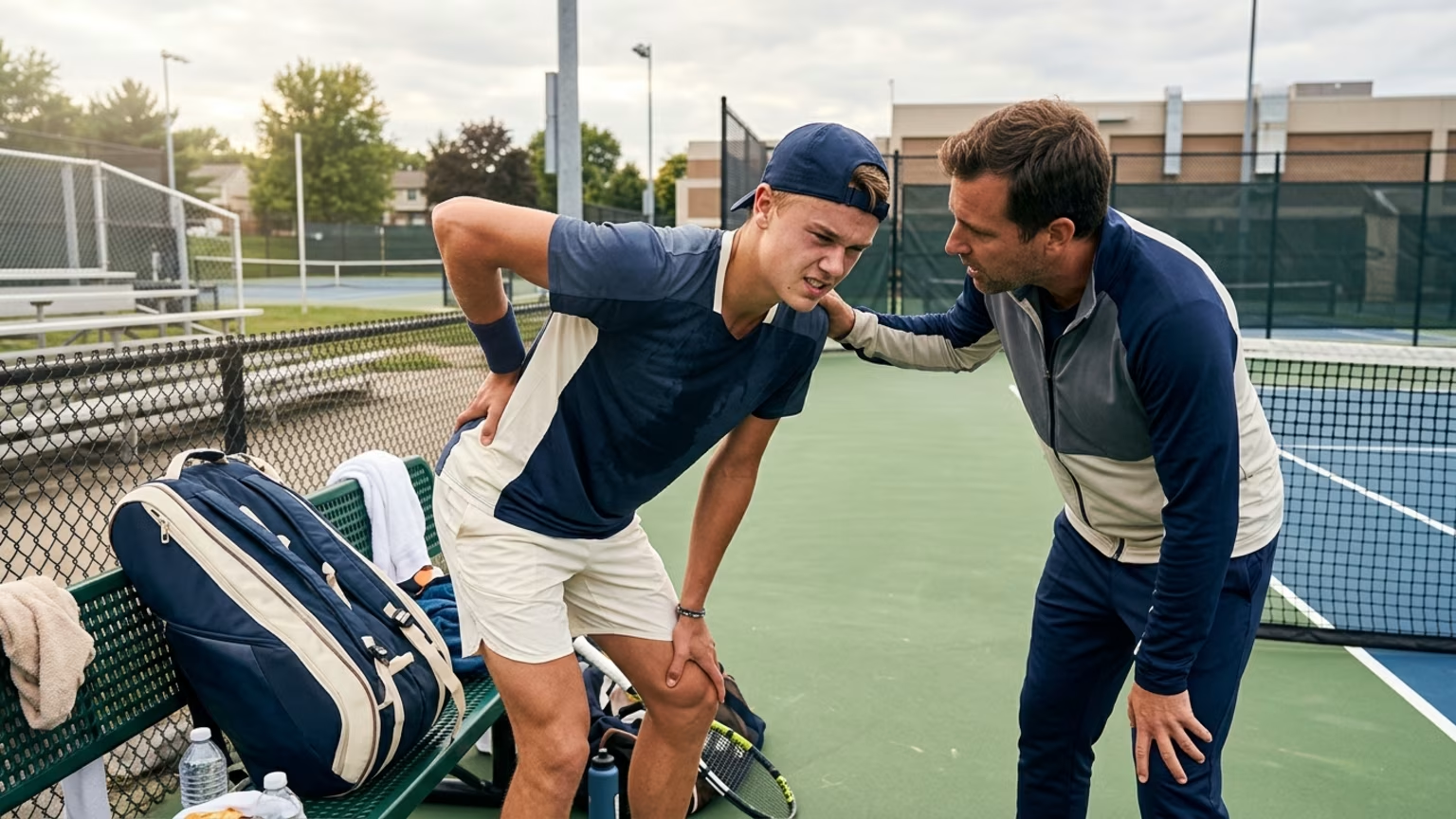
Holger Rune withdrew from the European Open with a back problem. The facts behind his decision and a grounded perspective for recreational players.

The Dink’s October 17 guide emphasizes deep returns, ball-height decisions and positioning against faster pickleball opponents.

A new report outlines padel and tennis gear trends. Learn how to assess adjustable rackets, sensor feedback and smart-court claims.
Read practical guidance for better movement, smarter preparation and a game that keeps working for you.
explore the Blog
