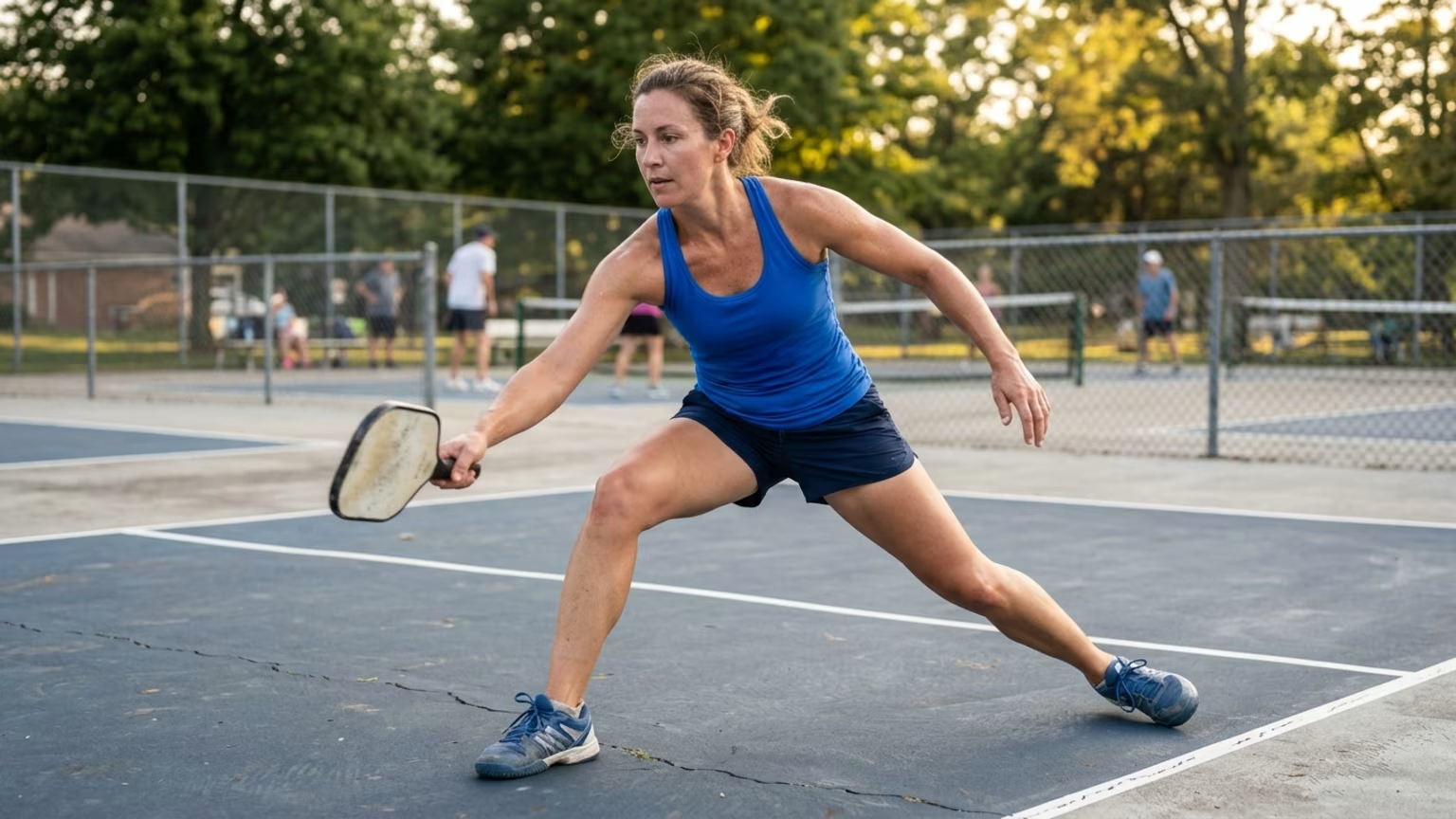

Learn how a simple off-court strength and balance routine helps racquet sports players safely handle sudden stops and changes of direction for healthy aging.




Deceleration is the physical ability to absorb force and bring your body to a controlled stop on the court. Change of direction is the rapid shift of your momentum toward a new target. These two mechanics dictate how safely and efficiently you move during a fast-paced point. Without adequate control, your body struggles to handle the sudden starts and stops required by racquet sports.
Players rely on this side-to-side stability and single-leg balance during every extended rally. Every volley, dink, and baseline return asks your joints to manage a complex exchange of kinetic energy. When you lack the strength to brake efficiently, excess force travels directly into your ankles, knees, and hips. Mastering these foundational mechanics is the key to moving well and avoiding unnecessary strain.
Understanding these mechanics helps you bridge the gap between casual play and intentional physical preparation. Most adults focus on paddle technique while entirely ignoring the lower-body strength required to reach the ball. However, the ability to control your body weight is the ultimate prerequisite for successful play. Building this control off the court translates directly to cleaner shots and safer matches.
Tennis, pickleball, and padel specifically challenge your leg strength and balance. These sports demand repeated explosive efforts and continuous changes of direction over very short distances. You might sprint forward for a drop shot, brake sharply, and then immediately push sideways to cover a passing shot. This unpredictable movement taxes the muscles of your calves, hips, thighs, and trunk.
Unlike running in a straight line, court movement forces one leg to bear your entire body weight during rapid lateral shifts. The repeated braking action requires significant eccentric strength to absorb downward force safely. If your muscles are not prepared for these specific efforts, your joints take on the burden. Understanding proper training load management for tennis, pickleball and padel players is necessary to prepare your lower body for this stress.
Recreational players often focus solely on forward motion and neglect lateral stability. However, racquet sports are inherently multi-directional and demand side-to-side competence from the very first serve. The compact dimensions of a pickleball or padel court actually increase the frequency of sudden stops. This constant shifting requires a robust musculoskeletal system to maintain proper alignment during every point.
Each time you plant your foot to change direction, your muscles must contract forcefully to stabilize the joint. This rapid transition from braking to accelerating is where many players feel sudden twinges or prolonged fatigue. A strong lower body acts as a shock absorber, protecting your structural tissues from the harsh impact of the playing surface. Preparing these specific muscle groups is essential for handling the relentless pace of a competitive match.
Sports science provides practical guidance for court movement without promising guaranteed injury prevention. Research focuses on general preparation rather than rigid protocols that claim to eliminate all risk. A recent report from Racket Chronicle offers insight into structured off-court preparation. The publication details results from a ten-week strength, balance, and change-of-direction program for players.
According to the report, fewer participants in the training group reported a fall at five months compared to a control group. However, the study was not randomized, and the difference between the groups was not statistically significant. This means the program offers a promising framework for general preparation, but it is not definitive proof that such training prevents falls. The current evidence supports training the qualities the game requires, such as leg strength and controlled lateral movement.
There is no single exercise dose or progression that guarantees optimal results for all adult players. Instead of seeking a perfect clinical protocol, players should prioritize simple consistency over complex routines. Proper conditioning provides the structural resilience needed to react safely during a fast-paced rally. By focusing on formal basics training, beginners can develop proper movement habits before attempting competitive play.
The lack of a validated universal program simply means you have the flexibility to scale exercises to your own level. The core objective remains the same across all research on athletic preparation. You are training the body to handle the specific physical questions that racquet sports ask. A sensible framework built on balance and basic strength is enough to support recreational play.
Understanding court mechanics helps adult players maintain their physical capabilities and stay active for years. Building strength away from the court protects your joints during intense rallies. A practical approach to healthy aging involves supported balance exercises, gentle squats, and lateral steps. These simple additions to your weekly routine build the capacity needed to safely decelerate and pivot.
A five to ten minute gentle warm-up before stepping on the court prepares your body for multi-directional demands. You can include brisk walking, side steps, heel raises, and short-court practice swings to gradually increase your heart rate. Starting slowly is far more beneficial than going directly into competitive points completely cold. Incorporating court-ready warm-up routines ensures your muscles are primed for sudden stops.
During play, you can further protect your body by making smart, deliberate movement choices. Turning and running forward to track a deep lob is much safer than backpedaling blindly. Simple off-court habits, like single-leg balance work near a stable support, translate directly to better control on the court. Consistent off-court training gives you the physical resilience to enjoy racquet sports well into the future.
You can complete these basic conditioning routines entirely off the court with minimal equipment. Resistance-band rows, step-ups, and sit-to-stands offer a safe way to reinforce your lower body. Scaling these movements to your experience level provides a sustainable path for long-term health. The goal is to build a reliable foundation that keeps you playing confidently season after season.
Players who commit to this off-court work often find they recover faster between challenging matches. When your muscles are conditioned to handle deceleration, you experience less residual stiffness the following morning. This proactive approach to physical health is the true driver of athletic longevity. Small, consistent investments in your strength and balance yield immense returns over a lifetime of play.
Even with a dedicated off-court routine, you must listen to your body and recognize when to stop. Sharp pain, persistent swelling, or a feeling of instability during lateral steps are clear signs to seek help. If your knee or ankle feels like it cannot support your weight during a sudden stop, consult a qualified physiotherapist. A healthcare provider can assess your specific movement patterns and offer tailored advice.
Playing through structural pain or noticeable weakness will only compromise your long-term ability to compete. Persistent aches that do not resolve with rest require professional evaluation rather than more exercise. Trying to self-manage a genuine injury often leads to compensatory movements that create new problems. By addressing small issues early, you maintain the structural integrity needed for demanding rallies.
Always check the playing surface before a match and be prepared to step away if something feels wrong. Fatigue and poor court conditions drastically increase the physical toll on your joints and muscles. Your safety is always more important than finishing a casual weekend match. When you prioritize off-court strength, those sudden starts, rapid shifts, and controlled stops become a foundation for better play rather than a source of pain.
Follow Evercourts for practical insights on tennis, pickleball and padel performance, movement, recovery and healthy ageing. Stay connected for new articles, research-led guidance and ideas to help you play well and keep playing for years.


An evidence check on sports supplements like tart cherry juice. Learn why racquet sports players should prioritize core nutrition over functional foods.
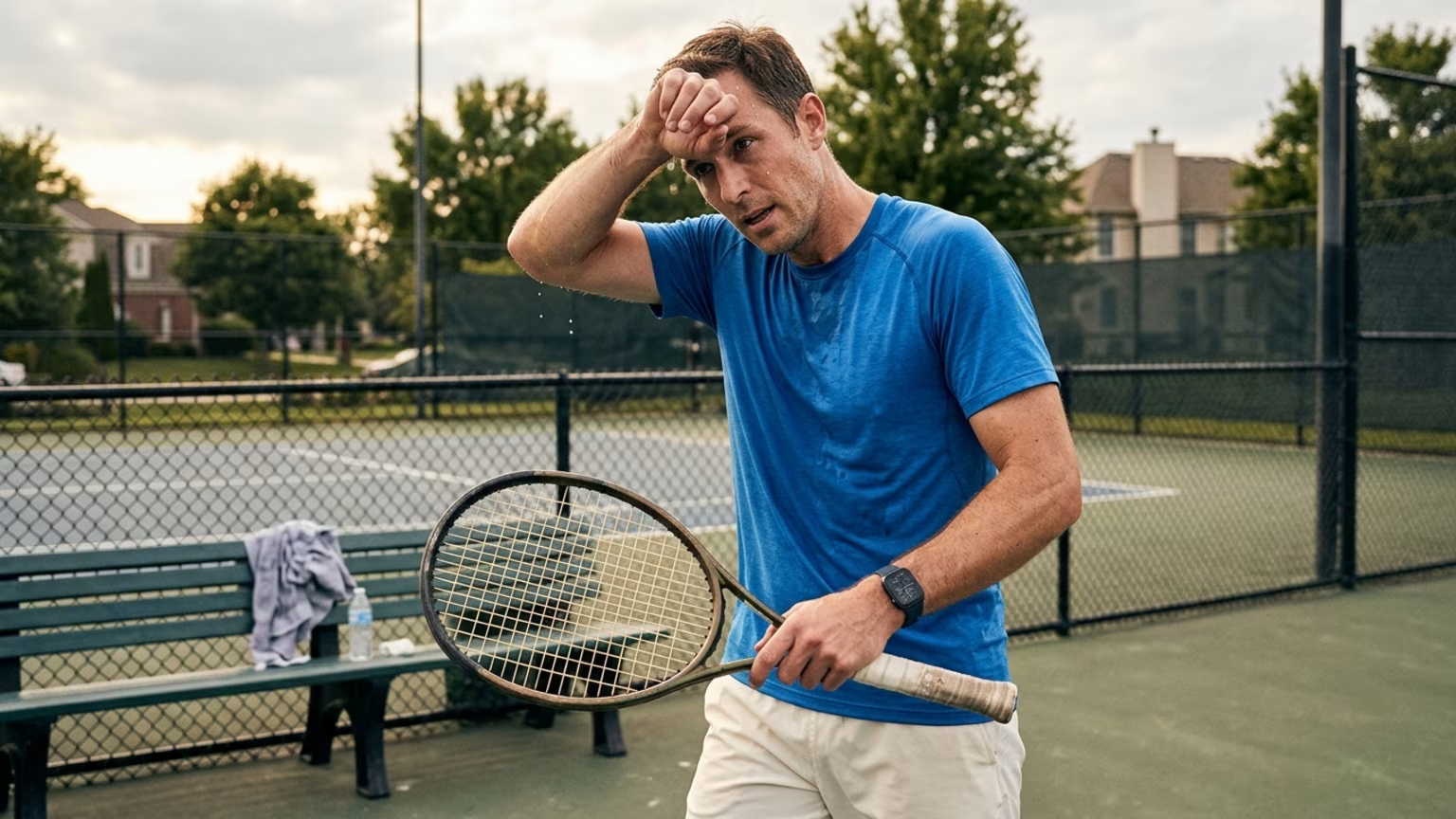
In late 2026, Oura analyzed wearable data to see how recreational tennis impacts heart health and recovery. Learn what this means for your athletic longevity.
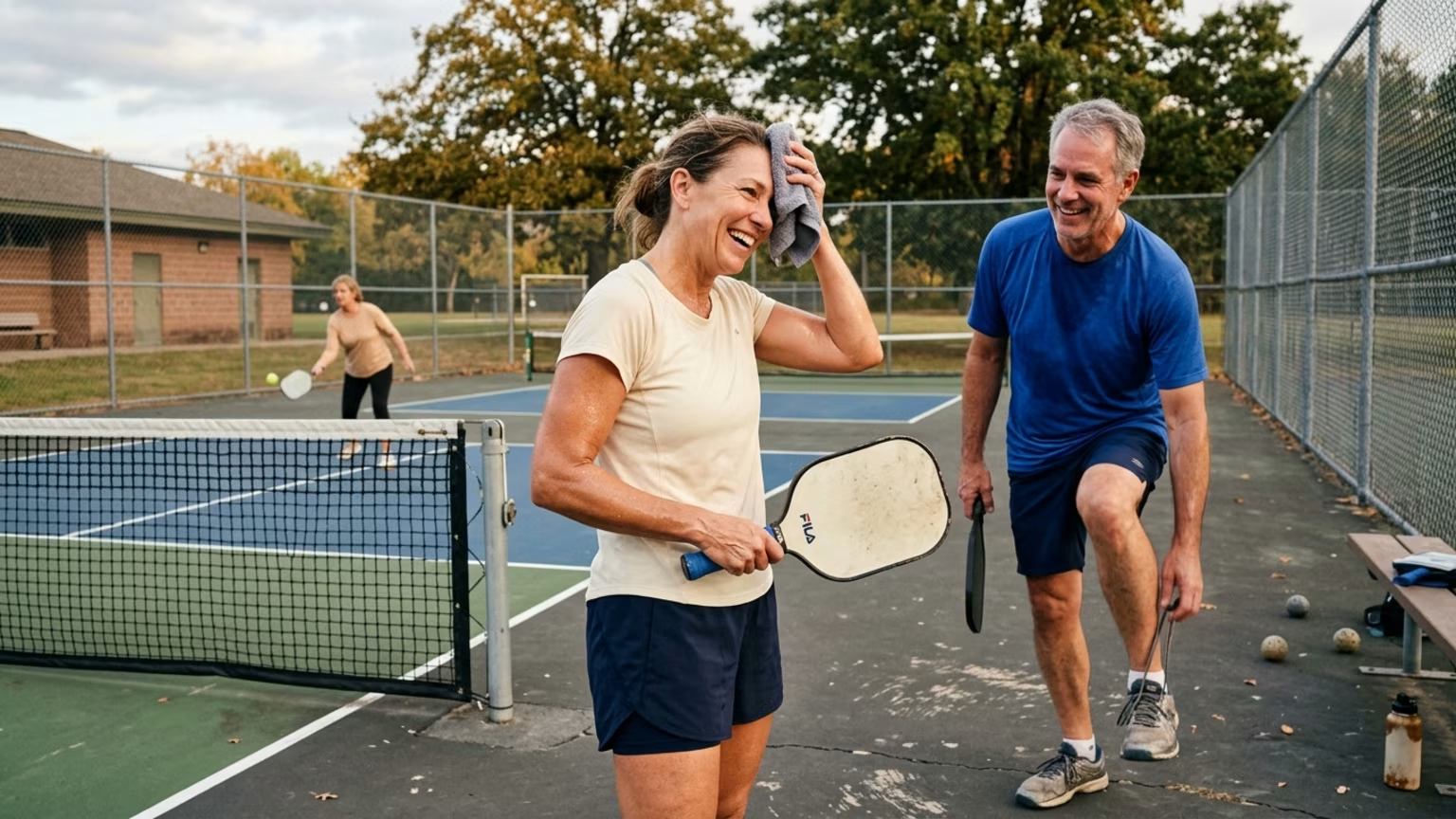
Recent guidelines emphasize gradual progression, dynamic warm-ups, and scheduled recovery to help adult racquet sports players maintain athletic longevity.
Read practical guidance for better movement, smarter preparation and a game that keeps working for you.
explore the Blog
