

Learn the difference between reacting to a ball and anticipating shots in racquet sports. Understand how reading the game early improves court movement.




Anticipation in racquet sports is the ability to use information available before contact to predict a likely shot. Reaction is simply responding to the ball after it has already taken flight. Many players think they need to speed up their physical movements to reach difficult shots. In reality, skilled players rely on early reads to prepare their movement decisions before the ball even crosses the net.
Reading the game is an active process of gathering early information to choose your next step. You process visual cues to form a hypothesis about where the ball will go. Once the ball is struck, you adjust that hypothesis and execute your physical movement. Better court coverage often comes from interpreting partial information rather than relying purely on physical speed.
Players who master this distinction spend less time scrambling and more time balanced. They learn to separate the mental process of deciding from the physical process of moving. This separation allows them to initiate weight transfers earlier and arrive at the contact point with complete control.
Racquet sports demand repeated explosive efforts and rapid changes of direction in very tight spaces. You must process an incoming ball, decide on an appropriate stroke, and move your body in a fraction of a second. This constant cycle of reading and reacting heavily taxes both your central nervous system and your lower body mechanics. If you misread the ball, you are forced to make abrupt adjustments that heavily stress your muscles and joints.
Each sport taxes your reaction systems in slightly different but equally demanding ways. Tennis requires covering wide areas of a large court, forcing rapid directional shifts over longer distances. Pickleball places players extremely close together at the kitchen line, demanding rapid physical responses to fast volleys. Padel involves reacting to unpredictable bounces off glass walls, adding another layer of complex spatial processing.
The physical cost of late reactions compounds rapidly over the course of a long session. When players react late, they often compensate by taking long, heavy strides to make up the distance. These panicked steps bypass the specialized shock absorption capabilities of a well timed athletic stance. The resulting impact travels directly up the kinetic chain, heavily taxing the ankles, knees, and hips.
In our experience, we used to think a tough conditioning block was the only way to improve court endurance. Then our team started tracking sleep metrics. We noticed that on days we slept less than six hours, reaction time at the net was noticeably sluggish and we felt gassed early. Prioritizing rest did more for our early shot reads than any extra sprints ever did, because recovery is the true foundation of performance.
Players who consistently monitor their rest often find that a consistent recovery log is highly valuable for on-court performance. A rested nervous system processes opponent cues much more efficiently.
The science of anticipation focuses on early judgments rather than instant physical changes. A 2002 study by Damian Farrow and Bruce Abernethy examined whether implicit video-based perceptual training could develop anticipatory skill in tennis. This study appeared in the Journal of Sports Sciences and tested how players process visual information. A secondary summary of this research reports improved anticipatory judgments among players after completing the training.
Interestingly, the training did not explicitly tell players which visual cues to attend to. Players simply improved their ability to predict outcomes through repeated exposure to visual patterns. However, it is important to clearly understand what the current research actually says. The available evidence does not establish that these drills produce faster raw reflexes or guarantee better live match performance.
Many players assume they need expensive technological gadgets to improve their visual processing. However, a recent sports-vision interview argues for foundational principles over relying on technical gadgets. The process of learning to read visual cues requires patience and deliberate practice over time. Improved anticipatory judgments take time to translate into smoother physical footwork.
Treat opponent physical cues as helpful possibilities rather than universal facts. Coaching guidance often suggests practicing a split step first with a partner supplying a spoken cue. You can then try the drill without the verbal cue before adding movement and recovery steps. This approach builds a practical bridge toward better anticipation training without making false promises about immediate physical gains.
Understanding anticipation helps adult players maintain their physical capabilities on the court for years to come. As raw physical speed naturally declines, the ability to read the game early becomes a crucial tool for healthy aging. Players who anticipate well can cover the court with significantly less physical strain. This allows them to stay competitive against younger opponents without relying on desperate lunges.
Rushing late to every ball increases the sheer mechanical load on your joints and muscles. When you read the play early, you can initiate a balanced split step and move efficiently toward the ball. This smoother movement sequence reduces the risk of acute strains and minimizes overall physical wear and tear. Over a long season, conserving energy on every single point compounds into much better health outcomes.
Anticipation is ultimately about moving smarter instead of working harder. It removes the panic from defensive situations and allows you to establish a strong base before contact. Adult players should prioritize this skill as a primary strategy for sustainable long-term preparation. Reading the game effectively is a reliable way to extend your playing years and keep enjoying the sport.
Moving proactively rather than reactively gives you more time to execute proper stroke mechanics. When you are not constantly stretched to your physical limits, you maintain better posture and balance through your swings. This structural stability protects your shoulders and lower back from the forces generated during aggressive shots.
Sometimes, feeling sluggish on the court is not simply a matter of poor anticipation. If you experience persistent dizziness, severe balance issues or chronic joint pain when changing direction, it is time to seek professional help. A trained physiotherapist can assess whether a physical limitation is preventing you from executing a proper split step. You should not attempt to train through sharp pain or recurring instability.
Vision changes can also severely impact your ability to read incoming shots early. If you notice a sudden decline in your tracking ability, consult an eye care specialist to rule out underlying physiological issues. Professional guidance ensures that you are building your skills on a structurally healthy physical foundation. Medical experts can provide targeted, individualized interventions that general court drills simply cannot replace.
Ignoring physical warning signs will ultimately undermine your ability to play the sports you love. Seeking proactive advice from healthcare providers is a hallmark of a mature, responsible approach to athletic longevity.
Start by watching your opponent's weight transfer on their next few shots to see if you can pick up early directional clues.
Follow Evercourts for practical insights on tennis, pickleball and padel performance, movement, recovery and healthy ageing. Stay connected for new articles, research-led guidance and ideas to help you play well and keep playing for years.


An evidence check on sports supplements like tart cherry juice. Learn why racquet sports players should prioritize core nutrition over functional foods.
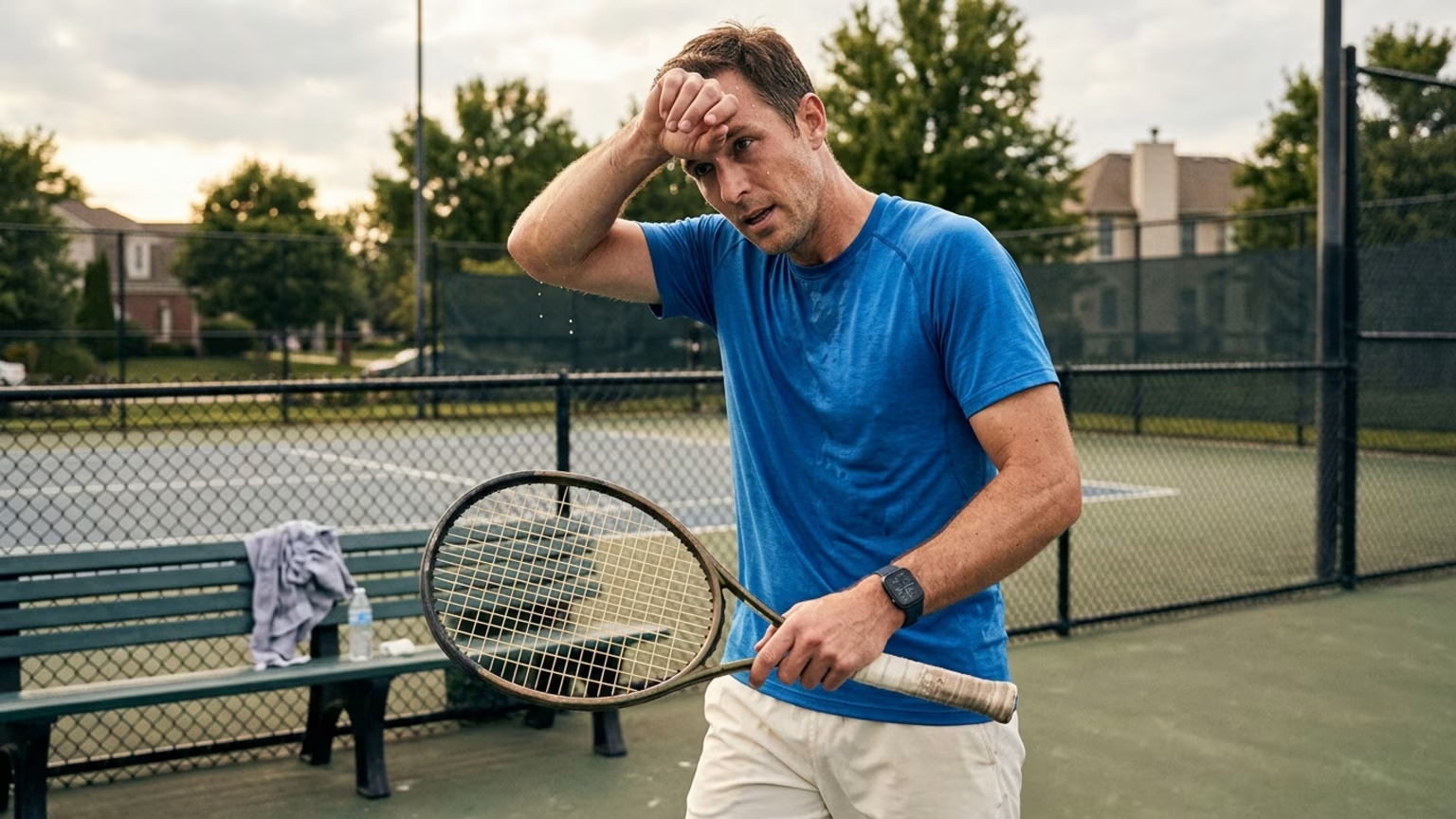
In late 2026, Oura analyzed wearable data to see how recreational tennis impacts heart health and recovery. Learn what this means for your athletic longevity.
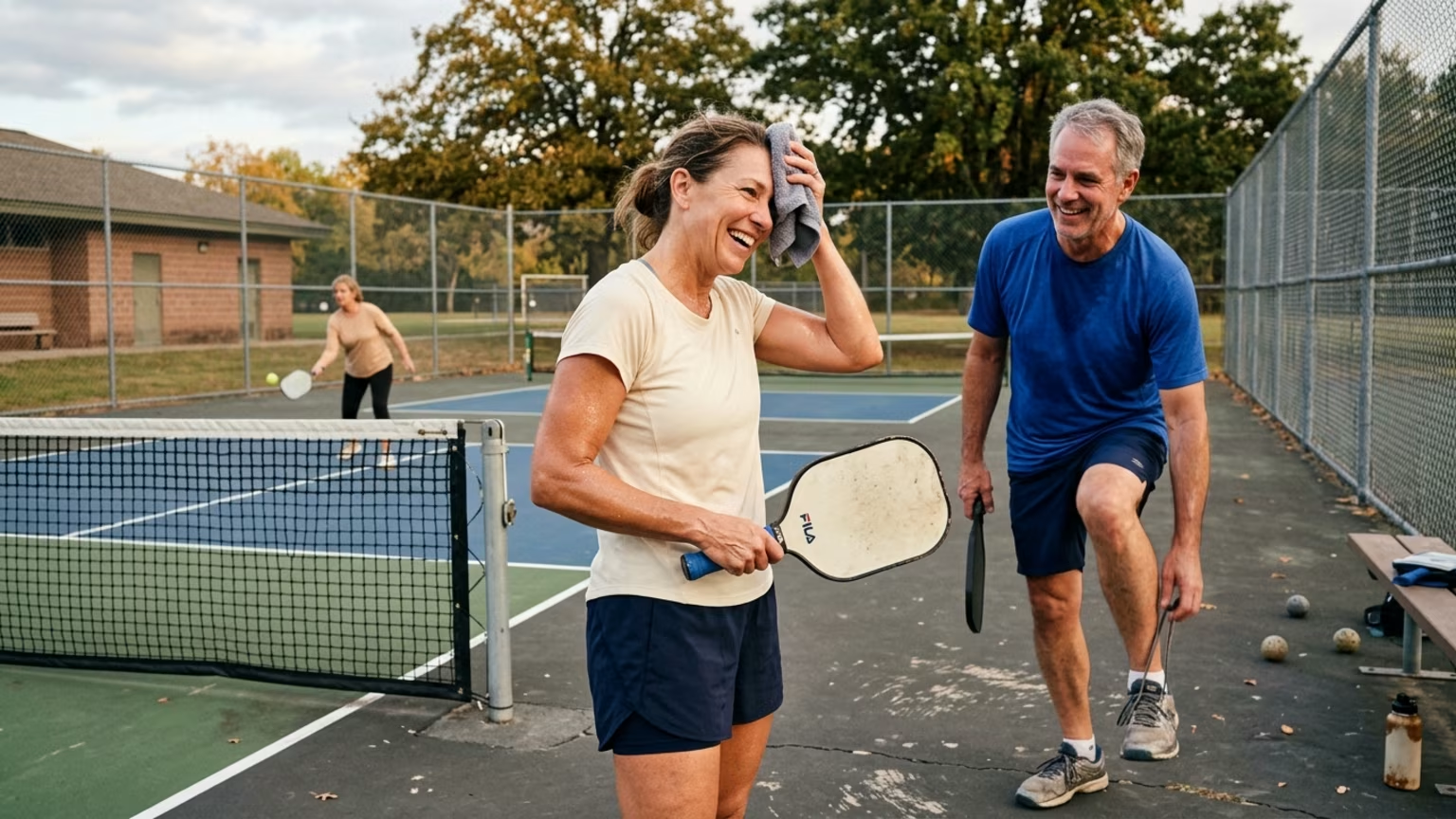
Recent guidelines emphasize gradual progression, dynamic warm-ups, and scheduled recovery to help adult racquet sports players maintain athletic longevity.
Read practical guidance for better movement, smarter preparation and a game that keeps working for you.
explore the Blog
