

A newly proposed movement span framework emphasizes adaptive control for healthy aging. Here is what the concept means for adult racquet sports players.




On September 10, 2026, a News-Medical report highlighted a newly proposed aging framework called movement span. Georgia Southern University professor Li Li introduced the concept in an opinion paper for the Journal of Sport and Health Science. The paper originally became available online on June 2, 2026. This framework shifts the longevity conversation toward how long people retain the physical ability to navigate their environments effectively.
Li defines movement span as the period of life during which a person can move with confidence, responsiveness and adaptive control. This approach emphasizes exposure to differences in pace, direction, surface and timing. The primary article connects this concept to the World Health Organization emphasis on maintaining functional ability. Functional ability focuses on the capacity to be and do what a person values.
Locomotor capacity operates as one essential component of that broader goal. SuperAging News reports that movement span remains a proposed framework rather than a standardized medical measurement. It is not yet a validated clinical endpoint. Li calls for future research to establish standardized criteria, measurement protocols and reference data.
The primary article notes that abilities like walking speed, balance, strength and power have been studied independently. However, movement span gathers them under one conceptual umbrella. A News-Medical report identifies Li’s paper as Movement span: Extending the discourse on aging beyond life span and health span. The report provides the digital object identifier as 10.1016/j.jshs.2026.101150.
For adult recreational players, this proposal prompts a practical evaluation of current training habits. The primary article mentions tennis and pickleball as examples of varied movement activities. However, it offers no specific programming or proof that playing matches meets every healthy aging need. Court fitness alone does not equal complete physical capacity.
Hitting balls on the weekend provides excellent exercise, but it does not guarantee adequate strength or balance for life off the court. Maintaining the ability to react to a drop shot requires underlying joint stability and varied movement exposure. Players must combine their court time with targeted work that addresses power and functional mobility. This broader approach aligns with structured movement routines to protect key joints.
Confidence on the court stems directly from a player knowing their body can handle sudden changes in direction. When a player doubts their balance, they often hesitate before lunging for a wide volley. This hesitation reduces court effectiveness and increases the likelihood of awkward landings. True movement span emphasizes moving with confidence, which requires dedicated balance training outside of regular match hours.
Responsiveness involves the nervous system reacting quickly to the shifting dynamics of a rally. Racquet sports inherently challenge this system by forcing players to track a moving ball while managing their footwork. However, relying solely on match play means players only practice responsiveness in highly specific, familiar patterns. Building a broader movement capacity requires challenging the nervous system with new drills, unfamiliar surfaces and varied tempos.
Adaptive control allows a player to adjust their mechanics when a surface is slippery or a ball takes a bad bounce. The ability to modify movement mid-stride protects players from sudden tweaks or strains. Training for adaptive control involves working through varied ranges of motion during warm-ups and conditioning sessions. A comprehensive physical routine ensures the body can adjust safely when ideal footwork is no longer possible.
Developing true adaptive control means preparing the body for unexpected demands on the court. When players focus strictly on match play, they often neglect the foundational strength needed to slow down safely. You can read more about mastering deceleration and momentum control to reduce fatigue and support better court coverage. Incorporating strength training ensures the body can handle the deceleration forces required during competition.
Players should view movement span as a highly individualized metric that requires professional input. The primary article recommends tailoring new exercise for people with pre-existing conditions. These conditions include osteoporosis, significant arthritis and cardiovascular disease. Individuals with balance problems or a history of falls should also seek guidance before modifying their routines.
While movement span itself awaits standardized criteria, researchers have gathered substantial data on its component abilities. A JAMA analysis summarized by SuperAging News combined nine cohort studies involving more than 34,000 adults aged 65 and older. The analysis found that each 0.1-meter-per-second increase in usual gait speed was associated with roughly a 12 percent lower mortality risk during follow-up. The primary article notes this is an association and not proof that walking faster causes a longer life.
Walking speed acts as a useful snapshot of the heart, lungs, muscles, nervous system and balance working together. The primary article also summarizes findings from the LIFE randomized clinical trial regarding mobility in older adults. This trial followed 1,635 sedentary adults aged 70 to 89 who had physical limitations but could still walk 400 meters. Researchers monitored these participants over an average follow-up of about 2.6 years.
During this period, major mobility disability occurred in 30.1 percent of the physical-activity group. In contrast, 35.5 percent of the health-education group experienced major mobility disability in that same timeframe. These results highlight the potential impact of structured physical activity on maintaining mobility in older populations. Translating these concepts into daily habits requires consistent effort across multiple physical disciplines.
The primary article reports CDC activity guidance for adults aged 65 and older to help structure this effort. The CDC recommends at least 150 minutes of moderate-intensity aerobic activity per week, or 75 minutes of vigorous activity, or an equivalent combination. The CDC guidance also calls for muscle-strengthening activity on at least two days per week. Finally, adults should incorporate dedicated balance-improving activity into their weekly routines.
Understanding how movement requirements differ across racquet sports can help players build better training plans. You can review the specific movement demands that separate tennis, pickleball and padel to better tailor your fitness work. Adapting to the geometric differences of each court requires distinct types of physical readiness.
Over the next few seasons, expect sports science organizations to attempt to quantify this movement span framework. Researchers will likely work to validate clinical endpoints and establish reference data that can be applied to active populations. As the concept matures, generic cardiovascular advice will likely shift toward multi-directional, skill-based movement prescriptions. Racquet sports players are uniquely positioned to benefit from this shift, provided they support their court time with dedicated conditioning.
This shift in sports science validates what many seasoned players already know about staying healthy on the court. Playing matches provides the motivation, but comprehensive physical preparation provides the durability. As the medical community refines the movement span concept, the baseline standard for healthy aging will become significantly more active.
Follow Evercourts for practical insights on tennis, pickleball and padel performance, movement, recovery and healthy ageing. Stay connected for new articles, research-led guidance and ideas to help you play well and keep playing for years.


An evidence check on sports supplements like tart cherry juice. Learn why racquet sports players should prioritize core nutrition over functional foods.
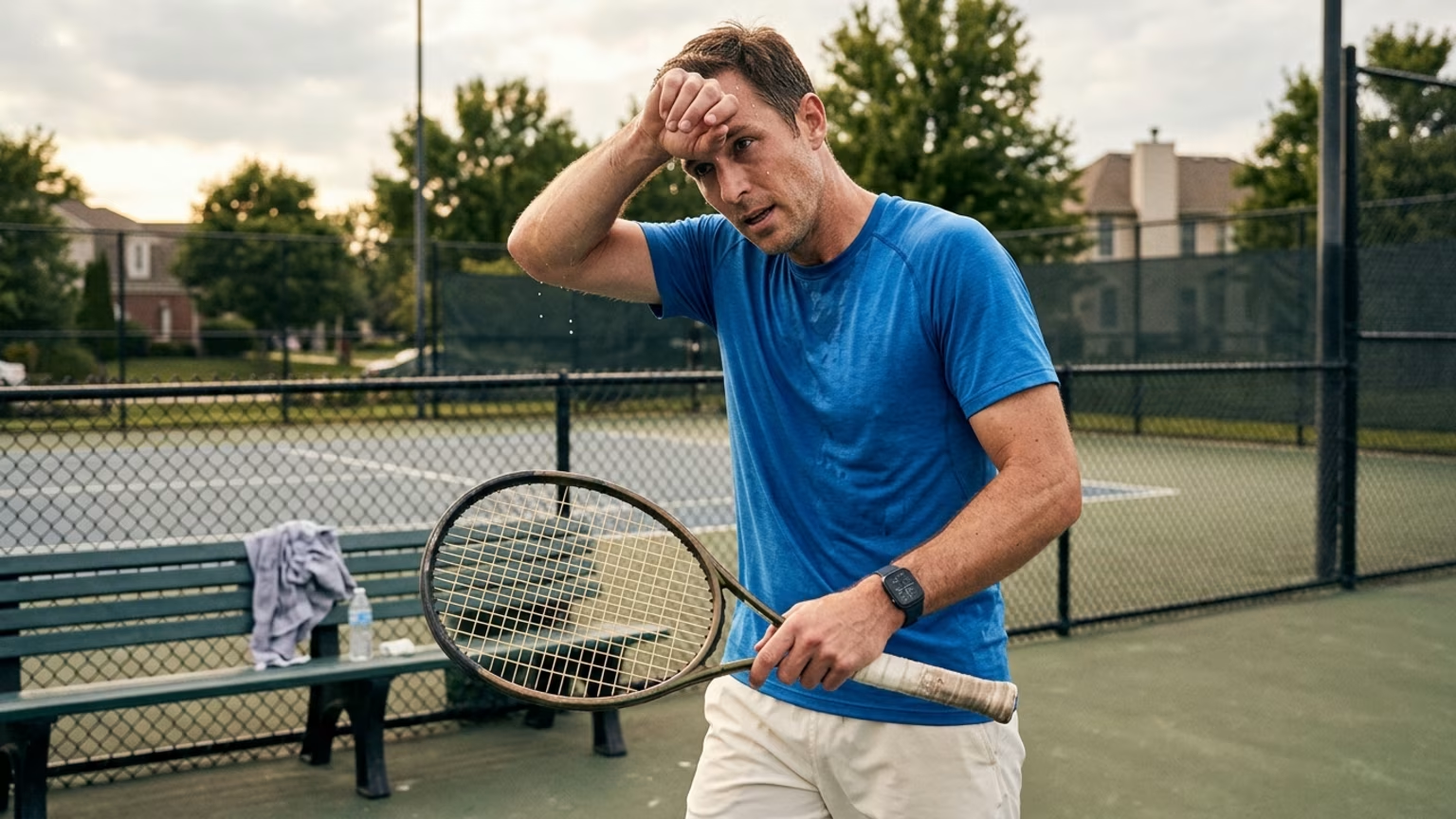
In late 2026, Oura analyzed wearable data to see how recreational tennis impacts heart health and recovery. Learn what this means for your athletic longevity.
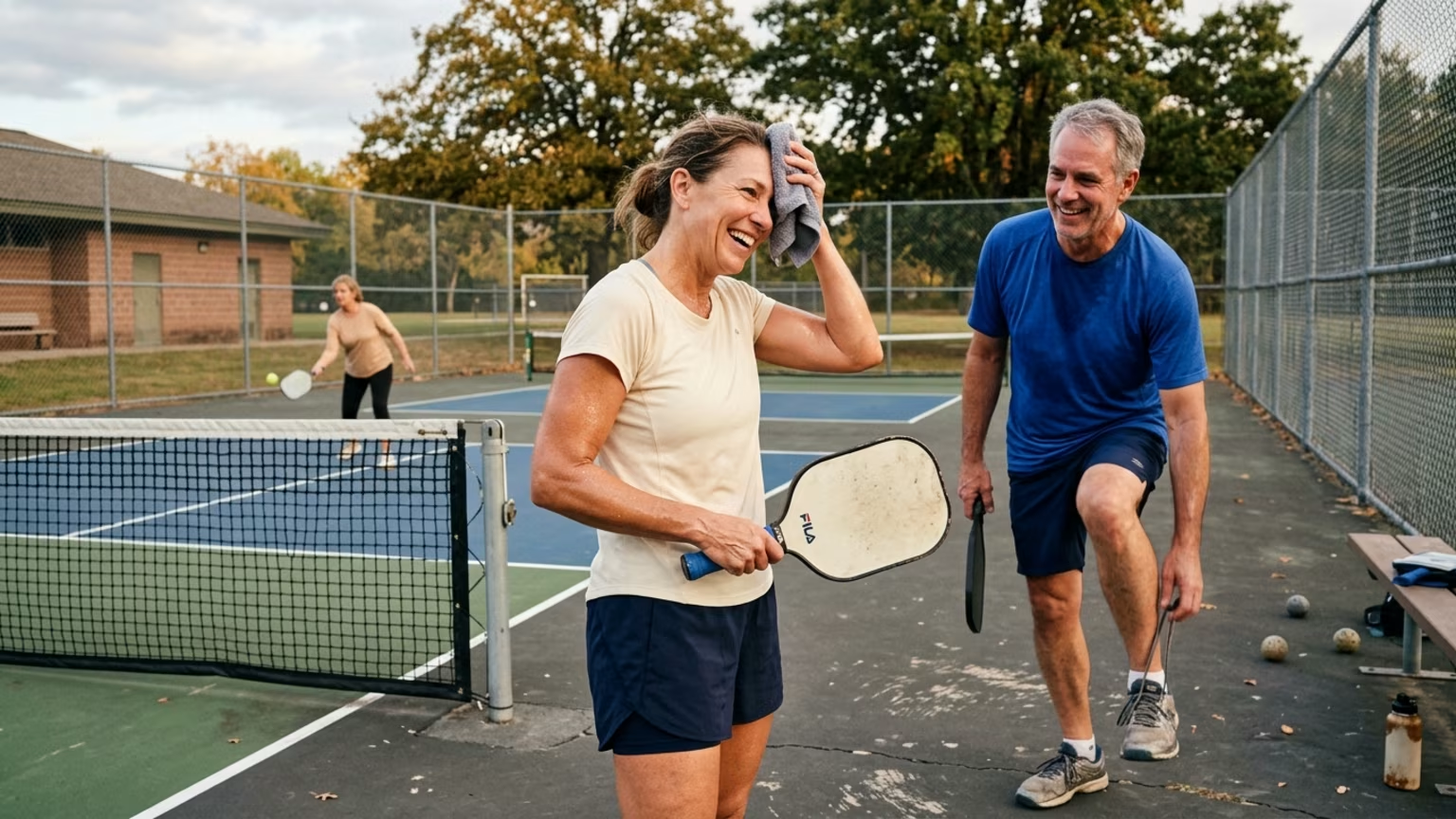
Recent guidelines emphasize gradual progression, dynamic warm-ups, and scheduled recovery to help adult racquet sports players maintain athletic longevity.
Read practical guidance for better movement, smarter preparation and a game that keeps working for you.
explore the Blog
